The Agentic AI Landscape Evolves: From Orchestrated Loops to Intelligent Swarms by Mid-2026

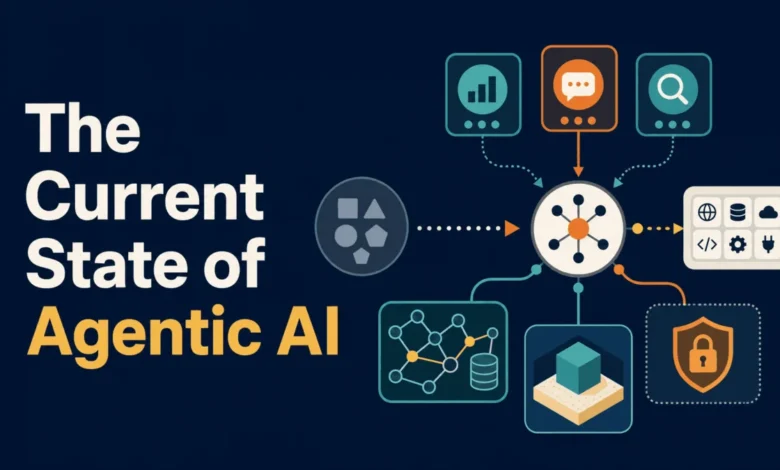
The field of agentic Artificial Intelligence has undergone a profound transformation by mid-2026, shifting from cumbersome, hand-crafted reasoning loops to dynamic, multi-agent swarms powered by standardized protocols. This evolution marks a significant maturation of AI engineering, moving from the intricate prompting of monolithic models to the sophisticated design of distributed intelligent systems. The era of the all-encompassing, brute-force agent is rapidly receding, replaced by a more specialized and efficient ecosystem.
The Decline of Orchestrated Reasoning Loops
Just a year prior, the prevailing approach to building AI agents relied heavily on what engineers termed "brute-force orchestration." This involved the meticulous construction of complex Reasoning and Acting (ReAct) loops. Developers would spend considerable effort devising brittle prompt chains and attempting to force single, large language models to simultaneously manage planning, tool execution, and context maintenance. This monolithic approach, while functional, was often characterized by significant latency and token overhead.
The limitations of this paradigm became increasingly apparent as foundation models began to integrate "System 2" thinking, a more deliberate and analytical cognitive process, directly into their architectures. This internal evolution meant that many of the external scaffolding mechanisms built to simulate reflection and step-by-step reasoning were becoming redundant.
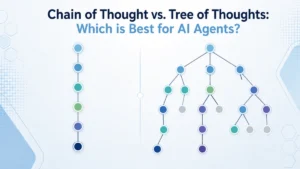
As documented in "The Machine Learning Practitioner’s Guide to Agentic AI Systems," earlier patterns like Plan-and-Execute and Reflexion relied on external code to guide models through iterative thinking, self-critique, and refinement. Today, foundation models are capable of generating hidden reasoning tokens, exploring multiple solution branches internally, and self-correcting before presenting a final output. This native capability has rendered much of the external orchestration framework obsolete.
For AI engineers, this transition signifies a fundamental shift in their role. The focus has moved from meticulously crafting prompts to designing the underlying infrastructure that enables specialized agents to communicate and collaborate effectively. The orchestration layer is now primarily concerned with routing tasks, managing state across agents, and facilitating environment execution, rather than simulating the agent’s core cognitive processes.
The Rise of Agent Swarms: Specialization and Microservices
With foundation models now adept at their own internal reasoning, the strategic question for production teams has become: what should a single agent be responsible for? The consensus emerging from leading development teams is to delegate as little as possible to any individual agent.
The concept of attaching numerous tools—sometimes upwards of 50—to a single large language model has proven to be a significant bottleneck. This observation, highlighted in analyses such as "Beyond Giant Models: Why AI Orchestration Is the New Architecture," has driven a widespread adoption of agentic swarms. These swarms are collections of smaller, highly specialized agents that interact through a standardized communication protocol.
Instead of one agent attempting to perform a multitude of tasks, the modern architecture favors a distributed approach:
- Specialized Agents: Each agent is designed to excel at a specific function, such as data retrieval, analysis, code generation, or user interaction.
- Decoupled Functionality: This specialization breaks down complex workflows into manageable, testable, and replaceable components.
- Efficient Resource Utilization: Smaller, specialized models can be employed for individual tasks, reserving more powerful and resource-intensive models for complex synthesis or strategic decision-making.
While the fragmentation of a monolithic agent into multiple smaller ones might initially appear to simply shift complexity, the key insight is that this complexity becomes significantly more manageable. It allows for granular testing, easier debugging, and the flexible replacement of individual components without overhauling the entire system.
Building a Basic Swarm Pattern
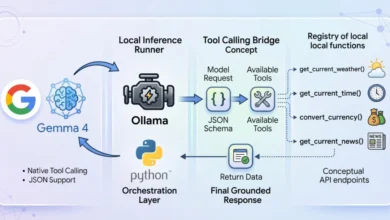
The architectural shift towards swarms is exemplified by the following pseudo-code, illustrating a basic swarm pattern. It’s important to note that this is conceptual and not directly runnable without a dedicated swarm framework. Leading implementations can be found in projects like the OpenAI Agents SDK and LangGraph Swarm.
# Conceptual illustration of a swarm architecture

from swarm_framework import Agent, Swarm, TransferCommand

# Define the initial triage agent responsible for routing requests
triage_agent = Agent(
    name="Triage",
    system_prompt="Route the request to the correct specialist agent.",
    tools=[transfer_to_sql, transfer_to_analyst] # Hypothetical tools for routing
)

# Define specialized agents for specific domains
sql_agent = Agent(
    name="Data Fetcher",
    system_prompt="You write and execute read-only PostgreSQL queries.",
    tools=[execute_read_query] # Hypothetical tool for SQL execution
)

analysis_agent = Agent(
    name="Data Analyst",
    system_prompt="You analyze datasets using Python pandas and generate insights.",
    tools=[run_python_sandbox] # Hypothetical tool for Python analysis
)

# Define the handoff logic for transferring control and context
def transfer_to_analyst(context_variables):
    """Call this when raw data has been fetched and needs analysis."""
    return TransferCommand(target_agent=analysis_agent, context=context_variables)

# Add the transfer tool to the SQL agent's capabilities
sql_agent.add_tool(transfer_to_analyst)

# Initialize and run the swarm
enterprise_swarm = Swarm(
    starting_agent=triage_agent,
    agents=[triage_agent, sql_agent, analysis_agent]
)

# Example user query to the swarm
response = enterprise_swarm.run(
    user_input="How did our Q2 churn rate correlate with support ticket volume?"
)
This architectural pattern emphasizes statelessness for individual agent calls, while maintaining state across the entire system through orchestrated handoffs. When the sql_agent completes its data retrieval, it utilizes a TransferCommand to pass control and relevant data context to the analysis_agent. This approach ensures lean context windows for each agent, enabling the use of more cost-effective and faster models for individual nodes. Larger, more powerful models can then be reserved for tasks requiring broader synthesis or complex routing decisions.
This system-level memory, coupled with efficient communication, becomes even more critical when considering how agents interact with external systems. This is where significant advancements in standardization have streamlined integration.
The Model Context Protocol (MCP): Standardizing Agency
Connecting these specialized agents to the real-world systems and data sources that users rely on was, until recently, a significant hurdle. The process of integrating an API typically involved writing custom schemas, managing HTTP requests, and parsing potentially error-prone JSON responses from models. Each new integration required a repetitive and time-consuming effort.
The current landscape of AI agent integration is increasingly shaped by the Model Context Protocol (MCP). MCP has emerged as an open standard, acting as a universal adapter between AI models and diverse data sources, whether local or remote.
| Old Paradigm (Pre-2025) | Current State (Mid-2026) |
|---|---|
| Hardcoded API keys directly into the agent’s environment | Agent connects to an isolated MCP server for secure access |
| Engineer writes custom JSON schemas for every tool | MCP server automatically exposes available tools and resources |
| Agent directly executes API calls inline | Execution occurs on the MCP server, separating concerns |
This standardization dramatically simplifies the integration process. Teams can now connect pre-built GitHub MCP servers, Slack MCP servers, or PostgreSQL MCP servers to their swarms without the need to develop custom API wrappers for each. While careful credential management on the server-side remains crucial, the overall integration surface area has been substantially reduced, accelerating development cycles and increasing the interoperability of AI systems.
Continuous Learning Through Memory Graphs
A long-held aspiration in agentic AI has been the development of agents capable of learning from their past interactions. This is now becoming a production reality through the implementation of memory graphs. The distinction here is between the stateless nature of individual agent invocations and the persistent memory of the overall system.
While individual agents remain stateless for each interaction to maintain efficiency, the system as a whole retains memory through graph databases, such as Neo4j, or managed alternatives. These graph databases are integrated directly into the agent’s context pipeline, allowing the system to build a cumulative understanding over time.
In a typical swarm execution, a dedicated Memory Agent operates asynchronously in the background. Its sole purpose is to analyze the main swarm’s execution trajectory, extract persistent facts, and update the memory graph. This process enables the system to improve its performance and decision-making over time without requiring explicit fine-tuning of the underlying foundation models.
The practical implementation of this memory graph system involves several key steps:
- Fact Extraction: As agents execute tasks and interact with data, the Memory Agent identifies and extracts key factual information from their interactions.
- Graph Ingestion: These extracted facts are then structured and ingested into the memory graph database, creating a network of interconnected knowledge.
- Contextual Retrieval: When new tasks are initiated, the Memory Agent can retrieve relevant information from the graph to enrich the context provided to the active agents.
- Feedback Loop: The insights gained from the memory graph can inform future agent actions, creating a continuous learning loop that enhances system performance and adaptability.
This approach effectively shifts the focus from prompt engineering to "context engineering," where the system’s ability to learn and adapt is driven by the quality and structure of its persistent memory.
Security Considerations: The Expanding Swarm Attack Surface
The proliferation of multi-agent systems connected via universal protocols like MCP has inevitably expanded the potential attack surface. The threat of indirect prompt injections, where malicious instructions can hijack automated workflows, was foreseen in analyses like "Facing the Threat of AIjacking" and has now become a primary concern for enterprise adoption. The swarm architecture, in particular, presents a structurally more dangerous environment for such attacks compared to the monolithic model era.
The inherent danger lies in the interconnectedness of agents. If Agent A, which can access external emails, is capable of transferring context and control to Agent B, which possesses database access, a malicious instruction embedded within an email could pivot laterally through the entire swarm. This mirrors traditional network intrusion patterns, where the very handoff mechanisms that make swarms efficient also render them vulnerable.
In response to these evolving threats, three primary defensive strategies are converging:
- Capabilities-Based Security: This approach limits agent actions to only those explicitly granted, akin to principle of least privilege in traditional cybersecurity.
- Runtime Anomaly Detection: Monitoring agent behavior for deviations from expected patterns, such as unusual tool usage or unexpected data access, can flag potential compromises.
- Formal Verification of Handoffs: Implementing rigorous checks and balances on agent-to-agent communication and data transfers to ensure they adhere to strict security policies.
While these defenses are not yet universally standardized, they represent the cutting edge of production agentic security. Any organization deploying swarms into production environments today should consider at least one of these measures as a fundamental security baseline.
The Path Forward: Engineering Resilient Swarms
Agentic AI has transitioned from a niche research curiosity to a robust engineering discipline. This evolution is characterized by tangible constraints, well-defined failure modes, and critical design decisions at every architectural layer.
The foundational primitives—tool calling, routing, and native reasoning—are rapidly maturing. The primary locus of innovation and competitive advantage now lies in the systems layer. This includes the strategic design of swarm topologies, the architecture of memory systems to facilitate knowledge compounding over time, and the establishment of robust security boundaries that enable these systems to operate safely and effectively at scale.
Leading teams are no longer solely focused on creating smarter individual agents. Instead, their efforts are directed towards building more resilient, specialized, and interconnected swarms. For organizations embarking on new agentic AI projects, the recommended approach is to adopt one of the established patterns, implement it at a small scale, and instrument it meticulously. The architectural intuition gained from developing a three-agent swarm translates directly to the complexities of a thirty-agent system, providing a scalable foundation for future innovation.