Global Takedown of Kratos Phishing Infrastructure Disrupts Worldwide Cybercrime Syndicate

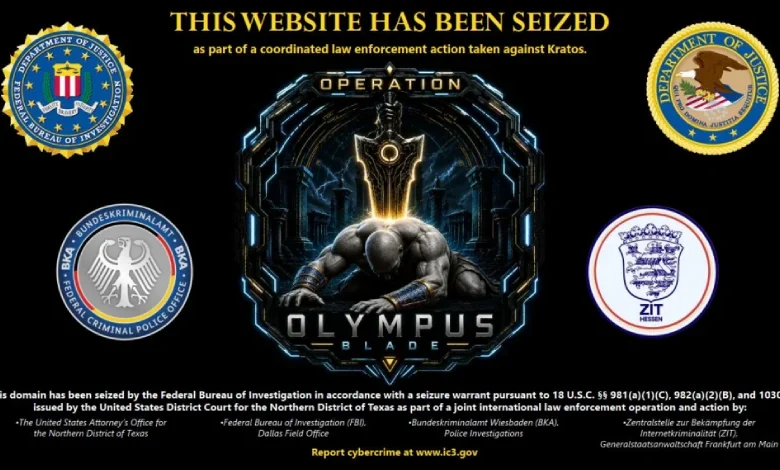
In a major blow to the global cybercrime ecosystem, law enforcement agencies from Germany, the United States, and Indonesia have successfully dismantled the core infrastructure of Kratos, a sophisticated and widely used phishing-as-a-service (PhaaS) platform. The operation, announced on July 20, 2026, by the Frankfurt Public Prosecutor’s Office’s Central Office for Combating Cybercrime (ZIT) and the German Federal Criminal Police Office (BKA), represents one of the most significant disruptions of phishing infrastructure in recent years. Beyond the seizure of hardware, the operation led to the arrest of the primary developer and operator of the kit in Indonesia, marking a rare instance of successful attribution and physical apprehension in the often-anonymous world of cybercrime.
The Scale of the Kratos Network
The Kratos phishing kit was not merely a tool but a comprehensive criminal enterprise. According to investigators, the infrastructure supported approximately 1,800 "franchisees"—paying customers who utilized the platform to launch their own malicious campaigns. These customers were responsible for an estimated 15,000 phishing campaigns every month, targeting victims across more than 30 countries.
The BKA reported that the operation resulted in the seizure and shutdown of more than 200 servers located in various jurisdictions. These servers functioned as the backbone for the automated delivery of phishing emails, the hosting of deceptive login pages, and the collection of stolen credentials. Since late 2024, the Kratos network is believed to have facilitated the compromise of hundreds of thousands of accounts, with a heavy concentration of victims located in Europe and North America. Financially, the operators of Kratos are estimated to have earned at least 300,000 euros through subscription fees and the sale of illicit services, though investigators suggest the total economic damage caused by the kit’s users likely runs into the millions.
Technical Sophistication: The Adversary-in-the-Middle (AiTM) Threat
What set Kratos apart from standard, low-level phishing kits was its implementation of Adversary-in-the-Middle (AiTM) techniques. While traditional phishing involves a static page that simply records a username and password, Kratos offered a more advanced "reverse proxy" mode built on Node.js.
Security researchers at ANY.RUN, who conducted a deep-dive analysis of the kit prior to its takedown, noted that the platform offered two distinct operational modes. The first was a basic PHP-based credential harvester. The second, and far more dangerous, was the Node.js reverse proxy. This mode allowed the attacker to sit between the victim and the legitimate service—most frequently Microsoft 365—in real-time.

When a victim entered their credentials into a Kratos-hosted fake login page, the kit would relay those credentials to the actual Microsoft login portal. If the user was prompted for two-factor authentication (MFA), the kit would relay that prompt to the victim and then pass the response back to Microsoft. Once the login was successful, the Kratos kit would intercept the resulting session cookie. By possessing this cookie, an attacker can bypass MFA entirely, gaining full access to the victim’s account without ever needing to know the victim’s secondary authentication method. This capability has made AiTM kits like Kratos a primary concern for enterprise security teams, as it effectively nullifies the protection provided by standard SMS or app-based MFA.
A Chronology of Detection and Disruption
The downfall of Kratos was the result of a multi-year investigation that combined technical intelligence from the private sector with international police cooperation.
- Late 2024: The Kratos platform begins to gain traction in the underground market, marketed as an easy-to-use solution for both novice and experienced cybercriminals.
- Early 2025: Microsoft Threat Intelligence begins tracking the kit under the moniker "SneakyLog." Security researchers observe a surge in credential theft campaigns targeting Microsoft 365 environments.
- February 2026: A major campaign is detected targeting approximately 100 organizations in the United States, specifically within the healthcare, retail, and manufacturing sectors. The campaign used tax-related lures, including fraudulent W-2 forms containing personalized QR codes that led victims to AiTM login pages.
- Spring 2026: German investigators at ZIT and the BKA, working in tandem with the U.S. Federal Bureau of Investigation (FBI), begin mapping the kit’s global server infrastructure.
- July 2026: Law enforcement agencies execute a synchronized takedown. Indonesian authorities, acting on intelligence provided by Western partners, locate and arrest the suspected developer. Simultaneously, over 200 servers are taken offline across multiple continents.
The Phishing-as-a-Service Business Model
The investigation into Kratos shed light on the highly professionalized nature of modern cybercrime. The platform operated with a level of customer support and organizational structure typically associated with legitimate software companies.
Potential "franchisees" could sign up via a dedicated website or through a Telegram-based shop. The platform accepted payments in various cryptocurrencies, ensuring a degree of anonymity for the transactions. Once a subscription was purchased, users were given access to a dashboard where they could manage their campaigns, track "hit rates," and organize stolen credentials.
This "as-a-service" model has significantly lowered the barrier to entry for cybercrime. An individual with very little technical knowledge could purchase a Kratos subscription, select a pre-made template (such as a Microsoft 365 or bank login page), and launch a sophisticated AiTM attack that would have previously required advanced coding skills.
Implications for Corporate Security and Microsoft 365 Environments
The primary target of Kratos was Microsoft 365, the world’s most widely used enterprise productivity suite. For cybercriminals, a stolen Microsoft login is a high-value asset. It serves as a gateway to Business Email Compromise (BEC), where attackers use a compromised internal account to send fraudulent invoices or redirect wire transfers.

The BKA warned that the stolen credentials harvested by Kratos were often used for "lateral movement." Once inside a corporate environment, attackers could use the initial phished account to send further phishing emails to the victim’s colleagues. Because these emails originate from a legitimate internal address, they are far more likely to bypass traditional email filters and gain the trust of recipients.
Carsten Meywirth, head of the BKA’s cybercrime division, emphasized that the success of the Kratos operation demonstrates that professionalized criminal infrastructures are not untouchable. However, he also cautioned that the threat is evolving. Benjamin Krause of the ZIT noted that the "disruptive" approach—targeting the infrastructure itself—is essential because it halts thousands of ongoing campaigns simultaneously, providing a broader impact than individual arrests alone.
Remediation and Detection Strategies
In the wake of the takedown, Microsoft has begun notifying organizations and individuals whose accounts were targeted or compromised by Kratos-powered campaigns. Security experts advise that remediation depends on the type of attack experienced.
If an account was hit by the basic credential-harvesting version of the kit, a simple password reset and an audit of MFA settings may suffice. However, for victims of the AiTM/reverse-proxy mode, the situation is more complex. Because the kit steals session cookies, the attacker’s access may persist even after a password change. In these cases, administrators must manually revoke all active sessions for the affected user.
For long-term protection, security agencies are urging organizations to move toward "phishing-resistant" authentication methods. These include FIDO2-based hardware keys or Windows Hello for Business, which utilize cryptographic handshakes that cannot be intercepted or relayed by reverse proxies like Kratos.
From a detection standpoint, researchers at ANY.RUN identified specific technical signatures associated with the kit. Most Kratos login pages load two specific vector graphic files: barr.svg and lg.svg. Furthermore, the kit typically POSTs stolen data to endpoints named next.php or save.php. Security teams can use these indicators of compromise (IOCs) to scan their web traffic logs for signs of past exposure.

The Road Ahead for Global Cyber Law Enforcement
While the Kratos takedown is a significant victory, the "hydra-headed" nature of the PhaaS market remains a challenge. The 1,800 customers who used Kratos still possess the skills and motivation to seek out alternative platforms. Many of the techniques used by Kratos, including the use of disposable domains and compromised WordPress sites for hosting, are standard across the industry.
The arrest of the developer in Indonesia, however, sends a powerful message to the "upper management" of the cybercrime world. It highlights that the veil of digital anonymity is thinning as international cooperation between law enforcement agencies becomes more streamlined. The transition from purely investigative work to active "infrastructure disruption" signals a new era in the fight against global cybercrime, one where the goal is to make the business of phishing too expensive and too risky to maintain.
As the digital landscape continues to shift, the lessons learned from the Kratos investigation will likely inform future operations against similar syndicates, emphasizing the need for constant vigilance and the adoption of more robust, hardware-based security protocols across the private sector.