Signal Ring Poised to Revolutionize Blood Pressure Monitoring with Calibration-Free Accuracy

In a significant advancement for consumer health technology, the Vital Signals startup has unveiled the Signal Ring, a smart wearable device claiming to deliver accurate, continuous blood pressure readings without the need for traditional calibration against a cuff monitor. This innovative device enters a market increasingly focused on proactive health management, directly addressing a critical gap left by existing smartwatches and rings, including Apple Watch models and the Oura Ring, which currently offer only alerts for potential hypertension or require frequent calibration for actual readings. The Signal Ring is set to go on pre-sale later today, priced at $399 with no subscription fees, and deliveries anticipated in October, promising a new era of personal health monitoring.
The introduction of the Signal Ring comes at a crucial time, as cardiovascular diseases remain the leading cause of death globally. Central to this health crisis is hypertension, often referred to as "the silent killer." This condition, characterized by abnormally high blood pressure, frequently presents without noticeable symptoms, allowing it to progress undetected while causing severe and irreversible damage to arteries, the heart, and the brain. The grave consequences often manifest as sudden heart attacks or strokes, making early detection and consistent monitoring paramount. Conversely, abnormally low blood pressure, or hypotension, can also pose significant risks, leading to dizziness, fainting, and inadequate blood flow to vital organs. For older individuals, or those with pre-existing health conditions, regular blood pressure monitoring is not just recommended but often medically advised to manage risks effectively. While traditional home blood pressure cuffs offer a reliable method for self-monitoring, the convenience and potential for continuous, automatic readings from a discreet, wearable device represent an ideal solution that the healthcare industry has long sought.
The Evolution of Wearable Health Technology and Its Limitations
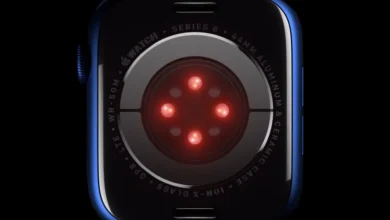
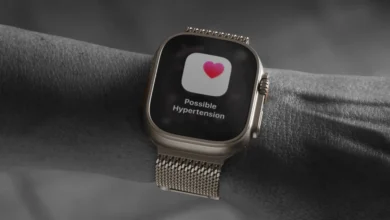
The landscape of wearable health technology has seen rapid evolution over the past decade, transforming from basic fitness trackers into sophisticated health monitoring devices. Smartwatches, particularly the Apple Watch, have been at the forefront of this revolution, integrating a suite of sensors to track heart rate, detect irregular heart rhythms (ECG), measure blood oxygen levels, and even provide fall detection. In recent years, Apple has pushed the boundaries further, with watchOS 26 enabling five Apple Watch models to measure blood pressure, generating alerts for possible hypertension. However, these capabilities are limited; they do not provide specific systolic and diastolic blood pressure readings but rather flag potential concerns, prompting users to consult medical professionals or use traditional methods for precise measurements. This approach, while valuable for early warning, falls short of offering the comprehensive, actionable data many users and healthcare providers desire for continuous management.
Other smart rings, such as the popular Oura Ring, have also carved out a niche in health tracking, primarily focusing on sleep analysis, heart rate variability, and temperature monitoring. While these devices contribute significantly to understanding overall well-being, their blood pressure monitoring capabilities, if present, typically share the same limitations as smartwatches: either providing alerts without specific readings or requiring regular, inconvenient calibration with a traditional blood pressure cuff to maintain accuracy. This calibration requirement undermines the "set it and forget it" convenience that consumers increasingly expect from wearable technology, creating a barrier to consistent, reliable data collection. The reliance on external calibration introduces a variable that can lead to inconsistent data if not performed diligently, thereby reducing the practical utility of these devices for continuous, accurate blood pressure tracking.

The challenge in developing a truly calibration-free blood pressure monitor lies in the complex biophysics involved. Traditional cuffs use an oscillometric method, inflating to temporarily occlude an artery and then deflating to detect pressure waves. Replicating this non-invasively and continuously from a wrist or finger, without the physical constriction, requires advanced sensor technology and sophisticated algorithms capable of inferring blood pressure from subtle physiological signals like pulse wave velocity, photoplethysmography (PPG) data, and heart rate. The scientific hurdle has been significant, often resulting in devices that are either not accurate enough for clinical use or demand regular recalibration to maintain their precision against a gold standard.
Introducing the Signal Ring: A Potential Game-Changer
Against this backdrop of existing limitations, Vital Signals, a startup founded by Tom Moss, has stepped forward with a bold claim: the Signal Ring delivers full blood pressure measurements with accuracy comparable to traditional arm cuffs, entirely without calibration. This assertion is supported by a trial involving thousands of participants, suggesting a robust validation process for its underlying technology. Moss, a veteran of hardware manufacturers like Razer Inc. and Nextbit Systems, and drone maker Skydio Inc., revealed that his personal experience with undiagnosed hypertension, which nearly proved fatal, was the driving force behind his pivot into health technology. "Fundamentally, there’s almost no real way for you to truly know your blood pressure as a consumer, and it’s kind of crazy," Moss stated, highlighting the critical need his company aims to address.
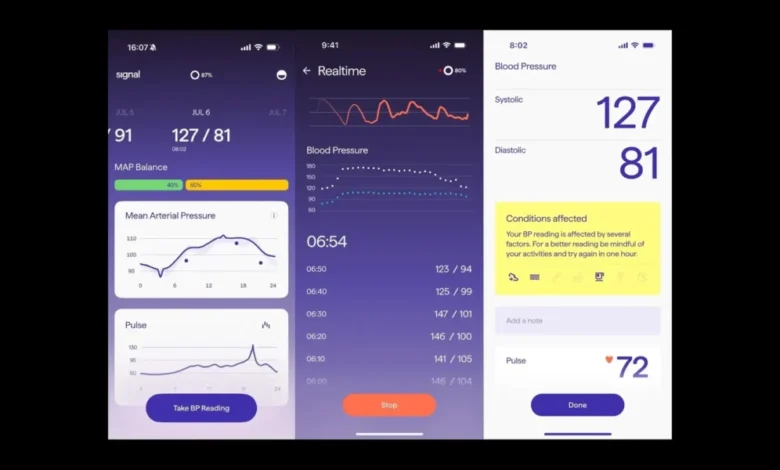
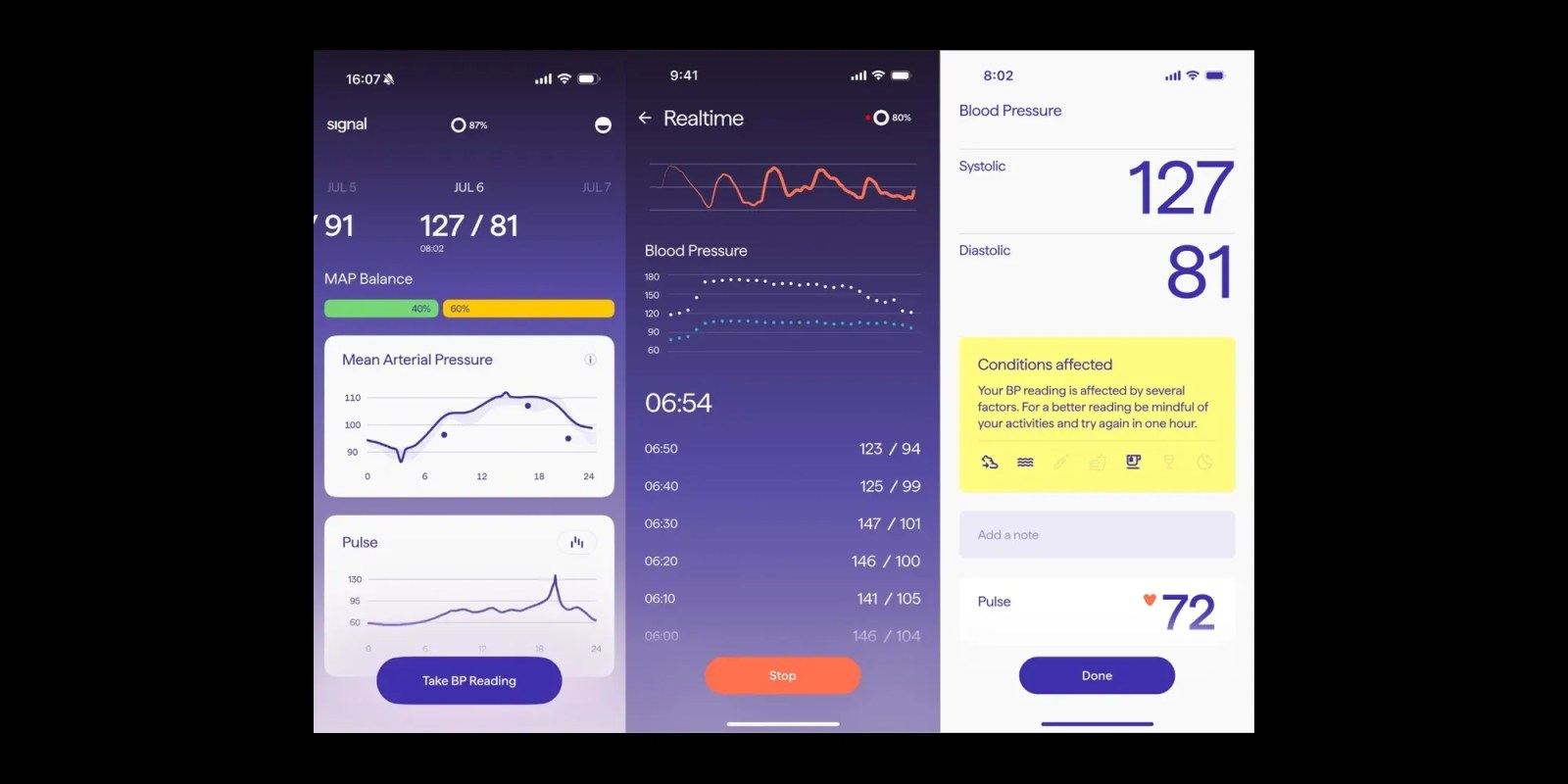
The Signal Ring’s promise of calibration-free, accurate blood pressure readings represents a potential paradigm shift in how individuals manage their cardiovascular health. Unlike devices that only offer alerts, the Signal Ring provides actual systolic and diastolic readings, displayed clearly within a companion iPhone application. This app also tracks blood pressure trends over time, offering users a comprehensive overview of their cardiovascular health and enabling them to share this data with healthcare providers. The ability to monitor these vital signs continuously and unobtrusively could empower users to identify patterns, understand the impact of lifestyle choices, and seek medical intervention sooner if necessary. The design choice of a smart ring is also strategic; rings are often worn more consistently than watches, particularly during sleep, offering potential for 24/7 data collection without interruption.
Clinical Validation and Regulatory Pathways
The claim of accurate, calibration-free blood pressure measurement is a significant one, particularly in the medical device sector where precision and reliability are paramount. The mention of "clinical trials show that it produced accurate blood pressure readings for thousands of participants" is crucial. Such extensive trials are essential for validating the device’s efficacy and building trust among consumers and medical professionals. However, it’s important to note that while clinical validation is a strong indicator of performance, obtaining regulatory clearance from bodies like the US Food and Drug Administration (FDA) is a separate, rigorous process. The FDA’s role is to ensure medical devices are safe and effective for their intended use. For a device like the Signal Ring, which aims to provide diagnostic-grade health metrics, FDA clearance (or similar approvals from regulatory bodies in other regions, such as the European Medicines Agency or CE marking) would be a critical milestone, solidifying its credibility and enabling broader adoption within the healthcare system. The Oura Ring, for instance, has yet to receive FDA clearance for certain health claims, illustrating the stringent requirements for medical-grade wearables.
The process for FDA clearance typically involves submitting detailed documentation on the device’s design, manufacturing, preclinical testing, and clinical trial results. For novel devices, the FDA might require de novo classification or premarket approval (PMA), which are more extensive pathways than the 510(k) pathway used for devices substantially equivalent to existing ones. Given the Signal Ring’s unique claim of calibration-free accuracy for blood pressure, it’s likely to undergo significant scrutiny. Success in this regulatory journey would not only open doors to broader market access but also allow the device’s data to be used more formally in clinical decision-making, moving beyond mere wellness tracking to a true medical monitoring tool.
Strategic Positioning in a Competitive Market
Tom Moss’s strategic positioning of the Signal Ring reveals a nuanced understanding of the competitive landscape and target demographics. Instead of attempting to compete directly with general-purpose smartwatches and rings that offer a broad array of features, Moss explicitly suggests that the Signal Ring’s specialist capabilities are best suited for older individuals and those advised by their doctors to be at risk of hypertension. For "younger, less-at-risk individuals or anyone confident their blood pressure is healthy," his advice is straightforward: "Just buy an Oura or an Apple Watch." This indicates a deliberate focus on a niche market where continuous, accurate blood pressure monitoring is a primary concern, rather than a secondary feature.
This targeted approach acknowledges that while the Signal Ring excels in its core function, it might not offer the same breadth of features—such as extensive sleep tracking, workout analysis, or smart notifications—that general-purpose wearables provide. By concentrating on a critical unmet need, Vital Signals aims to establish itself as the go-to solution for blood pressure management, rather than diluting its value proposition by trying to be an all-in-one device. This strategy could prove effective, as consumers in the health-conscious segment are often willing to invest in specialized tools that deliver superior performance in specific areas vital to their well-being. The lack of a subscription fee further enhances its appeal, especially in a market where many smart health devices are moving towards subscription models for advanced features and data insights.
Broader Implications for Preventative Healthcare
The potential impact of the Signal Ring, if its claims of accuracy and calibration-free operation hold true and it secures regulatory approvals, extends far beyond individual convenience. It could profoundly transform preventative healthcare and chronic disease management.

- Early Detection and Intervention: Continuous, unobtrusive monitoring could lead to earlier detection of hypertension, allowing for timely medical intervention before severe complications arise. This proactive approach could significantly reduce the incidence of heart attacks, strokes, and kidney disease.
- Empowered Patients: Patients would gain an unprecedented level of insight into their blood pressure fluctuations throughout the day and night, in various real-life situations. This data can empower them to make informed lifestyle choices, adhere to medication regimens more effectively, and have more productive conversations with their doctors.
- Personalized Medicine: The wealth of continuous data could facilitate more personalized treatment plans. Doctors could observe how blood pressure responds to different medications, diets, or exercise routines in real-time, allowing for precise adjustments to optimize patient outcomes.
- Reduced Healthcare Costs: By enabling earlier detection and better management of hypertension, the Signal Ring could contribute to a reduction in emergency room visits, hospitalizations, and long-term care costs associated with cardiovascular complications. This would represent a significant economic benefit for healthcare systems globally.
- Population Health Management: Aggregated, anonymized data from a large user base could offer valuable insights into population health trends, risk factors, and the effectiveness of public health interventions aimed at reducing hypertension prevalence.
- Research and Development: The technology behind the Signal Ring could spur further innovation in non-invasive sensing, accelerating the development of similar devices for monitoring other vital signs and biomarkers.
Challenges and Future Outlook
Despite its promising potential, the Signal Ring will face several challenges. User adoption, especially among the target demographic, will depend on ease of use, comfort, and sustained accuracy over time. Long-term studies beyond the initial clinical trials will be essential to demonstrate consistent performance in real-world conditions. Furthermore, data privacy and security will be paramount, as the device collects highly sensitive health information. Vital Signals must ensure robust data protection measures are in place to build and maintain user trust.
The competitive landscape is also dynamic. Apple and other tech giants are continually investing in health technology, and it is plausible that they will eventually develop their own calibration-free blood pressure monitoring solutions. However, if Vital Signals can establish a strong market presence and secure regulatory approvals quickly, it could gain a significant first-mover advantage. The long-term success of the Signal Ring will ultimately hinge on its ability to consistently deliver on its core promise, navigate the complex regulatory environment, and effectively integrate into the broader healthcare ecosystem.
In conclusion, the Signal Ring represents a compelling leap forward in personal health technology. By potentially offering accurate, calibration-free blood pressure readings in a convenient wearable form factor, it stands to empower individuals in their health management and could play a crucial role in the global fight against hypertension. As it moves from pre-sale to market availability, the world will be watching to see if this innovative device truly lives up to its transformative potential, ushering in a new era of proactive and accessible cardiovascular health monitoring.