Lucid Motors Appoints Silvio Napoli as CEO Amid Strategic Pivot and Major Capital Injections from Uber and Saudi PIF

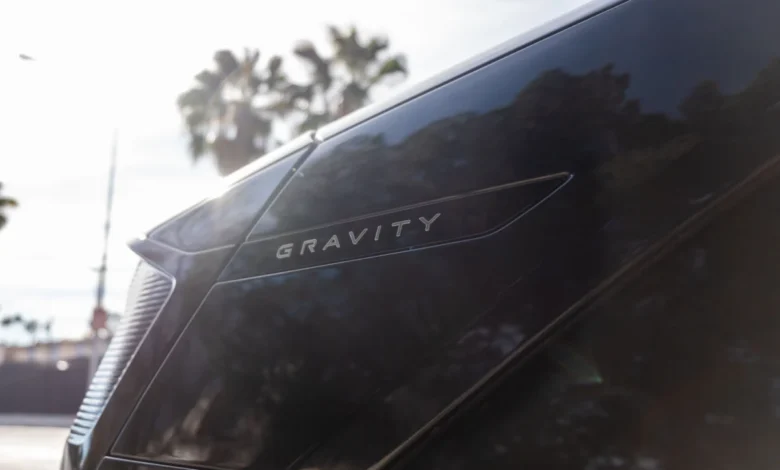
Lucid Motors, the California-based luxury electric vehicle (EV) manufacturer, has officially concluded its year-long search for a permanent leader by appointing Silvio Napoli as its new Chief Executive Officer. The announcement, made on Tuesday, marks a significant turning point for the company as it navigates a volatile global EV market and transitions from a niche luxury player to a high-volume manufacturer. Napoli, a veteran industrial executive with decades of experience at the Swiss-based Schindler Group, will also join the company’s board of directors. The appointment arrives alongside a massive influx of capital, with Uber committing an additional $200 million and the Saudi Arabian Public Investment Fund (PIF) purchasing $550 million in new shares, providing Lucid with a vital financial runway as it scales production of its Gravity SUV and prepares a new mid-size platform.
A New Era of Leadership: From Engineering to Industrial Scaling
The selection of Silvio Napoli signals a shift in Lucid’s corporate strategy. For years, the company was defined by the vision of its former CEO, Peter Rawlinson, who was widely regarded as an engineering-first leader. Rawlinson, who previously served as the Chief Engineer for the Tesla Model S, focused heavily on technical superiority, leading to the development of the Lucid Air, a sedan recognized for its industry-leading range and efficiency. However, following Rawlinson’s sudden resignation in February 2025, the company entered a period of administrative limbo.
While Marc Winterhoff, the Chief Operating Officer, served as interim CEO and reportedly sought the permanent position, the board of directors opted for an external candidate with deep roots in traditional industrial manufacturing. Napoli spent several decades at Schindler Group, a global leader in elevators and escalators, where he held various leadership roles, including CEO and Chairman. His background in complex global supply chains and high-precision industrial operations is seen as a direct response to Lucid’s recent manufacturing hurdles.
Napoli’s compensation package reflects the high stakes of his appointment. According to regulatory filings, he will receive a base salary of $1.5 million, a $1 million relocation allowance to facilitate his move from Switzerland to the United States, and a grant of shares valued at nearly $10 million. Furthermore, a performance-based stock package could see his total compensation reach tens of millions of dollars if he successfully meets aggressive production and profitability targets. Due to his current residency in Switzerland, Napoli will initially serve as an "executive director" under a Swiss employment agreement until his U.S. work authorization is finalized, a process expected to take several weeks. Once cleared, Winterhoff will return to his primary role as COO.
The Uber Partnership: A Bet on Autonomous Mobility
Simultaneous with the leadership announcement, Lucid revealed a deepened partnership with ride-hailing giant Uber. Uber has committed an additional $200 million to Lucid, bringing its total investment in the EV maker to $500 million. As part of this expanded agreement, Uber has pledged to purchase 25,000 "robotaxi-ready" versions of Lucid’s upcoming mid-size vehicle. This brings Uber’s total minimum vehicle order to 35,000 units, including the 10,000 Gravity SUVs previously negotiated.
This partnership is intricately linked with Nuro, Uber’s autonomous vehicle technology partner. Just one day prior to the CEO announcement, Uber and Nuro began public testing of modified Lucid Gravity SUVs in San Francisco. These vehicles are being utilized for a luxury robotaxi service slated for a wider rollout later this year. The integration of Lucid’s hardware with Nuro’s software suggests that Lucid is positioning itself not just as a consumer car brand, but as a primary hardware provider for the burgeoning autonomous ride-hailing sector.
The move into the mid-size market is particularly critical. While the Lucid Air and Gravity SUV target the luxury segment with price tags often exceeding $80,000, the upcoming mid-size platform is designed to compete in the $50,000 range. This puts Lucid in direct competition with the Tesla Model 3 and Model Y, as well as mainstream electric offerings from legacy automakers like Ford and Hyundai. By securing a massive fleet order from Uber before the vehicle has even hit the assembly line, Lucid has mitigated some of the financial risk associated with launching a new high-volume platform.
Financial Stability through the Saudi Public Investment Fund
The Saudi Arabian Public Investment Fund (PIF), which holds a majority stake in Lucid Motors, remains the company’s most significant financial benefactor. On Tuesday, the PIF confirmed the purchase of an additional $550 million in Lucid shares. This latest injection of capital is part of a long-standing relationship that began in 2018 when a $1 billion investment from the Kingdom saved the then-struggling startup from potential insolvency.
To date, the PIF has invested billions into Lucid, viewing the company as a cornerstone of "Vision 2030," Saudi Arabia’s strategic framework to diversify its economy away from oil. Lucid has already established a manufacturing facility in Saudi Arabia, and the continued support from the PIF provides a level of financial security that many of Lucid’s competitors, such as Rivian or Fisker, have struggled to maintain.
Chronology of a Pivotal Year: Lucid’s Path to 2026
To understand the weight of these announcements, one must look at the tumultuous timeline Lucid has navigated over the past eighteen months:
- February 2025: Peter Rawlinson suddenly resigns as CEO. COO Marc Winterhoff is named interim chief.
- May 2025: Lucid reports "early hiccups" in the production ramp-up of the Gravity SUV, citing supply chain constraints and software integration issues.
- July 2025: Uber makes its initial $300 million investment in Lucid and partners with Nuro to develop a luxury robotaxi service using the Gravity SUV.
- February 2026: Facing pressure to reach profitability, Lucid slashes 12% of its workforce, affecting approximately 1,000 employees.
- March 2026: At an Investor Day event, Lucid previews its "Lunar" robotaxi concept and announces plans for a $50,000 mid-size vehicle platform.
- April 1, 2026: Lucid issues a recall for over 4,000 Gravity SUVs due to improperly welded seat belt anchors, a blow to the brand’s reputation for quality.
- April 13, 2026: Uber and Nuro begin testing autonomous Gravity SUVs in San Francisco.
- April 14, 2026: Silvio Napoli is named CEO; Uber and PIF announce $750 million in combined new funding.
Operational Hurdles and the Quest for Quality
Despite the influx of cash and new leadership, Lucid faces significant operational challenges. The company’s second model, the Gravity SUV, is currently in its critical ramp-up phase. While the vehicle has received praise for its design and interior space, the recent recall involving seat belt welds highlighted the "quality issues" that interim CEO Marc Winterhoff struggled to contain.
In addition to the 12% workforce reduction in February, Lucid recently confirmed in a regulatory filing that it has "reduced contractor headcount" at its primary factory in Casa Grande, Arizona. These measures are part of an aggressive cost-efficiency drive intended to preserve capital as the company prepares its Arizona facility for the mid-size platform. The transition from low-volume luxury assembly to high-volume manufacturing is a notorious "production hell" phase that has claimed several EV startups in recent years. Napoli’s expertise in industrial scaling will be immediately put to the test as he oversees the expansion of the Arizona plant and the synchronization of the Saudi Arabian facility.
Market Analysis and Future Implications
The appointment of Napoli and the renewed commitments from Uber and the PIF come at a time when the EV industry is facing a "cooling" period. High interest rates and a lack of affordable charging infrastructure have slowed consumer demand in the United States and Europe. By pivoting toward fleet sales (via Uber) and a more affordable mid-size platform, Lucid is attempting to insulate itself from the volatility of the high-end luxury consumer market.
Industry analysts suggest that the Uber deal is a masterstroke of "guaranteed demand." In an era where EV manufacturers are struggling with inventory build-up, having a committed buyer for 35,000 units provides a predictable revenue stream. Furthermore, the robotaxi-ready nature of these vehicles positions Lucid at the forefront of the "Transportation as a Service" (TaaS) model, which many believe is the ultimate endgame for the automotive industry.
However, the reliance on the Saudi PIF remains a point of discussion among market watchers. While the Kingdom’s deep pockets provide a safety net, it also subjects Lucid to geopolitical risks and the specific economic goals of the Saudi government. Napoli’s primary challenge will be to guide Lucid toward "self-sustainability," reducing its dependence on periodic cash injections from Riyadh by achieving positive cash flow through the mid-size platform.
Conclusion
Lucid Motors is entering its most ambitious chapter yet. With Silvio Napoli at the helm, the company is moving away from the "startup" mentality and toward a future defined by industrial discipline and strategic partnerships. The $750 million in new funding from Uber and the PIF provides the necessary fuel, but the success of the mission depends on the company’s ability to execute its mid-size platform without the quality lapses that have plagued its recent SUV launch. As the luxury robotaxis begin their rounds in San Francisco, the world will be watching to see if Napoli can transform Lucid from a technical marvel into a profitable titan of the electric age.