Sony Bravia 9 II Review: A Deep Dive Into Flagship LED Performance and Display Technology

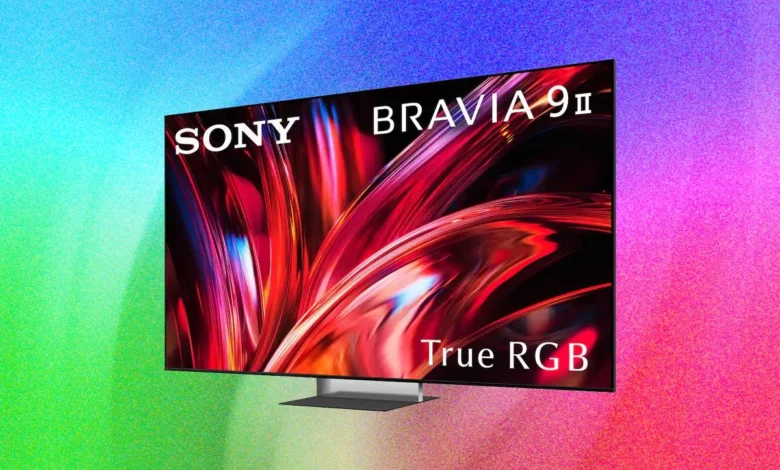
The landscape of modern television technology has reached a critical juncture where consumers must weigh the specific benefits of high-end LED panels against the self-emissive dominance of OLED technology. Sony’s latest flagship, the Bravia 9 II, enters this competitive fray as a powerhouse of brightness and color precision, designed for users who prioritize daytime visibility and high-octane gaming performance over the infinite contrast ratios inherent to OLED displays. While it succeeds in establishing itself as a top-tier contender in the premium television market, its performance reveals the ongoing trade-offs between various display architectures.
The Evolution of Display Technology: Context and Competition
The television industry has spent the last decade oscillating between the vibrant, high-brightness capabilities of LED-backlit LCD panels and the deep, ink-like blacks of Organic Light Emitting Diode (OLED) technology. OLEDs, such as the Samsung S95H or the LG Evo series, function by allowing each individual pixel to emit its own light, which can be turned off entirely to achieve perfect black levels. This creates a contrast ratio that is, for all practical purposes, infinite.
Conversely, the Sony Bravia 9 II utilizes an RGB LED-backlit panel. In this configuration, light from red, green, and blue LEDs is directed through an LCD matrix. While this architecture allows the Bravia 9 II to achieve levels of luminance that often surpass OLED counterparts, it necessitates the use of local dimming zones to simulate deep blacks. When compared to the Samsung S95H, the Bravia 9 II demonstrates that even the most advanced LED arrays face physical limitations in dark-room performance. During high-contrast sequences, such as the darker scenes in Toy Story 5, the "blooming" effect—where light from bright objects bleeds into adjacent dark areas—remains a lingering challenge that OLEDs have largely solved.
Performance Analysis: Cinematic Fidelity and Calibration
The primary advantage of the Sony Bravia 9 II lies in its immense light output and its sophisticated image processing engine. During testing with cinematic content such as The Creator and Awake, the out-of-the-box settings lean toward a high-brightness bias. While this is excellent for well-lit living rooms, cinephiles may find the factory presets require manual intervention to achieve a balanced, film-like aesthetic.
For the enthusiast, the Bravia 9 II offers a granular level of control that justifies its place in the flagship category. By manually adjusting the black level to a setting of 61 out of 100, users can unlock significantly more shadow detail in complex sequences, such as predawn landscapes or dimly lit interior shots. This level of customization allows the display to rival the clarity of high-end projection systems, though it requires a significant time investment to dial in the settings for specific ambient lighting conditions.
Gaming Performance and Latency Metrics
In the gaming sector, the Bravia 9 II distinguishes itself as a formidable monitor for console and PC gaming. The integration of HDMI 2.1 ports provides the necessary bandwidth for 4K resolution at 120Hz refresh rates. In rigorous testing with titles like Resident Evil: Requiem, the input latency was found to be virtually imperceptible, a critical metric for fast-paced action games where millisecond-level responsiveness determines the outcome.
The display’s ability to render dark, atmospheric environments—a common feature in modern titles like Senua’s Saga: Hellblade II and End of Abyss—was notably superior to that of the midrange Bravia 7 II. While the Bravia 7 II and other budget-oriented LED models often suffer from a "washed-out" gray appearance in dark corridors, the Bravia 9 II maintains depth and color saturation. It does not perfectly replicate the absolute black of an OLED, but it closes the gap sufficiently to satisfy the majority of gaming enthusiasts who prioritize brightness and motion clarity.

Broadcast Television and Sports Integration
The Bravia 9 II finds its natural habitat in the broadcast environment, particularly for sports enthusiasts. When viewing high-motion content such as NFL games, the panel demonstrates exceptional color accuracy and motion handling. The rendering of team-specific hues, such as the Minnesota Vikings’ purple jerseys, is vivid without the aggressive oversaturation that often plagues lower-end displays.
The absence of screen glare is a major selling point for this model, allowing it to perform consistently in rooms with uncontrolled natural or artificial light. In testing with news programs and daytime television, the panel remained bright and legible. The pixel-level clarity is such that the fine details of broadcast cinematography—down to the subtle textures of an on-screen subject’s appearance—are rendered with high precision.
Market Positioning and Consumer Considerations
At a price point of approximately $3,600, the Sony Bravia 9 II occupies a premium tier that invites intense scrutiny. In the current market, high-quality televisions are available for around $2,000, raising the question of whether the incremental gains in brightness, processing, and build quality warrant the nearly 80% price premium.
The decision to purchase the Bravia 9 II hinges on the consumer’s primary use case. If the user’s priority is a "set-it-and-forget-it" experience for casual viewing, the high cost of a flagship model may be difficult to justify. However, for users who demand a versatile display that can handle bright-room sports viewing, high-refresh-rate gaming, and professional-grade cinematic adjustment, the Bravia 9 II is a compelling, if expensive, investment.
Technical Implications and Industry Outlook
The reliance on RGB LED technology represents a calculated bet by Sony that consumers value peak brightness and longevity over the absolute black levels of OLED. Unlike OLEDs, which carry a long-term risk of image retention or "burn-in" when static elements are displayed for extended periods, the Bravia 9 II’s LCD-based architecture is fundamentally more resistant to such issues. This makes it an ideal candidate for households that use their television for static-heavy content, such as news tickers, gaming HUDs, or desktop computing.
Furthermore, the wide viewing angles of the Bravia 9 II ensure that the picture quality remains consistent for all viewers in a room, regardless of their seating position. This is a vital improvement over older LCD technologies that suffered from significant color shift when viewed off-center. By combining these functional advantages with a robust image processor, Sony has created a device that prioritizes utility and adaptability.
Conclusion
The Sony Bravia 9 II is a testament to the current ceiling of LED technology. While it concedes the title of "best black level" to the OLED market, it fights back with superior brightness, excellent color reproduction, and a lack of risk regarding image retention. It is a television for the power user—the individual who understands the value of manual calibration and requires a display that can perform under a variety of lighting conditions.
For the casual consumer, the price tag may be a deterrent. However, for those who seek to bridge the gap between broadcast television, competitive gaming, and high-fidelity cinema, the Bravia 9 II stands as one of the most capable displays on the market. It does not aim to be the perfect display for every user; rather, it aims to be the most versatile tool for those who demand maximum performance across every category of visual media. As the industry continues to advance, the Bravia 9 II will likely be remembered as the benchmark for how far traditional LED and LCD technology could be pushed before shifting entirely toward newer, self-emissive standards.