Prusa Research Unveils Prusament PETG ESD: A Carbon-Infused Filament Designed to Protect Sensitive Electronics

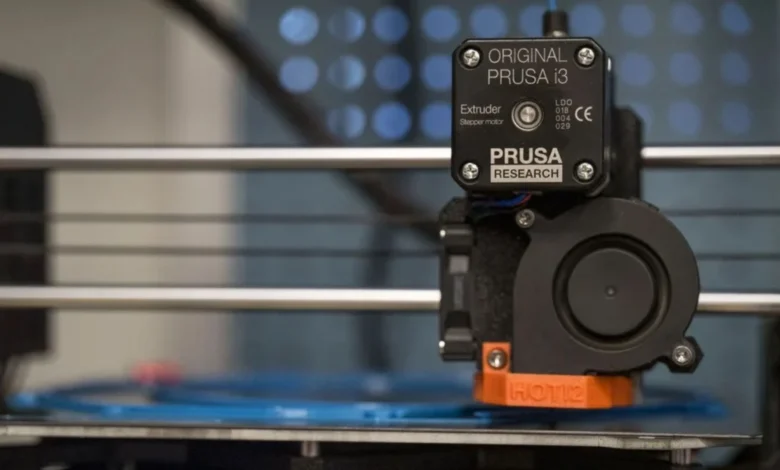
Prusa Research, a prominent manufacturer in the global 3D printing industry, officially expanded its specialized materials catalog this Tuesday with the release of Prusament PETG ESD. This new carbon-fiber and carbon-nanotube-filled polyethylene terephthalate glycol (PETG) filament is engineered specifically for electrostatic-dissipative (ESD) applications. Designed to safeguard static-sensitive electronic components from the damaging effects of electrostatic discharge, the product bridges a crucial gap between industrial manufacturing requirements and accessible additive manufacturing materials.
Priced at $56.99 per kilogram spool, the material undercuts the cost of Prusa’s standard non-ESD Prusament PETG Carbon Fiber. Although the filament is well-suited for enthusiast projects—such as custom protective enclosures for microcontrollers like the Raspberry Pi or ESP32—Prusa has positioned the product primarily for small-scale electronics production, functional prototyping, and industrial deployment.
Background Context and Industry Evolution
The introduction of Prusament PETG ESD arrives at a time of rapid maturation within the desktop and prosumer 3D printing sectors. Historically, specialized functional filaments such as high-temperature engineering polymers, abrasive carbon-fiber-reinforced thermoplastics, and conductive or dissipative materials were largely restricted to high-end industrial systems. These proprietary materials often carried prohibitive price tags, limiting their adoption among independent engineers, small businesses, and makers.
Electrostatic discharge remains a persistent challenge in electronics manufacturing and assembly. Unseen static charges accumulated on equipment, housings, or operator surfaces can easily discharge through sensitive semiconductor components, causing immediate catastrophic failure or latent defects that shorten operational lifespans. Traditional 3D-printed plastics are typically insulating, meaning they can trap and accumulate static charge rather than safely bleeding it away. While carbon-filled filaments have long existed to provide structural reinforcement or basic electrical conductivity, achieving controlled electrostatic dissipation—where charges bleed off slowly and safely—without compromising layer adhesion or printability has been a complex metallurgical and chemical challenge for filament producers.
By developing a PETG matrix infused with a precise blend of carbon fibers and carbon nanotubes, Prusa has sought to deliver a material that balances mechanical durability, chemical resistance, ease of printing, and reliable electrical properties. PETG is already widely favored for its toughness, impact resistance, and lower warping tendencies compared to materials like ABS or Nylon, making it an ideal carrier base for functional electronics housings.
Chronology of Development and Release
The rollout of Prusament PETG ESD reflects Prusa Research’s ongoing strategy to diversify its consumables portfolio beyond standard consumer-grade polyactic acid (PLA) and generic PETG formulations.
Over the past several years, the Czech Republic-based company has systematically scaled up its in-house filament manufacturing capabilities under the "Prusament" brand, emphasizing tight dimensional tolerances, high-purity pigments, and strict quality control. The development of advanced engineering filaments—including carbon-fiber-reinforced variants—laid the groundwork for the introduction of functionalized safety materials like ESD-safe variants.
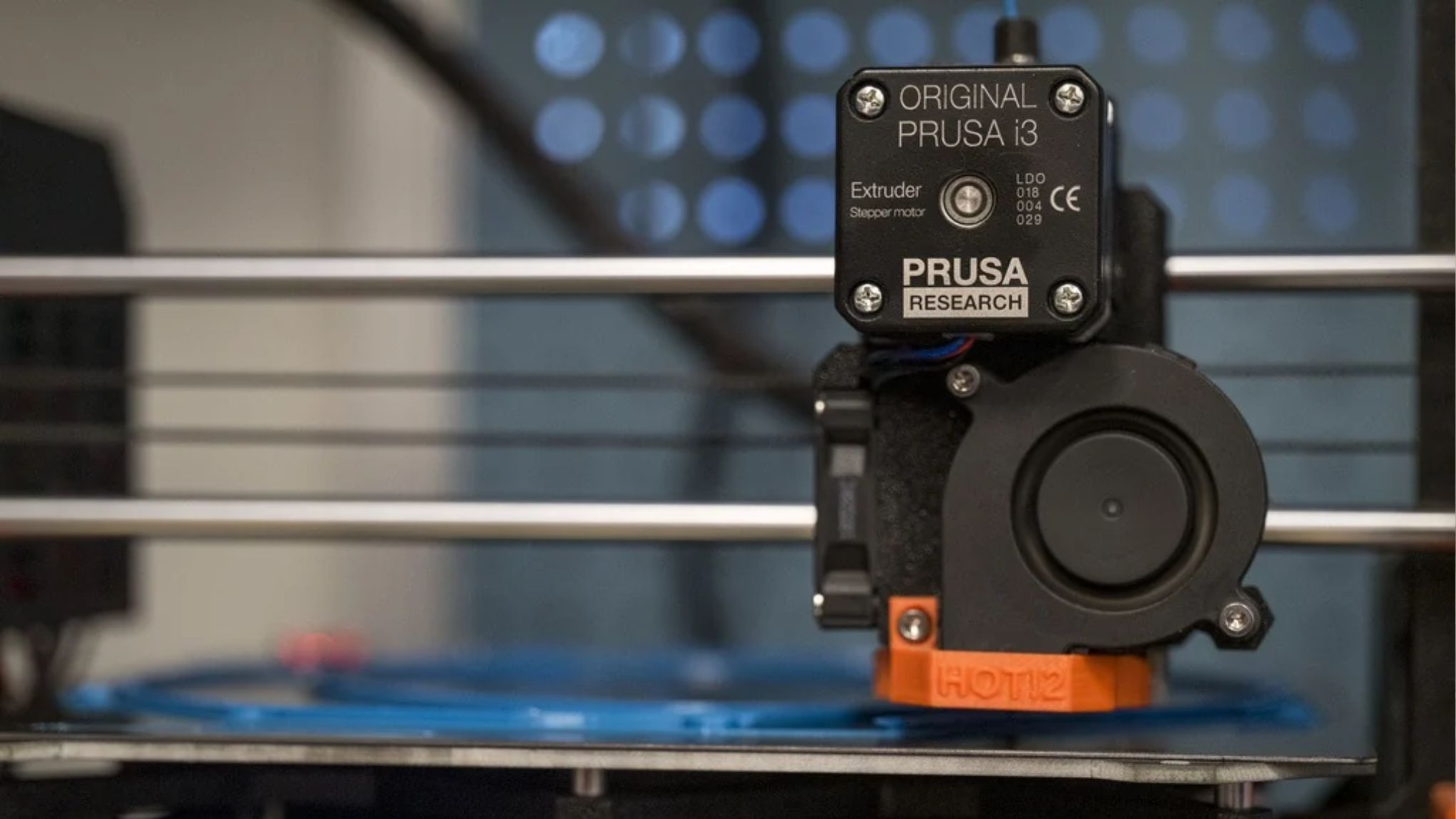
- Initial Material Research: Prusa’s material science division identified a growing market demand for accessible, reliable ESD-safe materials that could be processed on standard desktop 3D printers equipped with hardened nozzles.
- Formulation and Testing: Engineers experimented with varying concentrations of carbon nanotubes and chopped carbon fibers to achieve the precise surface resistivity required for electrostatic dissipation standards, while maintaining the flow characteristics and layer bonding typical of PETG.
- Manufacturing Integration: The company integrated the new composite into its automated extrusion lines, ensuring consistent dispersion of the conductive additives throughout the filament spool.
- Official Launch: Prusa formally announced and released Prusament PETG ESD to the global market on Tuesday, making it immediately available through its web store and authorized distribution networks.
Supporting Data and Technical Specifications
While standard PETG is an electrical insulator with surface resistivity values exceeding $10^12$ ohms per square, ESD-safe materials typically target a specific surface resistivity window—usually between $10^6$ and $10^9$ ohms per square. This controlled range ensures that static charges are dissipated slowly enough to prevent rapid, arcing discharges, yet quickly enough to prevent dangerous charge accumulation.
Key parameters surrounding the new filament release include:
- Base Material: Polyethylene Terephthalate Glycol (PETG)
- Additives: Carbon fiber and carbon nanotubes (CNT)
- Primary Function: Electrostatic Dissipative (ESD) protection
- Retail Price: $56.99 per 1kg spool
- Cost Comparison: Notably lower than the non-ESD Prusament PETG Carbon Fiber variant, despite the complex additive profile required for electrostatic control.
- Compatibility: Recommended for use with hardened steel nozzles due to the abrasive nature of the carbon fiber reinforcement.
Industry Implications and Expert Analysis
The release of an affordably priced, high-quality ESD filament carries several significant implications for both professional and prosumer electronics development.
From an economic perspective, lowering the cost barrier for ESD-safe prototyping materials allows small manufacturing firms, engineering startups, and educational institutions to iterate rapidly without investing in expensive injection-molded tooling or outsourcing specialized enclosures. Engineers can now print custom jigs, fixtures, component trays, and test-bench housings directly in-house, ensuring that static-sensitive assemblies remain protected throughout every stage of development and testing.
Furthermore, the choice of PETG as the base polymer offers distinct operational advantages. Unlike Nylon, which absorbs ambient moisture rapidly and requires rigorous drying protocols before printing, or ABS, which emits potentially hazardous volatile organic compounds (VOCs) and requires heated enclosures to prevent warping, PETG is relatively forgiving. It prints reliably on open-frame or semi-enclosed machines, adheres well to standard print surfaces, and offers good chemical resistance against oils and common solvents.
However, industry analysts note that users must exercise caution regarding hardware wear. The inclusion of carbon fibers makes the filament abrasive, meaning standard brass nozzles will degrade rapidly. Operators will need to upgrade to hardened steel, ruby-tipped, or similarly wear-resistant nozzles to prevent premature nozzle enlargement and print quality degradation.
Future Outlook
As additive manufacturing continues its transition from rapid prototyping to final-part production, the demand for functional, application-specific materials is expected to accelerate. Prusa’s introduction of Prusament PETG ESD highlights a broader industry trend toward application-tailored consumables.
By addressing niche industrial requirements—such as electrostatic discharge protection—at a price point accessible to a wider market, manufacturers are empowering a new wave of localized, custom manufacturing. Whether this release prompts competing filament producers to introduce similarly priced ESD alternatives remains to be seen, but the initial market reception suggests a strong appetite for materials that combine specialized safety features with reliable, user-friendly printing characteristics.