The Definitive Guide to Finding the Right Computer Speakers for Your Desktop Setup

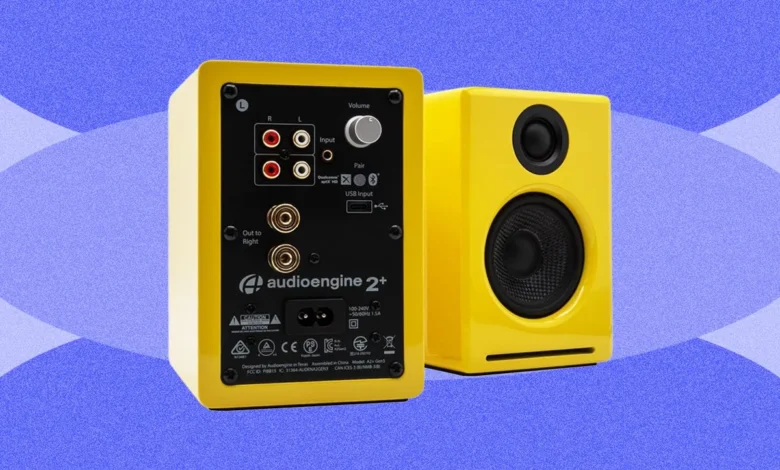
The consumer audio market for desktop computing has undergone a significant transformation over the past five years. As remote work environments have become standardized and high-fidelity gaming has reached mainstream audiences, the demand for high-quality PC speakers has transitioned from a niche audiophile pursuit to a functional necessity for the modern office. While built-in monitor speakers have historically been criticized for their tinny, compressed audio profiles, the current market offers a wide array of solutions ranging from compact, USB-powered soundbars to complex 5.1 surround sound systems.

Testing and evaluating these devices requires a standardized approach. Recent industry benchmarks suggest that the average consumer prioritizes three factors above all others: desk footprint, connectivity versatility (specifically the shift from 3.5-mm auxiliary to USB-C and Bluetooth 5.0+), and low-end frequency response. Understanding these variables is critical for any consumer looking to upgrade their workstation.
The Evolution of Desktop Audio Architecture
Historically, desktop audio was dominated by simple 2.0 channel systems. However, the rise of multimedia content consumption—including high-bitrate streaming services, competitive gaming with spatial audio, and professional video conferencing—has forced manufacturers to innovate. Modern systems now frequently incorporate Digital Signal Processing (DSP) to mimic larger soundstages and improve the clarity of dialogue in real-time.

A significant shift in the sector is the integration of software ecosystems. Major hardware manufacturers, including Razer, SteelSeries, and Creative, have begun bundling their speakers with proprietary software suites. These programs allow users to customize RGB lighting zones, apply equalizer (EQ) presets, and manage virtual surround sound configurations. While this provides a cohesive experience for users already committed to a brand’s peripheral ecosystem, it also introduces complexity, as users must now manage firmware updates and software overhead for their audio hardware.
Comparative Analysis of Notable Desktop Audio Systems
The market currently features several distinct categories of speakers, each serving specific user profiles.

The Pioneer DJ DM-40D-BT ($239) represents the "prosumer" entry point. Built with MDF cabinets rather than the standard lightweight plastic found in budget models, these speakers are designed for accuracy. They utilize a 4-inch fiberglass woofer and a soft-dome tweeter, powered by a Class-D amplifier. While their size is substantial—making them better suited for dedicated production desks than standard small-form-factor setups—they provide a reference-quality sound that is difficult to replicate in smaller enclosures.
In the mid-range segment, the Edifier M60 ($200) offers a balance of value and performance. These units support modern connectivity standards like USB-C and Bluetooth 5.3. Unlike many competitors that struggle with distortion at high volumes, the M60 maintains a relatively clean profile. However, internal testing indicates that the bass response, while punchy for a sub-wooferless system, can occasionally become muddy at high decibel levels. The reliance on an app for deep customization—which some users have reported as occasionally inconsistent—is a trade-off for the system’s low price-to-performance ratio.

For users prioritizing aesthetics and spatial immersion, the Creative Pebble Nova ($266) serves as a distinct alternative. Its orb-shaped design and integrated RGB rings are clearly aimed at the gaming market. Beyond the visual appeal, these speakers provide surprisingly deep sound and virtual surround capabilities. However, their height—exacerbated by their angled stands—can create physical conflicts with multi-monitor setups, particularly those utilizing portrait-oriented screens.
High-End Fidelity and Specialist Soundbars
For consumers who view audio as a primary component of their work environment, higher-end systems like the Ruark MR1 MK3 ($599) offer a "lifestyle" approach. These speakers prioritize a natural, expansive soundstage and use premium materials like fabric grilles. They excel in voice reproduction, making them ideal for long-form video meetings or content creation.

Conversely, the OXS Thunder Pro ($600) demonstrates the capabilities of modern soundbar engineering. By utilizing passive radiators to maximize bass without requiring a separate subwoofer, it manages to maintain a slim 3-inch profile. This is an optimal solution for users with constrained desk space. With Dolby Atmos certification and comprehensive connectivity including HDMI eARC, it bridges the gap between traditional PC speakers and home theater soundbars. However, audiophiles note that even the most advanced soundbars rarely achieve the same separation and stereo imaging as a pair of dedicated bookshelf speakers with a separate subwoofer.
The Gaming Ecosystem: Razer and SteelSeries
Gamers often prioritize integration. The Razer Nommo V2 Pro ($438) and the SteelSeries Arena 7 ($380) cater to this demographic by focusing on software synergy. The Nommo V2 Pro features a wireless subwoofer, which reduces cable clutter—a primary concern for clean-desk enthusiasts. The system’s THX Spatial Audio support provides a clear advantage in competitive titles, though it suffers from a lack of high-end crispness when compared to professional-grade studio monitors.

The SteelSeries Arena 7 offers a similar value proposition, providing a 2.1 system that includes a powerful subwoofer. Its strength lies in its precision, though out-of-the-box tuning can be overly bass-heavy. Users must be prepared to utilize the SteelSeries GG software to achieve a balanced sound profile. These systems are clearly superior to the entry-level options like the Logitech G560, which, while capable of decent volume, lacks the soundstage definition required for nuanced audio.
Technical Considerations: Connectivity and Placement
The debate regarding the best method of connection remains a point of contention among technical users. USB connections are widely considered the gold standard for desktop speakers because they bypass the computer’s internal sound card, which is often susceptible to electromagnetic interference from the motherboard. By using the speaker’s internal Digital-to-Analog Converter (DAC), users ensure a cleaner signal path.

Placement also remains the most overlooked factor in audio quality. The "sweet spot"—where the tweeter is at ear level and the speakers are toed in at a 15-degree angle—can improve the perceived quality of a $100 set of speakers more effectively than an expensive upgrade. Furthermore, the use of physical stands to decouple the speakers from the desk surface prevents unwanted vibrations, which are a primary cause of "muddy" or "rattly" audio.
Chronology of Market Trends
- 2019-2020: The shift to remote work drives a massive surge in demand for affordable, reliable desktop audio.
- 2021-2022: Manufacturers begin emphasizing "gaming-centric" features, including heavy RGB integration and software-based virtual surround sound.
- 2023-2024: The market matures with the introduction of USB-C and Bluetooth 5.3 as standard requirements, and a move toward soundbars that incorporate Dolby Atmos technology.
Summary of Recommendations
The "best" speaker is ultimately defined by the user’s specific space and use case. For those with limited space, the Creative Pebble X Plus or the OXS Thunder Lite provide compact solutions. For users seeking a balance of price and quality, the Edifier M60 remains a top contender. For enthusiasts or those with a larger budget, the Pioneer DJ DM-40D-BT or the Ruark MR1 MK3 offer superior acoustic reproduction.
Ultimately, consumers are advised to measure their available desk surface, determine the necessity of a dedicated subwoofer, and prioritize connectivity options that match their existing hardware. While software-enhanced gaming speakers offer convenience for brand-loyal users, those seeking longevity and sound quality should look toward manufacturers with a history of traditional speaker engineering. Whether for professional production or casual consumption, the current market offers more variety and higher baseline quality than at any point in the history of personal computing.
Related posts: