CueFlip revolutionizes musical performance by automating sheet music navigation through advanced audio alignment technology

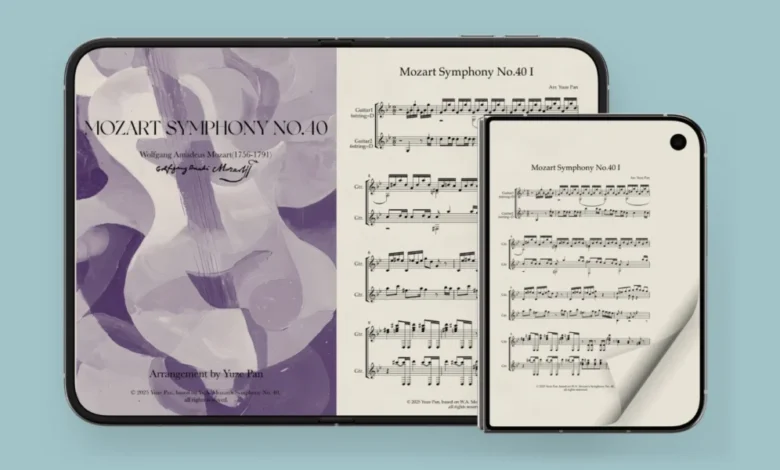
The persistent challenge of page-turning has long been a source of frustration for musicians, often forcing performers to interrupt the continuity of their play to manually navigate digital or physical scores. A new iOS application, CueFlip, is addressing this technical bottleneck by utilizing real-time audio analysis to synchronize digital sheet music with the performer’s actual tempo. Developed by 15-year-old classical guitarist Yuze Pan, the application represents a significant shift in how digital scores interact with human performance, moving beyond static displays toward an intelligent, responsive system that adapts to the nuances of live music.
The Chronology of Development
The genesis of CueFlip is rooted in the practical requirements of ensemble performance. In 2025, during his tenure with the Primal Guitar Quartet in Beijing, Yuze Pan identified a critical flaw in current digital music workflows. Standard page-turning solutions, such as physical pedals or timed intervals, failed to account for the organic fluctuations in tempo inherent in live, expressive performances.
Pan’s initial attempt at creating a solution in 2025 proved unsuccessful, highlighting the immense complexity of audio alignment in a live environment. Following this setback, Pan undertook a rigorous study of digital signal processing and audio alignment research. By May 2026, he began the second iteration of the project. This phase was defined by an iterative development process: each new build of the software was tested daily during the quartet’s rehearsals. This "in-the-wild" testing environment allowed for the fine-tuning of the algorithm, ensuring that the software could accurately distinguish between performance markers despite the acoustic variations of different venues and the varying dynamics of a four-person ensemble.
Technological Architecture and Core Features
At its core, CueFlip operates on an audio-alignment engine that requires the user to "teach" the application their specific interpretation of a piece. Unlike systems that rely on rigid metronomic timing, CueFlip allows performers to record or perform a rehearsal, manually marking the precise moments where page turns are required. Once calibrated, the software listens to the live performance, matching the acoustic input against the pre-recorded reference to trigger turns autonomously.

Beyond its primary function as a page-turner, the application integrates a comprehensive musical reference suite. Recognizing that musicians often encounter terminology that varies across international schools of composition, the app includes a dictionary containing over 20,000 musical terms. This database supports translation across 13 languages, providing immediate clarification for performers navigating global repertoires. The application also leverages optical character recognition (OCR) capabilities to extract and translate terms directly from scanned physical scores.
Accessibility features round out the software’s utility. Integrating Apple’s Face ID sensors, CueFlip offers a hands-free navigation alternative through ocular gestures. A wink of the right eye triggers a forward page turn, while a left-eye wink navigates backward. This secondary input method ensures that even in scenarios where audio alignment might be compromised—such as an extremely quiet or ambient environment—the performer retains total control without physical contact with the hardware.
Supporting Data and Market Context
The digital sheet music market has experienced consistent growth over the past decade as tablet adoption in conservatories and professional orchestras has surged. According to industry reports, the shift toward paperless performance is driven by the portability of iPads and the ease of managing extensive libraries. However, the limitation of current "page-turning" hardware, such as Bluetooth foot pedals, remains a significant point of friction.
The reliance on foot pedals introduces a secondary cognitive load for the performer, who must maintain focus on the score while simultaneously operating physical hardware. By removing the need for auxiliary hardware, CueFlip aligns with the broader trend of "invisible technology" in professional tools—where the software environment becomes an extension of the performer’s intent rather than a tool to be managed.
Implications for the Performance Industry
The emergence of student-led software development in this space highlights a broader trend toward specialized, niche-driven innovation. For professional musicians, the implications of automated, responsive score navigation are twofold: improved rehearsal efficiency and enhanced stage presence. In high-stakes environments such as orchestral performances or chamber music, where the penalty for a missed page turn is a lapse in musical continuity, the reliability of audio-tracking technology could become a standard requirement.

Furthermore, the integration of translation and dictionary tools reflects a growing demand for "smart scores." By transforming a PDF from a static image into an interactive, database-linked document, CueFlip effectively lowers the barrier to entry for performing complex, multi-lingual scores. The ability to pull terminology directly from scanned scores suggests that the application is not merely a reader, but a pedagogical tool that aids in the interpretation and study of music.
Official Positioning and Accessibility
CueFlip is currently available on the Apple App Store, compatible with iPhone and iPad devices running iOS 16.4 or later. The developer has adopted a "freemium" model: the basic version allows for the management of PDF scores with manual annotations and a single instance of automated page turning. The "Pro" tier, priced at $4.99 per month or $29.99 per year, unlocks the full suite of features, including unlimited automated turns, the multilingual music dictionary, and facial-recognition navigation.
This pricing strategy suggests a dual-market approach: the free version serves as an accessible entry point for students and casual players, while the professional subscription targets conservatory students and career musicians who require a reliable, automated workflow for extensive repertoires.
Analysis: The Future of Musical Notation
The success of projects like CueFlip points toward a future where musical notation is fundamentally dynamic. As the industry moves away from physical paper, the next evolution of sheet music software will likely focus on "content-aware" systems. If an application can understand the context of a note—its tempo, dynamic, and linguistic origin—it creates a more immersive experience for the performer.
However, the technology is not without challenges. The primary hurdle for any audio-tracking software is ambient noise and the potential for "drift," where the software loses synchronization with the performer due to unexpected tempo shifts or acoustics. The effectiveness of CueFlip will be judged by its long-term stability in varying acoustic environments, from small practice rooms to large concert halls.

As the development continues, the integration of such tools into the mainstream curriculum of music education could redefine how students interact with complex pieces. By automating the mechanical aspects of performance, musicians are free to dedicate more cognitive resources to the artistic and interpretive elements of their craft. Whether CueFlip becomes the definitive standard for digital page-turning remains to be seen, but its arrival signifies a necessary evolution in the way performers interact with the digital manifestations of their art.
In summary, the trajectory of CueFlip—from a localized solution to a broader software application—demonstrates the potential of targeted, developer-led solutions to solve age-old problems in the arts. By combining computer vision, audio processing, and a deep understanding of the musical workflow, the application provides a blueprint for the next generation of performance technology. As more users adopt these tools, the expectation for seamless, automated, and intelligent sheet music will likely drive further innovation across the sector, ultimately benefiting the global community of performers.
Related posts: