Navigating the Evolving Smartphone Market: Price Reductions and Strategic Alternatives for Flagship Buyers

The contemporary consumer electronics market is characterized by a delicate equilibrium between rapid technological obsolescence and aggressive retail pricing strategies. For discerning buyers, timing a smartphone purchase can result in substantial savings, particularly as manufacturers and major retailers adjust inventory to clear space for mid-cycle refreshes or upcoming product generations. Recent retail data indicates that patience continues to be a lucrative virtue for tech enthusiasts, with notable downward price adjustments across several marquee flagship devices from Samsung and Google.
However, these price fluctuations also highlight a broader strategic dilemma within the mobile industry: whether to invest in the latest iterative hardware release or leverage deep discounts on preceding generations that often offer superior core specifications. An analysis of current market trends reveals complex pricing hierarchies, shifting generational values, and consumer behavior patterns that dictate how flagship and foldable smartphones are positioned in a highly competitive global economy.
Main Facts and Current Market Pricing Dynamics
The most prominent shifts in the current retail landscape center on Samsung’s premier slab and folding portfolios. Following a period of elevated pricing upon their initial market deployment, several tier-one devices have experienced strategic corrections.
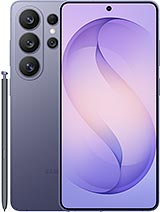
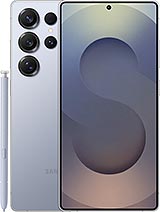
The Samsung Galaxy S26 Ultra, which commanded a steep $1,105 price tag for the 256GB storage configuration just a week prior, has receded to a more palatable $1,000 threshold. While industry trackers note that promotional bursts have previously brought this specific model down to $950, the current $50 downward adjustment offers a reasonable entry point for early adopters looking to bypass peak pricing. Furthermore, consumers seeking expanded storage tiers can secure the 512GB configuration for an additional $150.
In contrast, the Samsung Galaxy S26+ has remained stagnant at its introductory price point, holding steady at $810 for the 256GB variant, with a $135 premium required for the 512GB upgrade. Market analysts have frequently scrutinized the value proposition of the Plus model, noting that it often struggles to justify its cost when measured against the vastly superior hardware package of the S26 Ultra. Its primary market advantage remains strictly financial, serving as an intermediate bridge for buyers who find the Ultra tier cost-prohibitive.

Meanwhile, the base Samsung Galaxy S26—featuring the compact 6.3-inch form factor—defied the downward pricing trend by moving upward compared to the previous week. Industry observers advise prospective buyers of the standard model to exercise patience and hold off on purchases until market stabilization occurs.
Chronology of Pricing Shifts and Product Lifecycles
Understanding the current retail landscape requires examining the release chronology and lifecycle management of Samsung’s flagship ecosystem. The traditional annual release cadence established by major original equipment manufacturers (OEMs) typically sees a steep depreciation curve begin approximately three to six months post-launch.
- Initial Launch Phase: Devices debut at Manufacturer Suggested Retail Prices (MSRP), accompanied by pre-order incentives, trade-in bonuses, and bundled accessories designed to mask the high initial cost.
- Post-Launch Stabilization (Weeks 2–6): Initial demand subsides, leading to minor promotional adjustments by third-party retailers seeking to capture price-sensitive segments. This is the phase currently witnessed with the Galaxy S26 Ultra and the Galaxy Z Fold8.
- Mid-Cycle Reevaluation (Months 3–9): Competing devices, unexpected supply chain adjustments, and currency fluctuations force brands to re-evaluate regional pricing. This period often exposes the "generation gap," where previous-year flagships out-compete current-year mid-tier or Plus variants.
- End-of-Cycle Clearance (Months 10–12): Deep discounting precedes the announcement of successor hardware, setting the stage for inventory liquidation.
The current market sits squarely within the early-to-mid stabilization phase, creating unique windows of opportunity where older flagships—such as the Samsung Galaxy S25 Ultra—re-enter the conversation as financially viable alternatives to newer, but less comprehensively equipped, current-generation devices.
Comparative Analysis: The Generation Gap in Flagship Hardware
One of the most compelling insights to emerge from recent retail data is the counter-intuitive value proposition presented by older generation Ultra models when stacked against current Plus or standard iterations.

When evaluating the Samsung Galaxy S25 Ultra against the newer Galaxy S26+, market analysts point to a decisive victory for the older hardware. Although the S25 Ultra utilizes a preceding-generation chipset—the Snapdragon 8 Elite compared to the newer Elite Gen 5 found in its successor—its imaging and build specifications comprehensively eclipse the S26+.
The S25 Ultra boasts a robust camera array, anchored by a 200MP primary sensor (1/1.3-inch) that significantly outperforms the 50MP (1/1.56-inch) sensor found on comparable modern variants. Furthermore, the inclusion of dual telephoto modules—specifically a 10MP 3x optical zoom and a high-resolution 50MP 5x periscope telephoto lens—provides a versatile focal range that the streamlined S26+ simply cannot match. Additional hardware advantages for the older Ultra include a wider 50MP 120-degree ultra-wide sensor, contrasting with the 12MP ultra-wide unit on current mid-tier flagships.

The trade-offs for opting for the older Ultra are primarily ergonomic. The S25 Ultra is fractionally wider, measuring 77.6mm compared to the S26+’s 75.8mm, and carries a heavier footprint at 218 grams versus 190 grams. For the vast majority of consumers, however, these minor physical differences are easily outweighed by superior optical performance, build materials, and long-term utility. Industry consensus concludes that an established Ultra model frequently represents a superior investment than a freshly minted Plus variant.
A similar dynamic applies to the mid-range Fan Edition ecosystem. The Samsung Galaxy S26 FE, specifically in its 8GB RAM and 256GB storage configuration, serves as a budget-conscious alternative to higher-tier S-series models. While the base 128GB version offers negligible retail discounts and forces compromises—such as a reduction in RAM to 8GB and the integration of an Exynos 2500 processor that struggles to match the efficiency and raw computing power of Snapdragon silicon—the 256GB variant provides a more balanced value proposition.

Display comparisons further highlight these compromises: while the S26+ features an advanced 1440p+ LTPO panel, the S26 FE relies on a 1080p+ LTPS screen. Despite these technical disparities, the S26 FE represents a solid generational improvement over the S25 FE, though it remains fundamentally limited when matched against top-tier flagships—particularly when promotional pricing narrows the gap between MSRP tiers.
Folding Devices and High-End Market Segments
Beyond traditional slab smartphones, the foldable market continues to mature, albeit with persistent pricing friction. The Samsung Galaxy Z Fold8 has recently undergone a strategic price correction, with both the 256GB base model and the 512GB upgrade experiencing a $100 retail reduction, bringing them down to $1,600 and $1,800 respectively.

Despite these price cuts, foldables remain an elite, luxury product category. Nevertheless, market analysts observe that traditional non-folding flagships are steadily creeping upward, with specialized ultra-premium devices now frequently challenging the $1,600 threshold. This convergence in pricing narrows the psychological barrier for consumers weighing whether to transition to a dual-screen foldable form factor.
Consumers exploring the foldable landscape also face ecosystem choices between Samsung’s established hardware and emerging alternatives. While the larger Samsung Galaxy Z Fold8 Ultra remains an option for buyers prioritizing expansive screen real estate and advanced camera systems, competitor offerings face stiffer scrutiny.

The Google Pixel 11 Pro Fold, for instance, has faced cautious reception from tech analysts. Because the primary utility of a foldable device lies in heavy-duty multitasking, split-screen workflows, and sustained computational demands, the integration of Google’s Tensor G6 chipset has been flagged as a limiting factor. Industry experts note that the thermal and processing characteristics of the Tensor G6 may struggle to keep pace with the rigorous multitasking demands typically expected of high-end folding hardware, making it a harder recommendation for power users. Meanwhile, the remainder of the Pixel 11 lineup—including the standard Pixel 11, Pro, and Pro XL variants—has maintained stable pricing without significant promotional movement, leaving their market positioning unchanged.
Broader Economic Implications and Consumer Takeaways
The ongoing fluctuations in smartphone pricing reflect a shifting economic landscape where consumers are increasingly holding onto their devices for longer cycles. According to global tech market research, the average smartphone replacement cycle has extended past three years, putting mounting pressure on OEMs to justify annual hardware refreshes through aggressive promotional campaigns, enhanced trade-in values, and flexible financing structures.

For the mobile industry, the trend of older flagships undercutting newer mid-tier devices signals a maturing market. Consumers are becoming more sophisticated, frequently looking past marketing terminology to evaluate raw hardware specifications, long-term software support commitments, and real-world performance metrics. When an older Ultra model delivers superior optics and build quality at a lower price point than a current Plus or FE model, consumer trust naturally shifts toward value-driven longevity.
Ultimately, the current retail environment underscores the importance of strategic purchasing. For buyers willing to monitor price trends, wait out initial launch premiums, and look laterally across generational product lines, significant financial savings are readily available without sacrificing device capability. As manufacturers prepare for the next wave of mobile innovation, market analysts expect pricing volatility to persist, rewarding the patient consumer with unprecedented access to premium technology.
Related posts: