Bluetooth’s biggest speed boost in years could finally make lossless wireless audio more accessible

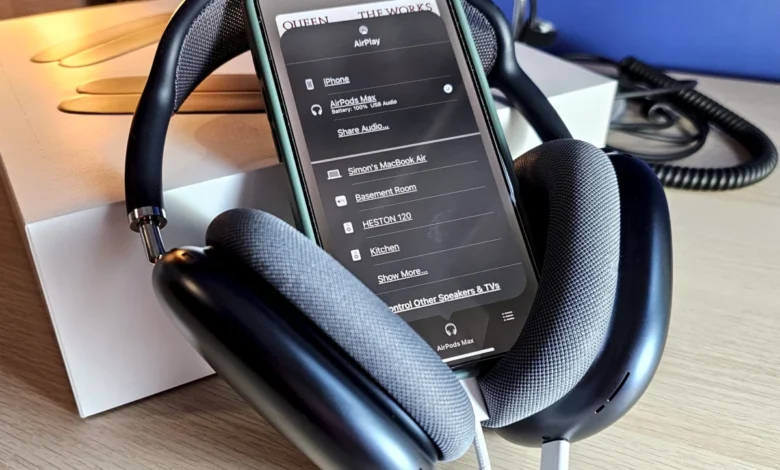
For years, the convenience of wireless headphones has been fundamentally tethered to a compromise in sound fidelity. Audiophiles and casual listeners alike have long accepted that moving away from a wired connection meant sacrificing the nuance and dynamic range of high-resolution audio files. While proprietary codecs from manufacturers like Sony (LDAC), Qualcomm (aptX Lossless), and Apple have attempted to bridge this gap, they often rely on closed ecosystems that require specific hardware pairings. The introduction of the HDT standard seeks to provide a universal, manufacturer-agnostic foundation that allows high-fidelity, lossless audio to become the baseline expectation rather than a premium, fragmented feature.

The Technical Evolution of Bluetooth Bandwidth
To understand the magnitude of this shift, one must look at the historical trajectory of Bluetooth as a medium for data. Bluetooth Low Energy (LE) Audio was designed primarily with power efficiency in mind, prioritizing battery longevity over raw throughput. While this approach revolutionized the wearable market, it necessitated aggressive data compression—often stripping away the finer details of complex audio tracks to keep the bitrate within the 2 Mbps limit.
The transition to the 7.5 Mbps threshold in the Core 7.0 specification is facilitated by a refined radio communication architecture. By increasing the data rate, the protocol allows for a more efficient transmission cycle. In practical terms, this means that the wireless radio can transmit large packets of high-resolution audio data in significantly shorter bursts. Once the data transfer is complete, the radio can enter a low-power "sleep" state much faster than it could under previous standards. This creates a dual benefit: higher audio quality and, theoretically, improved battery efficiency for the end device.

Chronology and Expected Market Integration
The announcement from the Bluetooth SIG marks the beginning of a multi-year rollout phase. As of the Q4 2026 announcement, the industry has transitioned into the development phase for silicon manufacturers. Hardware developers are now tasked with integrating the Core 7.0 stack into upcoming chips for audio peripherals, smartphones, and IoT devices.
Industry analysts expect a standard product lifecycle for this technology. The first half of 2027 will likely be defined by chip-level certification and prototype testing by major audio manufacturers. Consumers should anticipate the first wave of consumer-grade products—likely high-end flagship earbuds and over-ear headphones—to hit retail shelves in late 2027. Following this, the technology will likely trickle down into mid-range devices by 2028, provided the adoption rate among manufacturers meets the SIG’s expectations.

Broader Implications Beyond Audio
While the promise of lossless wireless music has garnered the most attention, the implications of HDT extend far beyond the realm of headphones. The increased bandwidth capacity is a foundational requirement for the next generation of interconnected hardware.
- Smart Wearables and AI Offloading: As AI-driven wearables, such as smart glasses and advanced health monitors, become more prevalent, the need for rapid data synchronization between the wearable and the smartphone is critical. HDT will allow these devices to offload intensive processing tasks to a primary phone without the latency bottlenecks that currently plague lower-bandwidth connections.
- Spatial Computing and XR: Virtual and Augmented Reality (VR/AR) headsets are notoriously data-hungry. HDT provides the necessary headroom to transmit high-definition, multi-channel spatial audio, which is essential for maintaining immersion in a simulated environment.
- Industrial and Home Automation: The increased throughput allows for more complex, high-resolution sensor data to be transmitted across home and industrial networks. This could enable more responsive smart home ecosystems that process data locally rather than relying solely on cloud-based processing.
The Challenge of Optional Implementation
A point of contention among industry experts is the "optional" nature of the HDT feature. Within the Bluetooth Core 7.0 specification, manufacturers are not mandated to include HDT in their hardware. This creates a potential fragmentation risk where consumers may be confused by varying levels of support across different devices.

Historically, when a feature is optional, it often becomes a differentiator for premium products, leading to a "tiered" market where only high-end audio gear supports the new standard. If manufacturers choose to prioritize cost-cutting over feature implementation, the widespread adoption of universal lossless audio could be delayed. However, if the market demand for "lossless wireless" continues to grow—as evidenced by the recent inclusion of high-resolution streaming tiers in platforms like Apple Music and Tidal—market pressure may eventually force the feature to become a de facto standard across all tiers.
Fact-Based Analysis of Performance Claims
While the potential for high-resolution audio is clear, actual performance will depend heavily on the underlying codec implementation. Even with 7.5 Mbps of throughput, the quality of the sound will be dictated by how the device compresses and decompresses the audio signal. The Bluetooth SIG has emphasized that HDT provides the "pipe" for the data, but the "water" quality remains the responsibility of the device manufacturers.

Regarding battery life, while the physics of shorter transmission times suggests improved efficiency, real-world battery performance is rarely as linear as theoretical specifications. Factors such as connection distance, signal interference, and the power consumption of the internal digital-to-analog converter (DAC) will continue to play a significant role in overall longevity. Consumers should remain cautious of early marketing claims until third-party benchmarks are available, particularly regarding how HDT behaves in environments with high wireless congestion, such as crowded urban centers or office buildings.
Future Perspectives
The move toward higher throughput is an acknowledgment that the "good enough" era of consumer audio is reaching its expiration date. As streaming services continue to offer better-than-CD quality audio, the wireless hardware must catch up to the content being provided. The Bluetooth SIG’s decision to increase bandwidth is a strategic maneuver to ensure that the Bluetooth protocol remains the primary medium for wireless connectivity in a future where data density is increasing across all sectors.

The successful implementation of HDT will serve as a bellwether for the future of the Bluetooth ecosystem. If the standard is adopted widely and transparently, it could finally resolve the long-standing friction between the convenience of wireless audio and the demands of high-fidelity sound. For the average consumer, this means that by 2027, the choice between a wired cable and a wireless pair of earbuds may no longer be a choice between quality and convenience—but simply a choice between two different ways to experience the same, uncompromised high-resolution sound. As the industry pivots toward this new standard, the focus will now shift to the hardware manufacturers, whose implementation of these specifications will ultimately define the user experience of the next decade.
Related posts: