General Motors Recalls Over 67,000 Cadillac and Chevy EVs Due to Software Glitch Causing Temporary Loss of Braking

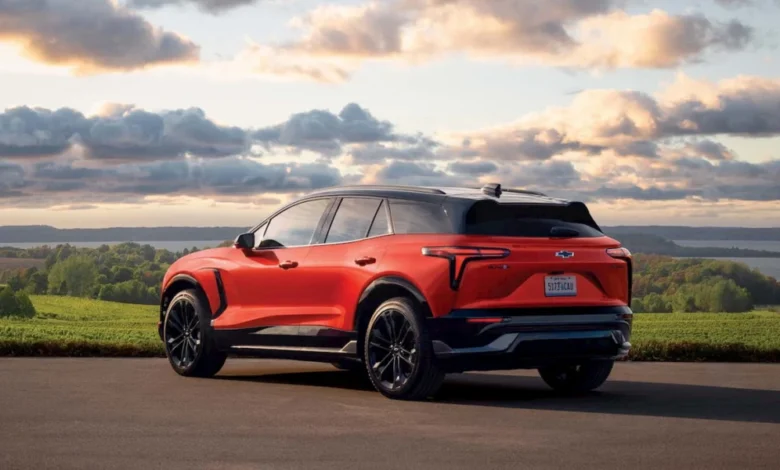
General Motors has officially issued a major safety recall affecting more than 67,000 electric vehicles across its Cadillac and Chevrolet lineups. The recall was prompted by a software malfunction within the brake system control module that can result in a dangerous, albeit temporary, loss of braking capability while the vehicle is in motion. The issue specifically targets certain all-wheel-drive electric models, triggering swift regulatory filings with the National Highway Traffic Safety Administration and setting the stage for a widespread over-the-air and dealership software remediation effort.
The genesis of this recall highlights the critical role internal safety reporting systems play in modern automotive manufacturing. According to documents submitted to federal safety regulators, the investigation began following an isolated low-speed incident involving a 2024 Cadillac Lyriq that rolled into a residential garage. While the initial collision resulted in minimal physical damage, it served as the catalyst for deeper technical scrutiny. On April 10, 2026, an internal technical expert employed by General Motors formally submitted a detailed report to the company’s Speak Up for Safety program for comprehensive evaluation.
Following this submission, GM’s engineering teams initiated rigorous internal testing protocols to replicate the reported anomaly. Their findings confirmed that under very specific driving dynamics, the vehicle’s braking software could misbehave. Specifically, engineers discovered that if a driver lightly applies the brakes while executing a sharp turn and simultaneously driving over a physical bump in the road, the braking system’s internal slip calculation algorithms can erroneously interpret the wheel movement. This miscalculation confuses the traction and stability controls, temporarily interrupting normal braking pressure and leading to a momentary loss of stopping power.
The scope of this technical defect is limited to performance all-wheel-drive configurations within select modern EV architectures. The affected population encompasses certain units of the Cadillac Lyriq, the ultra-luxury Cadillac Celestiq, the upcoming Cadillac Vistiq, and the popular Chevrolet Blazer EV. In total, official documents sent to the National Highway Traffic Safety Administration on October 29 indicate that 67,380 vehicles are subject to the recall campaign, designated by NHTSA under campaign number 26V717 and by General Motors under internal reference code N262570900.

A Chronology of the Investigation and Field Reports
Understanding the timeline of this defect reveals how automotive safety issues are detected, investigated, and ultimately brought to regulatory attention. The paper trail submitted to federal authorities provides a clear chronology of events spanning more than two years.
The earliest consumer complaints logged in connection with this specific software behavior date back to February 24, 2024. Over the subsequent two-year period, as adoption rates for GM’s Ultium-based electric vehicles climbed, field data accumulated. By June 11, 2026, General Motors had cataloged a total of 24 distinct customer field complaints pointing toward unexpected braking behavior during sharp turns and uneven road surfaces.
Of the 24 complaints received during this window, the vast majority involved minor mechanical or cosmetic impacts rather than catastrophic collisions. Nevertheless, 20 of the reported incidents resulted in minor accidents, and two of those complaints explicitly included allegations of minor injuries sustained by occupants or third parties.
Once the Speak Up for Safety report was filed in April 2026 and internal replication tests succeeded, GM leadership fast-tracked corrective measures. The automaker noted that remedial software calibrations had already been integrated into active factory production lines over the preceding months to prevent newly manufactured vehicles from leaving the assembly plant with the vulnerable code. For vehicles already in customer hands, however, a formal recall was deemed mandatory to ensure complete fleet-wide safety compliance.

Technical Details and Fleet Impact
The technical crux of the issue lies in the complexity of modern software-defined vehicles. As automakers shift toward fully integrated electronic architectures, traditional mechanical linkages are increasingly replaced by computerized control modules that manage braking, steering, and power delivery in real-time.
In General Motors’ electric vehicle lineup, the Brake System Control Module acts as the central electronic brain governing hydraulic pressure and regenerative braking integration. The algorithm responsible for managing wheel slip is designed to optimize stopping distances and vehicle stability on slick or uneven surfaces. However, the confluence of a turning maneuver, a suspension-compressing bump, and a light brake pedal application creates a transient edge-case scenario that the legacy software code failed to properly process.
Because the glitch requires a very specific sequence of physical inputs and road conditions, it did not manifest universally across all driving experiences, which explains why the total number of field complaints remained relatively low relative to the overall production volume. Nevertheless, any compromise in braking integrity—even if temporary—poses an unacceptable safety risk to drivers, pedestrians, and surrounding traffic, necessitating federal intervention.
Official Remediation and Owner Instructions

To resolve the issue without placing an undue burden on vehicle owners, General Motors has structured a dual-path remedy. The automaker will update the Brake System Control Module software free of charge. In alignment with modern automotive maintenance standards, a significant portion of the affected vehicles will receive the necessary patch via an over-the-air software update, allowing owners to install the fix remotely without visiting a service center. For vehicles requiring manual intervention or for owners who prefer physical servicing, certified dealerships will perform the software flash at no cost.
General Motors has established a structured communication timeline for affected consumers. Official owner notification letters are scheduled to be mailed out to registered addresses starting December 14, 2026.
Vehicle owners who wish to verify whether their specific automobile is included in the recall campaign are encouraged to reach out directly to manufacturer customer support channels. Cadillac owners can contact customer service at 1-800-333-4223, while Chevrolet owners may reach out to Chevrolet customer service at 1-800-222-1020, referencing recall number N262570900. Additionally, consumers can utilize the federal resources provided by the National Highway Traffic Safety Administration by calling the NHTSA Vehicle Safety Hotline at 1-888-327-4236 or by searching their vehicle identification number directly on the official nhtsa.gov recalls portal.
Broader Industry Implications and the Software-Defined Era
This recall underscores a broader, industry-wide challenge facing legacy automakers and digital-first EV manufacturers alike: the immense complexity of managing millions of lines of embedded vehicle software. As cars evolve into computers on wheels, software glitches have increasingly supplanted traditional mechanical failures—such as worn brake pads or leaking hydraulic lines—as the leading drivers of automotive safety recalls.

While traditional recalls historically required physical component replacements, such as swapping out alternators, steering racks, or brake rotors, the rise of over-the-air update capabilities has transformed how manufacturers respond to software bugs. Instead of requiring tens of thousands of customers to schedule dealership appointments, wait in service lounges, and tie up technician capacity, modern automakers can deploy patches overnight, dramatically reducing the time-to-remediation.
However, the occurrence of 24 field complaints and 20 minor accidents prior to the implementation of the fix also highlights the critical importance of proactive software validation. As regulatory bodies like the NHTSA increase their scrutiny over advanced driver-assistance systems, electronic braking controls, and OTA update protocols, automakers are under mounting pressure to catch edge-case software anomalies during pre-market simulation and closed-course testing rather than relying on real-world consumer exposure.
For General Motors, successfully executing this recall via a seamless OTA rollout will be vital not only for restoring consumer confidence in its burgeoning Ultium electric vehicle portfolio but also for demonstrating the reliability and responsiveness of its digital infrastructure. As the company continues to scale its EV production through the latter half of the decade, ensuring the absolute safety and predictability of software-driven safety-critical systems will remain a paramount operational priority.