Tesla Supercharger Diner Sets Global Usage Records Amid Quarterly Financial Shifts and Regulatory Developments

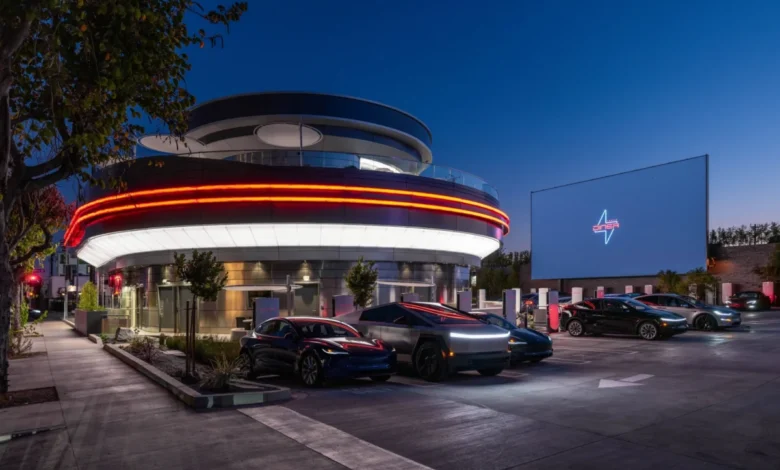
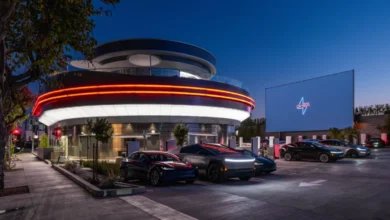
The Tesla Supercharger Diner in Los Angeles has officially ascended to the top of the company’s global infrastructure rankings, recording unprecedented usage levels within its first year of operation. Located on the iconic Santa Monica Boulevard, the retro-futuristic site has transitioned from a conceptual novelty into the most productive charging hub in Tesla’s worldwide network. According to data released by Max de Zegher, Tesla’s Head of Charging, the facility delivered 21.2 gigawatt-hours (GWh) of energy during its inaugural year, facilitating an average of 1,600 charging sessions per day. This performance not only solidifies the "Diner and Drive-In" concept as a viable business model but also signals a potential shift in how the company approaches urban charging infrastructure and customer experience.
The Success of the Los Angeles Supercharger Diner
The Los Angeles Diner was first conceptualized by CEO Elon Musk in 2018 as a way to enhance the waiting experience for electric vehicle (EV) owners. After years of regulatory hurdles and construction, the site opened to significant fanfare, featuring a two-story restaurant, two movie screens showing clips of cinematic history, and approximately 30 Supercharger stalls. The data revealed this week suggests that the integration of food and entertainment with high-speed charging has created a "destination" effect that far exceeds the utility of standard charging stations.
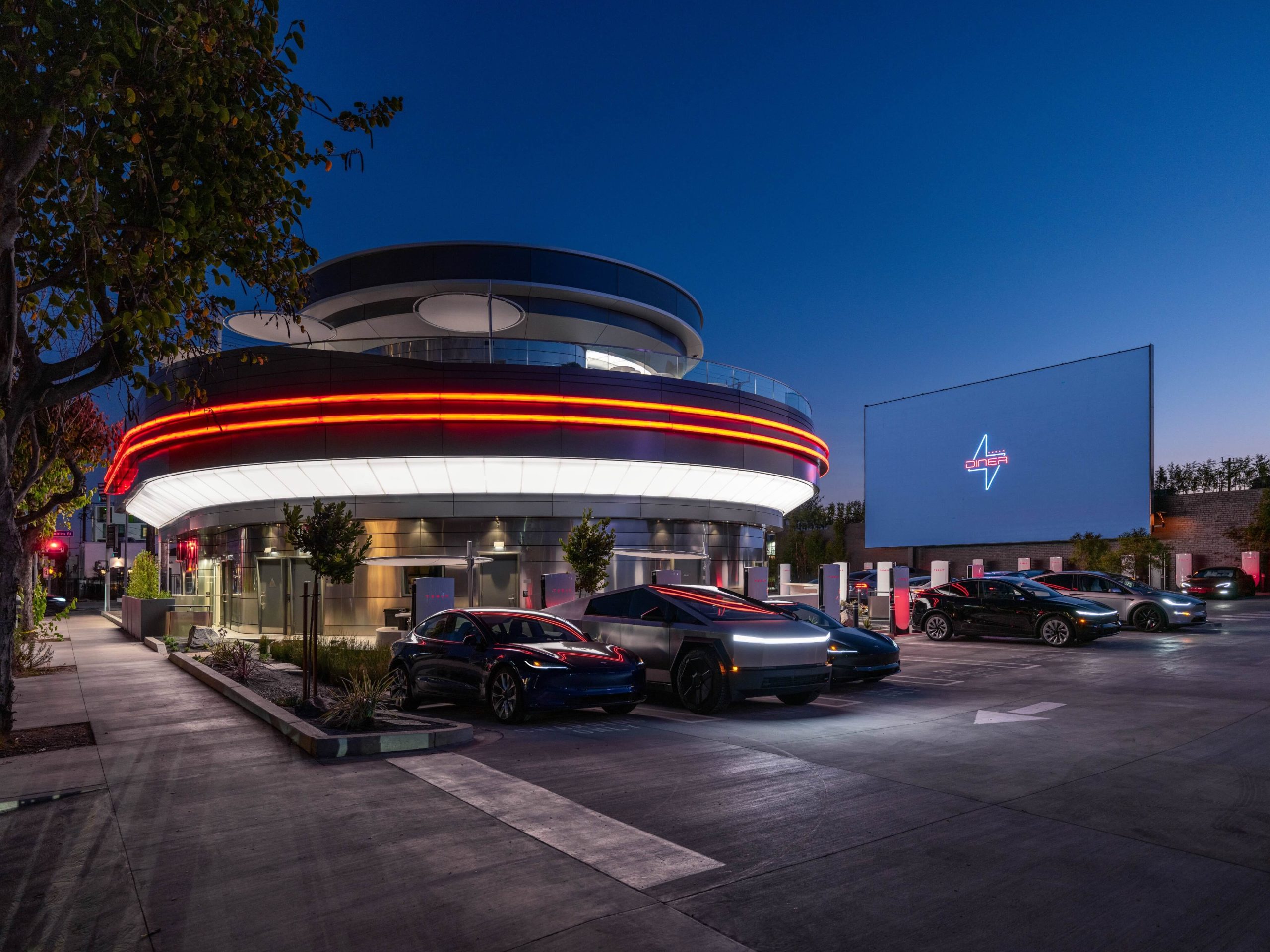
The delivery of 21.2 GWh of energy is a staggering metric. To put this in perspective, an average electric vehicle consumes roughly 0.3 kilowatt-hours (kWh) per mile. This suggests that the Los Angeles Diner provided enough energy in its first year to power over 70 million miles of driving. The 1,600 sessions per day indicate a nearly constant turnover of vehicles, highlighting the site’s efficiency and the high demand for charging in the Los Angeles basin.
This success has prompted discussions regarding the expansion of the "Diner" concept. CEO Elon Musk has previously hinted that if the Los Angeles pilot proved successful, the company would consider bringing similar locations to other major metropolitan areas. Potential candidates for future sites include Austin, Texas—home of Tesla’s global headquarters—and Palo Alto, California. While no formal plans have been announced, the data suggests that the "charging-as-an-experience" model is highly profitable and effective at managing high-density traffic.
Financial Volatility and the Rise of Short Sellers
While the charging division celebrates operational milestones, Tesla’s broader financial performance has faced significant headwinds on Wall Street. Following the release of the company’s Q2 2026 earnings report, Tesla shares experienced one of their sharpest single-day declines in three years, falling by as much as 15 percent. This downturn proved highly lucrative for short sellers—investors who bet against the company’s stock—who reportedly collected approximately $4.12 billion in single-day profits.

The sell-off was triggered by a combination of factors. Although Tesla reported record revenues driven by strong vehicle deliveries, it significantly missed analyst expectations for earnings per share (EPS). The company reported an EPS of $0.33, well below the $0.53 forecast by market analysts. Investors expressed concern over Tesla’s aggressive pivot toward capital-intensive projects, specifically artificial intelligence (AI) and the Optimus humanoid robot project, which have increased operational spending.
Data from S3 Partners indicates that roughly 3 percent of Tesla’s outstanding stock is currently sold short. Ihor Dusaniwsky, Managing Director at S3 Partners, noted that short sellers have likely accrued paper gains of $8.92 billion throughout 2026, as the stock has declined by approximately 30 percent year-to-date. Notable skeptics, including Michael Burry of "The Big Short" fame, have remained vocal about their positions. Burry recently disclosed a new short position at a price level of $416.22, expressing satisfaction with the stock’s recent volatility.
Regulatory Scrutiny and the Door Handle Safety Debate
Adding to the company’s complex landscape is ongoing regulatory scrutiny regarding vehicle safety. The National Highway Traffic Safety Administration (NHTSA) recently denied a petition from Tesla that sought to prevent a defect investigation into approximately 180,000 Model 3 vehicles. The issue centers on the emergency mechanical door releases, which some critics argue are difficult to locate and use during power failures.

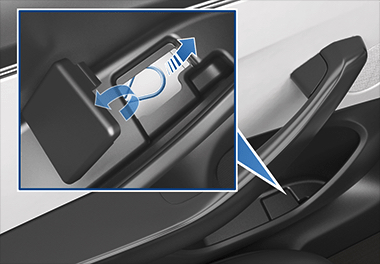
Tesla’s door handles are electronically operated, relying on the vehicle’s 12V battery system. In the event of a total power loss—such as after a severe collision—occupants must use a manual mechanical release to exit the vehicle. While every Tesla vehicle is equipped with these releases, they are often integrated into the door paneling in a way that is not immediately intuitive to passengers unfamiliar with the brand’s design language.
The NHTSA’s decision to deny the petition does not necessarily mean a defect has been confirmed. Instead, the agency stated that it prefers to address the issue through a formal "rulemaking process." This process aims to establish new federal safety standards that would require all automakers to more clearly label and standardize the location of emergency door-egress systems. The agency identified a specific complaint involving a 2022 Model 3 where an owner, following a front-end collision that severed the power, struggled to find the concealed release. Tesla has responded by emphasizing that its safety manuals provide detailed instructions on manual releases, though the company has also explored "simple engineering fixes" to improve visibility and ease of use.
Aerospace Synergy: SpaceX and the Starship Flight 13 Delay
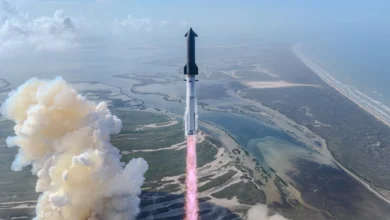
The broader ecosystem of Musk-led ventures also saw significant activity this week with the scheduled launch of SpaceX’s Starship Flight 13. Originally planned for a Thursday liftoff from the Starbase facility in Boca Chica, Texas, the mission was postponed to Friday, July 24, due to adverse weather conditions associated with Tropical Storm Bertha.
SpaceX confirmed that the delay was necessary to ensure high-quality ground imagery of the Starship’s heat shield. A primary objective of Flight 13 is to observe the heat shield’s performance as the vehicle encounters maximum dynamic pressure (Max Q) during ascent. Tropical Storm Bertha’s cloud cover would have obscured these critical observations.
Flight 13 represents a significant milestone for the Starship program. It is the second flight featuring the "V3" iterations of the Starship and Super Heavy booster. Unlike previous tests, which carried mass simulators, Flight 13 is carrying 20 operational Starlink V3 satellites. This marks the transition of Starship from a purely experimental vehicle to a functional cargo carrier. Six of these satellites are equipped with specialized cameras designed to inspect the Starship’s exterior during flight, providing engineers with a secondary data stream alongside ground-based telescopes.
The mission profile includes a boostback burn and a controlled splashdown of the Super Heavy booster in the Gulf of America, while the Starship upper stage will follow a suborbital trajectory toward the Indian Ocean. If successful, SpaceX officials have indicated that Flight 14 could be the first attempt at a full orbital mission, bringing the program closer to its goal of a fully reusable interplanetary transport system.
Strategic Implications and Future Outlook
The convergence of these events—the record-breaking success of the Supercharger Diner, the financial shift toward AI, regulatory challenges, and aerospace progress—paints a picture of a company in a state of profound transition. Tesla is increasingly distancing itself from its identity as a traditional automaker, repositioning itself as a diversified energy and robotics firm.
The success of the Los Angeles Diner demonstrates that Tesla can successfully monetize the time customers spend charging, potentially opening a new high-margin revenue stream. As the EV market matures and charging becomes more commoditized, the "experience" factor may become a key differentiator for the brand.
However, the financial miss and the resulting gains for short sellers highlight the risks of this transition. The market remains divided on whether Tesla’s massive investments in AI and the Optimus robot will yield returns that justify the current valuation. The pivot to AI requires billions in capital expenditure for GPU clusters and research and development, which weighs on short-term profitability.

Furthermore, the NHTSA’s focus on standardized safety labeling suggests that as Tesla reaches a more mainstream audience, its "minimalist" design philosophy will continue to face pushback from regulators. Ensuring that non-technical users can safely operate and exit vehicles during emergencies is a hurdle the company must clear to maintain its reputation for safety.
As the third quarter of 2026 progresses, the industry will be watching closely to see if the Los Angeles Diner model is replicated and if the company can stabilize its earnings while pursuing Musk’s ambitious technological roadmap. For now, the Santa Monica Boulevard location remains a singular testament to the company’s ability to turn a utility service into a global phenomenon.