The landscape of the consumer smart home and the broader Internet of Things (IoT) ecosystem is experiencing a profound transitional phase, defined by high-profile executive departures, shifting hardware economics, evolving cybersecurity regulations, and significant advancements in local device control and wireless protocol infrastructure. As Amazon prepares to celebrate the milestone tenth anniversary of its pioneer voice assistant Alexa and the Echo smart speaker line next year, the industry finds itself reflecting on a decade of rapid expansion, lingering frustrations, and the ongoing quest for true commercial viability and standalone profitability.
Compounding this milestone moment is major leadership turnover within Big Tech. Amazon’s long-serving head of devices, David Limp, has announced plans to retire. Limp’s departure represents the culmination of a broader wave of high-level executive exits at Amazon over the past year, signaling a changing of the guard as the corporation re-evaluates its hardware roadmap, profitability metrics, and the long-term trajectory of its ambient computing ambitions.
A Decade of the Smart Home: Evolution, Stagnation, and Niche Luxury
As Alexa and the Echo approach their ten-year anniversary, industry analysts and smart home enthusiasts are scrutinizing what has fundamentally transformed—and what stubbornly remains the same—since voice assistants first entered the consumer consciousness. While the initial wave of smart home adoption was driven by novelty, convenience, and low-cost connected lighting, the market has increasingly bifurcated into utilitarian automation and expensive, specialized luxury products.
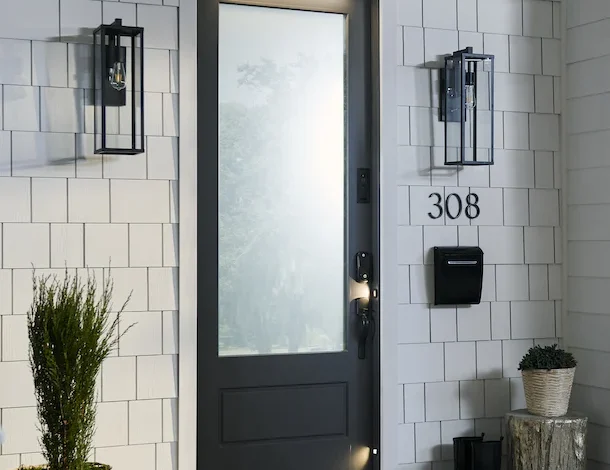
Recent product launches and reviews underscore the persistent friction points in the consumer IoT market. For instance, the high-profile rollout of the Mill composting system—engineered by Nest co-founder Matt Rodgers—highlights the ongoing struggle to marry sustainability with high-end connected home hardware, often at price points that alienate mass-market consumers. Similarly, the commercial debut of the Masonite M-Pwr smart door, now available at major home improvement retailers like Home Depot, exemplifies the ultra-premium tier of home automation. Integrating continuous power, LED lighting, and smart lock technology directly into a residential entry door, the product is a technical marvel; however, its prohibitive cost ensures that it remains an aspirational luxury rather than a standard household upgrade.
These developments raise persistent questions regarding whether the smart home can truly stand on its own two feet as a self-sustaining, interoperable ecosystem, or whether it will remain dependent on subsidized platform ecosystems managed by data-driven conglomerates.
Regulatory Interventions: The FCC Proposes IoT Cybersecurity Labeling
Amid hardware fragmentation and consumer pricing hurdles, government regulators are stepping in to establish baseline standards for device security. The Federal Communications Commission (FCC) has officially released its Notice of Proposed Rule Making (NPRM) aimed at establishing a national IoT cybersecurity labeling program.
The proposed initiative seeks to introduce a standardized trust mark—often referred to as a "U.S. Cyber Trust Mark"—for wireless consumer smart devices that meet rigorous federal cybersecurity criteria. This labeling system is designed to help consumers easily identify connected products that incorporate robust security protections, such as strong default passwords, data encryption, secure update mechanisms, and vulnerability disclosure policies. With the official public comment window set at 30 days, industry stakeholders, manufacturers, and consumer advocacy groups are currently racing to review the framework and submit feedback.
Security experts view the FCC’s proposed labeling initiative as a crucial step toward mitigating the systemic risks posed by insecure connected hardware, which has historically been exploited to launch massive distributed denial-of-service (DDoS) attacks and compromise residential network perimeters.
Industrial Vulnerabilities and Infrastructure Security
While consumer smart home devices present privacy and localized security challenges, industrial IoT (IIoT) systems face threats of a much higher magnitude. Recent threat intelligence findings from Microsoft have brought to light a critical set of newly discovered vulnerabilities affecting industrial equipment and operational technology (OT). According to Microsoft’s security analysts, these vulnerabilities could potentially be weaponized by sophisticated threat actors to disrupt or entirely shut down critical infrastructure, including power generation and electrical plants.
The disclosure highlights the precarious digital-physical convergence defining modern critical infrastructure. As legacy industrial control systems (ICS) are increasingly connected to IP networks and cloud monitoring platforms to drive operational efficiencies, the attack surface expands exponentially. Cybersecurity researchers emphasize that securing these environments requires a paradigm shift, moving beyond traditional IT security models to implement strict hardware-level isolation, continuous behavioral monitoring, and rigorous supply chain validation.

Wireless Protocols and the Z-Wave Renaissance
Underpinning the hardware and software layers of the smart home are the foundational wireless communication protocols that allow devices to converse with one another. For years, the smart home landscape has been dominated by a patchwork of competing radio standards, including Wi-Fi, Bluetooth, Zigbee, and Z-Wave, alongside newer unifying frameworks like Matter.
A significant development bolstering the long-term viability of the Z-Wave ecosystem is the emergence of a secondary chip provider, Trident IoT. Founded by industry veterans, Trident IoT aims to inject fresh momentum into the Z-Wave community by acting as both a silicon manufacturer and an authorized certification house.
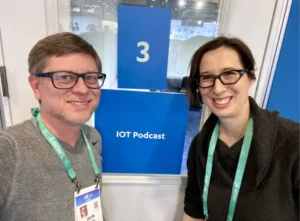
In an in-depth interview, Mariusz Malkowski, founder and Chief Technology Officer of Trident IoT, shed light on the company’s foundational origins and its strategic vision for the Z-Wave community. Malkowski detailed how Trident IoT plans to accelerate product development cycles by providing reliable silicon alternatives, simplifying the compliance and certification process, and integrating multiple smart home radio protocols into a unified hardware architecture.
A central theme in modern IoT engineering is interoperability, particularly concerning how legacy mesh networks like Z-Wave will interface with the emerging Matter standard. Malkowski explained the critical importance of protocol bridging, which allows established Z-Wave devices to communicate seamlessly within Matter-compliant ecosystems. Furthermore, the discussion highlighted the future roadmap for Z-Wave, including the rollout of Z-Wave Long Range (Z-Wave LR)—which vastly extends transmission range and supports thousands of nodes on a single smart home network—alongside advanced military-grade security upgrades designed to future-proof the technology against emerging cryptographic threats.
Local Control Hardware: Reviewing the Homey Pro Hub
As consumer frustration mounts over cloud-dependent smart home platforms prone to corporate service shutdowns, internet outages, and privacy intrusions, the demand for local control has surged. Addressing this market demand, smart home expert Kevin recently published a comprehensive review of the Homey Pro smart home hub.
Positioned as an advanced alternative to mainstream hub offerings, the Homey Pro commands a premium price point but compensates by offering robust, localized control capabilities. Unlike cloud-centric systems that route automation commands through remote servers, the Homey Pro executes routines and manages device integrations directly within the local network environment. This ensures lower latency, heightened privacy, and uninterrupted operation even during broadband internet outages. However, the review notes that prospective buyers must carefully verify device compatibility and support lists, as integrating niche or non-standard hardware ecosystems still requires technical diligence.
Practical Engineering: Tailoring Lighting Solutions for Custom Woodworking
Moving from enterprise infrastructure down to bespoke craftsmanship, the intersection of traditional woodworking and smart home technology often yields unique design challenges. In a recent listener Q&A segment, the panel addressed a practical inquiry from a woodworker seeking guidance on selecting the appropriate smart or connected light bulb for a custom-built artisanal lamp.
The discussion emphasized that when integrating connected lighting into custom furniture, creators must balance aesthetic form factors with electrical safety and protocol compatibility. Factors such as physical bulb dimensions, heat dissipation within enclosed wooden enclosures, dimming curves, and protocol selection (whether choosing Zigbee, Z-Wave, or Wi-Fi-based smart bulbs) play a pivotal role in ensuring the final creation is both visually stunning and functionally reliable.
Industry Implications and the Road Ahead
As the smart home industry approaches the ten-year mark since the commercialization of modern voice assistants, the ecosystem stands at a critical crossroads. The convergence of tightening federal cybersecurity regulations, the expansion of industrial-grade threat intelligence, the arrival of new silicon and protocol manufacturers like Trident IoT, and a growing consumer preference for localized control indicate a maturing market.
While luxury novelties and high-end smart fixtures will continue to test the upper limits of consumer spending, the foundational architecture of the smart home is steadily becoming more secure, interoperable, and resilient. Whether major tech conglomerates can successfully transition their smart home divisions into profitable, standalone business models following the departure of pioneering leaders like David Limp remains one of the industry’s most compelling questions heading into the next decade.