Xreal Aura Launches: Spatial Computing Meets Everyday Wearability as Android XR Glasses Hit the Market

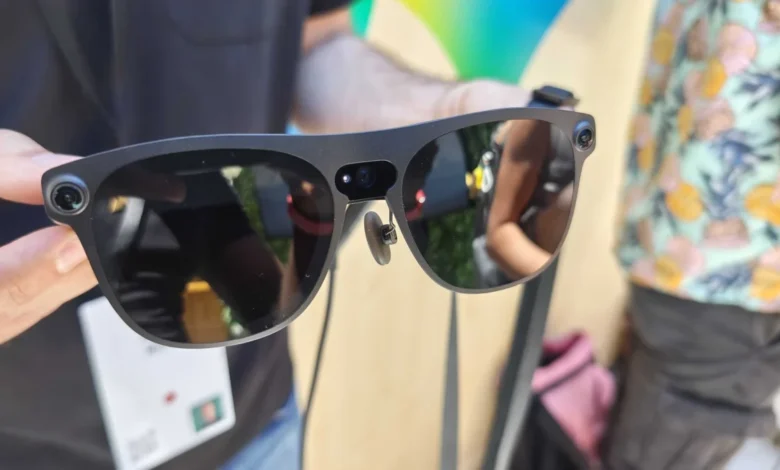
The consumer technology landscape has reached a significant milestone with the official market launch of the Xreal Aura, a cutting-edge pair of wired Android XR glasses designed to bridge the gap between immersive spatial computing and real-world awareness. Unveiled to consumers across the United States, Canada, Japan, and South Korea, the Xreal Aura introduces a new paradigm in augmented and mixed reality hardware, combining enterprise-grade capability with a lightweight, consumer-friendly form factor.
The launch follows months of intense industry speculation and high-profile demonstrations, positioning Xreal at the forefront of the burgeoning spatial computing sector. By integrating powerful mobile ecosystems with advanced optical engineering, the company aims to redefine how users interact with digital content while remaining fully engaged with their physical environments.
Pricing Structure and Availability Timeline
In a strategic move to capture early market share, Xreal introduced the Aura with limited-time promotional pricing that significantly undercuts its standard retail value. For customers purchasing the device through authorized channels—including the official Xreal storefront and major retail partners such as Best Buy—the 12GB RAM and 256GB storage configuration is available for $1,099. Meanwhile, the higher-tier 16GB RAM and 512GB storage variant is priced at $1,299.
These introductory rates represent a $200 discount off the device’s original baseline pricing and are guaranteed to remain in effect through December 2026. Following the conclusion of this promotional window, the baseline and high-tier models will revert to their standard retail prices of $1,279 and $1,499, respectively. Consumer deliveries and fulfillment are scheduled to commence in mid-November, with broader global retail distribution—including select Google Stores in the United States and Japan—slated for 2027.
The aggressive pricing strategy has already yielded substantial results. According to Xreal co-founder and CEO Chi Xu, early consumer enthusiasm surpassed corporate projections, with reservation milestones exceeding 10,000 units as early as August. Select pre-order and reservation packages sold out rapidly, fueled in large part by the company’s transparent pricing commitment that guaranteed the hardware would not exceed $1,500 prior to applicable taxes.

Technological Architecture: Powered by Google and Qualcomm
At the core of the Xreal Aura is a sophisticated hardware and software architecture developed in close collaboration with tech giants Google and Qualcomm. The device runs on Android XR, providing users with native access to millions of familiar mobile applications, productivity tools, and games directly from the Google Play Store, alongside a suite of tailor-made spatial experiences.
Performance is driven by Qualcomm’s advanced Snapdragon Reality Elite platform, a processor specifically engineered to handle the demanding computational workloads of spatial computing, real-time hand tracking, and spatial mapping without inducing excessive thermal strain or battery drain. Complementing the processing power is deep integration with Google’s Gemini artificial intelligence ecosystem. This AI backing enables intuitive voice interactions, context-aware assistance, and seamless multitasking, allowing users to transition effortlessly between professional workflows and entertainment applications.
Visual fidelity is managed through custom Sony Micro-OLED displays capable of delivering a crisp 1200p resolution at a smooth 120Hz refresh rate. This optical engine is paired with a wide 70-degree field of view (FOV), providing an expansive virtual canvas that floats naturally in the user’s field of vision. Audio duties are handled by Sound by Bose, ensuring that spatial audio matches the visual immersion. Despite packing this array of high-performance components into the chassis, the Xreal Aura weighs a remarkably light 95 grams, successfully avoiding the heavy, fatigue-inducing bulk traditionally associated with virtual and mixed reality headsets.
Ecosystem Integration and Launch Content
Recognizing that hardware success is intrinsically tied to software availability, Xreal has secured key content partnerships to bolster the Aura’s launch lineup. Sports enthusiasts can immediately leverage specialized applications such as the official NBA app for Android XR, which delivers advanced multiview capabilities via NBA League Pass, alongside real-time matchups, live statistics, and interactive data overlays. Similarly, the NASCAR XR app plunges racing fans into the heart of the competition with a live 3D track map, real-time driver telemetry, and multi-angle broadcast feeds.
In the realm of interactive entertainment, the Xreal Aura debuts with marquee titles designed from the ground up for spatial computing. Among these is Project Hail Mary: Journey Among the Stars, born from a strategic collaboration with Amazon MGM Studios, as well as Fallout: Factions from Modiphius Entertainment. These titles demonstrate the hardware’s capability to render complex, interactive worlds in a mixed-reality environment, proving that lightweight glasses can deliver experiences previously restricted to dedicated gaming consoles or heavy headsets.
Industry Context and the Evolution of Spatial Computing
The arrival of the Xreal Aura marks a pivotal evolution in the wearable technology market. For years, the industry was bifurcated into two distinct categories: bulky, fully enclosed virtual reality headsets that completely isolate the user from the physical world, and lightweight smart glasses that offered limited functionality, such as basic notifications or audio playback without visual overlays.

Products like the Xreal Aura represent the realization of optical see-through (OST) extended reality—a middle ground where digital information is seamlessly overlaid onto the physical environment. By maintaining a lightweight form factor akin to traditional eyewear while incorporating advanced spatial tracking and AI processing, Xreal is addressing the primary consumer barrier to adoption: social acceptability and physical comfort during extended wear.
Industry analysts note that the integration of mainstream operating systems like Android XR is crucial for establishing developer momentum. By leveraging the vast existing library of Android applications, Xreal bypasses the "cold start" problem that has historically plagued new hardware platforms, ensuring that users have immediate access to productivity suites, communication tools, and media platforms out of the box.
Leadership Perspective and Future Outlook
Reflecting on the launch, CEO Chi Xu emphasized the broader philosophy guiding the company’s product development. "This is a defining moment for XR," Xu stated. "We built AURA for people who want the power of spatial computing without being removed from the world around them. XREAL AURA sets a new benchmark for OST XR glasses, bringing powerful AI-driven experiences to both work and everyday life."
Having transitioned successfully from early conceptual prototypes—such as those showcased during Google I/O—to a commercially available product, Xreal is now tasked with scaling manufacturing and distribution to meet sustained global demand. The upcoming holiday shipping window will serve as a crucial stress test for supply chains in North America and East Asia.
As the market absorbs the Xreal Aura, the device’s performance over the coming months will likely influence the broader trajectory of the wearable tech industry. If consumer adoption matches the robust pre-order enthusiasm observed by company leadership, the Xreal Aura could very well catalyze a broader migration toward everyday spatial computing, shifting the paradigm of how humanity interacts with digital information in public and private spaces alike.