Building a Robust JSON Serialization Pipeline in Python for Enterprise Machine Learning Systems

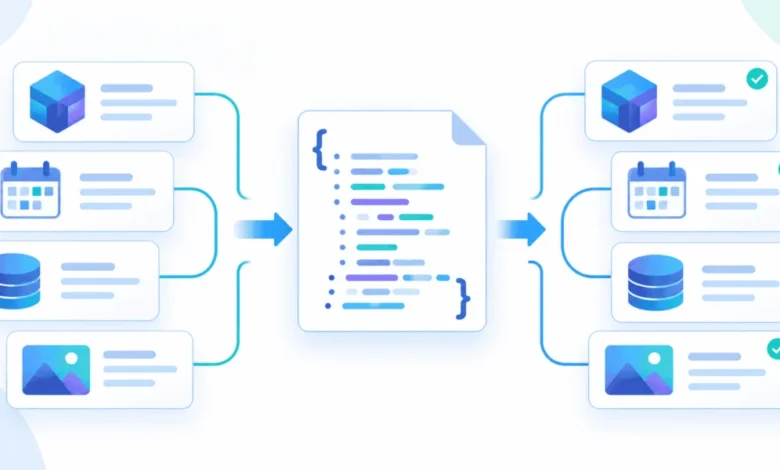
The rapid expansion of machine learning operations (MLOps) has shifted the focus of data engineering from purely algorithmic innovation to the architecture of data infrastructure. As organizations scale their model deployments, the "data plumbing"—the essential, often invisible work of moving structured datasets between microservices, file systems, and APIs—has become the primary bottleneck in production environments. At the center of this challenge lies the limitations of JSON, the ubiquitous data-interchange format, which lacks native support for complex Python objects such as timestamps, file paths, sets, and enumerations. When these types are passed through standard serialization, the result is frequently a runtime error, leading to pipeline failures that disrupt continuous integration and delivery cycles.
The Problem of Serialization in Production Pipelines
Standard serialization in Python, handled via the built-in json library, is inherently limited to primitive data types: strings, numbers, lists, dictionaries, and booleans. In modern machine learning pipelines, however, configurations are increasingly sophisticated. A standard experimental configuration might include datetime objects for versioning, pathlib.Path objects for managing data lineage, and Enum classes for strict typing of model architectures.
Industry benchmarks suggest that data engineering teams spend between 60% and 80% of their development time on data preparation and pipeline maintenance. When serialization fails, it often triggers a TypeError, halting the deployment process. In a production environment, this means that a single malformed configuration file can cascade into a service outage, causing significant downtime for downstream consumers who rely on real-time model inference.
Chronology of the Serialization Challenge
The history of data interchange in the Python ecosystem is marked by a struggle between simplicity and type safety. Early versions of Python relied on pickle for serialization, which, while capable of handling complex objects, posed severe security risks because it could execute arbitrary code during deserialization. As a result, JSON became the industry standard for cross-platform interoperability.
However, the divergence between Python’s rich object model and JSON’s rigid schema forced developers to implement "manual translation layers." For years, this was done using ad-hoc conversion scripts that were fragile and difficult to maintain. The evolution of modern Python libraries, particularly the introduction of the json.JSONEncoder and object_hook features, provided the foundation for a standardized, robust approach to the problem. By the mid-2020s, with the rise of complex microservice architectures in AI, the necessity for a systematic approach to handling custom data types in JSON became a critical requirement for senior machine learning engineers.
Architectural Solutions: The Custom Encoder Strategy
To resolve these serialization conflicts, engineering teams have moved toward implementing custom encoder classes. By subclassing json.JSONEncoder, developers can inject logic that intercept objects before they hit the serialization engine.
The strategy involves overriding the default() method. For example, when the encoder encounters a datetime object, it converts the object into an ISO-8601 string, wrapped within a dictionary containing a __type__ metadata tag. This tag serves as a schema marker, ensuring that the receiver can reconstruct the object with perfect fidelity.
Consider a configuration where a ModelType enum is utilized. A standard serializer would fail because it does not recognize the class type. An optimized pipeline, however, extracts the underlying value of the enum and preserves the intent of the configuration without breaking the JSON structure. This "tagging" pattern—associating a value with its original class type—is now considered a best practice in robust software engineering.
The Role of Custom Decoders and Type Recovery
Deserialization presents the reverse challenge: identifying the __type__ tags and mapping them back to the original Python class. The object_hook parameter in json.loads() acts as a middleware layer, processing every nested dictionary before it is fully constructed.
When a robust_decoder function is integrated, it scans each dictionary for the __type__ key. If found, the decoder invokes the appropriate constructor, such as datetime.fromisoformat() or pathlib.Path(). This mechanism ensures that the downstream application receives the data in the exact format it expects, eliminating the need for subsequent type casting.
Furthermore, this layer serves as a critical defense against malformed data. By implementing try-except blocks within the decoder, engineers can catch serialization errors in real-time. If an unexpected format appears, the system can log a warning and return the raw value, preventing a total system crash—a requirement for mission-critical ML pipelines.
Schema Evolution and Migration Strategies
Machine learning metadata is inherently dynamic. A model configuration defined in January may be incompatible with an application updated in June due to the addition of new hyperparameters, such as a learning_rate or batch_size. Without a migration strategy, legacy configuration files become "technical debt," forcing developers to either maintain outdated code or manually update thousands of JSON files.
A robust pipeline addresses this through a factory pattern that acts as a schema validator. By defining a load_experiment_config function, developers can set default values for missing keys. This approach allows for backward compatibility, where older configuration files are automatically upgraded to the current schema upon loading. This is a vital component of modern MLOps, as it facilitates seamless transitions between model versions without requiring manual intervention.
Implications for the Machine Learning Industry
The adoption of these serialization practices has profound implications for the stability of AI systems. When pipelines are designed to handle custom types and schema migrations, the velocity of experimentation increases. Data scientists can iterate on model architectures without the fear of breaking the plumbing.
From an organizational perspective, robust serialization reduces the "bus factor"—the risk associated with having only one developer who understands how the data configuration is parsed. By using standard, well-documented encoding and decoding patterns, the codebase becomes more readable and maintainable for new members of the team.
Furthermore, the shift toward structured, typed serialization aligns with broader industry trends toward data governance. As companies face increasing scrutiny regarding the explainability and auditability of AI, the ability to serialize, store, and reliably recover exact experiment configurations becomes a regulatory necessity.
Conclusion
Building a robust serialization pipeline is not merely a technical exercise in string manipulation; it is a fundamental pillar of production-grade machine learning. By utilizing custom encoders and decoders, and by incorporating defensive programming techniques to handle schema evolution, engineers can build systems that are resilient to the complexities of modern data.
The move away from ad-hoc scripts toward formalized, reusable serialization logic represents a maturation of the field. As machine learning systems continue to integrate deeper into the fabric of enterprise software, the focus must remain on the durability of the infrastructure. Through the systematic application of these techniques, developers ensure that their models are not only intelligent but also supported by an architecture capable of sustaining long-term, reliable performance in the face of ever-changing data requirements. The transition from fragile, manual data handling to automated, robust pipelines is the next logical step in the evolution of professional machine learning engineering.