Finding the Human Element: Why Joshua Lawrence Trades Commercial Gloss for the Raw Reality of Street Photography


The contemporary digital landscape is saturated with algorithm-driven imagery, generative artificial intelligence platforms, and a relentless demand for social media content designed solely to capture fleeting attention. In an era where anyone with an internet connection can generate a hyper-realistic scene in seconds, the fundamental value of authentic human documentation is undergoing a profound identity crisis. Yet, deep within the archives of contemporary photography discourse, artists like Joshua Lawrence offer a vital counter-narrative. By stepping away from the sterile predictability of commercial studios and into the unpredictable rhythm of everyday public life, Lawrence demonstrates that the most compelling visual narratives are not manufactured on demand; they are discovered through lived experience.

The Dichotomy of the Modern Commercial Lens
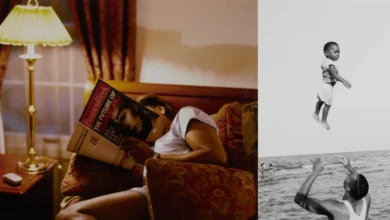
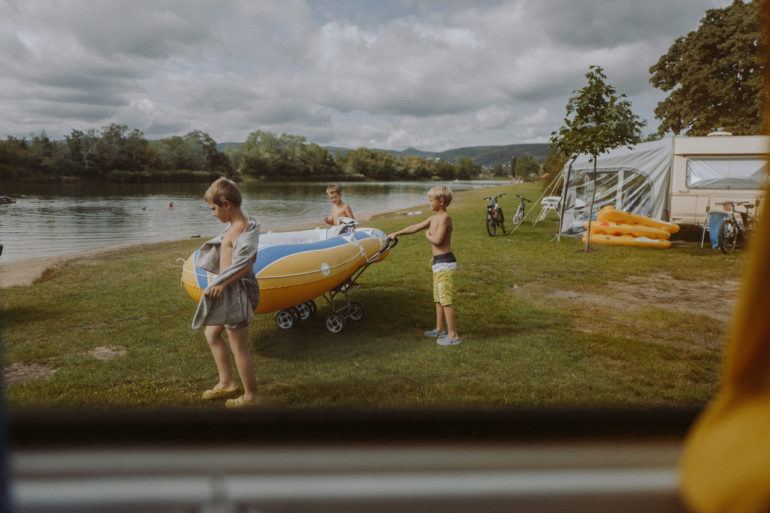
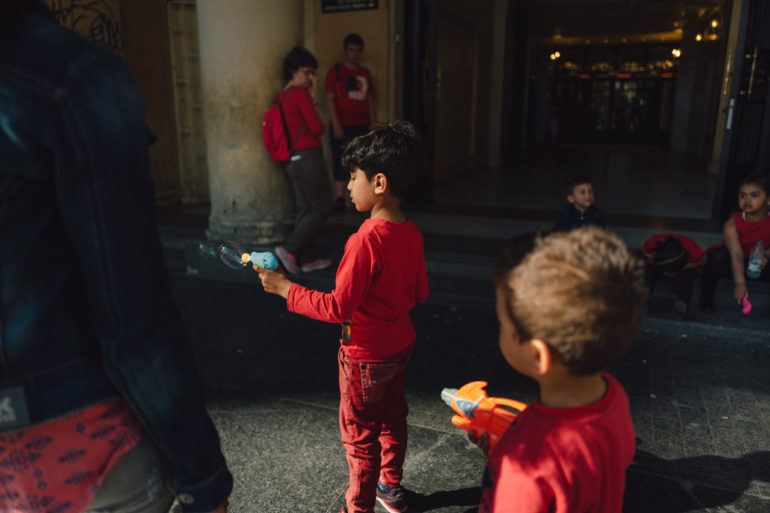
For Lawrence, the daily reality of working as a professional fashion and commercial photographer stands in stark contrast to his personal artistic pursuits. While commercial assignments provide financial stability, they often demand a level of rigid control and predictable aesthetic conformity that leaves little room for genuine emotional resonance. To balance the corporate demands of his day job, Lawrence turns to street photography—or what he more accurately defines as humanity documentary photography—as a vital creative outlet.
This duality is common among modern visual artists who navigate the tension between commerce and art. Where commercial photography relies on meticulous staging, lighting grids, and pre-visualized concepts, street photography requires radical surrender to the moment. For Lawrence, capturing the mundane and transforming it into something visually arresting serves as a psychological coping mechanism, allowing him to process the complexities of everyday life through the viewfinder of his camera.
Formative Years and the Discovery of Visual Language
Lawrence’s journey into the medium began in his late adolescence, roughly around the ages of 16 and 17. Struggling with traditional academic structures and conventional learning environments, he found himself searching for a tangible sense of direction and purpose. Photography provided an objective-driven outlet where he could measure his own progress and discover an innate competence.
Having initially aspired to paint photographs realistically—an ambition he humorously recalls abandoning due to his lack of draftsmanship—he gravitated toward the camera as a direct conduit for his creative impulses. The immediate feedback loop of capturing a frame and experiencing the visceral rush of the result provided a lifelong anchor. In retrospect, Lawrence credits photography with providing the necessary focus and validation that helped shape his trajectory during his formative years.
Artistic Influences and Aesthetic Philosophy
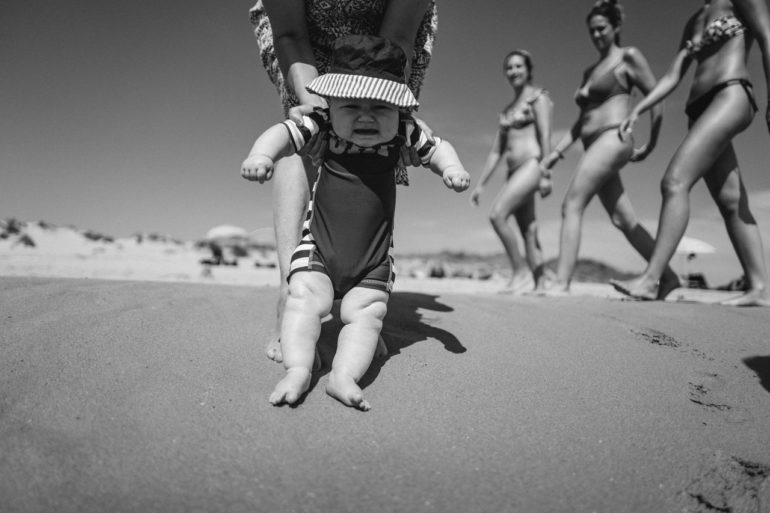
To understand Lawrence’s visual vocabulary, one must examine the masters who have informed his artistic perspective. He cites Jamie Hawkesworth as a primary influence for his sophisticated use of color and emotional depth, William Eggleston for his peerless ability to notice transient, overlooked moments in ordinary environments, and Alex Webb for his complex, layered approach to composition.
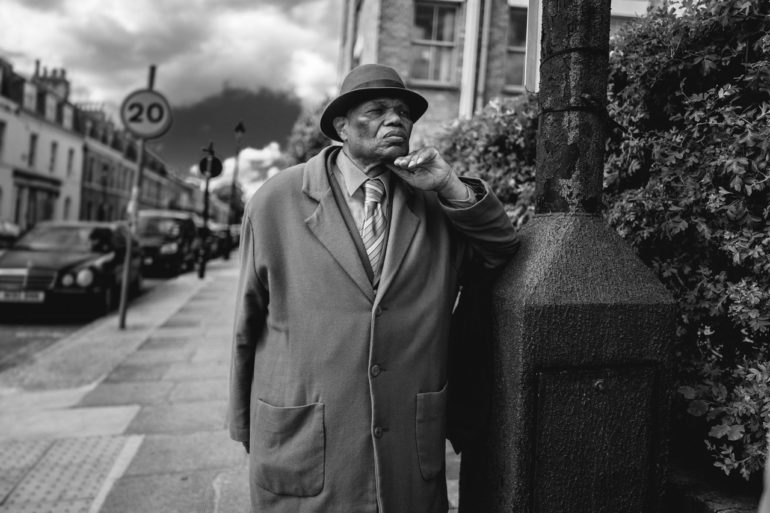
Rather than remaining stationary and waiting for a scene to unfold, Lawrence’s methodology relies on constant motion. His creative process is remarkably intuitive: he walks his daily route with his dog, allowing the environment to dictate the frame rather than hunting for specific subjects. When a character, color combination, or geometric shape catches his eye, his physical response is instantaneous. He consciously avoids working a scene to exhaustion, recognizing that the authentic emotional charge of a moment dissipates the split second after the shutter is pressed.
The Evolution of Gear: From APS-C to Full-Frame Precision
Technological tools play a critical role in realizing an artist’s vision, a reality reflected in Lawrence’s evolution of equipment. Having previously utilized compact camera systems equipped with smaller APS-C sensors—such as the Fujifilm X100 series—he consistently found himself constrained by the technical limitations of smaller sensors, particularly when shooting wide open in challenging lighting conditions.
The turning point in his mobile workflow came with the acquisition of the Leica Q, a full-frame compact camera that fundamentally transformed his output. By saving diligently for the investment, Lawrence unlocked a tool that matched his demand for optical excellence and ergonomic simplicity. The camera’s unobtrusive profile and full-frame sensor quality encouraged a tenfold increase in his daily capture rate, illustrating how the right equipment can seamlessly bridge the gap between technical capability and spontaneous artistic intent.
Post-Processing and the Preservation of Emotion
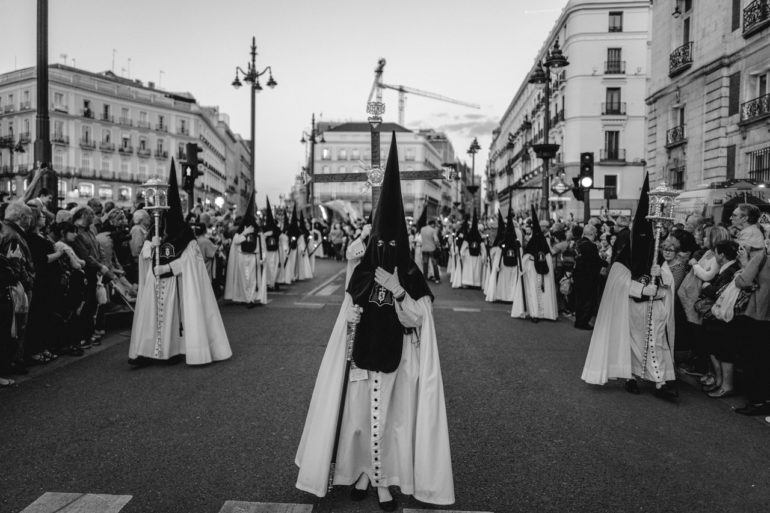
Lawrence’s darkroom philosophy—executed digitally on the computer screen—prioritizes restraint and emotional fidelity over heavy-handed manipulation. His workflow begins immediately upon returning from his daily walks, where he reviews his captures over a drink. Intriguingly, he configures his camera’s electronic viewfinder to display a monochrome (black-and-white) feed while shooting, a technique designed to help him analyze light, contrast, and tonal gradients without the distraction of color.
When he finally reviews the color files on a larger monitor, his editing decisions are strictly governed by the memory of the emotion he felt at the exact moment of capture. In Lawrence’s estimation, any post-processing that exceeds the boundary of that initial emotional experience is overdone, while any adjustment that falls short fails to do justice to the reality of the scene.
The Broader Implications in the Age of Generative AI
As the photography industry grapples with the disruptive emergence of generative artificial intelligence and the commercial devaluation of original content creation, the philosophies championed by artists like Joshua Lawrence carry renewed significance. Social media platforms increasingly incentivize sensationalized, high-frequency content designed purely to manipulate engagement algorithms. In contrast, Lawrence’s work represents a deliberate retreat into personal authenticity—making photographs primarily for oneself rather than for public validation.
This perspective challenges the prevailing commercial narrative that equates artistic value with algorithmic reach. By prioritizing genuine human documentation over manufactured perfection, street and documentary photographers serve as vital chroniclers of contemporary society. Lawrence’s ongoing journey from a struggling student to a refined documentary practitioner underscores an enduring truth: regardless of how advanced photographic technology becomes, the ability to recognize, honor, and communicate real human emotion remains an inherently irreplaceable human art form.