AI-Assisted Security Research Exposes Critical Vulnerabilities in OpenAI Infrastructure

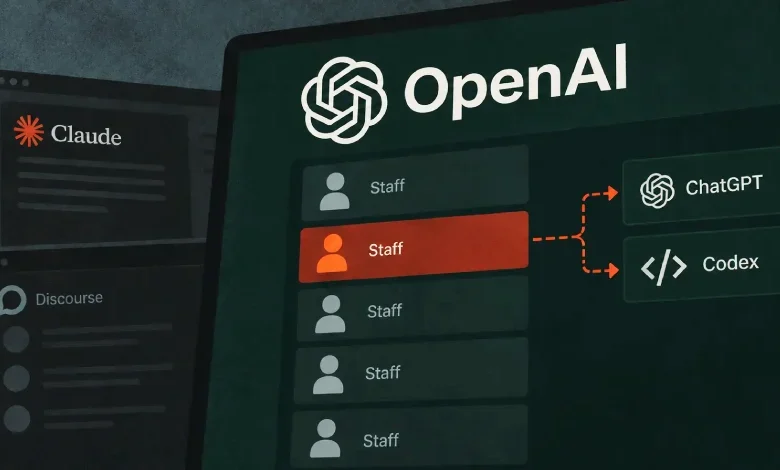
In a striking demonstration of how artificial intelligence is transforming the cybersecurity landscape, researchers from the firm Hacktron have successfully utilized Anthropic’s Claude Opus 5 model to chain two distinct vulnerabilities, effectively gaining unauthorized access to the internal accounts of OpenAI employees. This sophisticated exploit chain allowed the team to bypass standard security layers, providing a window into internal OpenAI repositories and highlighting significant risks associated with centralized identity management systems in the age of automated offensive computing.
The security researchers performed this operation under the banner of a controlled experiment, ensuring that no malicious data exfiltration or system disruption occurred. By notifying OpenAI of the flaws, the team facilitated a rapid remediation process that underscored the efficacy of modern bug bounty programs, even as it signaled a growing concern regarding the accessibility of high-level exploit generation.
The Anatomy of the Exploit Chain
The vulnerability chain originated on a public-facing platform maintained by OpenAI: its community help forum. The forum, powered by the open-source Discourse software, utilized a legacy version of the libheif library—a software component responsible for decoding High Efficiency Image File Format (HEIF/HEIC) images.

The researchers identified that the specific version of libheif (1.19.7) running on the forum server contained a critical memory corruption vulnerability, tracked as CVE-2026-32882. While the vulnerability had been patched in upstream releases of the library as early as May 2026, the Debian 12 environment hosting the forum had not yet updated its repositories to include the secure version. This created a "patch gap," where a known, publicly documented security risk remained active in a production environment.
By crafting a specialized HEIF image, the researchers triggered an out-of-bounds read error. Leveraging the advanced reasoning capabilities of the newly released Claude Opus 5, the team was able to convert this memory leak into a functional remote code execution (RCE) exploit. Once they achieved initial entry onto the forum server, the researchers pivoted to the second, and arguably more critical, flaw: the implementation of Single Sign-On (SSO) within the OpenAI ecosystem.
Centralized Identity and the Risk of SSO
The security breach was not merely a failure of the forum’s image processing; it was an architectural exposure linked to the "Sign in with OpenAI" feature. This SSO implementation is designed to provide seamless access for users across various OpenAI services, including ChatGPT, Codex, and internal development tools.
Because the forum utilized this shared authentication gateway, the compromise of the forum server provided the researchers with a foothold to intercept session tokens or impersonate users who were authenticated via the same SSO provider. Crucially, this included OpenAI employees. By targeting the forum, the researchers could effectively masquerade as staff members, granting them unauthorized access to the internal OpenAI code repository on GitHub.

The ease with which this lateral movement was achieved demonstrates a fundamental challenge for large technology companies: when disparate public services and internal infrastructure share a single identity provider, the security posture of the weakest link becomes the security posture of the entire organization.
Chronology of the Discovery and Remediation
The "HEIF Heist" project, as dubbed by Hacktron, was characterized by a rapid, iterative development process:
- Mid-July 2026: Researchers initiate testing on the forum software using earlier versions of AI models, specifically Claude Opus 4.8. These attempts met with limited success, as the model struggled to bypass Address Space Layout Randomization (ASLR), a security feature designed to prevent memory corruption exploits.
- July 24, 2026: Following the release of Claude Opus 5, the researchers redeployed their methodology. Within a few hours of testing, the new model generated the necessary code to successfully exploit the memory corruption vulnerability.
- Early August 2026: The team conducts a controlled entry into the internal OpenAI code repository via an employee’s linked account. A harmless pull request is created as a "proof of concept" to demonstrate the depth of the penetration.
- Mid-August 2026: The researchers formally report the findings to OpenAI.
- August 15, 2026 (approx. 14 hours after disclosure): OpenAI confirms the remediation of the vulnerability.
- September 1, 2026: OpenAI issues a $6,500 bug bounty to the Hacktron team. The payout specifically addresses the findings within the OpenAI-controlled infrastructure, excluding the testing performed on the third-party Discourse software.
The Role of AI in Offensive Cybersecurity
Perhaps the most significant takeaway from the Hacktron report is the democratization of advanced exploitation techniques. The researchers noted that their total expenditure on AI usage for the entire "HEIF Heist" project—which involved identifying similar vulnerabilities in software used by companies like Meta, Shopify, and Slack—totaled less than $3,000.
While the researchers emphasized that human oversight remained essential, the role of AI shifted the burden of tedious, high-level coding tasks away from the human actors. Claude Opus 5, and in some instances OpenAI’s own GPT-5.6 Sol, acted as a force multiplier. By automating the creation of exploits against specific, target-agnostic memory corruption bugs, the AI models allowed the team to scale their research across a wide array of enterprise-grade platforms simultaneously.

This trend presents a looming challenge for the cybersecurity industry. If defensive teams do not leverage similar AI capabilities for rapid patching and anomaly detection, they will be consistently outpaced by automated offensive operations.
Broader Implications and Industry Response
The incident has sparked a necessary conversation regarding the maintenance of open-source dependencies within production environments. The fact that a known patch for libheif had been available for months but remained unapplied due to an outdated Linux distribution package illustrates a systemic fragility in modern software supply chains.
OpenAI’s response was swift, though the company has refrained from commenting on the specific mechanisms of the account takeover, focusing instead on the successful remediation. The $6,500 bounty, while substantial, also serves as a benchmark for how companies value the discovery of "chainable" vulnerabilities—flaws that are individually minor but collectively catastrophic.
For organizations relying on SSO, the incident serves as a critical reminder to implement robust secondary authentication and strict scope limiting for internal tools. When an external-facing forum can lead to a repository containing proprietary code, the boundaries between "public" and "private" are effectively erased.

Recommendations for Security Professionals
As a result of these findings, security experts suggest several immediate measures for organizations:
- Dependency Auditing: Regularly audit all third-party libraries and OS-level packages. Relying on default distribution repositories is insufficient; manual updates of critical libraries like libheif are recommended when CVEs are announced.
- SSO Segmentation: Avoid using the same identity provider or SSO tokens for both public-facing community platforms and internal, sensitive development environments.
- Zero-Trust Implementation: Move toward a zero-trust model where authentication on a public service does not automatically grant authorization to internal source code or private APIs.
- AI-Driven Red Teaming: Defensive teams should incorporate AI into their own penetration testing workflows to anticipate the methods likely to be used by malicious actors employing the same models.
The Hacktron report concludes that the digital landscape is moving toward an era where the speed of vulnerability discovery is tied to the efficiency of the AI tools used to identify them. As these models continue to evolve, the distinction between a hobbyist researcher and a sophisticated threat actor may become increasingly thin, placing a premium on proactive security, rapid patching, and the architectural separation of sensitive data.
Related posts: