Nvidia CEO Jensen Huang tells Trump ‘we’re not going to let [an AI slowdown] happen’

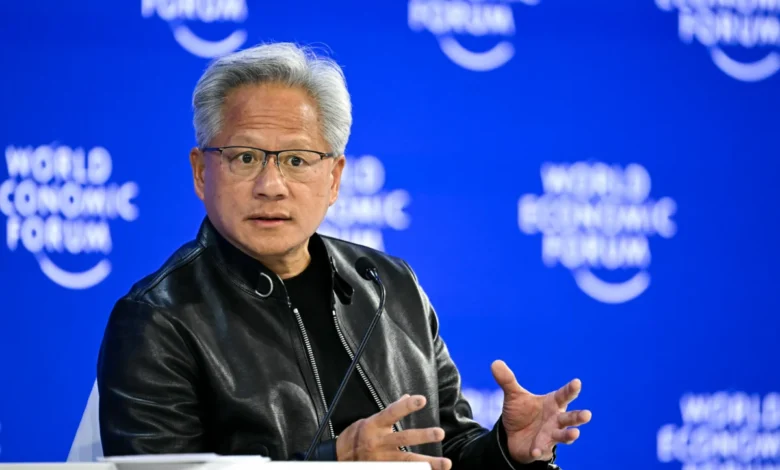
The intersection of artificial intelligence, high-stakes politics, and corporate bravado was on full display in Los Angeles during the Monday morning session of the All-In Summit. Nvidia CEO Jensen Huang found himself fielding an unexpected telephone call while addressing a packed auditorium alongside the podcast’s high-profile venture capitalist hosts. Rather than letting the call go to voicemail or stepping off the stage to handle the interruption privately, Huang chose to answer. The caller was none other than President Donald Trump, setting off an unscripted, highly publicized dialogue that immediately reverberated across global financial markets, technology corridors, and Washington policy circles.
In a move that tested the limits of corporate public relations management, Huang attempted to project the conversation to the live audience by requesting an auxiliary microphone to capture the audio from his mobile device. The resulting exchange offered a rare, unvarnished window into the political alignments shaping the contemporary technology landscape. The incident underscored the deepening ties between elite silicon valley executives and the highest levels of the federal government, while simultaneously illuminating profound industry fractures regarding the future pace of artificial intelligence research, infrastructure buildouts, and national competitiveness.
Chronology of the Incident and Onstage Context
The sequence of events leading up to the presidential call began moments earlier, when Huang and the hosts of the All-In podcast—Chamath Palihapitiya, Jason Calacanis, David Friedberg, and David Sacks—engaged in a deep dive regarding the current philosophical and strategic splits within the artificial intelligence sector. The panel had been analyzing recent remarks made by Anthropic CEO Dario Amodei, who had publicly advocated for slowing down the accelerated pace at which frontier artificial intelligence capabilities are advanced.
Amodei’s thesis, shared publicly through recent policy essays, suggests that as models approach unprecedented levels of autonomy and capability, the industry risks outpacing its own safety guardrails, societal preparedness, and regulatory frameworks. This cautious stance has found vocal support among other prominent tech leaders, notably SpaceX and Tesla CEO Elon Musk alongside OpenAI CEO Sam Altman. Both Musk and Altman have previously voiced concerns that an uncontrolled, breakneck race toward artificial general intelligence (AGI) could introduce severe systemic risks to public safety, cybersecurity, and labor markets.
Huang, however, has consistently maintained a divergent perspective. As the chief executive of the world’s leading supplier of advanced graphics processing units (GPUs) and AI accelerators, Huang’s business model depends on relentless, exponential compute scaling and the rapid deployment of massive data centers worldwide.
It was precisely this philosophical divergence that formed the backdrop of President Trump’s incoming call. Recognizing the unique convergence of Silicon Valley figures on stage—several of whom hold influential advisory roles within or adjacent to the administration—Huang greeted the president by announcing, "I’m onstage with the besties."
Trump seized the moment with characteristic dry humor, quipping over the phone line, "The great thing about life is Jensen can develop the most complex computer chip in the world… but he can’t figure out how to put you on speaker." Following minor logistical adjustments on stage to amplify the call, the conversation swiftly pivoted from casual banter to core matters of national industrial policy and geopolitical competition.
The Geopolitical Framing of AI Acceleration
Addressing the ongoing debate over whether to decelerate AI capability scaling, President Trump offered an uncompromising critique of the cautious approach advocated by figures like Amodei, Musk, and Altman. Without mincing words, the president characterized calls for self-regulation and intentional pacing as a strategic vulnerability that benefits foreign adversaries.
"They’re just playing right in the hands of a lot of people that don’t want to see it happen," Trump stated over the speakerphone to the auditorium. "That could be political people. It could also be China. And we’re not going to let that happen. It’s a hoax."
Huang offered immediate agreement with the president’s assessment, responding, "You’re right. We’re not going to let that happen, sir," to which the summit audience responded with sustained applause.
The framing of artificial intelligence development through the strict lens of geopolitical rivalry has become a cornerstone of contemporary U.S. industrial policy. The narrative positions the race for AI supremacy not merely as a commercial battle between competing enterprises, but as an existential contest for global hegemony between the United States and peer competitors, most notably China. Proponents of this view argue that any voluntary slowdown by American firms would simply cede technological leadership to foreign competitors who operate free from Western ethical debates or regulatory self-imposition.
Administration allies and prominent venture capitalists, including Y Combinator CEO Garry Tan, have frequently argued that resistance to the massive physical infrastructure required by modern AI models—such as the vast network of power-hungry data centers currently planned across the United States—is part of an coordinated effort to undermine American economic vitality.
Public Sentiment and the Infrastructure Backlash
Despite the high-level framing connecting anti-infrastructure sentiment to foreign interference or political obstructionism, sociological and empirical data suggest that the resistance to data center expansion stems from more localized, tangible concerns among American citizens.
Recent polling data compiled by Gallup highlights a significant disconnect between executive ambitions in Silicon Valley and public sentiment on the ground. According to the survey, approximately seven in ten Americans oppose the construction of large-scale data centers in their local communities. When asked to specify their primary reservations, more than half of respondents pointed to the immense environmental resource demands of these facilities, particularly concerning municipal water usage for cooling systems and the localized strain placed on regional electrical grids.
Furthermore, roughly 20 percent of surveyed residents expressed deep anxiety regarding the direct impact on their cost of living and overall quality of life. The rapid influx of industrial-scale computing facilities often drives up local electricity rates, increases land values beyond the reach of longtime residents, and introduces industrial-scale noise pollution into previously quiet suburban or rural areas.
Recognizing these domestic political realities while maintaining his pro-growth stance, President Trump acknowledged the need for operational prudence during his conversation with Huang. "We have to be a little bit careful… We have to do things and we have to do them prudently, but that doesn’t mean we’re going to stop an industry," Trump noted. He concluded with a definitive statement of support for the semiconductor titan: "So I’m with you all the way. I didn’t even know how you felt about it. I just hoped you felt the same way as me. We’re going to lead."
Broader Implications and Industry Analysis
The unscripted phone call between President Trump and Jensen Huang carries profound implications for the trajectory of artificial intelligence governance, corporate lobbying, and the broader tech economy.
First, the episode cements Nvidia’s status not just as a hardware manufacturer, but as an indispensable geopolitical asset. As governments worldwide race to secure domestic supplies of advanced silicon, the leadership of Nvidia occupies a position of extraordinary economic leverage. By publicly aligning with the administration’s "full speed ahead" philosophy on AI development, Huang has reinforced a symbiotic relationship between federal industrial policy and private-sector enterprise growth.
Second, the public division among tech executives regarding the pacing of AI development is hardening into distinct factions. On one side are firms like Anthropic and OpenAI, which, while deeply commercial, continue to articulate public-interest narratives emphasizing existential risk, safety alignment, and managed deployment. On the other side is a coalition of hardware providers, infrastructure developers, and free-market venture capitalists who view any discussion of slowing down as an invitation to national decline.
Finally, the tension between macro-level national security imperatives and micro-level community pushback over data center construction remains an unresolved policy challenge. While federal leaders and corporate executives prioritize maintaining global technological dominance, local communities continue to push back against the immediate environmental and economic externalities of the AI boom. How federal and state policymakers navigate this friction between grassroots environmental concerns and top-down industrial ambitions will likely dictate the speed and physical footprint of the artificial intelligence revolution in the years ahead.
Related posts: