Nikon Z 180-600mm F5-6.3 Lens Review: An Autofocusing Giant That’s Light on Your Feet

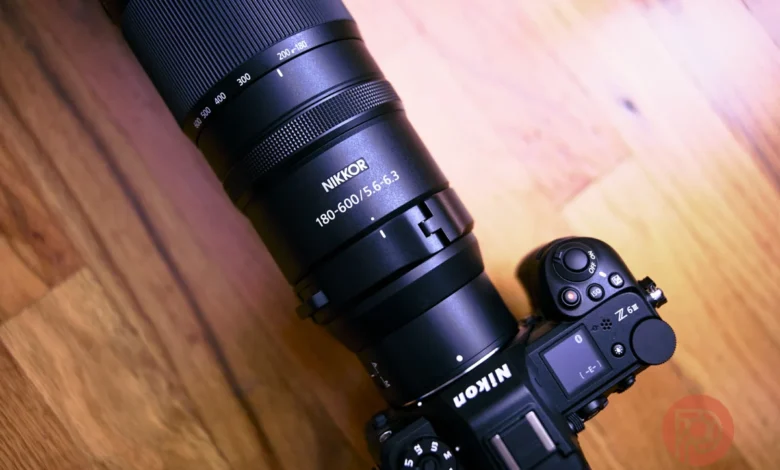
The modern landscape of mirrorless camera systems demands versatility, speed, and ergonomic efficiency, particularly within the specialized realm of super-telephoto photography. For professionals and advanced enthusiasts capturing wildlife, aviation, and fast-paced sports, the arrival of native telephoto zoom lenses defines the practical limits of their gear. Within the Nikon Z-mount ecosystem, the Nikon NIKKOR Z 180-600mm f/5.6-6.3 VR has emerged as a focal point of intense industry interest. Despite operating outside Nikon’s prestigious "S-Line" tier of high-end optics, this lens has challenged preconceived notions regarding performance, build quality, and value, cementing itself as a formidable tool for field photographers.
Main Facts and Core Specifications

The Nikon Z 180-600mm f/5.6-6.3 VR spans an exceptionally useful focal length range, making it a primary candidate for shooters requiring broad framing flexibility without the burden of multiple fixed-focal-length primes. Retailing at an accessible price point of approximately $2,196 USD, the lens bridges the gap between consumer-grade telephotos and professional exotics.
Unlike traditional external zoom mechanisms that extend significantly during operation, this lens features an internal zoom design. This architectural choice maintains the physical center of gravity and prevents the ingestion of dust and moisture in challenging outdoor environments. Although classified as a physically large lens due to its expansive reach, it breaks industry norms by remaining deceptively lightweight. Photographers can comfortably handhold the equipment for extended periods—such as during multi-hour sports matches or wildlife stakeouts—without immediately requiring a monopod or tripod setup.
Chronology and Review Evolution

The evaluation of the Nikon Z 180-600mm f/5.6-6.3 VR unfolded across two distinct phases of field testing by technical photography publications. The journey began with initial first-impression testing involving pre-production hardware units. During this preliminary phase, reviewers deployed the lens into natural habitats to assess its aptitude for avian and wildlife photography, where subjects present erratic movements and demand instant acquisition speeds.
Following these promising initial evaluations, a comprehensive review update was conducted using production-grade hardware paired with the Nikon Z6III mirrorless camera body. This subsequent phase shifted the testing environment from open-air wilderness to demanding indoor and controlled athletic settings—specifically, a beach volleyball training class held at QBK Sports in Long Island City, New York. By testing the lens against both beginner athletes with unpredictable movement patterns and high-altitude aviation subjects captured from urban vantage points, reviewers established a holistic profile of the lens’s operational limits across varied lighting conditions.
Field Performance: Autofocus, Handling, and Ergonomics

In fast-action photography, the synergy between a camera body’s autofocus algorithm and a lens’s internal motor dictates success. Operating under the challenging, mixed lighting conditions typical of indoor athletic facilities—where overhead industrial fixtures cast deep shadows interspersed with bright zones—the Nikon Z 180-600mm demonstrated rapid and decisive focus acquisition.
Testing revealed that the lens’s autofocus system maintains reliable tracking across diverse skin tones, locking onto subjects swiftly and retaining tenacity when paired with continuous autofocus (AF-C) modes. When utilizing single-point autofocus (AF-S), the lens reliably isolates subject details, minimizing missed frames.
Ergonomically, the lens barrel eschews clutter, featuring a minimalist control layout that limits extraneous switches and buttons. The exterior houses standard zoom and manual focus rings alongside four customizable function buttons. Many operators configure these custom buttons uniformly to lock focus, allowing the photographer to maintain tactile familiarity without shifting visual attention away from composition. Furthermore, the optical system accommodates standard 95mm filters, ensuring compatibility with polarizers and neutral density filters commonly deployed in landscape and wildlife applications.

Optical Quality and Image Rendering
From a technical standpoint, the Nikon Z 180-600mm f/5.6-6.3 VR delivers the sharp resolution required for commercial reporting and wildlife documentation. The variable maximum aperture range of f/5.6 to f/6.3 provides sufficient light-gathering capability at longer focal lengths while naturally producing adequate subject separation from distant backgrounds.
Evaluations of Straight-Out-Of-Camera (SOOC) JPEGs and processed NEF (RAW) files indicate color neutrality and high micro-contrast. While technical reports emphasize clinical sharpness and accurate color representation, subjective assessments suggest that the lens prioritizes fidelity and performance consistency over exaggerated optical character. When paired with modern high-resolution sensors, the optical formula resolves fine details consistently throughout the zoom range, performing admirably whether tracking commercial aircraft at altitudes exceeding 4,500 feet or isolating birds in dense foliage.

Broader Market Impact and Industry Implications
The introduction and sustained market success of the Nikon Z 180-600mm f/5.6-6.3 VR highlight a strategic shift by major optical manufacturers toward bridging the performance gap between consumer and professional tiers. By offering robust build quality, weather sealing, internal zooming, and rapid autofocus in a non-S-Line lens, Nikon has provided budget-conscious enthusiasts with professional-grade reach.
Earning a strong four-out-of-five-star rating in professional evaluations, the lens redefines expectations for telephoto zooms in its price class. For photographers heavily invested in the Nikon Z mount, it serves as a cost-effective alternative to exotic prime lenses, democratizing access to high-performance wildlife and sports photography without demanding a prohibitive financial commitment.