Mobileye Founder Amnon Shashua to Step Down as CEO After Three Decades Leading the Automotive Technology Pioneer

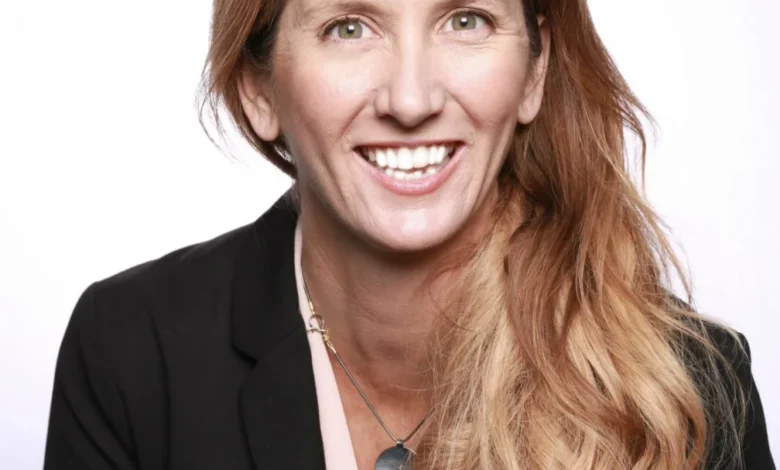
Mobileye Global Inc. announced on Thursday that its founder and visionary leader, Professor Amnon Shashua, intends to step down from his role as Chief Executive Officer, marking the end of a transformative 27-year tenure that saw the company evolve from a niche academic project into a global titan of automotive safety and autonomous driving technology. According to a regulatory filing with the U.S. Securities and Exchange Commission (SEC), Shashua will continue to serve as CEO until a suitable successor is identified and onboarded, ensuring a stable transition as the company embarks on its most ambitious chapter yet: the commercialization of robotaxis and the integration of humanoid robotics.
The departure of Shashua represents a watershed moment for the Jerusalem-based company. Since founding Mobileye in 1999, Shashua has been the primary architect of the company’s strategy, steering it through two public listings, a multi-billion dollar acquisition by Intel, and a subsequent spin-off. His exit comes at a critical juncture as the automotive industry shifts from basic driver-assistance systems toward fully autonomous platforms and "embodied AI."
The Genesis of a Tech Giant: From Hebrew University to Global Dominance
The story of Mobileye is inextricably linked to Shashua’s academic pursuits. As a professor of computer science at the Hebrew University of Jerusalem, Shashua’s research into computer vision and machine learning formed the bedrock of the company’s first products. At a time when the automotive industry relied on expensive radar systems for basic safety features, Shashua proposed a radical alternative: using a single camera and a specialized microprocessor to interpret the road environment in real-time.
This vision led to the development of the EyeQ chip, a proprietary System-on-Chip (SoC) that has since become the industry standard. Today, Mobileye’s technology is integrated into more than 150 million vehicles worldwide, powering Advanced Driver Assistance Systems (ADAS) for nearly every major automaker, including BMW, Ford, Nissan, and Volkswagen. The company’s ability to provide high-performance computer vision at a relatively low cost allowed safety features like Automatic Emergency Braking (AEB) and Lane Departure Warning (LDW) to move from luxury vehicles into the mass market.
A Chronology of Growth and Corporate Evolution
Mobileye’s trajectory has been marked by several high-stakes financial and strategic milestones that defined the modern landscape of automotive technology:
- 1999: Founded by Amnon Shashua and Ziv Aviram in Jerusalem.
- 2014: Mobileye goes public on the New York Stock Exchange in the largest-ever IPO for an Israeli company in the United States, raising $890 million and achieving a valuation of approximately $5.3 billion.
- 2017: Intel Corporation acquires Mobileye for $15.3 billion, a move designed to position the semiconductor giant at the center of the burgeoning self-driving car market. Under Intel, Mobileye operated as a largely independent subsidiary.
- 2022: Amid a shift in Intel’s corporate strategy, Mobileye is spun back out as a publicly traded company. Despite a challenging market for tech stocks, the IPO was considered a success, though Intel remains the majority shareholder.
- 2024: The company announces "Mobileye 3.0," a strategic pivot toward full-stack autonomous systems and diversified robotics.
- 2026 (January): Mobileye acquires Mentee Robotics, a humanoid robot startup founded by Shashua, for $900 million, signaling a move into general-purpose AI.
- 2026 (July): Shashua announces his intention to step down as CEO.
Mobileye 3.0: The Robotaxi and Humanoid Ambition
While Mobileye built its reputation as a "Tier 1" supplier of chips and software to other manufacturers, Shashua’s later years as CEO have been defined by a desire to control the entire technology stack. This evolution, dubbed "Mobileye 3.0," focuses on two primary pillars: autonomous mobility-as-a-service (MaaS) and embodied AI through humanoid robots.
In June 2026, Mobileye confirmed plans to launch its own branded robotaxi service in a major U.S. city by 2027. This move puts Mobileye in direct competition with Alphabet’s Waymo and General Motors’ Cruise. Unlike its competitors, which often rely on expensive lidar-heavy sensor suites, Mobileye’s "Drive" system utilizes a "True Redundancy" approach—combining a world-class camera-only subsystem with a separate lidar/radar subsystem to ensure maximum safety and reliability.
The acquisition of Mentee Robotics in early 2026 further illustrated Shashua’s belief that the AI developed for navigating complex urban traffic is fundamentally the same AI needed for robots to navigate human environments. By integrating Mentee’s humanoid technology, Mobileye aims to leverage its massive datasets and specialized silicon to create robots capable of performing complex tasks in logistics, manufacturing, and eventually, the home.
The Technological Moat: REM and RSS
A significant part of Shashua’s legacy is the creation of the Road Experience Management (REM) mapping system and the Responsibility-Sensitive Safety (RSS) model.
REM is a crowdsourced mapping technology that uses the millions of Mobileye-equipped vehicles already on the road to build high-definition maps in near real-time. This "living map" provides autonomous vehicles with a level of environmental awareness that static maps cannot match.

RSS, meanwhile, is a mathematical framework for autonomous vehicle safety. Shashua championed RSS as a way to standardize "safe driving" by defining clear rules for what constitutes a dangerous situation and how a machine should respond. This framework has been influential in global regulatory discussions regarding the certification of self-driving cars.
Market Implications and the Search for a Successor
The announcement of Shashua’s departure comes at a time of significant volatility in the autonomous vehicle sector. While the technology has advanced, the path to profitability for robotaxis has proven longer and more capital-intensive than many predicted a decade ago.
Industry analysts suggest that the search for a new CEO will likely focus on an executive with experience in large-scale operational execution and service deployment. While Shashua was a "founder-visionary" rooted in deep tech and academia, the next phase of Mobileye requires a leader who can navigate the complexities of launching a consumer-facing robotaxi fleet and managing the supply chains for mass-market humanoid robots.
"Amnon Shashua is one of the few individuals who can claim to have fundamentally changed the way the world drives," said a representative from a leading automotive consultancy. "His departure is the end of the ‘heroic’ era of AV development. The next CEO will need to be a master of operations, regulatory navigation, and commercial scaling."
Relationship with Intel and Financial Health
The leadership change also raises questions about Mobileye’s relationship with its parent company, Intel. Intel CEO Pat Gelsinger has faced pressure to streamline operations as the chipmaker struggles with its own turnaround. While Mobileye has remained a "crown jewel" within the Intel ecosystem, the leadership transition could potentially lead to a further reduction of Intel’s stake or a more distinct separation between the two entities.
Financially, Mobileye has shown resilience compared to other pure-play autonomous driving startups. Its core ADAS business provides a steady stream of revenue that helps subsidize the high R&D costs of its "SuperVision" and "Chauffeur" autonomous platforms. In its most recent quarterly report, the company highlighted growing demand for its higher-level autonomy packages, which command significantly higher margins than basic safety chips.
The Road Ahead for Mobileye
As Shashua prepares to hand over the reins, the company he built stands at a crossroads. The transition from a chip supplier to a service provider is fraught with risk, but the foundation Shashua laid is formidable. His remaining time as CEO will likely be focused on finalizing the technical milestones for the 2027 U.S. robotaxi launch and integrating the Mentee Robotics team into the broader Mobileye architecture.
The search for a successor will be closely watched by investors and automotive partners alike. Whether the new leader comes from within the semiconductor industry, the traditional automotive sector, or the Silicon Valley software world will signal much about Mobileye’s future direction.
In his nearly 30 years at the helm, Amnon Shashua transformed a theoretical approach to computer vision into a global standard for automotive safety. As he prepares to step down, his influence remains embedded in the silicon and software of millions of cars, and his vision of a world with zero traffic fatalities remains the guiding light for the company’s next generation of leadership. The "Mobileye 3.0" era will be his final legacy, a bold bet that the future of intelligence is not just in our computers, but in the machines that move us and work alongside us.