Apple Watch Fall Detection and Emergency SOS Credited with Life-Saving Rescue of Injured Cyclist

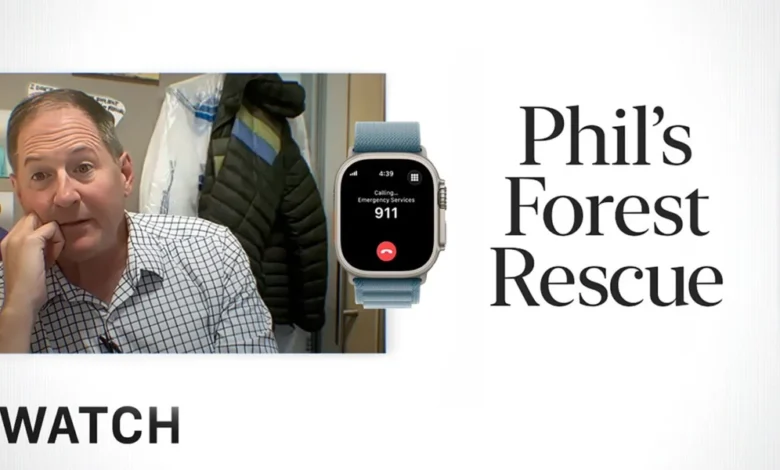
In an increasingly connected world where personal technology often serves as an extension of our daily lives, the Apple Watch continues to distinguish itself not merely as a convenience device but as a critical safety tool, repeatedly demonstrating its capacity to intervene in life-threatening situations. The Cupertino-based tech giant recently released a compelling new video, underscoring this vital role by recounting the dramatic rescue of an injured cyclist whose life was potentially saved by the device’s integrated safety features: Fall Detection and Emergency SOS. This incident is the latest in a growing compendium of real-world testimonies that Apple frequently shares, illustrating the profound impact of its wearable technology on user well-being.
The narrative centers on Phil, an avid mountain biker who, during a ride with his children, suffered a severe accident that rendered him unconscious. According to the Apple-commissioned video, Phil "misjudged" a takeoff, leading to a catastrophic crash that resulted in a broken collarbone and seven fractured ribs. The force of the impact was so significant that it immediately knocked him out, leaving him vulnerable and unable to call for help. It was in this critical moment that his Apple Watch, silently monitoring his movements and physiological state, sprang into action. Its advanced algorithms, designed to detect sudden, hard falls, initiated an automatic emergency protocol. When Phil remained unresponsive to the Watch’s prompts, the device autonomously contacted emergency services, transmitting his precise GPS location. This swift and decisive action enabled firefighters to locate him rapidly, facilitate his rescue, and transport him to a hospital, where he subsequently spent a week recovering from his extensive injuries.
The Chronology of a Critical Intervention
The incident unfolded on a typical day, with Phil embarking on a mountain biking excursion, a common recreational activity that, while exhilarating, carries inherent risks. Mountain biking, especially on challenging terrains, demands high levels of skill and concentration. A moment’s lapse, a technical error, or an unforeseen obstacle can quickly turn an enjoyable outing into a perilous ordeal. For Phil, this inherent risk materialized in a devastating manner.
As he navigated a particular section of the trail, the "misjudgment" occurred, leading to an uncontrolled fall. The impact with the ground was severe, a force strong enough to inflict multiple serious fractures and induce immediate unconsciousness. In such remote or less-trafficked environments, an unconscious individual can remain undiscovered for hours, even days, significantly worsening their prognosis due to exposure, blood loss, or delayed medical attention.
However, Phil had been wearing his Apple Watch, a device he likely viewed primarily for fitness tracking, notifications, or perhaps as a subtle reassurance. Unbeknownst to him in his unconscious state, the Watch’s internal accelerometers and gyroscopes registered the sudden, sharp deceleration and subsequent immobility characteristic of a hard fall. The Fall Detection feature, a cornerstone of the Watch’s safety suite, activated. Typically, after detecting a fall, the Apple Watch waits for about 30 seconds, tapping the user’s wrist and displaying an alert. If the user is able, they can dismiss the alert or initiate an emergency call. Crucially, if the Watch detects no movement for approximately one minute after the fall, it automatically initiates an Emergency SOS call. During this call, the Watch relays a pre-recorded message to emergency services, providing the user’s current location coordinates.

For Phil, who was unconscious, the automatic escalation proved life-saving. The Watch’s transmission reached the local emergency dispatch center, providing not only an alert of a potential medical emergency but also the precise geographical coordinates of the incident. This data was invaluable, transforming what could have been a prolonged search and rescue operation into a targeted response. Firefighters, equipped with this critical location information, were able to quickly pinpoint Phil’s position on the mountain trail. Their rapid arrival ensured that Phil received initial assessment and stabilization, followed by immediate transport to a medical facility. His week-long recovery in the hospital underscores the severity of his injuries and highlights the critical importance of the timely intervention facilitated by his Apple Watch.
The Evolution and Efficacy of Apple Watch Safety Features
Phil’s story is not an isolated incident but rather a testament to years of research, development, and iterative improvements in Apple’s wearable technology. The Apple Watch, first introduced in 2015, has progressively evolved from a sophisticated notification device to a comprehensive health and safety guardian.
Fall Detection was initially introduced with the Apple Watch Series 4 in 2018. The feature relies on an array of sophisticated sensors, including an accelerometer that measures changes in velocity and a gyroscope that detects changes in orientation. These sensors work in tandem with advanced algorithms trained on extensive real-world data to differentiate between typical activity and genuine falls. The system is designed to be intelligent enough to discern the difference between a trip and a hard fall, minimizing false positives while ensuring critical events are captured. Its integration with the Emergency SOS feature, which allows users to quickly contact emergency services by pressing and holding the side button, or automatically as in Phil’s case, forms a robust safety net.
Beyond Fall Detection, Apple has continuously expanded the Watch’s safety capabilities. The Emergency SOS feature, available across all modern Apple Watch models, has been instrumental in numerous rescues globally. More recently, with the introduction of the Apple Watch Series 8, Apple Watch Ultra, and the second-generation Apple Watch SE in 2022, the company unveiled Crash Detection. This feature utilizes an even more advanced set of sensors, including a high-g accelerometer capable of detecting extreme impacts up to 256 Gs, a barometer for detecting cabin pressure changes, and a microphone to identify loud crash noises. When a severe car crash is detected, the Watch automatically connects the user to emergency services and provides their location.
The integration of these features, alongside health monitoring capabilities like heart rate alerts for abnormally high or low readings and the Electrocardiogram (ECG) app, positions the Apple Watch as a multifaceted personal health and safety device. The company’s commitment to these features is not just about technological advancement but about a broader vision of empowering individuals with tools that can genuinely safeguard their lives.
Supporting Data and Industry Context
The impact of wearable technology, particularly the Apple Watch, on personal safety is supported by a growing body of anecdotal evidence and increasingly, by statistical data. Apple rarely releases precise figures for "saves" but often highlights individual stories, which collectively paint a picture of significant real-world utility. However, market penetration and general usage statistics provide context for the potential reach of these features.
The Apple Watch holds a dominant position in the smartwatch market. According to Counterpoint Research, Apple’s market share in the global smartwatch segment consistently hovers around 30-35%, selling tens of millions of units annually. This widespread adoption means that millions of individuals worldwide are equipped with devices capable of these life-saving functions.
Studies and reports from emergency services globally have noted an increase in automated emergency calls originating from smart devices. While some of these can be false alarms—a challenge that tech companies are continually working to mitigate through algorithm refinement—a substantial portion represents genuine emergencies where timely intervention was critical. For instance, data from various emergency dispatch centers has indicated that location data provided by devices like the Apple Watch significantly reduces response times, particularly in cases where the individual is disoriented, incapacitated, or in an unfamiliar location.
In trauma medicine, the concept of the "golden hour" is paramount—the period of time following a traumatic injury during which there is the highest likelihood that prompt medical treatment will prevent death. Technologies that can shave minutes off emergency response times directly contribute to better patient outcomes, reducing mortality and long-term disability, especially in cases of severe fractures, head injuries, or internal bleeding, as Phil experienced. The ability of the Apple Watch to automatically detect a fall and summon aid within moments of an incident directly contributes to maximizing this critical window.
Official Responses and Broader Implications
Apple’s strategy around showcasing these rescue stories is multifaceted. From a corporate perspective, it reinforces the company’s commitment to user well-being and differentiates its products in a competitive market. Tim Cook, Apple’s CEO, has frequently emphasized the company’s dedication to health and fitness, stating that the Apple Watch’s health features are among Apple’s most significant contributions. The company’s marketing campaigns, such as the "Thankfully, I was wearing it" initiative launched in China earlier this year, featuring stories of Fall Detection, Crash Detection, and heart rate alerts, are designed to resonate deeply with consumers, highlighting the practical and profound value proposition of the device beyond its aesthetic or connectivity features. These narratives are powerful testimonials that build trust and demonstrate tangible benefits, potentially influencing purchasing decisions.
From the perspective of emergency services, these technological advancements present both opportunities and challenges. The primary benefit is the increased efficiency in locating individuals in distress. Firefighters, paramedics, and law enforcement agencies have repeatedly acknowledged the invaluable assistance provided by accurate GPS data from smart devices. However, they also face the challenge of managing false alarms, which can divert resources. As technology improves, the accuracy of detection algorithms is expected to reduce these instances, making these devices even more reliable partners for emergency responders. Discussions are ongoing within emergency services about how best to integrate these automated alerts into existing protocols and systems to maximize their effectiveness.

The medical community largely views these innovations positively. Dr. Michael Sayre, an emergency physician and former medical director for the National Association of EMS Physicians, has often commented on the potential of such technology to bridge the gap between injury and professional medical care. For conditions like severe trauma, early stabilization and transport can be life-altering. Beyond emergencies, the continuous health monitoring capabilities of wearables are also seen as a step towards proactive healthcare, enabling earlier detection of chronic conditions or anomalies.
The broader implications of these safety features extend to the future of personal technology and healthcare. Wearable devices are increasingly moving beyond simple data tracking to becoming active participants in personal safety and health management. This trend suggests a future where our devices not only connect us but also protect us, serving as silent guardians monitoring our well-being. This shift could empower individuals, particularly those engaging in solitary activities like hiking, cycling, or elderly individuals living alone, by providing an unprecedented layer of security and autonomy.
Furthermore, the success of features like Fall Detection and Emergency SOS fuels innovation across the tech industry. Competitors are spurred to develop similar or superior safety features, leading to a virtuous cycle of technological advancement focused on user welfare. This competitive landscape ultimately benefits consumers, who gain access to increasingly sophisticated and reliable safety tools.
However, the proliferation of such features also raises important discussions around data privacy, the potential for over-reliance on technology, and the ethical considerations of constant monitoring. Companies like Apple are constantly working to balance utility with privacy, offering robust encryption and user control over health data. As these technologies become more integrated into our lives, ongoing dialogues will be necessary to ensure they are deployed responsibly and ethically, maximizing benefits while mitigating potential risks.
In conclusion, Phil’s rescue story serves as a poignant reminder of the transformative power of technology when designed with human well-being at its core. The Apple Watch, through its sophisticated Fall Detection and Emergency SOS features, has transcended its role as a mere gadget, establishing itself as a vital tool capable of making a tangible difference in critical, life-threatening moments. As Apple continues to innovate, these stories underscore the profound impact that thoughtfully engineered technology can have on enhancing personal safety and, ultimately, saving lives.
Related posts: