Suzuki Ignis EV Set for European Debut in Summer 2027 to Challenge Budget-Friendly Electric City Cars

Although Japanese automaker Suzuki officially withdrew from the United States passenger car market in 2012, the brand has maintained a strong, enduring presence across international markets where consumers favor compact, highly
efficient vehicles. This strategic focus is entering a new era of electrification, highlighted by the announcement of the forthcoming Suzuki Ignis EV. Slated to arrive on European shores in the summer of 2027, this micro-hatchback will step directly into an increasingly crowded and fiercely competitive segment populated by budget-conscious urban electric vehicles designed by both legacy European manufacturers and aggressive new entrants from China.
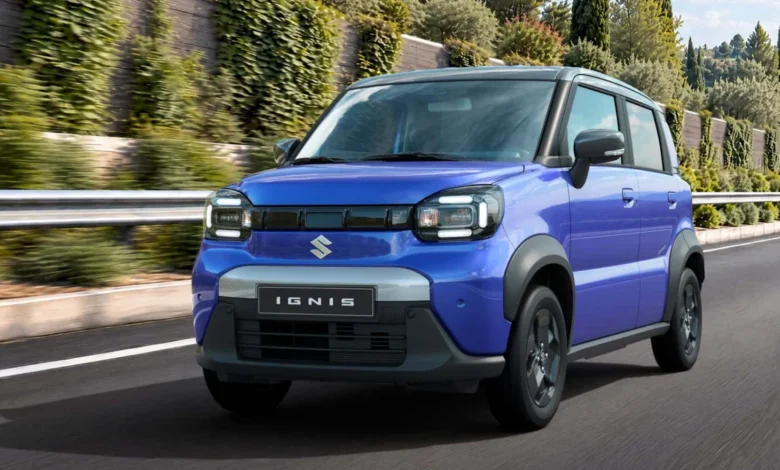
Measuring just 11 feet and 9 inches (3.57 meters) in length, the Ignis EV is engineered to navigate congested metropolitan environments with ease. Despite its departure from North America over a decade ago, Suzuki continues to thrive globally by leveraging its core competency: manufacturing remarkably space-efficient, lightweight, and affordable cars tailored for daily city driving.
Roots in Japanese Micro-Vehicles and Global Adaptations
The upcoming Ignis EV represents Suzuki’s first dedicated subcompact electric vehicle designed and marketed for global audiences, yet its architectural and engineering roots trace directly back to the domestic Japanese market. Recently, Suzuki introduced the "e Sky" in Japan, an all-electric kei car that forms the foundational blueprint for the Ignis’s body style and core powertrain components.
Kei cars are a uniquely Japanese phenomenon, bound by strict government regulations regarding vehicle dimensions and engine displacement to secure tax and insurance benefits. Consequently, the Ignis EV retains the signature proportions of a kei car: it is notably tall and narrow, maximizing vertical space while maintaining a tiny footprint on the road.
However, Suzuki recognized that European driving dynamics differ significantly from those in dense Japanese urban centers. To ensure the vehicle resonates with European buyers, Suzuki engineers relocated prototype testing to European city streets and winding rural roads. During this development phase, test drivers and suspension engineers meticulously tuned the vehicle’s dampers, springs, and power delivery curves. The goal was to enhance driving confidence, improve high-speed stability on European ring roads, and deliver an engaging, responsive driving character that appeals to Western tastes.
Platform Engineering and Powertrain Specifications
Beneath the exterior sheet metal lies Suzuki’s proprietary, dedicated electric vehicle architecture, officially designated as the Heartect-e platform. Engineered specifically to house battery-electric systems rather than being adapted from an internal combustion engine layout, the Heartect-e platform places a 26-kilowatt-hour lithium iron phosphate (LFP) battery flat beneath the cabin floor.
LFP chemistry was chosen deliberately by Suzuki’s powertrain development division. Compared to traditional nickel-manganese-cobalt (NMC) chemistries, LFP batteries offer superior thermal stability, enhanced safety profiles, and significantly greater longevity over thousands of charge-discharge cycles. Furthermore, LFP cells are typically less expensive to produce, which is a critical consideration for maintaining profitability in the entry-level electric vehicle segment. While Suzuki has not yet published official driving range estimates or specific DC fast-charging speeds for the European-spec Ignis EV, the battery capacity suggests a real-world urban range well-suited for daily commuting.
Up front, the Ignis EV utilizes a highly integrated powertrain module. The electric motor, power inverter, and reduction gear set are housed together within a single, highly compact assembly. This unit channels 90 horsepower and 98 pound-feet (133 Newton-meters) of torque directly to the front wheels. While these figures may appear modest compared to high-performance electric crossovers, they are more than adequate for a lightweight city car, promising brisk throttle response at lower urban speeds.
Exterior Design and Interior Packaging
The exterior styling of the Ignis EV embraces its ultra-compact dimensions through a clever "wheel-at-each-corner" layout. By pushing the wheels out to the extreme edges of the chassis, Suzuki has minimized the front and rear overhangs, creating a distinctive, purposeful stance that helps disguise the car’s diminutive size.
Modern lighting technology enhances the vehicle’s visual identity. Both the front and rear LED light signatures draw their geometric inspiration from digital numerals, lending the car a futuristic, tech-forward aesthetic. Combined with dark-tinted roof pillars that create a "floating roof" illusion, the Ignis EV manages to project a trendy, youthful image.
Inside, packaging ingenuity takes center stage. A fluid, curved design element sweeps continuously from the dashboard into the front door panels, creating an enveloping sense of space. A wide, digitized instrument and infotainment display commands the driver’s attention, while a ceramic-inspired storage tray spans the length of the dashboard, offering practical utility for everyday items.
Suzuki President Toshihiro Suzuki has frequently emphasized that the company’s decades of specialized experience building Japanese mini vehicles is the primary driver behind this spatial efficiency. Translating micro-car packaging expertise to a global EV platform allows the Ignis to offer a genuinely usable, comfortable cabin without expanding its external footprint. Furthermore, the vehicle boasts an exceptionally tight turning circle of just 29.5 feet (9 meters), making parallel parking and executing U-turns in narrow European alleyways effortless.
The Changing European Electric City Car Landscape
When the Suzuki Ignis EV hits European showrooms in the summer of 2027, it will enter a market vastly different from the one dominated by traditional fuel-efficient hatchbacks of the past. For decades, European automotive mainstays held a virtual monopoly on affordable city transportation. European consumers seeking a low-cost vehicle capable of squeezing down medieval streets could rely on staple models like the Fiat Panda, the Renault Twingo, and the Volkswagen Up.
Today, as tightening environmental regulations and consumer demand accelerate the transition to electric mobility, those legacy models are either being phased out or radically reinvented. Recognizing an enormous commercial opening in the sub-€20,000 price bracket, Chinese automakers and joint ventures have rapidly moved to fill the void.
Stellantis partnered with Chinese manufacturer Leapmotor to bring the affordable T03 city EV to Europe. Meanwhile, BYD adapted its highly successful Chinese-market Seagull for European consumers, marketing it under the name Dolphin Surf. Industry analysts and automotive journalists reviewing the Dolphin Surf have noted that these Chinese imports are no longer defined by cheap materials; instead, they offer impressive build quality, comprehensive feature lists, and competitive pricing that undercuts established European marques.
Intensifying Competition From Domestic Automakers
European automotive groups are far from ceding the entry-level EV market without a fight. By the time the Ignis EV makes its market debut, European buyers will have a robust selection of homegrown electric hatchbacks to choose from.
Renault has successfully injected new life into its heritage portfolio, reviving both the iconic Renault 5 and the Twingo as dedicated electric vehicles, alongside the ultra-budget Dacia Spring. Meanwhile, the Volkswagen Group is rolling out a family of compact EVs across its subsidiary brands. This offensive includes the upcoming Volkswagen ID. Polo, the Cupra Raval, and the Skoda Epiq.
The market appetite for these small, affordable electric vehicles is already demonstrable. In late 2025, a major German Volkswagen dealer group reported accumulating over 30,000 advanced orders for the ID. Polo, resulting in waiting lists stretching nearly ten months out. This overwhelming consumer demand underscores that European drivers desperately want accessible, practical electric cars rather than oversized, expensive SUVs.
The Pricing Dilemma and Strategic Implications
Despite its clever packaging, robust safety-focused LFP battery, and nimble driving dynamics, the ultimate success of the Suzuki Ignis EV will hinge almost entirely on its retail pricing strategy.
To understand the competitive pressure Suzuki faces, one must look at the newly redesigned Dacia Spring. Dacia strategically shifted production of its tiny EV from China to a European facility in Slovenia while sharing core underpinnings with the electric Twingo. The resulting vehicle launched in Italy with a starting price of just €17,900, offering up to 155 miles (250 kilometers) of WLTP driving range from a battery pack only marginally larger than the one fitted to the Suzuki.
If Suzuki can price the Ignis EV competitively alongside the Dacia Spring while offering the distinct build quality, reliability, and quirky aesthetic charm associated with Japanese manufacturing, it could carve out a lucrative niche. However, if import tariffs, localized supply chain costs, or currency fluctuations push the Ignis past the psychological €20,000 barrier, it risks being marginalized by aggressive Chinese competitors and deeply entrenched European volume brands.
As the summer 2027 launch date approaches, industry observers will be watching closely to see how Suzuki positions its first global electric hatchback in a battleground where every euro counts.