Polestar to Exit United States Market After Deciding Not to Challenge Federal Ban on Chinese Connected Vehicle Technology

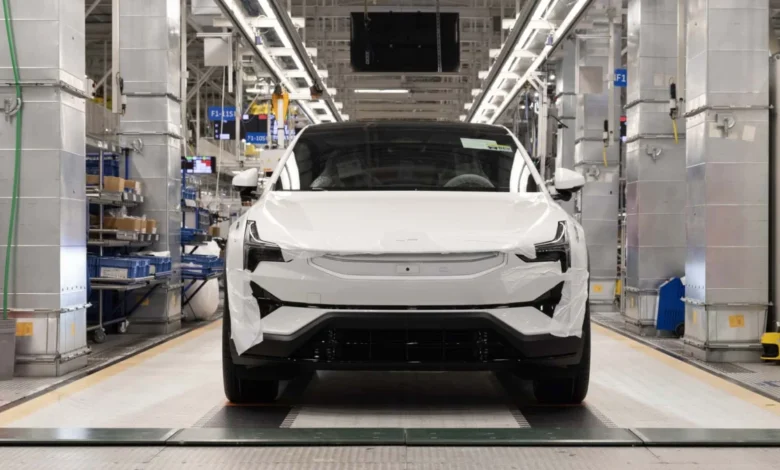
Polestar, the Swedish-headquartered electric vehicle manufacturer owned by China’s Zhejiang Geely Holding Group, has officially confirmed its intention to withdraw from the United States automotive market. This decision comes in the wake of a recent federal ban targeting vehicles equipped with Chinese-sourced hardware and software essential for "connected" functionalities. Despite having the option to petition the U.S. Department of Commerce for a reconsideration or to pursue legal action through the federal court system, the automaker has indicated it will not challenge the ruling. The move signals a major shift in the competitive landscape of the American electric vehicle (EV) sector and highlights the escalating geopolitical tensions influencing global trade and automotive manufacturing.
The withdrawal follows a period of intense scrutiny by the Biden administration regarding the potential national security risks posed by Chinese technology in the American transportation infrastructure. The Department of Commerce’s decision to ban such vehicles is rooted in concerns that integrated software and hardware could be leveraged for data collection, surveillance, or even remote manipulation by foreign entities. While Polestar’s corporate sibling, Volvo—also owned by Geely—was granted certain authorizations to continue selling connected vehicles in the U.S., Polestar was unable to secure similar exemptions. A spokesperson for the company confirmed the exit to The Wall Street Journal, noting that after "significant dialogue" with U.S. authorities, the company concluded that an appeal would likely be unsuccessful.
The Regulatory Framework and National Security Concerns
The federal ban that precipitated Polestar’s exit is part of a broader strategy by the U.S. government to secure domestic supply chains and protect national infrastructure from foreign interference. The specific regulations target the "Connected Vehicle" ecosystem, which includes systems for automated driving, vehicle-to-everything (V2X) communication, and infotainment platforms that rely on software or hardware developed by entities with ties to "countries of concern," most notably China and Russia.
According to the Department of Commerce, modern vehicles are essentially "computers on wheels," equipped with cameras, microphones, GPS tracking, and constant internet connectivity. The government argues that if a foreign adversary were to gain access to these systems, they could potentially collect sensitive data on American citizens, monitor the movements of government officials, or disrupt traffic flow on a massive scale. For Polestar, whose vehicles are deeply integrated with advanced software suites and connectivity features, the cost and complexity of decoupling its Chinese-developed technology to meet U.S. standards proved insurmountable within the required timeframe.
The ban is scheduled to take full effect for the 2027 model year for software and the 2030 model year for hardware. However, the regulatory uncertainty has forced Polestar’s hand much earlier. By choosing not to fight the ruling, the company is effectively acknowledging that its current business model and supply chain are incompatible with the evolving American regulatory environment.
Chronology of Polestar’s U.S. Operations and Recent Challenges
Polestar’s journey in the United States has been marked by both ambitious growth and significant hurdles. The brand originally launched as a high-performance subsidiary of Volvo before being spun off as a standalone electric-only brand in 2017.
- 2019–2021: Polestar enters the U.S. market with the Polestar 1 (a limited-run plug-in hybrid) and the Polestar 2, a fully electric fastback designed to compete directly with the Tesla Model 3.
- 2022: The company goes public via a SPAC merger, valuing the brand at approximately $20 billion. It announces plans for a rapid expansion of its lineup, including the Polestar 3 and Polestar 4 SUVs.
- 2023: Polestar faces headwinds as U.S. EV demand begins to fluctuate and competition intensifies. The company reports selling 5,747 vehicles in the U.S. for the year, representing only 6% of its global volume.
- Early 2024: The U.S. government increases tariffs on Chinese-made EVs to 100%. Polestar attempts to mitigate this by shifting production of the Polestar 3 to a Volvo-operated plant in Ridgeville, South Carolina.
- Late 2024: The Department of Commerce announces the ban on Chinese connected vehicle technology. Despite the South Carolina production site, the Polestar 3 remains subject to the ban due to its underlying software architecture.
- Present: Polestar announces it will not appeal the ban and prepares to wind down U.S. operations.
The Impact on American Dealerships and Infrastructure
The decision to exit the market has left Polestar’s American retail partners in a state of distress. Currently, there are 32 Polestar "Spaces"—the brand’s term for its minimalist, gallery-style showrooms—across the country. These dealerships are owned by various automotive groups that have invested millions of dollars into the brand’s infrastructure based on the promise of a multi-model lineup and long-term growth.
Matthew Haiken, a prominent Polestar dealer who has been a vocal advocate for the brand, expressed the frustration felt by many in the retail network. "We deserve some answers," Haiken told The Wall Street Journal, questioning why Polestar could not achieve the same regulatory clearance as Volvo. Dealers are now facing the prospect of "stranded assets"—showrooms and service centers that may no longer have new products to sell or a clear path toward profitability.
While Polestar has stated it will continue to sell its remaining inventory in the U.S., the long-term viability of these dealerships is effectively over once the current stock is depleted. To accelerate this process, the automaker has initiated aggressive pricing strategies, in some cases slashing the MSRP of vehicles by as much as $25,000. While this provides a short-term bargain for consumers, it significantly impacts the resale value for existing owners and further complicates the financial outlook for the dealer network.
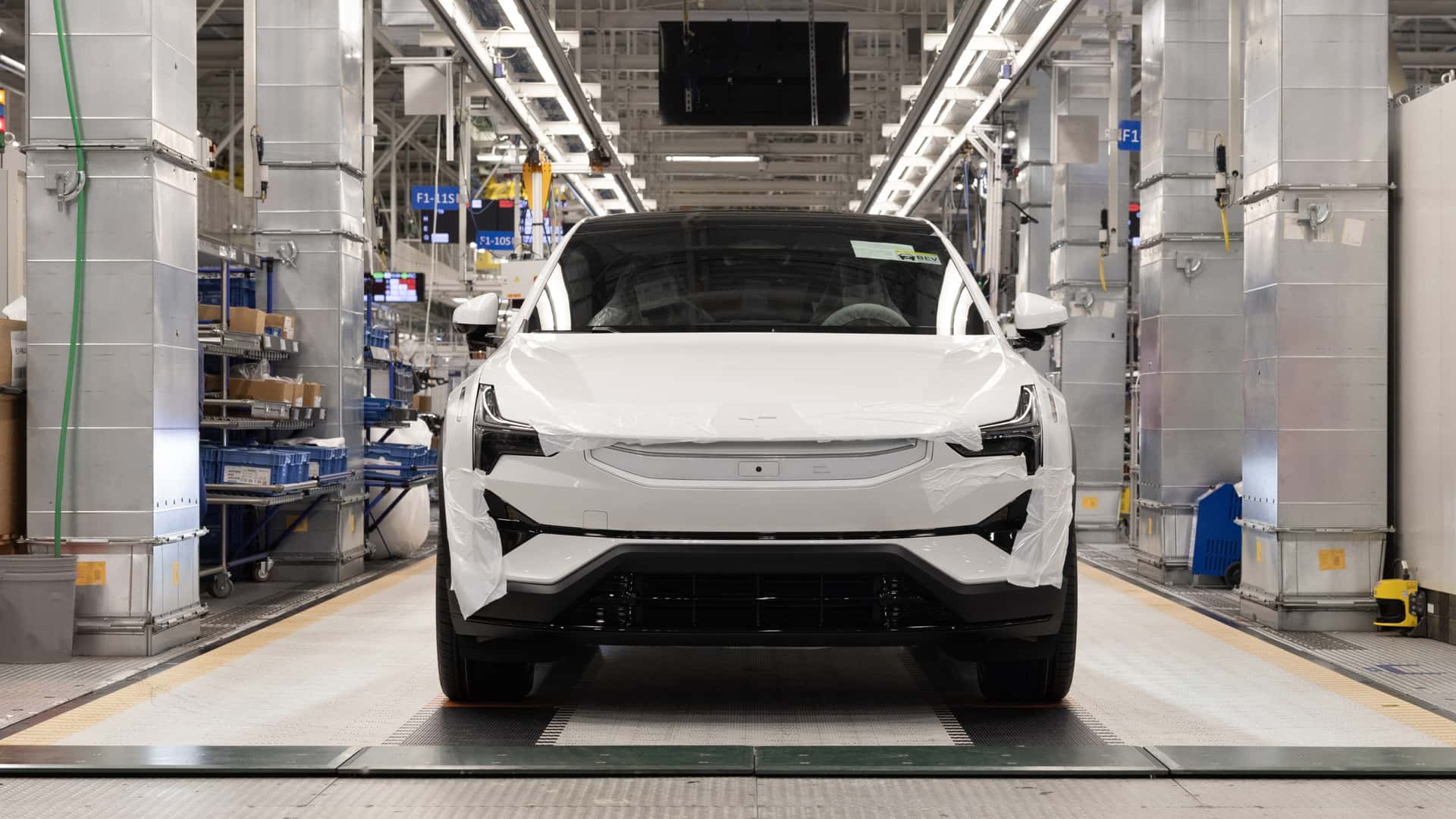
Comparative Analysis: Why Volvo Stayed and Polestar Left
One of the most pressing questions surrounding this exit is the disparity between Polestar and Volvo. Both brands share a parent company in Geely, and both utilize shared platforms and technology. However, Volvo was granted a path forward in the U.S. while Polestar was not.
Analysts point to several factors for this divergence. First, Volvo has a much longer and more established history in the United States, with a massive existing fleet of vehicles and a long-standing manufacturing presence. The South Carolina plant, while producing the Polestar 3, is primarily a Volvo facility. Furthermore, Volvo has been more successful in diversifying its global R&D, with significant engineering hubs in Sweden and the U.S. that operate with a degree of autonomy from Geely’s Chinese operations.
In contrast, Polestar was developed with a more centralized Chinese-centric supply chain for its software and electronics. As a smaller, younger brand, it lacked the lobbying power and the deep-seated industrial footprint required to negotiate the complex "carve-outs" that older, more established manufacturers often secure during major regulatory shifts. For Geely, the cost of re-engineering Polestar’s entire digital architecture specifically for the American market—which only accounts for a fraction of the brand’s sales—likely did not make financial sense.
Market Data and Global Strategy Pivot
From a purely statistical perspective, Polestar’s departure from the U.S. is a calculated retreat to more favorable ground. In 2023, the vast majority of Polestar’s sales were concentrated in Europe and parts of the Asia-Pacific region. European markets, in particular, have shown a higher appetite for Polestar’s design-led, performance-oriented EVs, and while the European Union has also introduced tariffs on Chinese-made EVs, they are significantly lower than the 100% duty imposed by the United States.
By exiting the U.S., Polestar can reallocate its marketing and R&D budget toward the Polestar 4 and upcoming Polestar 5 and 6 models in markets where the regulatory environment is more predictable. The company has indicated that it will focus on "core markets" where it has already achieved significant scale. This pivot suggests that the company is prioritizing survival and profitability over the expensive and politically fraught goal of maintaining a foothold in North America.
Broader Implications for the EV Industry
Polestar’s exit serves as a cautionary tale for the global automotive industry, illustrating how quickly trade policy and national security concerns can dismantle years of market preparation. It highlights a growing "decoupling" of the Western and Chinese automotive sectors. As vehicles become more reliant on data and software, they are increasingly being viewed not just as consumer goods, but as strategic assets subject to the same level of scrutiny as telecommunications equipment or energy infrastructure.
For other automakers with Chinese ties, such as Lotus (also owned by Geely) or various joint ventures, the Polestar precedent is alarming. It suggests that merely assembling cars in the U.S. is no longer a guaranteed "safe harbor" if the underlying technology originates from a country deemed a security risk.
Furthermore, the exit of a legitimate competitor like Polestar reduces consumer choice in the premium EV segment. With Polestar out of the picture, the market share for mid-to-high-end electric SUVs and sedans will likely be further consolidated by Tesla, Rivian, and traditional luxury brands like BMW, Mercedes-Benz, and Audi.
Conclusion and Outlook
As Polestar begins its "end of the road" phase in the United States, the focus remains on how the company will handle its existing customer base and dealer obligations. While the company has promised to support existing owners with service and parts, the long-term availability of software updates—a critical component of the "connected" car experience—remains a point of concern for those who recently purchased a Polestar vehicle.
The departure of Polestar marks a significant moment in the history of the American EV transition. It is the first major casualty of a new era of "techno-nationalism" where the digital origins of a vehicle are as important as the physical location of its assembly line. For Polestar, the decision to walk away without a fight reflects a pragmatic, albeit painful, realization that in the current geopolitical climate, the American dream is no longer a viable pursuit for a Chinese-backed electric performance brand.