The enduring appeal of the Fujifilm hybrid viewfinder and why mirrorless cameras still miss the mark

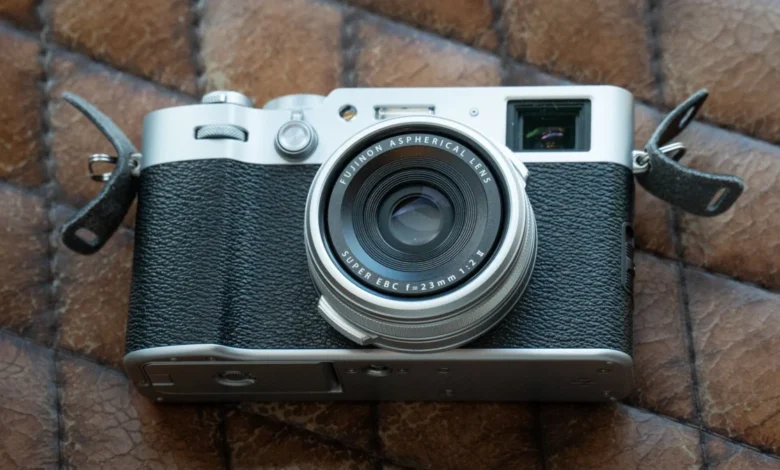
The Fujifilm X100VI has captured the collective imagination of the photography world, not merely for its compact, retro-aesthetic chassis, but for its singular, defining technical feature: the Advanced Hybrid Viewfinder. While the industry has almost universally pivoted toward electronic viewfinders (EVFs) for their ability to provide real-time exposure simulation and focus peaking, a vocal segment of the photography community—and even the Fujifilm user base itself—continues to advocate for the tactile, organic experience provided by the hybrid optical-electronic system. Despite its status as a hallmark of Fujifilm’s premium compact line, the technology has remained largely sequestered from the company’s interchangeable lens mirrorless ecosystem, leaving professional photographers to wonder why such a sophisticated tool has not seen wider implementation.
A Legacy of Hybrid Innovation
The origins of the hybrid viewfinder trace back to the 2011 launch of the original Fujifilm X100. At a time when mirrorless technology was in its infancy and struggled to compete with the clarity of traditional DSLR optical viewfinders (OVFs), Fujifilm introduced a solution that bridged the gap. By integrating a Galilean reverse-Galilean optical viewfinder with an overlaid liquid crystal display (LCD) panel, the company allowed users to toggle between a bright, lag-free optical view and a digital overlay that displays critical shooting information.
This technology evolved over the subsequent decade. The current iteration found in the X100VI allows for an "Electronic Rangefinder" (ERF) mode, which projects a small, magnified digital window into the corner of the optical view, enabling precise manual focus verification without obscuring the composition. This dual-nature approach addresses the primary criticism of optical viewfinders—their inability to show digital data—while circumventing the primary criticism of electronic viewfinders: the latency and potential "disconnect" from reality.

The X-Pro Series and the Challenge of Integration
The only notable attempt to integrate this technology into an interchangeable lens system was the X-Pro series. The X-Pro1, X-Pro2, and the polarizing X-Pro3 utilized this same hybrid mechanism. However, the discontinuation of the X-Pro3 has left a significant void in the market.
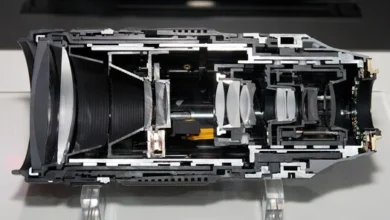
Industry analysts have pointed to several engineering challenges that explain why the hybrid viewfinder has not proliferated across the X-T or X-H lineups. The primary constraint is physical space and light path complexity. Unlike a fixed-lens compact camera, where the viewfinder optics can be calibrated to a single, static lens focal length, an interchangeable lens system requires the viewfinder to adjust its frame lines to match various focal lengths. This requires a complex, mechanical lens-shifting assembly within the viewfinder housing, which increases both the size and the manufacturing cost of the camera body.
Furthermore, as modern autofocus systems have shifted toward sophisticated, AI-driven subject detection, the reliance on the electronic viewfinder has become nearly total. Electronic viewfinders are essential for displaying the "bounding boxes" that track human eyes, birds, or vehicles in real-time. Integrating these high-speed digital graphics into an optical path requires significant miniaturization of the display components, a feat that Fujifilm managed with the X-Pro series but which remains prohibitively expensive for mass-market implementation.
The Professional Case for Optical Clarity
For professional photographers, the debate between EVF and OVF is not merely nostalgic; it is practical. Many studio and fashion photographers working with high-intensity flash setups find the standard EVF experience counter-intuitive. Because an EVF is designed to simulate the final exposure, the screen often appears black or severely underexposed in a studio environment where the ambient light is intentionally kept low to favor the strobes.

While most modern cameras include an "Exposure Preview Off" setting, this often results in a "noisy" or grainy image as the camera struggles to gain up the signal. In contrast, an optical viewfinder provides a crystal-clear, lag-free view of the subject, regardless of the camera’s exposure settings. This allows the photographer to maintain constant eye contact and dynamic engagement with the subject, a nuance that has preserved the popularity of traditional DSLRs and rangefinders among portrait and wedding photographers.
Market Trends and the Rise of Screen-Free Photography
The current fascination with the X100VI aligns with a broader industry trend toward "mindful" photography. As digital sensor technology reaches a point of diminishing returns, manufacturers are increasingly focusing on the ergonomics and the "shooting experience." The rise of screen-free digital cameras, which rely entirely on optical viewfinders, underscores a market fatigue regarding the constant digital mediation of photography.
Data from the Camera & Imaging Products Association (CIPA) indicates that while the total volume of camera shipments has declined since the peak of the mid-2010s, the revenue per unit has risen. This suggests that consumers are willing to pay a premium for cameras that offer unique tactile experiences, such as those provided by the X100 series or boutique digital rangefinders. The X100VI, which has consistently faced global supply shortages due to unprecedented demand, serves as a case study for how a unique, "non-digital" feature can drive brand loyalty in a commoditized market.
The Future of Fujifilm’s Viewfinder Strategy
Looking forward, the question remains whether Fujifilm will return to the hybrid viewfinder in a future interchangeable lens body. There is a strong, persistent rumor mill suggesting a potential successor to the X-Pro3, but official statements from Fujifilm have remained guarded.

From an engineering perspective, the path forward likely involves the "EVF-only" route, focusing on increasing the refresh rate, resolution, and dynamic range of electronic panels to the point where they are indistinguishable from reality. Current top-tier EVFs offer 5.76 million dots and 120fps refresh rates, which effectively eliminate the "lag" that once made photographers reach for optical finders. However, the optical viewfinder maintains a distinct advantage in terms of power consumption and battery life—a factor that will become increasingly relevant as camera bodies shrink in size.
Implications for the Mirrorless Market
If the hybrid viewfinder remains exclusive to the fixed-lens X100 series, it may eventually be viewed as a niche luxury rather than a standard feature. However, the absence of this feature in the wider mirrorless market has created a secondary effect: the growth of third-party optical accessories. Photographers are increasingly turning to clip-on optical finders, frame-line projectors, and other external aids to replicate the rangefinder experience on modern, high-performance bodies.
The "X100VI effect" has demonstrated that the market does not want to choose between the convenience of digital technology and the soul of analog operation. For the time being, the X100VI stands as a solitary beacon for those who value the hybrid experience. Whether that beacon will light the way for a new generation of interchangeable mirrorless cameras depends on whether Fujifilm can overcome the dual hurdles of manufacturing costs and the rapid acceleration of AI-based digital assistance.
For now, the photographers who demand a hybrid experience are forced to choose: the convenience of the interchangeable lens system without the hybrid view, or the unique optical-electronic blend of the X100 series. As the camera industry continues to evolve, the demand for the hybrid viewfinder will likely serve as a litmus test for how much the modern photographer values the "act" of looking through a lens, as opposed to simply monitoring a digital stream of data. The legacy of the X-Pro3 and the current success of the X100VI prove that, even in an era of pure digital processing, the optical experience remains an irreplaceable element of the photographic craft.