US Regulators to Mandate Standardized Emergency Door Releases Following Tesla Safety Concerns and Reports of Trapped Occupants

The National Highway Traffic Safety Administration (NHTSA) has announced a significant shift in its regulatory approach toward automotive door safety, moving to establish new federal mandates that would require all vehicles to feature "robust and obvious" interior door release systems. This decision follows years of mounting public concern and multiple federal inquiries into the electronic door handle designs popularized by Tesla and subsequently adopted by various other manufacturers. While the agency has opted not to pursue a specific safety defect investigation into the Tesla Model 3’s interior door releases at this time, it has instead launched a comprehensive rulemaking proceeding that could fundamentally alter how car doors are designed and operated across the entire United States automotive market.
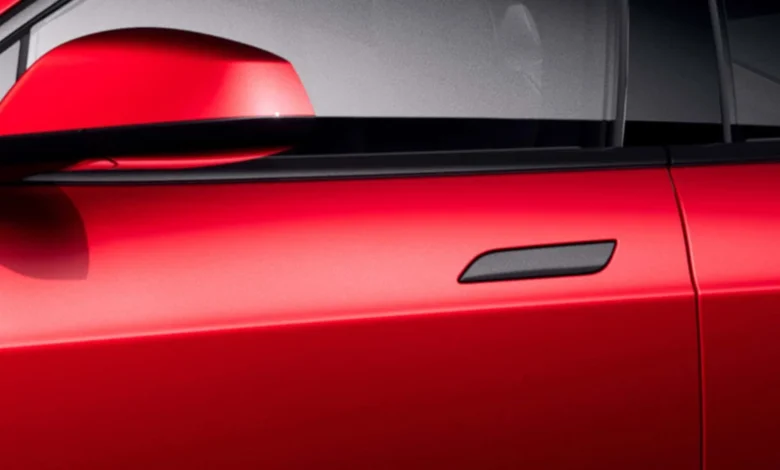
The move marks a pivotal moment in the intersection of automotive aesthetics and passenger safety. For over a decade, the industry has trended toward minimalist interior and exterior designs, replacing traditional mechanical linkages with electronic solenoids and flush-mounted "pop-out" handles. While these designs offer benefits in aerodynamics and modern styling, they have come under intense scrutiny for their performance during catastrophic events, such as high-impact collisions or vehicle fires, where a car’s electrical system may be compromised.
The Evolution of the Electronic Door Handle Controversy
The controversy primarily centers on the design choices made by Tesla, particularly in its high-volume Model 3 and Model Y vehicles. Unlike traditional cars where a physical pull of a lever mechanically unlatches the door, these vehicles utilize an electronic button on the interior door panel. When pressed, a signal is sent to an electronic actuator to open the door. While Tesla does provide manual override releases, they are often integrated into the door’s architecture in a way that is not immediately intuitive to an panicked occupant or a first responder unfamiliar with the vehicle’s specific layout.
In the Tesla Model 3 and Model Y, the manual release for the front doors is a small lever located just ahead of the window switches. However, the rear doors in many versions of these vehicles require a more complex process, such as pulling a tab hidden at the bottom of a door pocket or removing a plastic cover to access a mechanical cable. Safety advocates have long argued that in a smoke-filled cabin or a post-crash scenario where power is lost, expecting a passenger—especially a child or an elderly individual—to locate and operate these "hidden" releases is unrealistic.
The urgency of this regulatory shift was highlighted by a series of high-profile incidents. A 2024 investigation by Bloomberg uncovered a pattern of accidents where occupants were allegedly trapped inside Teslas following crashes that resulted in power loss. In some tragic instances, these incidents resulted in fatalities because bystanders and first responders could not open the doors from the outside, and the occupants were unable to find the manual overrides from the inside.
The Rulemaking Process and Legislative Pressure
NHTSA’s decision to "commence a rulemaking proceeding" is the most formal and far-reaching action the agency can take. According to a filing in the Federal Register, the agency aims to "mandate a robust and obvious door egress system in all motor vehicles." This language suggests that the government is no longer satisfied with manual overrides being relegated to the "fine print" of an owner’s manual. Instead, the agency wants the primary or secondary exit method to be self-explanatory to any occupant, regardless of their familiarity with the vehicle.

This regulatory movement is being bolstered by legislative action on Capitol Hill. Lawmakers have recently introduced the "Safe Exit Act," a proposed piece of legislation that would require the Department of Transportation to establish a federal motor vehicle safety standard specifically for electronic door handles. The act would mandate that all vehicles with electronic locks include a manual release that is easily identifiable and operable without the need for tools or specialized knowledge.
The rulemaking process, however, is notoriously slow. NHTSA officials have noted that creating new Federal Motor Vehicle Safety Standards (FMVSS) typically takes several years. The process involves an Advanced Notice of Proposed Rulemaking (ANPRM), followed by a period of public comment where manufacturers, safety experts, and the general public can weigh in. After reviewing the data, the agency issues a Notice of Proposed Rulemaking (NPRM), leading eventually to a Final Rule. Despite the lengthy timeline, the announcement sends a clear signal to the industry: the era of "hidden" manual releases is likely coming to an end.
Industry-Wide Implications and Technical Challenges
While Tesla has been the focal point of the door handle debate, they are far from the only manufacturer to adopt electronic latches. The Lexus e-Latch system, found on the NX and RX models, uses an electronic push-button but integrates it into a handle that can still be pulled twice to actuate a mechanical release. General Motors has used electronic "touch pads" on the Chevrolet Corvette for years, and brands like Mustang Mach-E and various luxury European marques have also transitioned to electronic door actuation.
The challenge for engineers will be to balance the desire for sleek, "tech-forward" interiors with the rigid requirements of the upcoming NHTSA mandate. Redesigning door internals to include a more prominent mechanical lever may require significant changes to door card architecture and side-impact protection structures.
Furthermore, the mandate is expected to address exterior door handles as well. Flush-mounted handles that retract into the bodywork are common on modern electric vehicles (EVs) to reduce drag and increase range. However, if these handles do not "pop out" automatically during a crash—or if they lack a physical way for a firefighter to grab them—precious seconds are lost during a rescue operation.
Global Regulatory Context: The China Precedent
The United States is not the only market tightening its grip on door handle safety. Earlier this year, Chinese regulators announced that they would begin enforcing more stringent rules on both interior and exterior door handles starting in 2027. China’s move was prompted by similar concerns regarding EV safety and occupant entrapment. Given that China is the world’s largest automotive market, many global manufacturers were already beginning to rethink their door designs to comply with Chinese standards. NHTSA’s move ensures that the North American market will align with these emerging global safety expectations.
Safety Data and the "Golden Hour"
The drive for this regulation is underpinned by the concept of the "Golden Hour" in emergency medicine—the period of time following a traumatic injury where prompt medical treatment has the highest likelihood of preventing death. In vehicle fires, which can occur with both internal combustion engine (ICE) vehicles and EVs (though the nature of the fires differs), the window for escape is often measured in seconds rather than minutes.

Data from the National Fire Protection Association (NFPA) indicates that vehicle fires account for a significant portion of fire-related deaths in the U.S. While EVs do not catch fire more frequently than ICE vehicles, lithium-ion battery fires can burn more intensely and are harder to extinguish. In such scenarios, the inability to exit a vehicle immediately due to an unintuitive door handle design is a catastrophic failure of basic safety engineering.
Reactions from Safety Advocates and the Automotive Sector
Consumer advocacy groups have largely applauded the NHTSA’s decision. "For too long, car companies have prioritized styling over the most basic safety function of a vehicle: getting out in an emergency," said a spokesperson for a leading consumer safety organization. "A door handle should not require a tutorial or a search through a digital manual."
Tesla, for its part, has historically defended its designs by pointing to the presence of manual overrides and arguing that its vehicles are among the safest on the road based on crash test ratings. However, the company has also shown a willingness to adapt; recent updates to the Model 3 "Highland" refresh included some modifications to door hardware, though the electronic button remains the primary interface.
Other manufacturers are already seeking ways to innovate within the likely new rules. Volvo, for instance, has explored designs where the electronic handle is backed by a visible and tactile mechanical fail-safe that doesn’t detract from the modern aesthetic.
Conclusion and Future Outlook
The NHTSA’s commitment to rulemaking for door egress systems represents a fundamental shift in how vehicle safety is defined in the digital age. As cars become more like computers on wheels, the government is stepping in to ensure that "analog" safety—the physical ability to escape a machine—is not lost in the transition.
As the rulemaking process begins, the automotive industry will be watching closely to see how NHTSA defines "obvious." Does it mean a return to the traditional pull-lever? Or will the agency allow for "smart" overrides that illuminate or deploy during an emergency? Regardless of the technical specifics, the goal remains clear: ensuring that no occupant is ever trapped in a vehicle simply because they couldn’t find the handle.
For consumers, this move promises a future where the learning curve for a new car doesn’t include life-or-death instructions on how to open the door. For the industry, it is a reminder that while innovation is welcome, it must never come at the expense of the most fundamental safety protocols. The next few years will see a flurry of engineering activity as the world’s automakers prepare for a new era of standardized, fail-safe vehicle egress.