Illinois Launches First Federally-Funded EV Charging Station in Casey and Announces $23.5 Million in New Grants

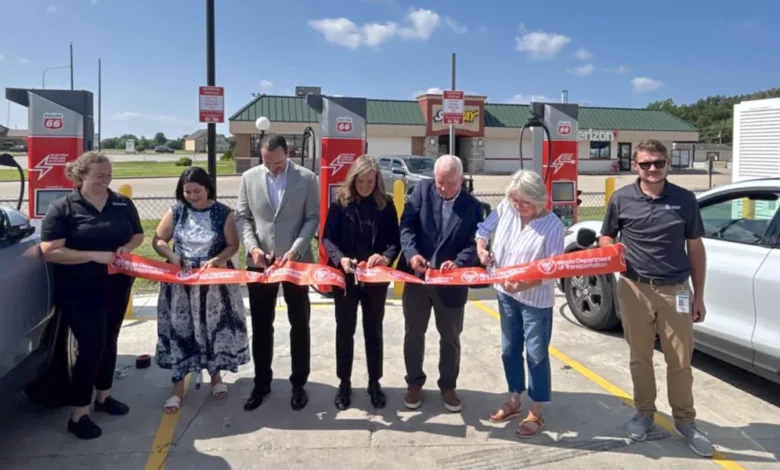
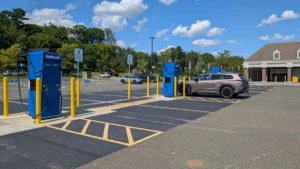
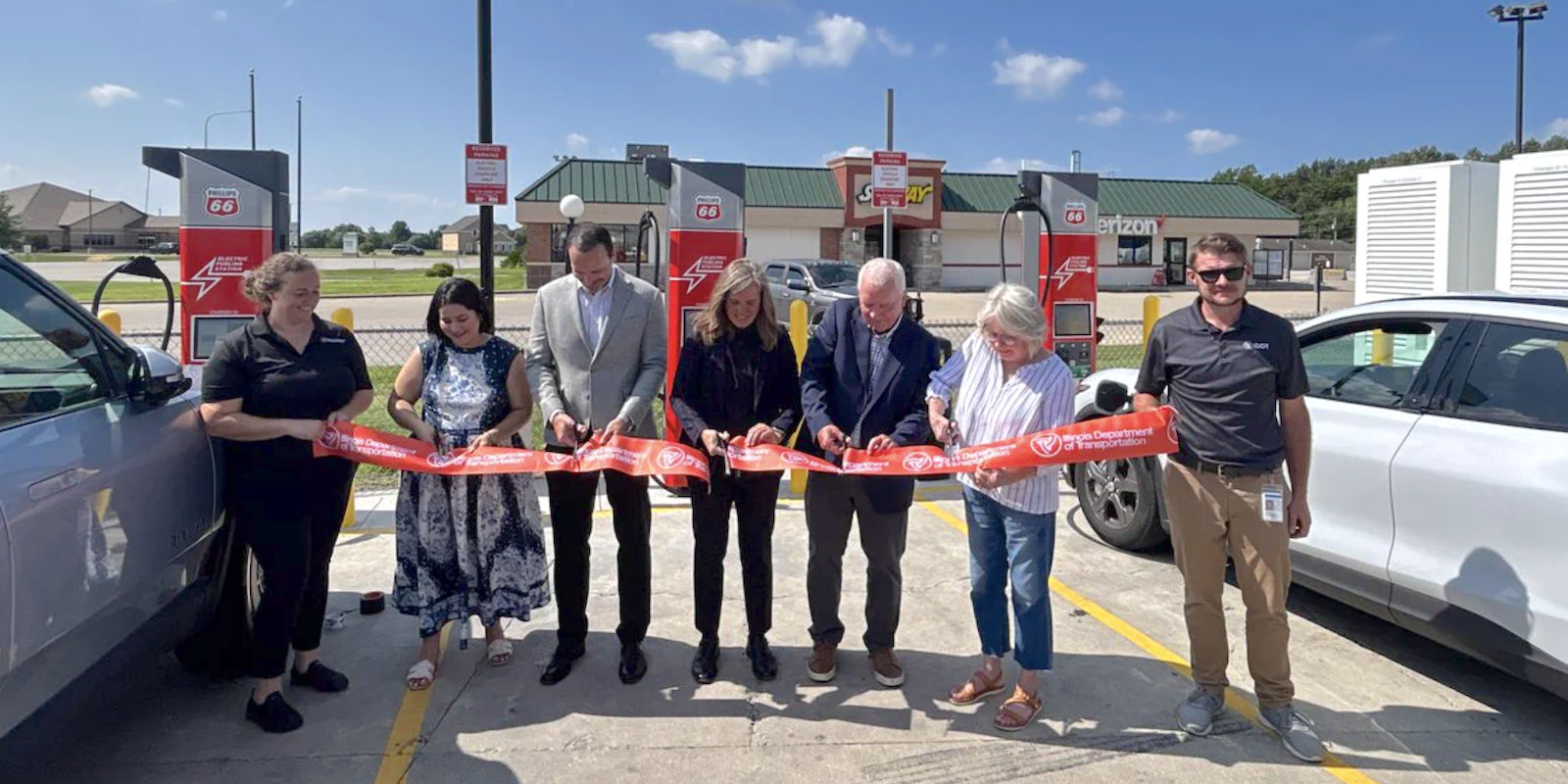
The Illinois Department of Transportation (IDOT) officially inaugurated the state’s first electric vehicle (EV) charging station funded by the federal government this week, marking a significant milestone in the state’s transition toward sustainable transportation infrastructure. The new high-speed charging hub is located at a Phillips 66 Mach 1 station in Casey, Illinois, strategically positioned to serve travelers along the Interstate 70 corridor. This project represents the first operational fruit of the National Electric Vehicle Infrastructure (NEVI) Formula Program in Illinois, a federal initiative designed to create a seamless nationwide network of EV chargers.
The ribbon-cutting ceremony in Casey served as a dual-purpose event, as state officials also announced a fresh infusion of $23.5 million in "Round 3" NEVI funding. This latest round of investment is slated to facilitate the construction of 140 new charging ports across 29 distinct locations throughout the state. By expanding the availability of DC fast charging, Illinois aims to eliminate "range anxiety" for EV drivers and ensure that the state’s infrastructure keeps pace with the rapidly growing adoption of electric vehicles by its residents.
Technical Specifications and Strategic Location
The newly energized station in Casey features four DC fast charging ports integrated into the Electrify America network. These units are among the most powerful currently available to the public, capable of delivering up to 350 kW of power each. For modern electric vehicles equipped with 800-volt battery architectures, such as the Hyundai Ioniq 6 or the Porsche Taycan, these chargers can replenish a battery from 10% to 80% in approximately 15 to 20 minutes. Even for vehicles with standard 400-volt systems, the high-capacity output ensures the fastest possible charging curve.
The deployment of the Casey station was supported by an $854,641 competitive grant awarded to Phillips 66. The location was chosen specifically for its proximity to Interstate 70 and Illinois Route 49, adhering to federal NEVI guidelines that require charging stations to be located no more than 50 miles apart along designated "Alternative Fuel Corridors" and within one travel mile of the highway. Casey, a town known for its "Big Things in a Small Town" attractions, is now positioned as a critical node for interstate EV travel between St. Louis and Indianapolis.

The NEVI Formula Program: A National Blueprint
The National Electric Vehicle Infrastructure (NEVI) Formula Program was established by the Bipartisan Infrastructure Law, signed by President Joe Biden in 2021. The program allocated $5 billion over five years to help states create a network of EV charging stations along approximately 75,000 miles of highway across the country. Illinois is expected to receive approximately $148 million in total NEVI funding through 2026.
Under federal requirements, each NEVI-funded site must feature at least four 150 kW DC fast chargers capable of simultaneous operation. The stations must also be non-proprietary, meaning they must serve vehicles from multiple manufacturers using the Combined Charging System (CCS) standard, though many newer stations are also incorporating the North American Charging Standard (NACS) to accommodate Tesla vehicles and future models from other automakers.
The Illinois Department of Transportation has structured its rollout in phases, prioritizing the most heavily trafficked corridors first to ensure that long-distance travel is viable for all EV owners. With the Casey station now online, IDOT is moving rapidly to close the remaining gaps in the state’s primary highway network.
Economic and Rural Implications
The expansion of EV infrastructure is not merely a technical or environmental endeavor; it is an economic strategy. Transportation Secretary Gia Biagi emphasized during the ceremony that rural communities stand to gain significantly from these investments. As EV drivers stop to charge their vehicles for 20 to 30 minutes, they are likely to patronize nearby businesses, including convenience stores, restaurants, and retail shops.
"Some of the strongest interest we’re seeing for EV charging is coming from rural areas that see the benefit of having travelers stop in their towns to charge up and spend their dollars at local stores and businesses," Secretary Biagi noted. This "charging tourism" provides a new stream of foot traffic for small-town economies that might otherwise be bypassed by travelers in a hurry.
Furthermore, the construction and maintenance of these stations create local jobs in the electrical and construction sectors. The NEVI program includes provisions for workforce development, ensuring that a new generation of electricians is trained to install and service high-voltage EV equipment.
Deep Dive into Round 3 Funding and Awardees
The announcement of $23.5 million in Round 3 funding brings the total amount awarded by IDOT through the NEVI program to more than $67 million. This total investment covers 91 charging stations across the state. Once all currently funded projects are completed, Illinois will have added 489 public EV charging ports to its network.
The most recent list of awardees reflects a diverse geographical spread, targeting both high-density urban areas and underserved rural counties. Notable projects in this round include:
- Cook County: Heartland Charging Services received over $2.5 million for two significant sites: the Arlington Heights Memorial Library and a Village of Oak Park location. These urban hubs are essential for apartment dwellers who may not have access to home charging.
- Kane County: The City of Aurora will host a new station with a $1.35 million grant, supporting one of the state’s largest population centers.
- Sangamon County: In the state capital of Springfield, Universal EV was awarded $644,418 to install chargers at a Days Inn by Wyndham, catering to tourists and government employees.
- St. Clair County: A Subway location in Lebanon will receive $656,320, illustrating the trend of integrating charging into existing fast-food and retail footprints.
- LaSalle County: The City of Ottawa will benefit from a $654,600 grant for a downtown installation, supporting local tourism in the Illinois River Valley.
These selections demonstrate IDOT’s strategy of placing chargers at locations where drivers already spend time—libraries, hotels, and restaurants—thereby making the charging process a convenient part of a daily routine or a travel stop.
Aligning with State Climate Goals
The NEVI rollout is a cornerstone of Governor JB Pritzker’s broader environmental agenda. In 2021, Illinois passed the Climate and Equitable Jobs Act (CEJA), which set an ambitious goal of putting one million electric vehicles on Illinois roads by 2030. To reach this target, the state has implemented several incentives, including a $4,000 rebate for the purchase of a new electric vehicle and a $1,500 rebate for electric motorcycles.

Recent data suggests that Illinois is making rapid progress. EV sales in the state have reportedly outpaced the national average by a significant margin, driven by a combination of state incentives, a growing variety of available models, and the expanding charging network. However, experts agree that the speed of adoption is tethered to the reliability of the public charging network. The Casey station and the subsequent 140 ports funded in Round 3 are designed to provide the "psychological safety net" required for consumers to make the switch from internal combustion engines.
Challenges and Future Outlook
Despite the progress, the rollout of NEVI-funded stations has faced challenges nationwide. Supply chain constraints for high-voltage transformers, permitting delays, and the need for utility grid upgrades have slowed the pace of installation in some regions. In Illinois, IDOT has worked closely with utility providers like ComEd and Ameren to ensure that the local grid can handle the sudden demand of 350 kW chargers, which can draw as much power as a small office building during a peak charging session.
Looking ahead, the state is expected to continue its phased approach. While Rounds 1 through 3 have focused primarily on the interstate system and major "Alternative Fuel Corridors," future rounds may look toward "community charging"—placing chargers in residential neighborhoods, public parks, and shopping centers to support those without dedicated off-street parking.
The transition to electric mobility is also seeing a shift in technology standards. While the Casey station utilizes Electrify America’s current hardware, future Illinois stations will likely see a mix of CCS and NACS connectors as the industry standardizes around the Tesla-designed plug. IDOT has indicated that its program remains flexible to accommodate these technological shifts, ensuring that the infrastructure built today remains relevant for the next decade of EV development.
Conclusion
The opening of the Casey charging station is more than just the addition of four plugs to a map; it is a proof of concept for the state’s infrastructure future. By leveraging federal funds to partner with private entities like Phillips 66 and Electrify America, Illinois is building a decentralized energy network that supports environmental goals, encourages local economic growth, and provides modern conveniences to travelers.

As the 489 planned ports come online in the months and years ahead, the Illinois landscape will become increasingly hospitable to electric transport. For the residents of Casey and the thousands of travelers who pass through it daily, the future of transportation has officially arrived at the Mach 1 station on Illinois 49. Through strategic investment and a commitment to statewide coverage, Illinois is positioning itself as a leader in the Midwest’s burgeoning green economy.