The Unblinking Eye: How a Humble iPhone and a Curious Giraffe Captured an Award-Winning Perspective

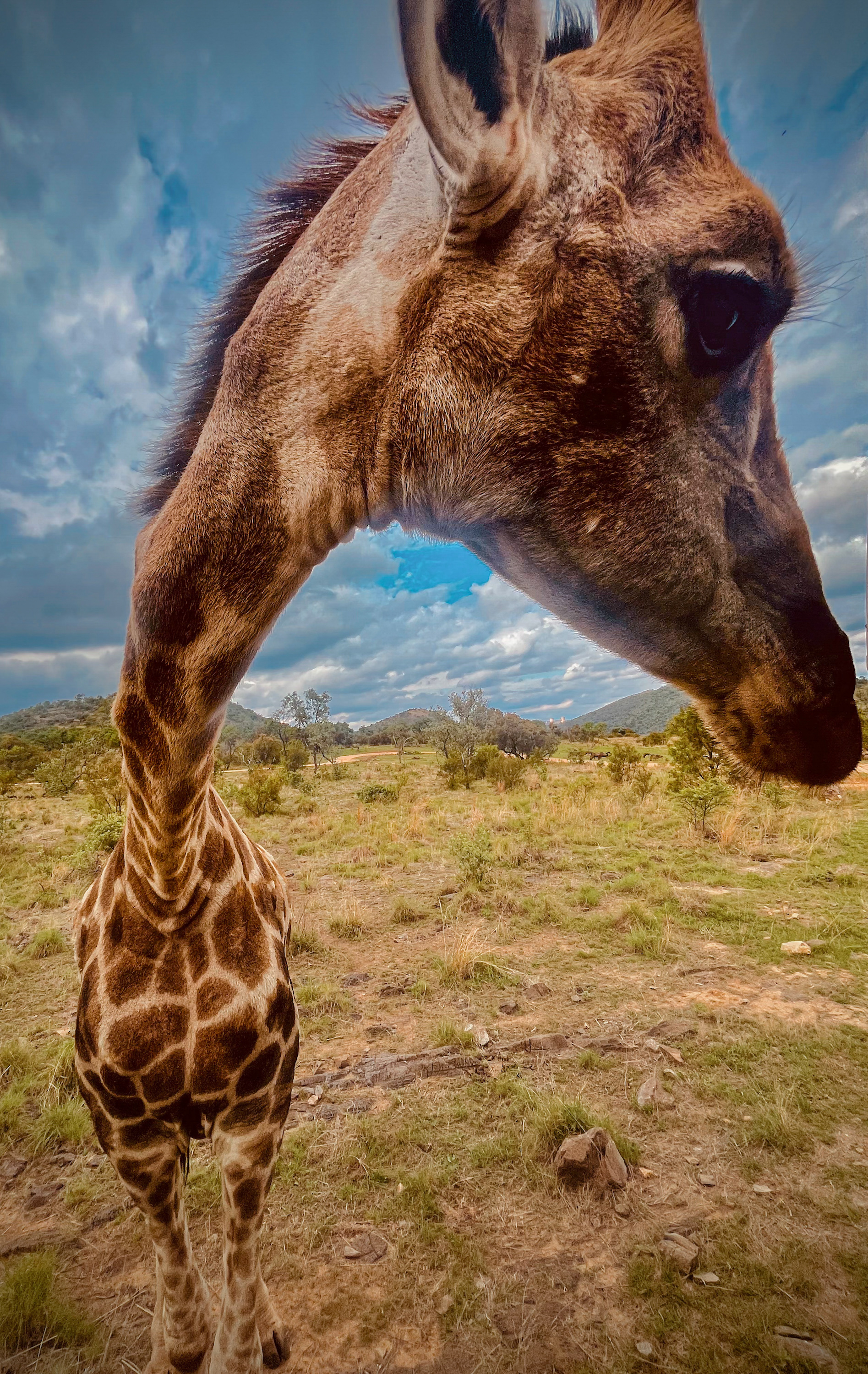
In a striking testament to the power of mobile photography and the inherent artistry of the natural world, German photographer Marcel Ohneberger has secured an Honorable Mention at the prestigious 2026 iPhone Photography Awards (IPPAWARDS) for a captivating image of a giraffe. The photograph, an intimate, wide-angle close-up, features the majestic animal’s head looming dramatically towards the camera, its iconic patterned neck curving into a softly blurred savanna landscape under a dramatic, cloud-laden sky. This achievement underscores a growing trend in photography: that exceptional images are born not solely from high-end equipment, but from a keen eye for composition, an understanding of perspective, and the serendipitous magic of a unique encounter.
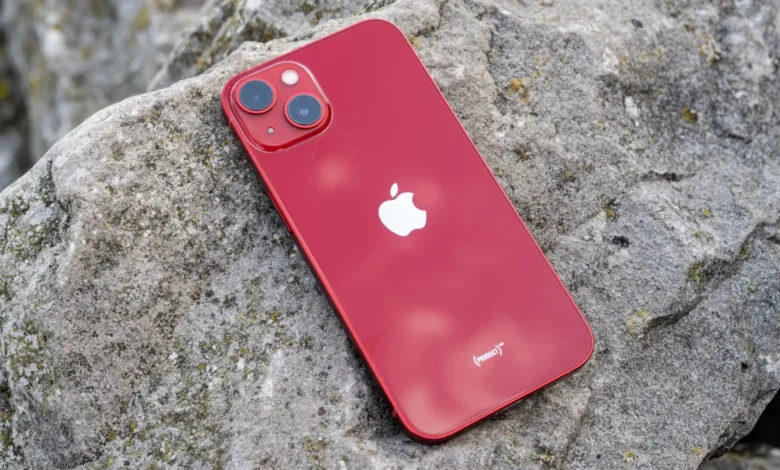
The award-winning shot was captured using an Apple iPhone 13, a device that, while now a few generations removed from the latest models, still possesses the technical prowess to produce remarkable results in skilled hands. Ohneberger utilized the iPhone’s ultra-wide rear camera, specifically at its native 1.54mm focal length, which translates to an approximate 13mm equivalent on a full-frame camera. This extreme wide-angle perspective is the linchpin of the photograph’s striking impact. At such a short focal length, proximity to the subject inherently creates dramatic perspective distortion. Elements closest to the lens are exaggerated, appearing larger and more imposing, while everything further away is compressed and diminished. In Ohneberger’s image, the giraffe’s nose and its dark, inquisitive eye are amplified, drawing the viewer into an almost confrontational intimacy, while its long neck and body recede into the distance, emphasizing the animal’s extraordinary proportions. The technical settings for the shot were deliberately straightforward: a shutter speed of 1/720th of a second, an aperture of f/2.4, and an ISO of 32. These settings indicate a well-lit environment, likely bright daylight, which allowed for a fast shutter speed to freeze any subtle movement of the giraffe and a low ISO to ensure a clean, detailed image with minimal noise.
The IPPAWARDS, now in its 19th year, is recognized as one of the longest-standing and most respected smartphone photography competitions globally. It champions the idea that compelling photographic narratives can be created with the devices most of us carry daily. The competition, which receives thousands of entries from over 140 countries, spans 12 diverse categories, including Animals, Nature, Portrait, and Landscape, celebrating a wide spectrum of photographic talent and subject matter. This year’s Grand Prix, Photographer of the Year award was presented to Robyn Jensen of the Cayman Islands for an awe-inspiring nature photograph taken on an iPhone 15 Pro, and Gellert Gombai of Hungary received the Gold Award for an intimate candid portrait captured on an iPhone. Ohneberger’s giraffe portrait, by earning an Honorable Mention in the Animals category, stands as a powerful example of how innovative use of everyday technology can yield extraordinary artistic results.
The Art of the Ultra-Wide Encounter
The true brilliance of Ohneberger’s photograph lies not in complex technical settings or elaborate post-processing, but in the masterful capture of a fleeting, authentic moment. Giraffes are renowned for their gentle curiosity, and coaxing such an animal to approach a handheld camera closely enough to dominate the frame requires a delicate balance of patience, quiet demeanor, and fortunate circumstances. The photographer’s strategic positioning – kneeling low and close to the ground, angling the camera slightly upwards to meet the giraffe’s gaze – transforms a common wildlife encounter into something far more dynamic and engaging. This perspective eschews the distant, often clinical view provided by telephoto lenses, opting instead for a caricature-like portrayal that amplifies the giraffe’s already improbable physical attributes. This approach imbues the photograph with a sense of playful humor, a quality less frequently achieved in traditional wildlife photography.
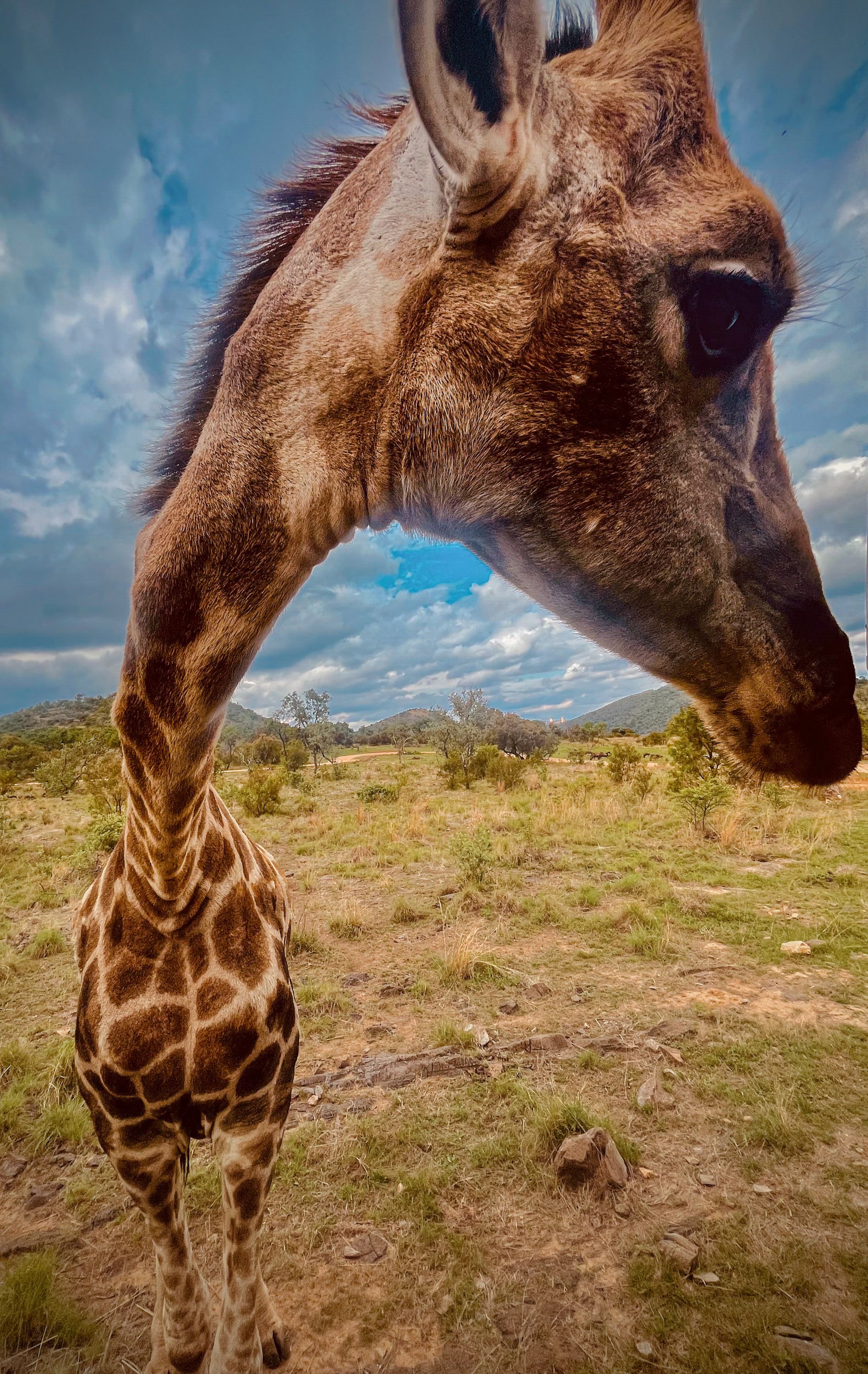
The exaggerated curve of the giraffe’s neck, stretching back towards a backdrop of grazing land punctuated by the silhouettes of acacia-like trees and distant rolling hills, serves to further enhance the sense of scale and context. Even as the foreground animal commands attention, the wider landscape anchors the image, providing a sense of place and grounding the extraordinary perspective. This photograph serves as a potent reminder that ultra-wide lenses, typically associated with sweeping vistas and architectural grandeur, can be equally transformative in animal portraiture when employed with an intimate understanding of proximity and subject interaction. The resulting image is a testament to the power of perspective and the ability of a simple wide-angle lens, when wielded with artistic intent, to reveal the extraordinary in the ordinary.
Technical Precision Meets Natural Instinct
The choice of an iPhone 13 for this award-winning shot is significant. It highlights the increasing sophistication of smartphone cameras and the accessibility they provide to a broad range of photographers. The iPhone 13, released in September 2021, featured a dual-camera system with a primary wide lens and an ultra-wide lens. The ultra-wide lens, with its expansive field of view, is crucial for capturing the dramatic perspective distortion that defines Ohneberger’s giraffe portrait. This type of lens is adept at capturing vast landscapes and fitting expansive scenes into a single frame. However, when used at very close distances, as demonstrated here, it creates a pronounced sense of depth and makes foreground elements appear significantly larger than they are in reality.
The technical specifications of 1/720 sec, f/2.4, and ISO 32 are not just numbers; they paint a picture of the shooting conditions. The fast shutter speed suggests the photographer was keen to avoid any motion blur, particularly important when photographing a living creature that might shift its weight or move its head. This implies ample daylight, allowing for such a quick exposure. The f/2.4 aperture is a relatively wide aperture for a smartphone, which helps in low-light situations and can contribute to a shallow depth of field, though in this wide-angle shot, much of the scene is likely to be in focus. The very low ISO 32 further confirms excellent lighting conditions, minimizing digital noise and ensuring the image retains its clarity and detail. This combination of settings indicates a photographer who understood the capabilities of their device and the environmental factors at play, making optimal use of the available light to capture a sharp and clean image.
The beauty of this shot lies in its apparent simplicity. There is no indication of complex artificial manipulation or heavy reliance on editing software. The dramatic effect is achieved organically through the interaction of the subject, the environment, and the specific characteristics of the ultra-wide lens. This aligns perfectly with the ethos of the IPPAWARDS, which celebrates authentic moments captured with accessible technology, emphasizing the photographer’s vision over the expense of their gear.
The Broader Implications for Photography
Marcel Ohneberger’s success at the IPPAWARDS is more than just a personal triumph; it is indicative of broader shifts in the photographic landscape. The competition consistently demonstrates that powerful storytelling and artistic merit are not exclusive to professional-grade DSLR or mirrorless cameras. Smartphone cameras have evolved to a point where they are capable of producing images that rival, and in some cases surpass, those taken with dedicated cameras, especially when creative vision and opportune moments align.
The implications of this are far-reaching. Firstly, it democratizes photography, making award-winning quality accessible to a much wider audience. Individuals who might not have the financial resources for expensive camera equipment can now participate in high-level photographic competitions and share their unique perspectives with the world. Secondly, it challenges traditional notions of what constitutes a "serious" photographic tool. The iPhone 13, a device designed for everyday communication and entertainment, has proven to be a capable instrument for artistic expression. This encourages photographers to explore the creative potential of the technology they already possess.
Furthermore, Ohneberger’s image highlights the importance of understanding lens characteristics. While wide-angle lenses are often associated with landscapes, their application in close-up animal photography can yield surprisingly intimate and impactful results. This encourages a more experimental approach to using different focal lengths, pushing the boundaries of conventional photographic genres. The success of such images also underscores the enduring value of a well-timed shot, a keen observational sense, and a deep appreciation for the subject matter. In an era of increasingly complex camera technology, these fundamental photographic skills remain paramount.
The IPPAWARDS, by focusing on smartphone photography, has played a pivotal role in fostering this evolution. It provides a platform for mobile photographers to gain recognition and encourages continuous innovation in mobile camera technology and its creative application. As smartphones continue to advance, we can expect to see even more groundbreaking images emerge from these ubiquitous devices, further blurring the lines between amateur and professional, and between everyday technology and fine art. Ohneberger’s giraffe portrait is not just a winning photograph; it is a symbol of this exciting and inclusive future for photography.