ASML Reportedly Considers Price Increases for Low-NA EUV Tools, Upsetting Key Client TSMC and Signaling Broader Industry Impact

ASML, the Dutch technology giant holding a near-monopoly on advanced lithography equipment essential for manufacturing the world’s most sophisticated semiconductors, is reportedly contemplating significant price increases for its existing Low-NA Extreme Ultraviolet (EUV) lithography tools. This potential shift in pricing strategy has already caused considerable consternation, particularly from TSMC, ASML’s largest and most crucial client, according to a report by The Information. While ASML’s Chief Financial Officer, Roger Dassen, has indicated that any price adjustments would not be immediate due to long order lead times, he affirmed the company’s "strong runway for potential price improvements" stemming from continuous enhancements in tool productivity. This move, if fully implemented, is poised to send ripple effects throughout the entire semiconductor industry, impacting everything from chip manufacturing costs to the eventual prices of consumer electronics.
The Critical Role of ASML in Semiconductor Manufacturing
ASML’s unique position in the global technology landscape cannot be overstated. The company is the sole producer of EUV lithography machines, which are indispensable for fabricating the most advanced semiconductor nodes (typically 7nm and below) used in high-performance computing, artificial intelligence, and cutting-edge smartphones. Without ASML’s intricate and immensely complex machines, leading foundries like TSMC, Samsung, and Intel would be unable to produce the next generation of microchips, effectively halting the progress of Moore’s Law.
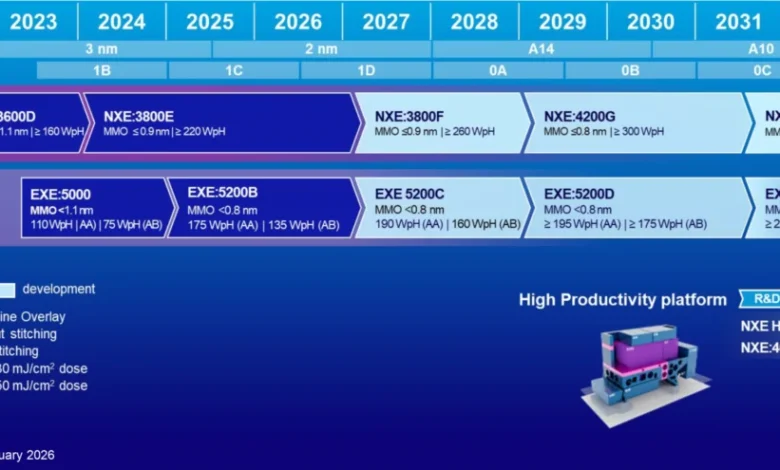
A single Low-NA EUV system, such as ASML’s Twinscan NXE:3400C or NXE:3600D, can cost upwards of $150 million to $200 million, representing a colossal investment for chipmakers. These machines use ultra-short wavelength ultraviolet light (13.5 nanometers) generated by a tin plasma to print incredibly fine patterns onto silicon wafers, enabling the creation of transistors just a few atoms wide. The precision and technological sophistication required to develop and manufacture these tools have allowed ASML to establish an unrivaled competitive moat, making it a pivotal choke point in the global semiconductor supply chain.
Background to the Price Adjustments: Productivity and Value
ASML’s consideration of price increases is not an arbitrary decision but appears rooted in its strategy of continuous innovation and value creation. CFO Roger Dassen explicitly linked the potential for price adjustments to the ongoing improvements in the productivity of Low-NA EUV tools. Over the years, ASML has consistently enhanced the performance of its EUV systems, primarily by increasing wafer throughput (the number of silicon wafers processed per hour) and improving tool uptime and reliability.
For instance, early commercial EUV systems had throughputs of around 100-125 wafers per hour (wph), but newer iterations have pushed this to 160-170 wph, with targets to reach even higher figures. These improvements directly translate into lower per-wafer processing costs for foundries, despite the high upfront capital expenditure. From ASML’s perspective, if the tools deliver greater value and efficiency to its customers, it justifies a higher price point. This aligns with a value-based pricing model, where the price reflects the economic benefits and competitive advantage provided to the customer.
However, ASML also invests billions of dollars annually into research and development. In 2023, the company’s R&D expenses were in the realm of €4 billion, a substantial sum aimed at refining existing technologies and developing next-generation systems like High-NA EUV. Recovering these R&D costs and ensuring healthy profit margins to fund future innovation are crucial for ASML’s long-term sustainability and its ability to maintain its technological leadership.
TSMC’s Reported Discontent and Client Dynamics
The reported displeasure from TSMC underscores the delicate balance ASML must maintain with its key clients. As the world’s leading contract chip manufacturer, TSMC is at the forefront of adopting ASML’s most advanced technology. The Taiwanese foundry has consistently been ASML’s largest customer for EUV tools, investing heavily in these systems to maintain its technological lead over competitors like Samsung Foundry and Intel Foundry Services.
For TSMC, an increase in the price of Low-NA EUV tools directly impacts its Cost of Goods Sold (COGS). While the enhanced productivity of newer tools might offer some mitigation, any significant price hike could squeeze TSMC’s profit margins, especially in a highly competitive market where wafer pricing is a critical factor. Furthermore, TSMC’s business model relies on attracting and retaining a vast array of fabless chip design companies (e.g., Apple, Qualcomm, NVIDIA, AMD), who are sensitive to the cost of manufacturing their chips. An increase in ASML’s equipment prices could eventually trickle down to higher wafer prices, potentially affecting the competitiveness of TSMC’s clients and, by extension, TSMC itself.
The relationship between ASML and its major clients is deeply intertwined and strategic. Foundries often collaborate closely with ASML on the development and optimization of new lithography generations. While ASML holds a monopolistic position, alienating its largest customers could have long-term repercussions, even if immediate alternatives are nonexistent.
Chronology of EUV Development and Market Penetration
The journey of EUV lithography from a theoretical concept to a commercial reality spans over two decades, marked by immense technical challenges and colossal investments.
- Late 1980s – Early 1990s: Initial research into extreme ultraviolet light as a potential successor to deep ultraviolet (DUV) lithography begins.
- Mid-1990s – Early 2000s: ASML, along with consortia of chipmakers (Intel, TSMC, Samsung) and government labs, intensifies R&D efforts. Significant hurdles include developing a powerful and stable EUV light source, ultra-flat mirrors (as EUV is absorbed by lenses), and photoresists sensitive to EUV.
- 2000s – 2010s: ASML acquires key technologies, including Cymer (a leading EUV light source developer) in 2013, to accelerate development. Prototypes and early test systems are deployed to major customers for evaluation. Throughput and reliability remain significant challenges.
- 2016-2017: ASML ships its first commercial EUV systems (NXE:3400B/C), marking the beginning of limited production for 7nm and 5nm nodes. TSMC is among the first to adopt these tools for high-volume manufacturing.
- 2019-Present: EUV becomes indispensable for volume production of 7nm, 5nm, and 3nm nodes. ASML continuously refines its Low-NA EUV platforms, increasing throughput and stability, making them more cost-effective for mass production.
- Late 2020s (Projected): Introduction of High-NA EUV systems (e.g., Twinscan EXE:5000 series), promising even finer resolution for 2nm nodes and beyond, albeit at an even higher price point (estimated over $350 million per unit).
This chronology highlights the enormous R&D expenditure and the long gestation period for EUV technology. The current Low-NA EUV tools represent the culmination of these efforts, having matured to a point where their productivity can justify a re-evaluation of pricing, according to ASML.
Market Context and ASML’s Financial Performance
The semiconductor industry is currently navigating a complex environment characterized by robust demand for advanced chips, ongoing geopolitical tensions impacting supply chains, and significant investments in domestic chip manufacturing capabilities across various regions. This backdrop provides ASML with a strong negotiating position.
ASML has consistently reported strong financial results, reflecting the insatiable demand for its equipment. In its most recent quarterly earnings calls, the company has highlighted a substantial order backlog, extending well into 2025 and beyond for some systems. This backlog underscores the critical need for ASML’s tools and indicates that customers are willing to commit to long lead times and high prices to secure capacity.
For instance, in Q4 2023, ASML reported net sales of €7.2 billion and a net income of €2.0 billion. For the full year 2023, net sales were €27.6 billion, up 30% from 2022, with a net income of €7.8 billion. The company’s gross margin also remained strong, indicating its pricing power and operational efficiency. This financial strength provides ASML with the flexibility to pursue pricing strategies that reflect the value of its technology and its dominant market position.
Official Responses and Forward-Looking Statements
Roger Dassen’s statements during ASML’s quarterly earnings call provided crucial insight into the company’s thinking. He articulated that the continuous improvements in the productivity of Low-NA EUV tools create a "pretty strong runway for potential price improvements going forward." This implies that ASML sees an opportunity to capture a greater share of the value its tools generate for chipmakers.
However, Dassen also tempered expectations regarding immediate price changes. He clarified, "Given the long order lead times that we have, that does not translate into pricing effects tomorrow." This suggests that any new pricing structure would likely apply to future orders rather than existing contracts or those already in the pipeline. This phased approach would allow customers time to adjust their capital expenditure plans and financial models, mitigating immediate shockwaves. It also indicates that ASML is mindful of its customer relationships and aims for a gradual, rather than abrupt, shift.
While ASML has not officially confirmed specific percentage increases or timelines, Dassen’s remarks serve as a clear signal to the market that a re-evaluation of Low-NA EUV tool pricing is actively underway and is being justified by the enhanced capabilities and efficiency these systems now offer.
Broader Industry Implications and Analysis
The potential price hikes for Low-NA EUV tools carry significant implications across the semiconductor ecosystem:
- Increased Chip Manufacturing Costs: Higher equipment costs for foundries will inevitably translate into increased capital expenditures and, potentially, higher wafer fabrication costs. This could pressure the margins of fabless chip designers who rely on these foundries.
- Impact on End-Product Prices: Ultimately, increased manufacturing costs for advanced chips could trickle down to higher prices for consumer electronics, including smartphones, laptops, AI servers, and automotive components.
- Investment Decisions and Innovation Pace: Foundries might re-evaluate their investment strategies for new fabrication plants or node transitions if equipment costs become excessively prohibitive. While EUV is critical, a sharp increase could influence the pace at which new nodes are adopted or compel foundries to optimize the longevity of existing nodes.
- Competitive Landscape: For companies like Intel, which are aggressively re-entering the foundry business, higher equipment costs could add another layer of challenge to their ambitious roadmap. For Samsung Foundry, which competes directly with TSMC, a uniform price increase from ASML would affect both, but the precise impact could differ based on their existing order books and capital structures.
- Geopolitical Dimension: In an era of intense focus on semiconductor supply chain resilience and technological sovereignty, any factor that increases the cost or complexity of chip manufacturing is closely watched by governments. Higher prices could impact government incentives for domestic chip production, potentially requiring larger subsidies.
- Value Chain Dynamics: The pricing decision by ASML highlights the immense leverage held by critical technology providers in a highly specialized global supply chain. It underscores the economic reality of a market with limited alternatives for essential production tools.
The Future of Lithography: Low-NA vs. High-NA EUV
The discussion around Low-NA EUV pricing occurs as ASML is on the cusp of introducing its next-generation High-NA EUV systems. These tools, designed for nodes of 2nm and below, are expected to cost significantly more than their Low-NA predecessors, with estimates ranging from $350 million to $400 million per unit.
The current consideration of raising Low-NA prices could be seen as a strategic move to adjust the market to increasingly expensive lithography solutions. If customers accept higher prices for mature Low-NA technology, it might set a precedent for the even more substantial investment required for High-NA EUV. It also allows ASML to maximize revenue from its current flagship products while simultaneously investing heavily in the development and ramp-up of the next technological leap. Intel has already placed orders for the first High-NA EUV machines, signaling the industry’s readiness to adopt even more costly, yet essential, advanced manufacturing capabilities.
In conclusion, ASML’s reported contemplation of price increases for its Low-NA EUV tools represents a significant development in the semiconductor industry. While justified by continuous productivity enhancements and substantial R&D investments, the move is met with understandable resistance from key clients like TSMC. The eventual implementation of these price adjustments, though not immediate, will undoubtedly reshape the economics of advanced chip manufacturing, influencing the cost structures of leading foundries, the pricing of end-user devices, and the broader trajectory of technological innovation in the digital age. ASML, as the gatekeeper of advanced chip production, continues to wield unparalleled influence over the future of global technology.