The tradition of selecting a new planner as the calendar year turns is more than just an exercise in organization; it is a psychological ritual that helps millions of people align their goals, manage professional deadlines, and track personal well-being. As we approach 2027, the stationery market has evolved significantly, shifting away from generic big-box store offerings toward highly specialized, modular, and design-forward systems. Whether you are a student balancing an academic schedule, a professional managing complex projects, or an individual seeking to improve mindfulness, the current market offers a tool to suit almost every cognitive style.
The Science of Analog Planning in a Digital Age
While digital tools such as Google Calendar or Notion provide undeniable utility for reminders and shared scheduling, the practice of handwriting remains a powerful tool for cognitive retention. Research published in journals like Frontiers in Psychology indicates that handwriting facilitates deeper neural encoding compared to typing. The physical act of tracing letters and structuring a layout engages the brain’s reticular activating system, helping to filter out extraneous information and prioritize critical tasks. For many users, this "low-tech" approach to high-level organization is not a regression, but an optimization of memory and focus.

Top Tier Planner Selections for 2027
After extensive testing of various formats—ranging from minimalist layouts to complex, multi-layered systems—several stand out for their build quality, paper grade, and functional versatility.
The Roterunner Purpose Planner
The Roterunner Purpose Planner has emerged as a premier option for those who require a comprehensive system that avoids the "companion notebook" trap. Its undated six-month format is a strategic choice for users who struggle with consistency. By allowing users to pick up where they left off without wasting pre-printed dated pages, the planner reduces the guilt often associated with falling off a schedule. The B5 size provides an expansive canvas for project brainstorming, meal tracking, and gratitude journaling, while the pre-made checklist sections minimize the need for manual formatting.
The Hobonichi Techo and Cousin
Hailing from Japan, the Hobonichi Techo has cultivated a cult-like following due to its use of Tomoe River S paper. This paper is renowned in the stationery community for being exceptionally thin, which allows for a high page count in a compact volume, yet it is robust enough to resist ink bleed from fountain pens. The Techo Cousin (A5) is particularly effective for those who appreciate a hybrid approach, offering both a monthly overview and a vertical weekly spread. While the presence of Japanese text in some editions might initially seem like a barrier, most users find the aesthetic, which includes daily quotes, to be an inspiring, albeit non-intrusive, element of the daily experience.

The Cloth & Paper Travel Notebook
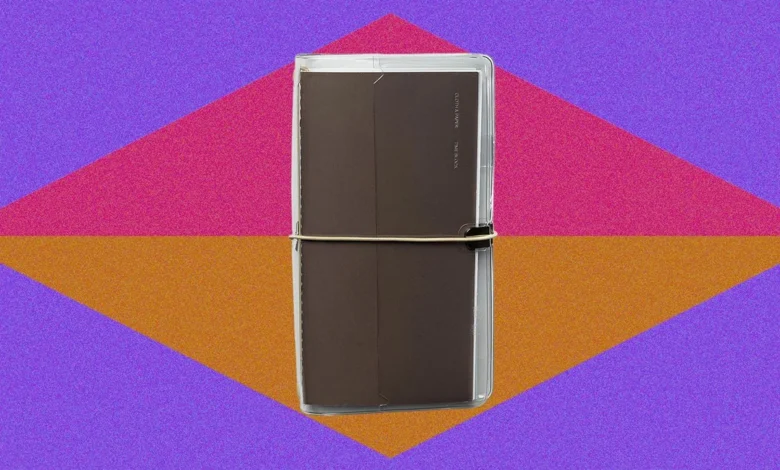
For users who prefer a modular architecture, the travel notebook system represents the pinnacle of customization. Cloth & Paper’s collection allows users to bundle multiple booklets into a single cover. This is particularly advantageous for students or professionals who need to isolate specific workflows—for instance, keeping a dedicated task planner separate from a long-form note-taking booklet. The A5 Slim size strikes a balance between portability and writing space, making it a viable daily carry for most commuters.
Comparative Analysis of Planning Styles
To determine which planner is right for a specific lifestyle, it is helpful to categorize needs based on the following three pillars:
- Temporal Scope: Does the user need a granular look at every hour of the day (Daily), a broad overview of weekly objectives (Weekly), or a high-level view of monthly milestones (Monthly)?
- Cognitive Load: Does the user require a planner that provides structured prompts, or do they prefer a blank canvas to build their own systems?
- Physicality: Is the planner intended to stay at a workstation, or must it travel inside a bag? High-quality hardcovers are essential for mobile users, while soft-cover, lay-flat designs are often preferred for desk-bound work.
Honorable Mentions and Niche Solutions
Not every user requires a heavy-duty, high-cost planner. The market for affordable, utilitarian stationery remains strong. The Lemome 2027 planner, for instance, offers a no-frills, hardback experience at a competitive price point, ideal for those whose planning is limited to tracking deadlines and to-do lists.

For those who gravitate toward the "bullet journal" movement, the Midori MD Notebook remains a gold standard. Its cotton-pulp paper offers a tactile experience that is rarely matched by mass-market brands. Meanwhile, brands like Erin Condren continue to dominate the academic market with highly structured layouts designed to help students track exams, assignments, and extracurricular commitments. Their transition into retail lines, such as those found at Target, has made professional-grade planning tools more accessible to a broader demographic.
Strategic Accessory Integration
The effectiveness of a planner is often dictated by the accessories paired with it. Our testing indicates that the "vintage" highlighter sets from brands like Passion Planner are superior for color-coding, as they provide soft hues that do not overwhelm the page. Similarly, the Pilot Metropolitan fountain pen has proven to be the most reliable entry-point for users looking to improve their writing experience. The glide of a fountain pen nib on high-quality paper turns the mundane task of writing a to-do list into a more satisfying sensory experience, which can increase the likelihood of daily engagement.
Broader Implications and Future Outlook
The rise of the "analog renaissance" in planning suggests that as digital interfaces become more cluttered with notifications and algorithmic distractions, the physical planner serves as a sanctuary of focus. We are seeing a shift where planner companies are no longer just selling paper; they are selling a methodology for intentional living.

As of November 2026, manufacturers have finalized their 2027 collections, with many introducing more sustainable paper sources and modular binding systems. Retailers are reporting a steady increase in sales for planners that offer both physical utility and aesthetic customization. While digital adoption remains high, the hybrid planner—one that integrates with digital task managers—appears to be the trend for the coming year.
Summary of Best Practices
- Start Small: If you have not used a planner recently, do not commit to a complex daily diary. Begin with an undated weekly planner to build the habit.
- Audit Your Needs: Before purchasing, track your daily tasks for one week. Do you need an hourly breakdown? Do you need blank space for sketches? Buy based on these observations.
- Invest in Quality: A cheap pen or poor-quality paper can lead to a frustrating experience. A mid-range investment in a fountain pen and a high-GSM (grams per square meter) paper planner will pay dividends in usage frequency.
Whether choosing the modularity of a travel notebook or the precision of a Japanese Techo, the most important factor in selecting a 2027 planner is alignment with one’s personal workflow. By treating the planner as a tool for cognitive offloading rather than a rigid set of rules, users can significantly enhance their productivity and reduce the mental fatigue associated with modern life.