GMKtec NucBox M8 Mini PC Drops to All-Time Low of $360 on Amazon, Offering Powerful AMD Ryzen Performance with eGPU Expansion Capability

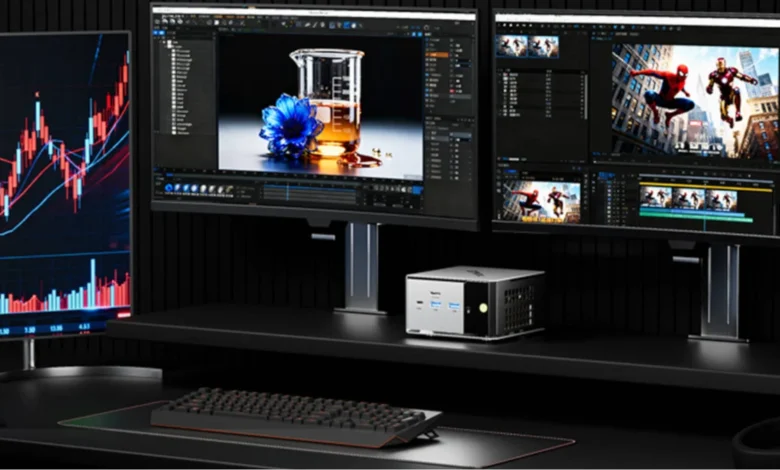
The compact computing market is currently witnessing a significant value proposition with the GMKtec NucBox M8 mini PC now available on Amazon for just $360, representing a substantial 25% discount. This price point matches its lowest historical offering, solidifying its position as a compelling option for consumers seeking robust performance in a minimal footprint. This particular deal highlights a growing trend in personal computing, where small form factor devices are increasingly challenging traditional desktops and even some laptops in terms of capability and efficiency, particularly for home office setups and media consumption. The NucBox M8, powered by an AMD Ryzen 5 Pro 6650H processor, 16GB of RAM, and a 512GB solid-state drive (SSD), is designed to adeptly manage a wide array of daily computing tasks, from professional applications to multimedia streaming, all while occupying a fraction of the space of a conventional PC tower.
The GMKtec NucBox M8: A Deep Dive into Performance and Portability
GMKtec, a notable player in the burgeoning mini PC segment, has positioned the NucBox M8 as a versatile and potent solution for a diverse user base. The device’s primary appeal lies in its compact design, allowing it to seamlessly integrate into any workspace, thereby freeing up valuable desk real estate often consumed by larger desktop towers. Its aesthetic is typically understated and functional, fitting into modern home and office environments without drawing undue attention. The internal specifications are what truly set this particular mini PC apart, especially at its current price point.
At its core, the GMKtec NucBox M8 is equipped with an AMD Ryzen 5 Pro 6650H processor. This is a crucial component that dictates the overall performance envelope of the machine. The "Pro" designation indicates features tailored for business environments, including enhanced security and manageability capabilities, which can be beneficial even for home users concerned with data integrity. The processor belongs to AMD’s Rembrandt generation, based on the Zen 3+ architecture and fabricated on a 6nm process. This architecture brings significant improvements in performance per watt compared to earlier generations, leading to both powerful processing capabilities and improved energy efficiency.
Accompanying the Ryzen 5 Pro 6650H is 16GB of LPDDR5 RAM. The choice of LPDDR5 is significant, offering higher bandwidth and lower power consumption compared to previous DDR4 or even standard DDR5 modules. This ample amount of high-speed RAM ensures smooth multitasking, allowing users to effortlessly switch between numerous browser tabs, demanding applications, and concurrent media streams without experiencing slowdowns. For most productivity and general computing tasks, 16GB is considered the sweet spot, providing sufficient headroom for current and future software demands.
Storage is handled by a speedy 512GB NVMe SSD. The NVMe (Non-Volatile Memory Express) protocol, combined with the solid-state nature of the drive, delivers vastly superior read and write speeds compared to traditional hard disk drives (HDDs) or even older SATA SSDs. This translates directly into quicker boot times, faster application loading, and more responsive file transfers, contributing significantly to the overall snappiness of the Windows 11 operating system and all installed applications. While 512GB may not be capacious enough for extensive game libraries or large media collections, it is generally adequate for the operating system, essential software, and a decent amount of user data, with options for external storage readily available.
Powering the Core: The AMD Ryzen 5 Pro 6650H Processor
The AMD Ryzen 5 Pro 6650H is a mobile-focused processor, but its integration into mini PCs like the NucBox M8 showcases its versatility and robust performance. Featuring 6 cores and 12 threads, with a boost clock speed that can reach up to 4.5 GHz, this CPU is well-suited for demanding workloads. The Zen 3+ architecture brought enhancements in instruction per clock (IPC) and power management, allowing the processor to deliver strong multi-threaded performance critical for applications like video editing, complex spreadsheets, and running virtual machines, alongside excellent single-threaded performance vital for general responsiveness.
A standout feature of the Ryzen 5 Pro 6650H, and indeed the entire Rembrandt series, is its integrated graphics processing unit (iGPU): the AMD Radeon 660M, based on the RDNA2 architecture. This is the same graphics architecture found in modern gaming consoles like the PlayStation 5 and Xbox Series X, albeit in a scaled-down form. The Radeon 660M significantly outperforms integrated graphics found in older generations of processors, including many Intel Iris Xe configurations. While it cannot rival dedicated desktop GPUs, it enables the NucBox M8 to handle casual gaming, esports titles, and demanding multimedia playback with surprising proficiency. This capability expands the mini PC’s utility beyond purely productivity-focused tasks, making it suitable for users who enjoy light gaming or require robust media center capabilities.
The "Pro" moniker on the 6650H indicates the inclusion of AMD PRO technologies, which provide a suite of features for enterprise-grade manageability and security. These include AMD Memory Guard for real-time memory encryption, AMD Secure Processor for hardware-level security, and AMD PRO Manageability for simplified deployment and maintenance in networked environments. While perhaps overkill for a purely home user, these features offer an additional layer of peace of mind and future-proofing, underscoring the processor’s robust and secure foundation.
Unlocking Gaming Potential: The Oculink eGPU Advantage
Perhaps the most differentiating feature of the GMKtec NucBox M8, especially at its price point, is the inclusion of an Oculink port. This is a significant technological addition that directly addresses one of the primary limitations of most mini PCs: their inability to handle demanding graphical tasks, particularly high-fidelity gaming, due to the absence of a dedicated graphics card.
Oculink (Optical-Copper Link) is an internal and external cabling standard primarily developed for PCIe connections. In the context of the NucBox M8, it serves as a high-bandwidth external port designed to connect an external GPU (eGPU) enclosure. Unlike Thunderbolt, which is a more general-purpose port supporting various protocols, Oculink is specifically optimized for PCIe throughput. The NucBox M8’s Oculink port likely provides a PCIe 4.0 x4 connection, offering a substantial 64 Gbps of bandwidth. This is often superior to the typical PCIe 3.0 x4 bandwidth offered by many Thunderbolt eGPU implementations, translating into less performance overhead when using an external graphics card.
The ability to connect an eGPU fundamentally transforms the NucBox M8 from a capable productivity machine into a potential gaming powerhouse. Users can purchase an eGPU enclosure and a desktop graphics card (e.g., an NVIDIA GeForce RTX 4060 or an AMD Radeon RX 7700 XT) and connect it via the Oculink port. This setup allows the NucBox M8 to leverage the full rendering capabilities of a high-end desktop GPU, enabling smooth gameplay at higher resolutions and settings in modern AAA titles. This flexibility offers a unique upgrade path, allowing users to start with an affordable mini PC for everyday tasks and later invest in an eGPU for gaming, without needing to replace their entire system. The cost implications of an eGPU setup should be considered, as enclosures and graphics cards represent additional investments, but the modularity and performance potential are undeniable. This feature is particularly appealing for users who require a compact and quiet system for daily use but desire the option to engage in serious gaming without owning a separate, bulky gaming desktop.
Connectivity: Versatility for Every Setup

Beyond its core processing and unique eGPU capability, the GMKtec NucBox M8 offers a comprehensive suite of connectivity options, ensuring it can serve as the hub for a wide range of peripherals and display configurations.
For video output, the device includes HDMI, DisplayPort, and USB4 ports. The combination of these three allows for a triple-monitor setup, which is invaluable for productivity, content creation, and even some gaming scenarios where an expansive view is desired. The USB4 port is particularly noteworthy as it is a highly versatile interface, supporting not only high-speed data transfer (up to 40 Gbps, similar to Thunderbolt 3/4) but also DisplayPort Alternate Mode for video output and USB Power Delivery for charging compatible devices. This single port can potentially replace multiple dedicated ports, simplifying cable management and expanding peripheral compatibility.
Data and peripheral connectivity are handled by four USB-A ports, providing ample connections for keyboards, mice, external drives, webcams, and other accessories. While the specific USB standard (e.g., USB 3.2 Gen 1 or Gen 2) is not detailed, it is safe to assume they offer modern high-speed data transfer capabilities suitable for most peripherals.
Networking is robustly addressed with double Ethernet ports. This feature is often found in more enterprise-grade or enthusiast networking devices and is a significant advantage for a mini PC. Dual Ethernet allows for several advanced configurations: network redundancy (if one connection fails, the other can take over), link aggregation for increased bandwidth, or separation of network traffic (e.g., one port for internet access and another for a local network attached storage (NAS) or home server). This makes the NucBox M8 a viable candidate for roles beyond a simple desktop, such as a compact server, firewall appliance, or a robust node in a sophisticated home network.
The Broader Mini PC Landscape: Market Trends and Consumer Appeal
The GMKtec NucBox M8’s current discounted price positions it favorably within a rapidly expanding mini PC market. Over the past decade, mini PCs have evolved from niche, low-power devices into powerful, versatile machines capable of handling a broad spectrum of tasks. Several factors have contributed to this growth:
- Space Efficiency: The most obvious advantage is their small footprint, making them ideal for cramped offices, minimalist setups, or integration into entertainment centers.
- Energy Efficiency: Compared to full-sized desktops, mini PCs generally consume less power, leading to lower electricity bills and a smaller environmental impact.
- Reduced Noise: With smaller cooling solutions and often fewer moving parts (especially with SSDs), mini PCs tend to be quieter than traditional desktops.
- Performance Improvements: Advances in CPU and iGPU technology, particularly from AMD and Intel, have closed the performance gap with larger systems for many common workloads.
- Remote Work and Hybrid Models: The shift towards remote and hybrid work environments has increased demand for compact, efficient, and easily deployable computing solutions.
Key players in this market include Intel with its NUC (Next Unit of Computing) series, Beelink, Minisforum, and GMKtec. These manufacturers offer a range of products catering to different needs, from ultra-affordable barebones systems to high-performance models with discrete graphics. The NucBox M8, with its Ryzen 5 Pro 6650H and Oculink port, carves out a niche by offering a balance of productivity performance, integrated graphics capability, and an upgrade path to serious gaming, all within a compact and energy-efficient package.
Value Proposition: Redefining Price-Performance in Compact Computing
At $360, the GMKtec NucBox M8 presents an exceptional value proposition. To put this into perspective, comparably priced laptops often come with less powerful processors, typically U-series or lower-end H-series chips, and may skimp on RAM or SSD capacity. While laptops offer portability, the NucBox M8 provides superior raw computing power per dollar for a stationary setup.
Compared to building a traditional desktop PC, achieving similar specifications (Ryzen 5 Pro 6650H equivalent, 16GB LPDDR5, 512GB NVMe SSD) for under $400 would be challenging, especially considering the cost of the motherboard, power supply, and case. The integrated nature of mini PCs often streamlines manufacturing costs, allowing for aggressive pricing, particularly during promotional periods like this one. For consumers seeking a primary home office machine, a powerful media center, or a dedicated workstation for light content creation, the NucBox M8 offers a compelling blend of performance, features, and affordability. The added benefit of the Oculink port further enhances its long-term value, allowing users to extend its lifecycle and utility by adding an eGPU when their needs evolve.
Strategic Pricing: GMKtec’s Market Approach
The 25% discount bringing the GMKtec NucBox M8 back to its lowest-ever price point is indicative of several market strategies. For GMKtec, such promotions are crucial for increasing market share, driving brand awareness, and clearing inventory. In a competitive market with many mini PC manufacturers, aggressive pricing is a key differentiator. For consumers, these deals represent opportune moments to acquire advanced technology at a significantly reduced cost. The timing of such sales often aligns with broader retail events or seasonal promotions, but consistent pricing at historical lows suggests a strategic effort to capture a larger segment of the budget-conscious yet performance-seeking market. This strategy not only benefits individual buyers but also fosters broader adoption of mini PC technology, showcasing its capabilities to a wider audience.
Implications for Home and Office: A Multifaceted Solution
The implications of a device like the GMKtec NucBox M8, especially at this price, are broad. For the home user, it offers a powerful, discreet, and energy-efficient alternative to a bulky desktop. It can serve as the heart of a home entertainment system, effortlessly streaming 4K content, or as a family computer capable of handling schoolwork, browsing, and light gaming. For remote workers or small businesses, its "Pro" features and robust connectivity make it an excellent choice for a dedicated workstation. Its small size allows for easy deployment in diverse environments, from compact home offices to shared workspaces. The dual Ethernet ports also open up possibilities for more specialized use cases, such as a network gateway, a personal cloud server, or a security camera recorder, highlighting its versatility beyond conventional desktop tasks.
In conclusion, the GMKtec NucBox M8 mini PC’s availability at $360 on Amazon marks a significant moment for the compact computing market. It delivers a powerful combination of AMD’s modern Ryzen processor, ample memory and fast storage, and a unique Oculink port for eGPU expansion, all within an incredibly small and efficient form factor. This deal not only makes high-performance mini computing more accessible but also underscores the evolving landscape of personal technology, where space-saving, energy-efficient, and versatile solutions are increasingly taking center stage. For consumers in search of an affordable yet capable machine for productivity, multimedia, and even future-proofed gaming, the NucBox M8 presents a compelling and timely opportunity.
Related posts: