Canon EOS R8 Mark II Hands-On: A Sensible Mid-Tier Full-Frame Upgrade with Mixed Design Choices

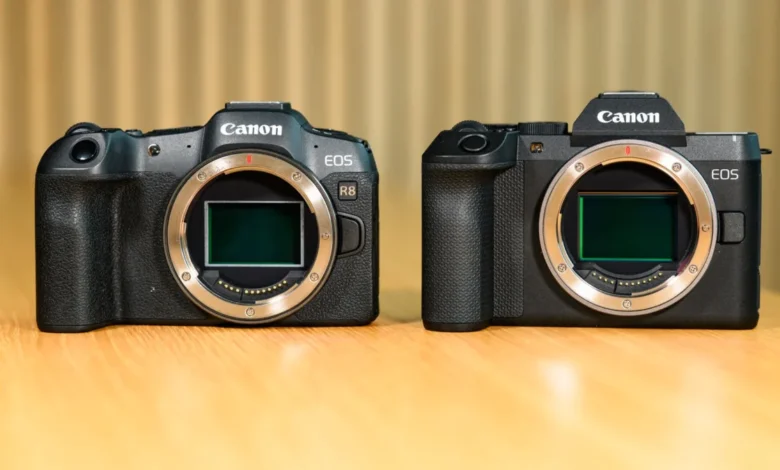
Canon has officially introduced the EOS R8 Mark II, expanding its full-frame mirrorless lineup with a camera aimed squarely at enthusiasts seeking high-end performance without the robust build quality, premium display specifications, or extended battery longevity found in the higher-tier EOS R6 series. Succeeding the original EOS R8, the second-generation model arrives with several critical performance upgrades, including long-awaited in-body image stabilization (IBIS) and an ergonomic layout adjustment, though its aesthetic approach has drawn mixed reactions from industry observers.

Main Facts and Pricing Structure
The Canon EOS R8 Mark II is scheduled for release on October 20, carrying a body-only retail price of $1,899 / £1,729 / AU$2,529. For consumers opting for bundled lenses, Canon will offer a 24-105mm F4-7.1 IS STM kit priced at £2,119 / AU$2,859, while the United States market will see a dedicated 24-50mm f/4.5-6.3 IS STM kit priced at $2,099. Additional promotional bundles, including supplementary batteries, will vary by region.
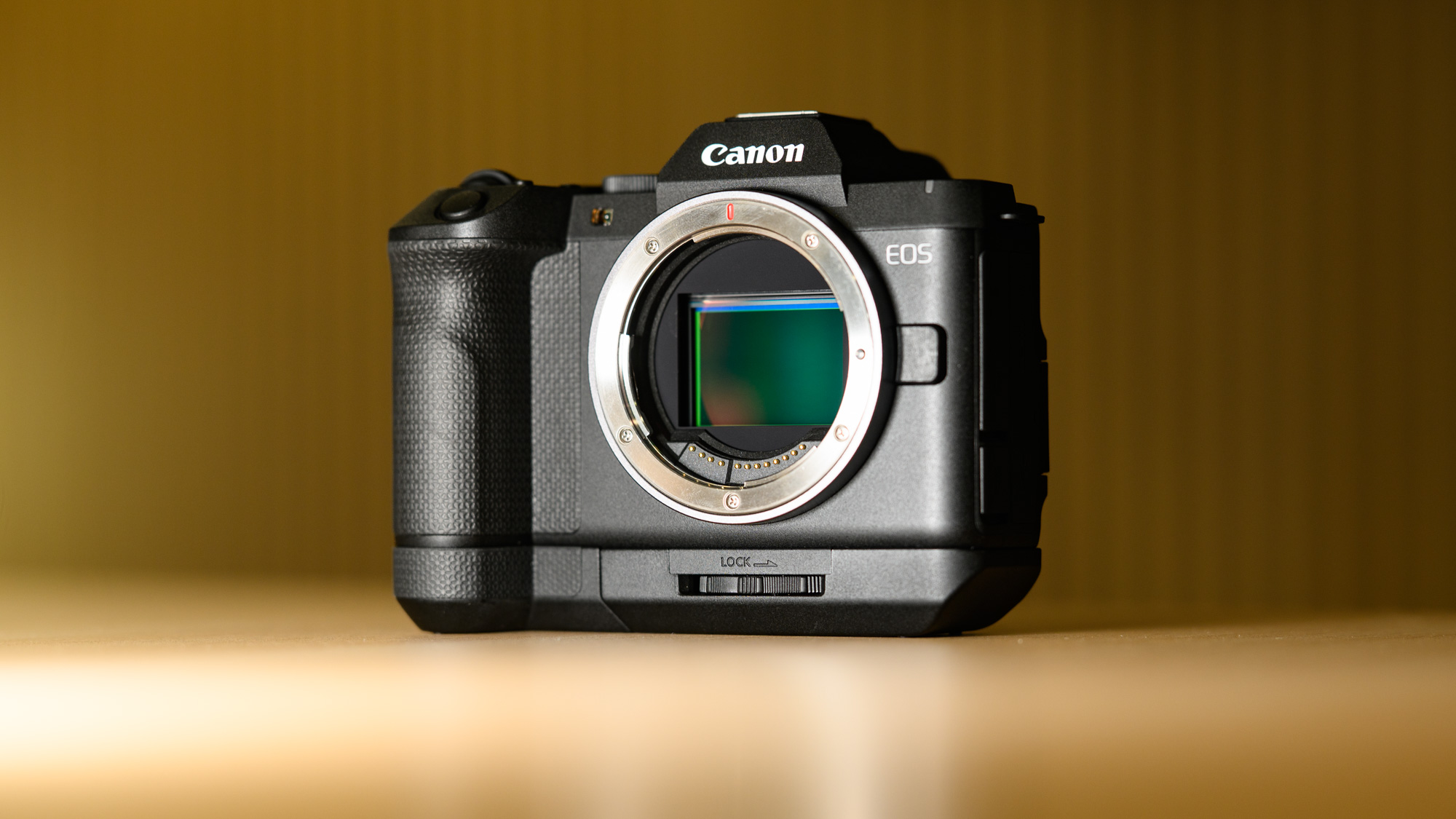
Alongside the camera body, Canon has released a dedicated ergonomic grip, the EC-G2, priced at $99 / £89 / AU$169. Notably, this accessory functions strictly as a physical extension to improve handling rather than a battery grip, featuring an integrated mechanical hinge that allows uninterrupted access to the battery compartment on the underside of the camera.

Core Specifications and Hardware Improvements
At the heart of the EOS R8 Mark II is a 24.2-megapixel full-frame CMOS sensor, retaining the core resolution of its predecessor. However, the integration of a five-axis in-body image stabilization system represents the most significant hardware revision. Rated for up to 7.5 stops of stabilization efficiency when paired with compatible RF lenses, the IBIS unit aims to mitigate hand tremors during low-light photography, telephoto shooting, and handheld videography.
Autofocus performance is driven by the Dual Pixel CMOS AF II system, encompassing 1,053 automatic AF zones with advanced subject-detection algorithms capable of tracking humans, animals, and vehicles. Among the software additions is the newly implemented "Register People Priority" feature. This tool allows users to pre-program and prioritize up to specific individual faces—such as a bride and groom during a wedding ceremony—ensuring tracking locks onto designated subjects amidst complex crowds. Low-light sensitivity has also been enhanced, rated down to -7.5EV.
For high-speed action and wildlife photography, the EOS R8 Mark II introduces Pre-Continuous Shooting (pre-capture) to Canon’s entry-level full-frame tier. By buffering up to 0.5 seconds of image data while the shutter button is half-pressed, the camera can capture up to 20 frames before the user fully depresses the shutter, compensating for human reaction latency. Maximum continuous electronic shutter speeds remain capped at 40 frames per second, as the camera continues to omit a mechanical shutter mechanism.
Videography Enhancements
Video capabilities have received a substantial overhaul to cater to hybrid content creators. The EOS R8 Mark II now oversamples 4K video footage from a 6K sensor area, resulting in sharper output detail. Furthermore, maximum 4K frame rates have been elevated to 60 frames per second, while 1080p full HD recording now supports up to 180 frames per second for sixfold slow-motion playback.
Additional video tools include the inclusion of Canon C-Log 3 profile support, 10-bit internal recording, a dedicated tally lamp to indicate active recording status, and an expanded array of color profiles, including customizable film-tone looks accessible via the Canon EOS Utility application. A new software-based "defocus" effect also allows users to simulate creative background blur transitions independent of physical lens aperture adjustments.
Design Evolution and Ergonomic Adjustments
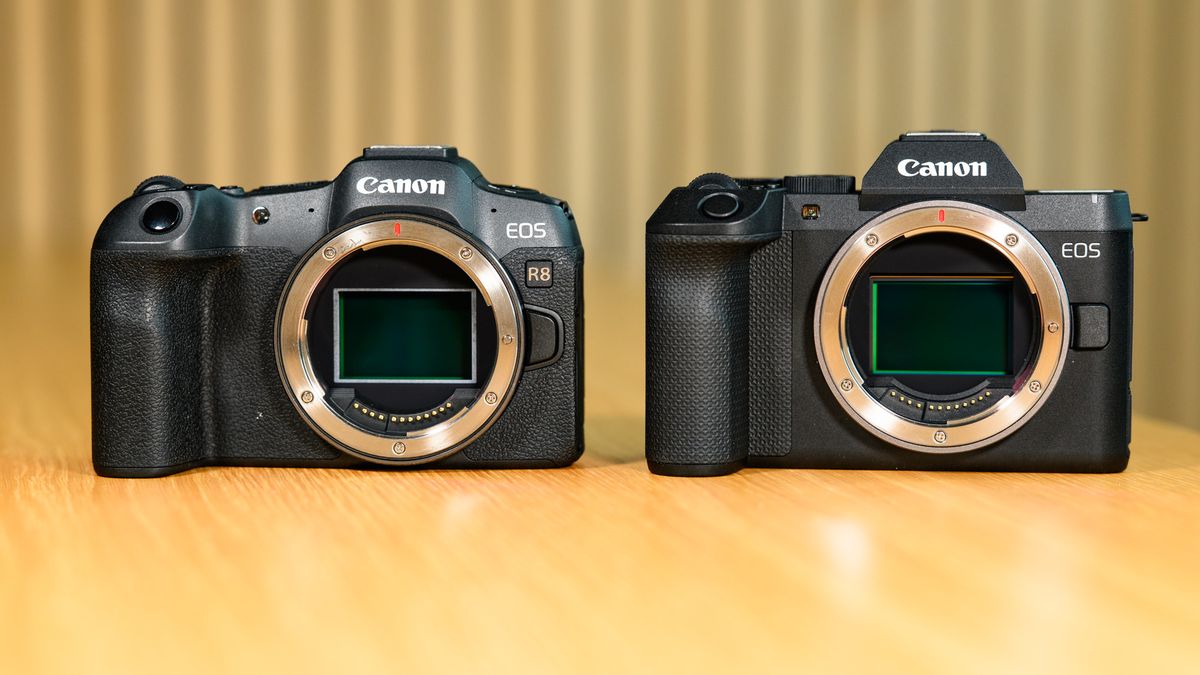
Prior to its announcement, industry rumors heavily suggested that Canon would release a digital homage to the analog AE-1 SLR camera to coincide with that legacy model’s historical milestones. While the EOS R8 Mark II incorporates sharper exterior lines, a slightly more pronounced handgrip, and an angular top plate, design critics note that the styling blends closer to contemporary competitor aesthetics than a true retro-styled chassis, falling short of the distinct vintage styling seen on rival models like the Nikon Zf.
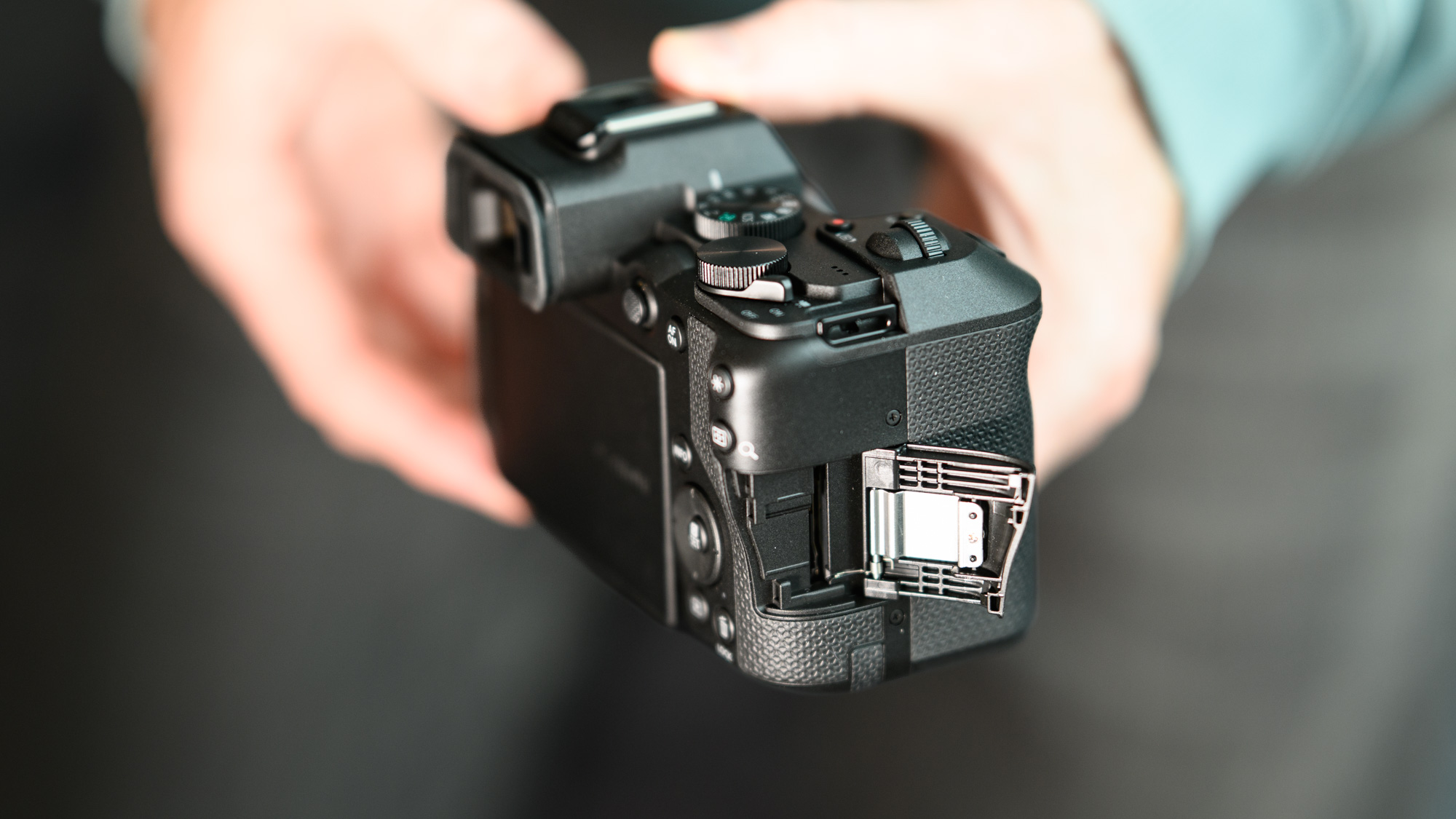
Ergonomically, the camera addresses several physical complaints leveled against the original R8. Canon has added a multi-controller (joystick) adjacent to the AF-ON button, enabling one-handed autofocus point selection. The single SD card slot (supporting SD/SDHC/SDXC media) has been relocated from the underside battery door to a dedicated compartment on the grip side of the chassis.
Despite these refinements, several legacy constraints persist. The EOS R8 Mark II retains the same 0.39-inch 2.36-million-dot OLED electronic viewfinder and 3.0-inch 1.62-million-dot vari-angle touchscreen LCD as its predecessor. Build materials continue to utilize a hybrid construction consisting of aluminum alloy and polycarbonate elements, omitting comprehensive weather-sealing gaskets.
Furthermore, despite the reallocation of internal components, the camera utilizes the exact same battery pack as the original R8. Power efficiency remains a recognized vulnerability, particularly when power-intensive features like IBIS are engaged; official CIPA ratings estimate battery endurance at approximately 220 shots using the electronic viewfinder or 340 shots via the rear LCD monitor.
Market Implications and Competitive Landscape
The release of the EOS R8 Mark II places it in direct competition within the entry-level full-frame segment, where consumer expectations are increasingly high. Market analysts note that while the R8 Mark II provides a logical upgrade path for existing Canon DSLR and early mirrorless users committed to the RF lens ecosystem, it faces stiff competition from alternatives such as the Nikon Z5 II. Released prior to Canon’s latest model, the Nikon Z5 II features a stabilized full-frame sensor, magnesium alloy weather-sealed chassis, and superior display specifications at a lower competitive price point.
Canon has confirmed that the original EOS R8 will remain available in its product catalog at a reduced price point, offering a more budget-friendly alternative for photographers who do not require in-body stabilization, pre-capture modes, or the updated ergonomic control layout. As the full-frame mirrorless market matures, the success of the EOS R8 Mark II will likely depend on retail price adjustments and its appeal to dedicated Canon brand loyalists seeking a lightweight hybrid solution.