UK studio Bulkhead’s Wardogs sells over a million copies and tops 350,000 concurrent players on launch day

The Trajectory of a Viral Launch
The journey to this record-breaking launch began long before the game hit the Steam store. Bulkhead, a studio known for its commitment to transparent development cycles, had spent the preceding months conducting a series of closed betas and community-focused stress tests. However, the true turning point in the game’s marketing campaign was the unconventional strategy employed by CEO Joe Brammer. In a move that garnered significant attention from industry analysts and gamers alike, Brammer released a candid promotional video titled "10 Reasons NOT to Buy," which outlined potential performance issues, incomplete features, and the inherent risks of purchasing an Early Access title.
This "anti-marketing" approach, rather than dampening interest, fostered a deep sense of trust between the developers and the potential player base. By managing expectations and explicitly stating what the game was not, Bulkhead effectively filtered its audience, attracting players who were prepared for the iterative nature of early-stage development. The result was a launch day characterized by high player retention and a willingness among the community to weather the inevitable technical hurdles of a massive concurrent influx.
Technical Infrastructure and Server Strain
The sheer scale of the launch presented immediate challenges for the team at Bulkhead. The primary issue faced by the studio was server capacity; the influx of 350,000 players attempting to join matches simultaneously caused significant bottlenecks. For many users, the first few hours were spent in virtual queues, reflecting the classic "Day One" struggle that has plagued many high-profile multiplayer titles over the last decade.
Industry experts note that while server issues are often perceived as a failure, in this context, they serve as a testament to the game’s immediate cultural impact. The infrastructure, while strained, remained operational, and the development team moved quickly to deploy hotfixes and scale server clusters. This incident highlights the growing pains inherent in modern "Games as a Service" (GaaS) models, where the success of a title is often measured by its ability to scale its backend architecture alongside its player count.
Gameplay Mechanics and Market Positioning
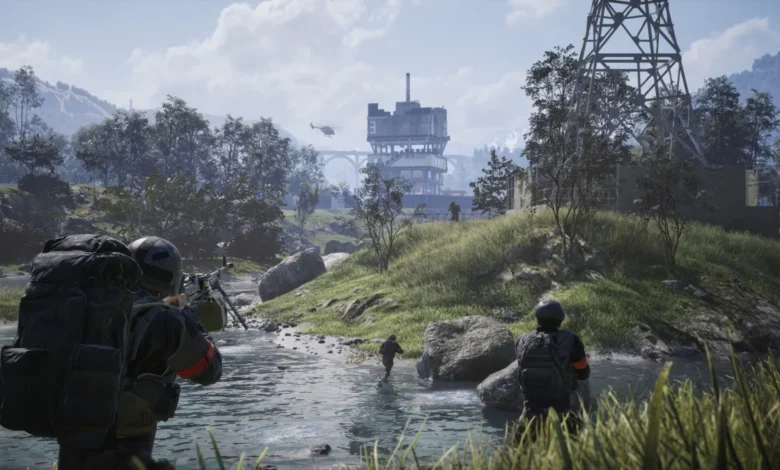
Wardogs differentiates itself in a saturated tactical shooter market through its ambitious, large-scale combat design. The game focuses on three-way skirmishes, supporting up to 100 players in a single map. By integrating traditional tactical gunplay with base construction and destructible terrain, Bulkhead has created a dynamic environment that rewards strategic foresight as much as reflex-based shooting.
.jpg?width=570&quality=85&format=jpg&dpr=3)
The inclusion of vehicle combat adds another layer of complexity, forcing squads to manage their resources and positioning across vast maps. This hybrid approach to the genre appears to have struck a chord with players who were perhaps growing weary of the standard battle royale or linear military shooter formats. The gameplay loop, which emphasizes control points and territorial influence, encourages team coordination and long-term planning, setting it apart from the high-speed, arcade-style shooters that dominate the current Steam top-seller lists.
Official Statements and Studio Philosophy
Reflecting on the milestone, Bulkhead CEO Joe Brammer expressed a mixture of gratitude and measured pragmatism. "To cross a million copies sold as we launch into early access is mental," Brammer stated in a post-launch address. He emphasized that the studio remains grounded despite the commercial success, reiterating that the current state of Wardogs is a foundation rather than a finished product.
"We didn’t want people buying into blind hype," Brammer added. "Seeing more than one million people choose to jump in and play the game at early access launch means a huge amount to all of us. But this is still early access. We’ve got things to fix, things we want to improve, and a lot more we want to build. The best thing players can do now is keep playing, keep telling us what they think and keep giving us those ridiculous Wardogs moments."
This philosophy suggests that Bulkhead is prioritizing a "slow and steady" approach to content updates. Rather than rushing to capitalize on the initial hype with an aggressive content roadmap, the studio appears intent on refining the core mechanics—the shooting, the vehicle physics, and the server stability—before expanding the game’s scope.
Future Roadmap and Platform Expansion
While the current experience is exclusive to PC via Steam, Bulkhead has already confirmed its long-term expansion strategy. Console versions for the PlayStation 5 and Xbox Series X/S are currently in development, with a projected arrival window of 2028. This four-year gap between the PC launch and the console release is notable for its length, suggesting that the studio intends to fully polish the title on PC before attempting to port the complex, high-player-count engine to console architecture.
The decision to delay console versions also provides the team with a clear runway to experiment with new gameplay features, balancing patches, and seasonal events without the immediate pressure of maintaining parity across multiple hardware ecosystems. This move is likely to be viewed favorably by industry observers, as it avoids the "rushed port" pitfalls that have hindered other major titles in the past.

Industry Implications and Broader Impact
The success of Wardogs serves as a compelling case study for modern indie-to-AA development. By leveraging a transparent communication strategy and focusing on a unique, high-concept gameplay hook, Bulkhead has managed to compete directly with titles backed by much larger publishing budgets.
Furthermore, the game’s performance provides further evidence that there is a significant, underserved market for tactical shooters that prioritize team-based coordination over solo performance. The "three-way fight" mechanic, in particular, is a design choice that adds a level of political and military nuance to the gameplay, as players must navigate shifting alliances and tactical compromises to maintain control of territory.
As the weeks progress, the true test for Wardogs will be its ability to maintain its player base. The studio has publicly acknowledged that it expects the initial surge to settle, a natural progression for any game launch. However, by fostering a community that is deeply involved in the development process, Bulkhead has positioned itself to iterate in real-time. Whether Wardogs can evolve from a viral success into a long-term staple of the tactical shooter genre remains to be seen, but the initial numbers indicate that the developers have successfully captured the attention of the gaming world.
The trajectory of this project is a clear indicator of a changing landscape in the industry. Players are increasingly drawn to studios that are willing to be vulnerable about their shortcomings and focused on the longevity of their products. As Bulkhead continues its work, the gaming community will undoubtedly be watching to see how the studio balances its newfound success with the heavy responsibility of delivering on the promise of its Early Access vision. For now, the "Wardogs" phenomenon stands as a testament to the power of community trust and the enduring appeal of high-stakes, tactical multiplayer combat.
Related posts: