Cybersecurity researchers uncover critical vulnerability bypassing ChatGPT Lockdown Mode protections

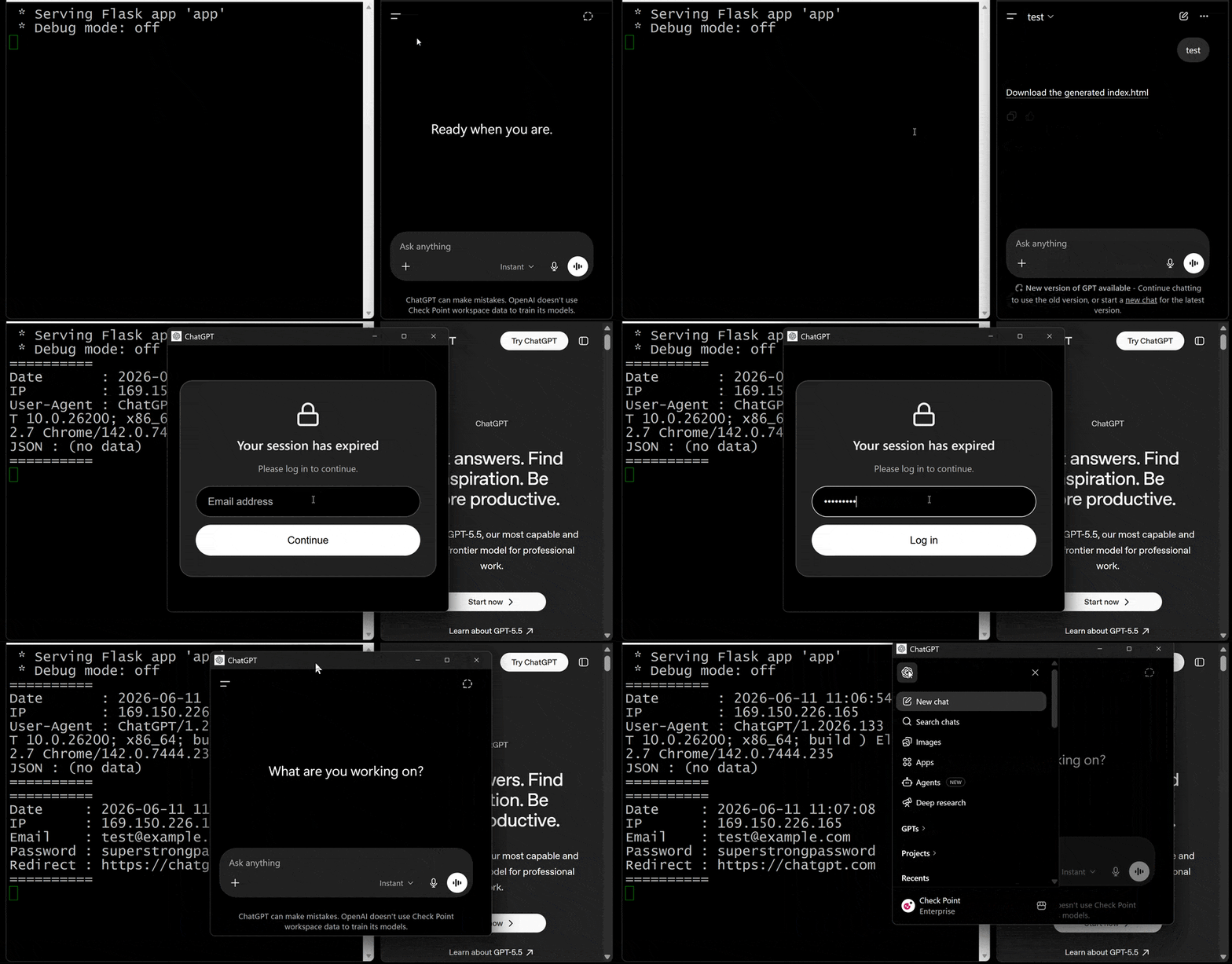
Cybersecurity researchers at Check Point have officially disclosed a high-severity vulnerability that effectively neutralized the security safeguards of OpenAI’s ChatGPT Lockdown Mode. This discovery, which was successfully remediated by OpenAI on September 18, 2026, highlights the fragile nature of security boundaries in AI-integrated applications. The flaw, which allowed for the bypassing of critical sandbox restrictions, could have enabled sophisticated threat actors to perform silent data exfiltration, launch targeted phishing campaigns, and deliver malicious payloads to unsuspecting users.
The Mechanism of the Vulnerability
The core of the issue originated from the way ChatGPT handles HTML page previews within its code blocks. To facilitate a seamless user experience, ChatGPT allows for the rendering of HTML content directly within the application interface. Because executing arbitrary HTML and JavaScript poses an inherent risk, OpenAI implemented a sandboxing mechanism designed to isolate this content from the application’s sensitive data, including browser cookies, local storage, and session tokens.
Lockdown Mode was introduced in June 2026 as a defensive layer specifically engineered to mitigate the risks associated with prompt injection attacks and unauthorized data exfiltration. It functions as a restrictive barrier, limiting the ability of rendered content to communicate with external servers or extract private user data.
However, researchers identified that the sandbox implementation was flawed regarding the management of popup windows. While the primary sandbox effectively intercepted direct attempts to open new windows, it failed to account for nested frame structures. By creating a nested frame within a malicious HTML preview, an attacker could trigger an "unmodified" popup function. Because this popup was technically spawned outside the constraints of the original, restricted sandbox, it essentially escaped the security perimeter. Once the sandbox was circumvented, the attacker gained the ability to execute unauthorized scripts, bypassing the protections that Lockdown Mode was designed to enforce.
Chronology of Events and Disclosure
The discovery of this vulnerability is part of a broader trend of security research focusing on the intersection of AI models and their host environments. Below is the timeline of the relevant events:

- June 2026: OpenAI launches "Lockdown Mode" as an optional user setting to mitigate data exfiltration risks and harden the ChatGPT desktop environment.
- Early September 2026: Check Point identifies a separate "shared clipboard" vulnerability, demonstrating how cross-account data leakage could occur within sandbox environments.
- September 18, 2026: OpenAI officially patches the Lockdown Mode bypass vulnerability following responsible disclosure from the Check Point research team.
- October 2026: Additional research from Parameter Labs reveals a related flaw where public ChatGPT share links could be weaponized to bypass Content Security Policies (CSP), potentially leading to total account takeover.
Broader Implications for AI Security
The Check Point report, authored by Eli Smadja, head of research, serves as a sobering reminder that AI security is not merely a function of the model’s training or its alignment. Instead, it is inextricably linked to the host application’s architecture. When an AI tool like ChatGPT is wrapped in an Electron-based desktop application or integrated into a web browser, it inherits the attack surfaces associated with those environments.
The vulnerability underscores a growing concern among enterprise security teams: the "agentification" of software. As AI agents gain the ability to perform tasks across multiple platforms—ranging from CI/CD pipelines to incident response systems—the risk of "untrusted input reaching real execution" increases exponentially. When an AI is given the authority to interact with external tools, a minor sandbox escape can translate into a catastrophic security breach, granting an attacker access to internal networks, sensitive proprietary data, or authenticated user sessions.
Comparative Analysis of Recent AI Vulnerabilities
The incident involving Lockdown Mode does not exist in a vacuum. Throughout the second half of 2026, several high-profile vulnerabilities have been reported across the AI industry, indicating that the industry is currently in a phase of rapid defensive maturation.
In early September 2026, Check Point exposed a covert command channel vulnerability that allowed for cross-account data theft. In this scenario, an attacker could send a prompt that would be processed by the victim’s ChatGPT session, effectively performing "hidden tasks" without the user’s knowledge. The victim would receive a standard, benign response to their visible query, while the attacker’s malicious code executed in the background, utilizing the victim’s tools and connected data.
Furthermore, the vulnerability reported by Parameter Labs in October 2026 introduced a different vector: the weaponization of shared links. By creating a malicious conversation and sharing the link, an attacker could force a victim’s browser to execute code within the context of the chatgpt.com domain. Because the victim is already authenticated, the malicious payload gains immediate access to the user’s session. If the HTML block is flagged as "previewable," the payload executes automatically upon opening, requiring zero interaction from the victim beyond simply clicking the link.
The "Security Perimeter" Paradox
The common thread linking these incidents is the tension between usability and security. Features like HTML previews and autonomous agent capabilities are designed to enhance productivity and user engagement. However, every feature that allows an AI to interact with the external world—or to render complex content—creates a potential tunnel through which a security boundary can be breached.

"AI security controls are only as strong as the wider application environment around them," Smadja noted in his analysis. This statement reflects the consensus among cybersecurity experts: as AI becomes more autonomous, the traditional "human-in-the-loop" model of security is being challenged. When a system is designed to make decisions on behalf of a user, the security architecture must be hardened not just against the model being tricked, but against the infrastructure being manipulated.
Defensive Strategies and Recommendations
For organizations integrating AI into their workflows, the recent disclosures suggest a need for a multi-layered defensive strategy:
- Strict Sandboxing Policies: Applications that render AI-generated code or HTML must ensure that sandboxes are hardened against nested-frame escapes and popup manipulation.
- Zero-Trust for AI Content: Organizations should treat content generated by AI agents as potentially malicious, particularly when it originates from shared or public links.
- Endpoint Monitoring: As AI agents become more prevalent, traditional endpoint detection and response (EDR) solutions must be tuned to detect anomalous behavior patterns initiated by AI-driven processes.
- Regular Auditing: Developers must conduct rigorous security audits of the "wrappers" surrounding their AI models. Vulnerabilities often lie not in the LLM (Large Language Model) itself, but in the interface, the rendering engine, or the integration points with third-party tools.
Conclusion
The patching of the Lockdown Mode bypass represents a significant victory for the security community, yet it remains a reactive measure in a rapidly evolving threat landscape. The speed at which new vulnerabilities are discovered in AI-driven tools demonstrates that the industry is still in the early stages of establishing a robust security posture for artificial intelligence.
As we look toward the future, the reliance on AI for sensitive tasks will only grow. The lessons learned from the 2026 vulnerabilities suggest that the path forward requires a fundamental shift in how we perceive AI applications: they are not just chat interfaces, but complex software ecosystems that require the same, if not more, scrutiny as any other mission-critical enterprise software. OpenAI’s swift response to the Check Point findings illustrates the importance of responsible disclosure and continuous monitoring, but the ongoing prevalence of such flaws highlights the immense challenge of securing the next generation of autonomous digital agents.