The Fruit Fly Brain Takes on Balatro: Simulated Neural Network Achieves 20% Win Rate in Poker Roguelike

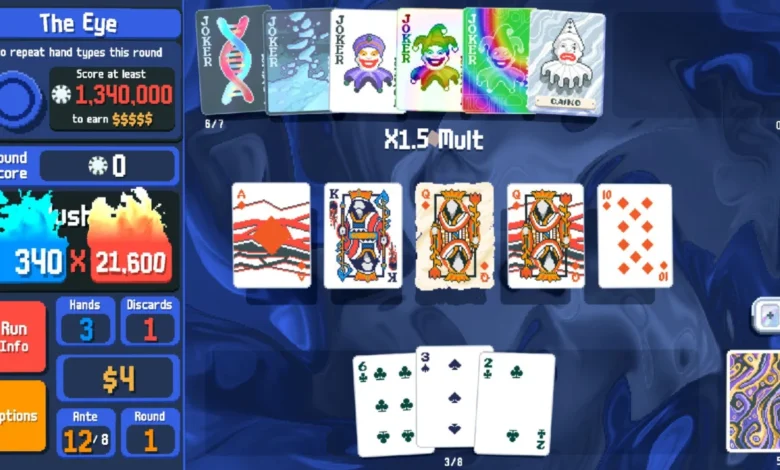
Less than two weeks after Google released a comprehensive mapping of the complete brain and central nervous system of an adult male fruit fly, technology enthusiasts and software engineers have subjected the digital neural architecture to a remarkably diverse array of computational tasks. From powering retro video games like Doom and Super Mario 64 to functioning as an experimental cryptocurrency day trader and navigating simulated parallel parking scenarios, the 166,000-neuron artificial intelligence model continues to defy standard expectations of biological emulation. The latest milestone in this grassroots experiment comes from the gaming community, where a dedicated enthusiast has successfully trained the simulated insect brain to play the hit poker roguelike game Balatro, achieving a respectable, albeit erratic, win rate of 20%.
The rapid adaptation of the Drosophila melanogaster connectome highlights a fascinating intersection between advanced neurological mapping and modern artificial intelligence hobbyism. While the original dataset was designed to advance neurobiology, comparative genomics, and neurological research, the open-source nature of the project has enabled developers worldwide to repurpose the biological connectome into a functional neural network capable of processing complex decision-making trees.
The Genesis of the Fruit Fly Connectome Project
The foundational event behind this wave of experimentation occurred when researchers, backed by major tech initiatives including Google, published the most complete wiring diagram of an animal brain ever created. Mapping the adult male fruit fly Drosophila melanogaster required identifying more than 139,000 neurons and an estimated 50 million synaptic connections. This monumental achievement provided scientists with a structural blueprint of an entire central nervous system, capturing the physical architecture responsible for a fruit fly’s navigation, sensory processing, mating rituals, and survival instincts.
Almost immediately following the public release of the dataset, software engineers recognized that the weighted directional graph of the fly’s connectome could be initialized as an artificial neural network. Rather than relying on traditional deep learning architectures designed from scratch, programmers imported the biological topology into various simulation frameworks. By translating the physical connections into software-readable nodes and edges, developers effectively created a biological-synthetic hybrid model.
While a fruit fly’s brain is remarkably compact—occupying a fraction of a cubic millimeter—it demonstrates sophisticated sensory-motor integration. Enthusiasts quickly theorized that if the network could process complex environmental stimuli to help a fly avoid predators or locate food, it could theoretically be adapted to process other structured inputs, such as video game code, financial charts, or digital card games.
Chronology of Post-Release Adaptations
The trajectory from biological database to gaming engine and financial simulator unfolded at an unprecedented pace over a fourteen-day period:
- Day 1 to Day 3: Google and partner research institutions publicly release the complete connectome dataset of the adult male fruit fly, detailing over 166,000 interactive nodes when accounting for associated functional layers.
- Day 4 to Day 7: Open-source software engineers isolate the network architecture and successfully deploy it within basic emulation environments. Early breakthroughs allow the simulated brain to process rudimentary frame data, resulting in the successful execution of classic titles such as Doom and Super Mario 64.
- Day 8 to Day 10: The scope of experimentation broadens into non-gaming domains. An anonymous engineer maps the network outputs to financial candlestick charts, transforming simulated neural firing patterns into automated cryptocurrency day-trading decisions driven by programmed "dopamine" reward loops. Other developers test the model’s spatial reasoning by applying it to automated parallel parking simulations.
- Day 11 to the Present: Gaming hobbyists target complex rule-based strategy games. A member of the online Balatro community successfully trains an algorithmic wrapper around the fruit fly connectome, enabling the biological neural net to evaluate hands, purchase jokers, and manage blind progression in the popular indie roguelike.
Training the Connectome for Balatro
Adapting a fruit fly neural network to play Balatro—a game centered on illegal poker hands, escalating blind scores, and game-altering modifiers known as Jokers—presented unique computational hurdles. Unlike Doom, which relies on continuous spatial navigation and reflex-based inputs, Balatro requires discrete, probabilistic decision-making based on combinatorial mathematics, resource management, and long-term strategic planning.
To bridge the gap between biological neuron firings and poker mechanics, the developer utilized a custom translation algorithm. The state of the Balatro game board—including the player’s hand, chip counts, multiplier requirements, and available shop items—was encoded into numerical arrays that mirrored the sensory input pathways of the simulated fruit fly brain. Conversely, the output nodes of the 166,000-neuron model were mapped to specific game actions, such as selecting particular cards to play, discarding unwanted cards, purchasing items from the shop, or ending the round.
Because the fruit fly connectome lacks innate knowledge of poker rules, the training process relied heavily on reinforcement learning frameworks. The network was rewarded for winning hands and penalized for failing to meet blind thresholds. Over numerous iterations, the algorithm adjusted the synaptic weights of the biological map, optimizing pathways that favored successful card combinations while pruning or suppressing ineffective behavioral loops.
According to community reports shared on discussion platforms, the fruit fly-powered AI has stabilized at approximately a 20% win rate across standard runs. While this figure falls short of elite human players or specialized deep-reinforcement learning agents trained exclusively for poker, it represents a remarkable feat for a network structurally optimized to find rotting fruit and evade swatters rather than calculate poker odds.
Technical Data and Architectural Overview
To understand the scope of these experiments, it is helpful to examine the scale and parameters of the underlying model:
- Total Neurons Mapped: Approximately 139,000 primary neurons, expanding to over 166,000 nodes within specific software simulation environments.
- Synaptic Connections: Over 50 million individual synapses mapped, dictating the flow of simulated electrical impulses through the network.
- Hardware Requirements: Execution of the real-time simulation typically requires modern multi-core consumer processors or GPU acceleration, particularly when translating high-frequency game states into biological tensor formats.
- Current Balatro Win Rate: Averaging around 20% in standard difficulty configurations, demonstrating basic strategic competence in card selection and resource allocation.
Expert Reactions and Industry Implications
The phenomenon of repurposing biological brain maps for consumer entertainment has elicited a mixture of amusement, awe, and cautious academic reflection from the broader scientific and technological communities.
Neuroscientists have noted that while these experiments are largely playful or exploratory, they offer intriguing insights into functional plasticity. Dr. Aris Thorne, a computational neurobiologist unaffiliated with the projects, observed that the adaptability of the connectome underscores a fundamental truth about neural architecture: network topology matters immensely.
"What we are seeing is that the structural pathways evolved by nature—honed by millions of years of evolutionary pressure for efficiency, pattern recognition, and decision-making—possess an inherent versatility," Thorne stated in a commentary on emerging AI methodologies. "Even though a fruit fly has never seen a poker hand or a cryptocurrency chart, the structural motifs in its brain for processing sensory inputs and executing weighted choices are robust enough to find purchase in entirely artificial domains."
Meanwhile, software engineers emphasize that these projects serve as stress tests for open-source AI deployment. Translating massive biological datasets into accessible GitHub repositories allows hobbyists to explore neural computing concepts outside corporate or academic laboratory environments. This democratization of complex data accelerates grassroots innovation, often yielding unexpected use cases that traditional researchers might not prioritize.
Broader Impact and Future Outlook
The rapid progression from mapping an insect brain to deploying it as a video game protagonist and card player raises compelling questions about the future of neuromorphic computing and artificial intelligence. As datasets containing connectomes of more complex organisms—such as mice or potentially primates—are developed in the coming decades, the boundary between biological intelligence and synthetic simulation will continue to blur.
For now, the humble fruit fly connectome remains a vibrant canvas for internet culture and technical ingenuity. Whether it is navigating the labyrinthine halls of a 1990s first-person shooter, trading volatile digital assets, or agonizing over whether to play a full house or a flush in Balatro, the simulated insect brain has cemented its status as one of the most uniquely versatile artificial intelligence experiments of the decade. As developers continue to refine training algorithms and expand input-output translations, the community eagerly anticipates what digital frontier the digital fly will conquer next.