The Comprehensive Roadmap to Mastering Voice Agent Development and Implementation

The evolution of artificial intelligence has moved beyond the silent interface of text-based chat windows, ushering in an era where voice agents serve as the primary bridge between human intent and machine execution. As industries ranging from healthcare and telecommunications to retail and smart home automation shift toward voice-first strategies, developers and engineers must navigate a complex technical landscape that blends sophisticated natural language processing with high-performance audio engineering.
The Technical Evolution of Voice Interfaces
The emergence of voice agents is not a sudden technological shift but rather the culmination of decades of research in computational linguistics and signal processing. While early speech recognition systems—popularized in the late 1990s and early 2000s—were limited by rigid, command-based architectures, the modern voice agent is powered by large language models (LLMs). This transition represents a shift from "command and control" interfaces to conversational, reasoning-based systems.
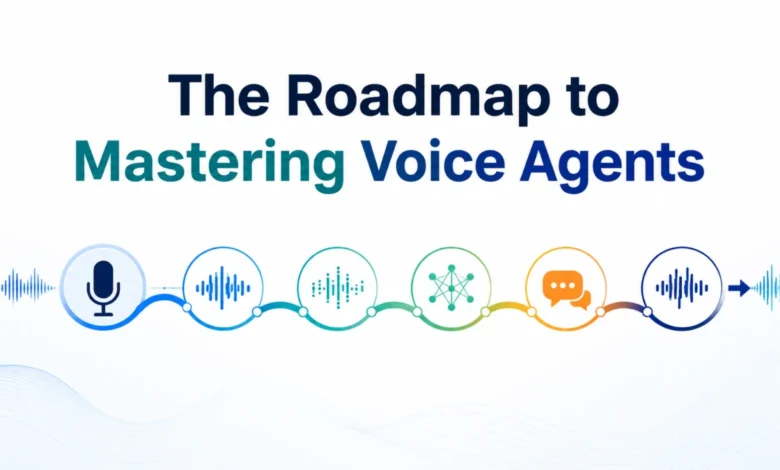
A voice agent operates as a tripartite pipeline. The initial stage, Automatic Speech Recognition (ASR), translates analog acoustic waveforms into digital text. The second stage utilizes an LLM to parse intent, perform reasoning, and formulate a response. The final stage, Text-to-Speech (TTS) synthesis, converts that response back into human-like audio. Unlike text-based systems, which process discrete inputs, voice agents must manage these stages in real-time, often necessitating sub-500-millisecond latency to maintain the illusion of natural conversation.
Chronology of Voice Technology Adoption
The trajectory of voice-activated AI can be categorized into four distinct eras:
- The Command Era (1995–2010): Characterized by rudimentary dictation software and phone-based Interactive Voice Response (IVR) systems. These systems were brittle and relied on predefined keyword triggers.
- The Assistant Era (2011–2017): The launch of mainstream virtual assistants like Siri and Alexa introduced natural language understanding (NLU) to a consumer audience. These systems excelled at information retrieval but struggled with sustained, multi-turn context.
- The Generative Era (2018–2023): The arrival of transformer-based models allowed agents to handle nuance, context, and complex reasoning, moving voice agents away from scripted responses toward generative capability.
- The Real-Time Agent Era (2024–Present): The current frontier focuses on low-latency streaming and multimodal integration, where agents can interpret tone, emotion, and overlapping speech in real-time.
Data-Driven Challenges in Voice Architecture
Industry data suggests that the transition from text to voice is fraught with technical friction. According to recent performance benchmarking studies, the Word Error Rate (WER) in ASR systems remains a primary bottleneck. In quiet, controlled environments, modern models achieve a WER of less than 2%, but in high-noise retail or industrial settings, this rate can spike to 10% or higher. Because errors in the STT layer compound as they flow into the LLM, a minor transcription mistake can fundamentally alter the reasoning output of the entire system.
Furthermore, industry benchmarks indicate that perceived latency is the single greatest determinant of user satisfaction. While a text-based interface can comfortably handle a two-second generation time, a voice agent that remains silent for more than 800 milliseconds is often perceived as "broken" by the user. This necessitates the use of streaming architectures, where the system begins generating and synthesizing audio before the entire response is even finalized by the LLM.
A Structured Roadmap for Voice Agent Development
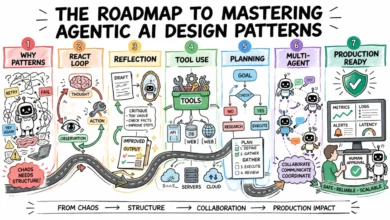
Engineers aiming to master this field must follow a rigorous, seven-stage development pathway to ensure reliability and scalability:
Stage 1: Foundational Pipeline Architecture
Developers must first master the mechanics of the three-stage pipeline. This involves understanding audio encoding (PCM, Opus, MP3), sampling rates, and the mechanics of how STT engines handle phonetics.
Stage 2: Language Processing and Constraints
The core LLM layer must be conditioned specifically for voice. Unlike text, where users may tolerate long paragraphs, voice agents require concise, high-impact language. Prompt engineering here is focused on "spoken-style" output, avoiding complex punctuation and nested lists that are difficult to process aurally.
Stage 3: Real-Time Streaming Systems
This phase shifts focus to engineering. Using technologies like WebSockets or gRPC, developers build systems that "chunk" data. By sending segments of text to the TTS engine as they are generated, the agent begins speaking while the LLM is still formulating the remainder of the sentence.
Stage 4: Advanced Conversation Design
Beyond the code, the agent must adhere to principles of linguistics and human-computer interaction (HCI). This involves designing "turn-taking" logic—the ability for the agent to know when to pause, when to interrupt, and how to handle "umms," "ahhs," and other disfluencies common in human speech.
Stage 5: Integration of Tools and Persistent Memory
To be functional, an agent must be capable of stateful interaction. This requires integrating vector databases for long-term memory and API function calling for real-time task execution, such as checking a flight status or updating a CRM entry.
Stage 6: Production-Grade Deployment and Monitoring
Deploying voice agents requires specialized infrastructure, including telephony gateways for phone-based agents and dedicated GPU resources to ensure low-latency inference. Monitoring shifts from simple text-log analysis to audio-log auditing, measuring "task completion rate" against "time to resolution."
Stage 7: Advanced Specialized Capabilities
The final stage of mastery involves implementing emotion detection (sentiment analysis of the user’s tone), multilingual support, and custom voice cloning. These features allow for a branded, high-fidelity user experience that is context-aware.
Broader Implications and Industry Impact
The integration of voice agents into the global economy carries significant implications for workforce productivity and accessibility. In healthcare, for instance, voice-enabled clinical documentation is already reducing the administrative burden on physicians, allowing them to focus on patient interaction rather than data entry. In the financial sector, voice authentication combined with conversational AI is streamlining identity verification processes.
However, the rapid deployment of these systems raises significant concerns regarding privacy and the "uncanny valley." As agents become more human-like, the threshold for ethical design increases. Developers are now tasked with ensuring that transparency remains a priority; users must be informed when they are interacting with a synthetic entity.
The shift toward voice is inevitable, driven by the desire for friction-free computing. As the gap between human speed and machine processing closes, the developers who succeed will be those who balance raw computational power with the nuanced, delicate art of conversation design. Building a voice agent is no longer just a programming task—it is an exercise in creating a reliable, intelligent, and responsive partner for the end user. Those who follow the structured path from infrastructure to design will find themselves at the forefront of the next great technological shift in human-computer interaction.
Related posts: