AI’s New Frontline: Trump Advisors Clash Over Chinese Competition and the Future of Regulation

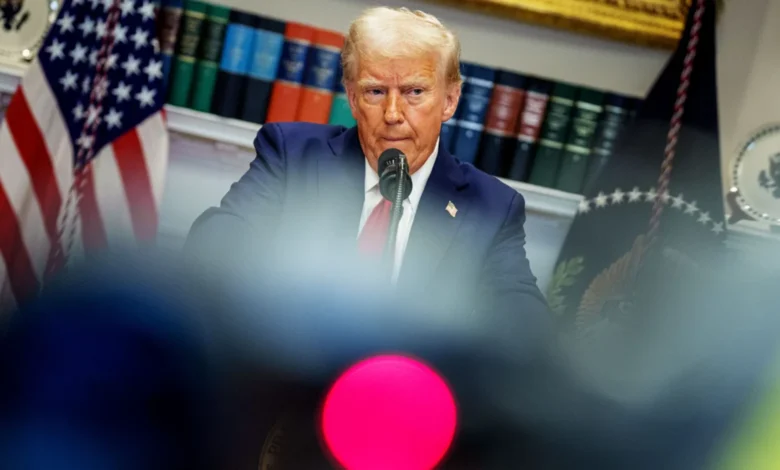
The escalating debate within former President Donald Trump’s circle regarding artificial intelligence has intensified, revealing deep divisions among his advisors on how to confront the growing influence of Chinese AI companies and their increasingly sophisticated, often free, open-source models. This internal discord, punctuated by public salvos and strategic disagreements, underscores a critical juncture for U.S. AI policy, particularly as the nation grapples with both economic competitiveness and national security concerns. The recent emergence of Kimi, a Chinese AI model that rivals the capabilities of leading American counterparts like OpenAI and Anthropic, has served as a flashpoint, igniting a debate that pits proponents of open innovation against those advocating for stricter government control.
The weekend’s public exchanges began with pointed criticisms from individuals closely associated with Trump’s AI and technology policy initiatives. David Sacks, who served as Trump’s AI and crypto "czar" until March, publicly labeled Anthropic’s AI models as "lobotomized" and "woke," suggesting a critique rooted in perceived ideological constraints. Concurrently, Emil Michael, a prominent figure within the Pentagon’s AI strategy apparatus, referred to OpenAI’s new head of strategic futures as a "supreme village idiot," a remark widely interpreted as a dismissal of the company’s strategic direction or its perceived handling of competitive threats. These sharp exchanges are not isolated incidents but rather symptomatic of a broader, unfolding strategic battle over the future of AI development and regulation in the United States.
The Kimi Catalyst: A Free, Open-Source Challenge
The immediate trigger for this heightened rhetoric appears to be the launch of Kimi, an open-source AI model developed by the Chinese company Moonshot. Kimi has rapidly garnered attention for its impressive performance, reportedly rivaling the intelligence of proprietary models from OpenAI and Anthropic. The crucial distinction lies in Kimi’s accessibility: it is offered for free, a stark contrast to the subscription-based models offered by U.S. tech giants. This pricing differential poses a significant challenge to the economic models of American AI leaders and, by extension, to the broader U.S. technology sector, which has become a significant driver of economic growth.
Economic and Political Ramifications for the Trump Administration
The rise of advanced, free AI models from China presents a complex dilemma for any future Trump administration. Anton Leicht, a fellow at the Carnegie Endowment, articulated the concern, stating that such developments are "a threat for an administration that really doesn’t want more economic bad news." The potential for Chinese AI to erode the market share of U.S. companies, which have attracted substantial investment and are seen as crucial to maintaining technological leadership, is a palpable worry. Indeed, reports indicate that Chinese AI models have already begun to "rattle U.S. stocks," signaling investor anxiety about the competitive landscape.
The economic implications are intertwined with political considerations. A perception of declining U.S. technological dominance could be politically damaging, particularly for an administration that has often emphasized American economic strength and competitiveness on the global stage. Furthermore, the debate over AI regulation is becoming increasingly politicized, with differing philosophical approaches emerging within the Republican party’s influential figures.
Divergent Strategies: Openness vs. Intervention
The public spat highlights a fundamental ideological divide within Trump’s orbit regarding AI. David Sacks, despite his recent criticisms of U.S. AI companies, has previously advocated for a more open AI ecosystem, criticizing top AI firms for allegedly seeking government intervention to "eliminate their open source competition." Sacks has argued that the popularity of Chinese AI models stems from their fewer usage restrictions, a perspective that, while acknowledging the models’ appeal, largely bypasses the issue of state censorship within China.
However, Sacks’s viewpoint appears to be increasingly sidelined within the Trump camp, which is leaning towards a more interventionist approach. This shift is driven by national security concerns, with the argument that sufficiently advanced AI models pose potential threats that necessitate government oversight. This perspective has informed the White House’s current review process, designed to vet AI models for security risks before their release.
The White House Review Process and Internal Disagreements
The White House’s AI model review process, which aims to pre-screen AI for national security implications, has drawn sharp criticism from within the AI community. Dean Ball, a former Trump AI advisor now employed by OpenAI, characterized the process as a "de facto licensing regime for frontier AI." Ball suggested that Trump might address the challenge posed by Chinese open-source models through "soft power," potentially by influencing U.S. companies to shy away from models like Kimi.
This suggestion was met with immediate pushback from Emil Michael, who, alongside Secretary of Defense Pete Hegseth, has been a key liaison with AI companies. Michael’s sharp retort, calling Ball the "supreme village idiot," underscored a preference for overt, "democratic process" solutions rather than what he implied could be a "Deep State scheme." This exchange reveals a clash between those who favor more subtle, market-driven influence and those who advocate for direct government action and transparency.
The Unanswered Question: How China Achieves AI Prowess
A critical element conspicuously absent from much of the public debate is a thorough examination of how Chinese AI models like Kimi have achieved their impressive capabilities. For a significant period, under both the Biden and early Trump administrations, a primary focus was on restricting China’s access to advanced semiconductor chips, crucial for AI development. While export controls were a cornerstone of this strategy, the Trump administration controversially eased some restrictions, allowing companies like Nvidia to increase chip sales to China in exchange for a share of the revenue for the U.S. government.
Despite these measures, and even with allegations of chip smuggling, the precise hardware powering China’s leading AI models remains a subject of speculation. The computing power available to Chinese firms, while potentially constrained, has clearly been sufficient to train models that can compete at the highest level.
Distillation and the Call for Government Intervention
One plausible explanation for China’s rapid AI advancement lies in the practice of "distillation." This technique involves training AI models on the outputs of pre-existing, often more powerful, AI models. OpenAI and Anthropic have long voiced concerns about Chinese companies engaging in this practice, arguing that it unfairly leverages their research and development investments. They have repeatedly requested government assistance to curb this activity.
In April, their appeals appeared to be heard when the Trump administration announced measures aimed at curtailing Chinese firms’ exploitation of U.S. AI models. However, the continued emergence of powerful, free models like Kimi suggests that these efforts have had limited success in stemming the tide.
A National Security Wake-Up Call, But for What?
The reality is that Kimi is now available, free and nearly as capable as some U.S. government-deemed "national security threats." The recent government shutdown of an Anthropic model, deemed too powerful and potentially dangerous, highlights the perceived risks associated with advanced AI. The public disagreements among Trump’s advisors, fueled by the Kimi phenomenon, suggest a growing recognition within his camp that the current trajectory of AI development, particularly from international competitors, demands a response.
However, the fractured nature of the debate indicates a lack of consensus on what that response should entail. Whether the path forward involves stricter export controls, direct regulation of AI development, fostering domestic innovation through subsidies, or a combination of these strategies remains to be seen. The diverging opinions among key figures in Trump’s political circle underscore the complexity of navigating the AI landscape, a landscape where economic opportunity, national security, and technological progress are increasingly intertwined, and where the competition is global and rapidly evolving. The public clashes are a clear signal that the administration, if it returns to power, will face significant internal pressure to define its stance on AI, a stance that will undoubtedly shape the future of the technology in the United States and beyond.