Apple Announces Leadership Transition as Tim Cook Steps Down to Executive Chairman and John Ternus Named CEO

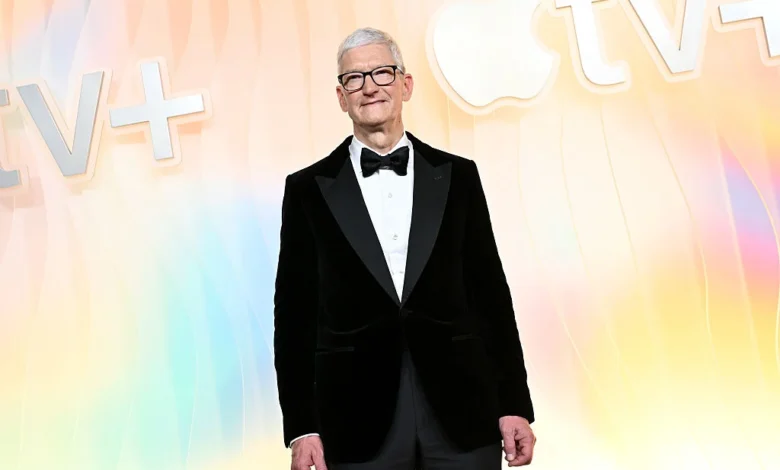
Apple Inc. announced a significant evolution in its corporate leadership on Monday, confirming that Tim Cook will step down from his role as Chief Executive Officer effective September 1, 2026. Cook, who has steered the technology giant through a period of unprecedented financial growth and product diversification since 2011, will transition into the role of Executive Chairman of the Board. The company’s Board of Directors has unanimously appointed John Ternus, currently Apple’s Senior Vice President of Hardware Engineering, as his successor.
The transition marks the end of a fifteen-year era defined by the expansion of the iPhone ecosystem, the birth of the Apple Watch and AirPods, and a strategic pivot toward services and recurring revenue. Cook’s move to Executive Chairman mirrors the leadership structure of many Fortune 500 companies, providing a bridge between the outgoing administration and the new leadership to ensure institutional stability.
A Legacy of Operational Excellence and Market Dominance
Tim Cook assumed the mantle of CEO in August 2011, succeeding co-founder Steve Jobs just weeks before Jobs’ passing. At the time, skeptics questioned whether an operations-focused executive could maintain the creative spark that defined Apple’s "insanely great" product philosophy. Cook answered those doubts by scaling the company to heights previously unimagined in the corporate world.
Under Cook’s leadership, Apple’s market capitalization surged from approximately $350 billion in late 2011 to peak valuations exceeding $3 trillion. His tenure was characterized by a meticulous refinement of the supply chain, the aggressive expansion of Apple’s retail presence in China, and the development of the "Services" division, which includes the App Store, iCloud, Apple Music, and Apple TV+. By 2026, the Services sector had become a primary driver of Apple’s profitability, insulating the company from the cyclical nature of hardware sales.
Cook also prioritized social responsibility, steering the company toward carbon neutrality goals and advocating for user privacy as a "fundamental human right." His statement regarding John Ternus reflected his confidence in the internal culture he helped cultivate: "John Ternus has the mind of an engineer, the soul of an innovator, and the heart to lead with integrity and with honor. He is a visionary whose contributions to Apple over 25 years are already too numerous to count."
The Rise of John Ternus: From Engineer to Executive
John Ternus, the incoming CEO, is a veteran of the Cupertino-based firm, having joined the product design team in 2001. Over his quarter-century at Apple, Ternus has been a central figure in the development of nearly every major hardware category. His appointment signals the Board’s desire to return to a product-centric leadership model, as Ternus has been a public face of Apple’s most ambitious engineering feats in recent years.
Before becoming Senior Vice President of Hardware Engineering in 2021, Ternus led the hardware teams responsible for the iPad and several generations of the iPhone. He was also a pivotal figure in the transition of the Mac lineup from Intel processors to Apple Silicon. This architectural shift, widely considered one of the most successful technical migrations in computing history, significantly improved the performance and efficiency of Apple’s computers and further decoupled the company’s roadmap from third-party chipmakers.
Analysts suggest that Ternus’s deep technical background will be vital as Apple navigates the burgeoning era of spatial computing and artificial intelligence. Having overseen the engineering of the Vision Pro and the latest iterations of the M-series chips, Ternus is positioned as a leader who understands the granular complexities of both hardware and software integration.
Chronology of Apple’s Leadership Transitions
The history of Apple’s CEO office is one of the most studied narratives in business history. The transition from Cook to Ternus represents only the fifth major leadership change since the company’s founding in 1976.
- 1977–1981: Michael Scott served as the first CEO, brought in by investor Mike Markkula to provide adult supervision for the young founders.
- 1981–1983: Mike Markkula took over the role during the company’s early years as a public entity.
- 1983–1993: John Sculley, formerly of PepsiCo, led the company through the launch of the original Macintosh but famously clashed with Steve Jobs, leading to Jobs’ departure.
- 1993–1997: A period of instability followed under CEOs Michael Spindler and Gil Amelio, as Apple struggled with market share and financial losses.
- 1997–2011: Steve Jobs returned as "interim CEO," eventually taking the role permanently. This era saw the release of the iMac, iPod, iPhone, and iPad.
- 2011–2026: Tim Cook took over on August 24, 2011. He focused on global scaling, wearables, and the services economy.
- 2026–Present: John Ternus is named successor, slated to take office on September 1, 2026.
Financial and Market Implications
The announcement, while significant, did not catch Wall Street entirely by surprise. Rumors of succession planning had been circulating for several years as Cook approached his mid-60s. Apple’s stock (AAPL) showed resilience in midday trading following the announcement, a sign that investors view the choice of Ternus as a "safe and steady" pick that maintains the company’s internal continuity.
Key financial metrics highlight the high bar set by the outgoing CEO:
- Revenue Growth: Apple’s annual revenue grew from $108 billion in 2011 to nearly $400 billion by the mid-2020s.
- Dividends and Buybacks: Under Cook, Apple returned over $600 billion to shareholders through dividends and share repurchases, making it one of the most shareholder-friendly companies in the tech sector.
- Gross Margins: Despite global inflation and supply chain disruptions, Apple maintained gross margins above 40%, a testament to Cook’s operational discipline.
Industry analysts at major firms like Goldman Sachs and Morgan Stanley have noted that Ternus will inherit a company with a massive "installed base" of over 2 billion active devices. The challenge for the new CEO will not be building a market from scratch, but rather deepening the monetization of existing users while finding the "next big thing" beyond the smartphone.
Strategic Challenges for the Ternus Era
As John Ternus prepares to take the helm, several headwinds remain on the horizon. The global regulatory environment has become increasingly hostile toward "Big Tech" ecosystems. Apple is currently embroiled in multiple antitrust lawsuits in the United States and the European Union regarding its App Store policies and the "walled garden" nature of the iOS platform. Ternus will need to balance Apple’s lucrative proprietary model with the legal requirements for interoperability and third-party competition.
Furthermore, the race for Artificial Intelligence supremacy has entered a critical phase. While Apple has integrated machine learning into its devices for years, the rise of generative AI has forced the company to accelerate its software development. Ternus’s background in hardware will be essential in designing the specialized neural engines required to run complex AI models locally on iPhones and Macs, preserving the company’s commitment to user privacy.
Finally, the geographical diversification of manufacturing remains a priority. Cook began the process of moving some production out of China to countries like India and Vietnam. Ternus will be responsible for overseeing this massive logistical shift without compromising the quality or availability of flagship products.
Statements from the Board and Industry Peers
The Apple Board of Directors issued a statement praising the planned transition. "Tim Cook has led Apple with a level of dedication and vision that is rare in the history of business," said Arthur Levinson, Apple’s Chairman of the Board. "In John Ternus, we have a leader who has been at the heart of Apple’s most important product breakthroughs for decades. The Board is confident that this transition will be seamless and that Apple’s best days are ahead."
While competitors at Google, Microsoft, and Meta have not officially commented on the personnel change, the industry consensus is that Ternus represents a "product-first" mentality that may lead to more aggressive hardware experimentation.
Conclusion: A New Chapter in Cupertino
The transition from Tim Cook to John Ternus is more than a change in personnel; it is a signal of Apple’s long-term strategy. By elevating a hardware engineer to the top post, Apple is doubling down on its identity as a premier maker of high-end consumer electronics, even as it continues to grow its software services.
Tim Cook’s move to Executive Chairman ensures that his institutional knowledge and diplomatic skills—honed through years of navigating international trade and government relations—remain available to the company. Meanwhile, Ternus will be tasked with the day-to-day execution of Apple’s ambitious roadmap.
As September 1, 2026, approaches, the tech world will be watching closely to see how Ternus handles his first major product launch as CEO. If his 25-year track record is any indication, the "Ternus Era" will likely be defined by engineering precision, aesthetic refinement, and a relentless focus on the integration of hardware and software that has become Apple’s hallmark. For now, the transition appears to be a calculated and orderly passing of the torch, designed to maintain the momentum of the world’s most valuable brand.