NVIDIA Poised for Strategic RTX 3060 Relaunch in Mid-2026 Amidst Shifting Market Dynamics and Reported RTX 5050 Delay.

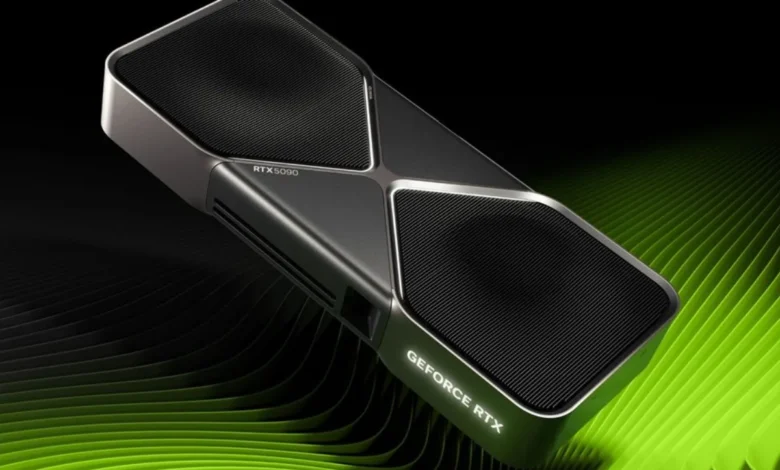
NVIDIA, a dominant force in the graphics processing unit (GPU) market, is reportedly preparing a significant strategic move: the relaunch of its popular GeForce RTX 3060 graphics card in June 2026. This unexpected development, first brought to light by prominent hardware leaker MEGAsizeGPU, suggests a potential pivot in the company’s entry-level GPU strategy. Concurrently, the same source indicates that NVIDIA has temporarily shelved plans for a previously rumored 9GB VRAM variant of the upcoming RTX 5050, a decision that could reshape the competitive landscape for budget-conscious gamers and creators. As of now, NVIDIA has not issued any official confirmation regarding either the RTX 3060 relaunch or the reported delay of the RTX 5050.
The potential reintroduction of the RTX 3060, a card originally launched in January 2021, marks an intriguing strategic maneuver. At its initial release, the RTX 3060 carried an MSRP of $329, positioning itself as a capable mid-range option during a period of unprecedented demand and supply chain volatility driven by the cryptocurrency boom and global semiconductor shortages. Its specifications included 3,584 CUDA cores, 12GB of GDDR6 memory across a 192-bit bus, and boost clock speeds reaching up to 1,777 MHz. The card was fabricated using Samsung’s 8nm process node, a critical detail that now plays a central role in the rationale behind its rumored relaunch.
The Strategic Rationale Behind an RTX 3060 Relaunch
The decision to reintroduce an older generation GPU is not unprecedented in the technology sector, but it invariably signals a calculated response to evolving market conditions. For NVIDIA, the RTX 3060’s potential return appears to be driven by a confluence of factors related to manufacturing efficiencies, cost optimization, and the competitive landscape for entry-level graphics cards in 2026.
One of the primary drivers is the RTX 3060’s memory configuration. The card’s 12GB of GDDR6 VRAM stands in stark contrast to many contemporary entry-level and mid-range GPUs, which often feature 8GB of VRAM. As modern game titles become increasingly VRAM-intensive, particularly at higher resolutions or with demanding texture settings, the 12GB buffer of the RTX 3060 offers a tangible practical advantage. This is especially pertinent as the market for sub-$300 GPUs sees new releases, such as AMD’s Radeon RX 7600 or Intel’s Arc A750/A770, often settling for 8GB configurations. A relaunched RTX 3060 could, therefore, carve out a niche for gamers prioritizing VRAM capacity without breaking the bank.
From a manufacturing perspective, the RTX 3060 presents significant advantages. The card utilizes GDDR6 memory, which is considerably less costly to produce than the newer, faster GDDR7 memory earmarked for current and upcoming high-end RTX 50 series cards. Amidst rising memory prices globally, leveraging an established, more economical memory standard allows for greater cost control and potentially higher production volumes. This cost efficiency is crucial for hitting an attractive price point in the budget segment.
Furthermore, the RTX 3060’s reliance on Samsung’s 8nm process technology provides another layer of strategic flexibility. Unlike the highly sought-after TSMC 4N (5nm class) process, which is the cornerstone for NVIDIA’s current RTX 40 series and the anticipated RTX 50 series, Samsung’s 8nm node faces significantly lower demand. This disparity in demand translates into potentially greater availability of manufacturing capacity and more favorable pricing from the foundry. By utilizing an older, less constrained process node, NVIDIA can bypass the intense competition for leading-edge fab resources, allowing them to produce the RTX 3060 in larger quantities at a reduced cost, without impacting the supply of their flagship products.
The Original RTX 3060: A Historical Context
To fully appreciate the implications of a relaunch, it is essential to revisit the RTX 3060’s initial journey. Launched in early 2021, the card entered a market defined by unprecedented GPU demand. Cryptocurrency mining was at its peak, and global supply chain disruptions exacerbated shortages, leading to widespread scalping and prices far exceeding MSRP. Despite these challenges, the RTX 3060 quickly became a popular choice due to its strong 1080p and respectable 1440p gaming performance, coupled with the inclusion of NVIDIA’s then-latest RTX features like hardware-accelerated ray tracing and DLSS (Deep Learning Super Sampling) 2.0. Its 12GB VRAM buffer was also seen as a forward-looking specification, offering longevity compared to its 8GB counterparts. The card was often pitted against AMD’s Radeon RX 6600 XT and later the RX 6700 series, frequently winning out in features and, at times, raw performance, particularly with DLSS enabled.
However, the RTX 3060 does carry certain limitations when compared to more modern architectures. It does not support DLSS Frame Generation (DLSS 3), a key feature of the RTX 40 series that uses AI to create entirely new frames, significantly boosting frame rates. Its ray tracing capabilities, while present, are less performant and efficient than the newer RT cores found in the RTX 40 and upcoming RTX 50 series. Moreover, it lacks the enhanced AI acceleration and the latest video encoding features (e.g., AV1 encoding/decoding) that characterize NVIDIA’s newer hardware, which are increasingly important for content creators and streamers. These technological distinctions are critical for NVIDIA to manage the positioning of a relaunched RTX 3060 to avoid cannibalizing sales of its current and future generation cards.
The Reported RTX 5050 Delay: A Consequential Pivot
The rumored delay of the RTX 5050 9GB VRAM variant is as significant as the RTX 3060 relaunch. The RTX 50 series, based on the anticipated Blackwell architecture, is expected to usher in a new era of performance and efficiency. The entry-level RTX 5050 would naturally be a crucial component of this lineup, targeting the volume segment of the market. The reported halting of a 9GB VRAM configuration suggests NVIDIA might be re-evaluating its VRAM strategy for the 50 series’ lower tiers or potentially optimizing its product stack to prevent internal competition.

One plausible explanation for the delay is that NVIDIA wants to avoid direct competition between a potentially low-cost, high-VRAM RTX 3060 and an RTX 5050 that might struggle to offer a compelling VRAM advantage at a similar price point. If the RTX 5050 were to launch with, for example, 8GB of VRAM and a price slightly higher than a relaunched RTX 3060, its appeal might be diminished for VRAM-sensitive consumers. By delaying the RTX 5050, NVIDIA could be buying time to re-configure its specifications, perhaps to offer a more distinct performance leap or a different VRAM configuration (e.g., 6GB or 12GB) that clearly delineates its position relative to the returning RTX 3060. This would allow the RTX 3060 to fulfill the budget-friendly, high-VRAM role, while the RTX 5050 could focus on raw performance per dollar or advanced features within the Blackwell architecture.
Economic Analysis: Pricing Strategy and Market Impact
Current market pricing for the RTX 3060 provides crucial context for a potential relaunch. New RTX 3060 12GB cards are presently available on platforms like Amazon for prices ranging between $350 and $400, reflecting its enduring utility and a lack of direct, similarly VRAM-endowed competitors at a lower price point. Conversely, the secondhand market sees listings from $150 to $200, showcasing the depreciation typical of older generation hardware.
Industry analysts estimate that a relaunch price point around $200 would be highly effective in appealing to budget-conscious buyers. At this price, the RTX 3060 12GB would offer an unprecedented combination of VRAM capacity, established performance, and access to the NVIDIA ecosystem (DLSS 2.0, Reflex) that few, if any, new cards could match. For comparison, AMD’s current entry-level RX 6600 often hovers around the $200-$250 mark, typically offering 8GB of VRAM. Intel’s Arc A750, another strong contender in this segment, also features 8GB of VRAM and a similar price. A $200 RTX 3060 would therefore represent a highly competitive option, potentially disrupting the sub-$250 market segment and putting pressure on both AMD and Intel.
Such a pricing strategy would aim to capture market share from gamers with limited budgets, those looking to upgrade from much older cards (e.g., GTX 10-series, GTX 16-series), or users in emerging markets where price sensitivity is paramount. It could also serve as a stop-gap solution for NVIDIA until the full RTX 50 series lineup is ready to descend into the mainstream and budget segments without fear of self-cannibalization. The impact on the used GPU market, however, could be significant, potentially driving down prices for existing RTX 3060 cards further, benefiting buyers but perhaps frustrating sellers.
NVIDIA’s History of Product Revisions and Relaunches
NVIDIA has a documented history of reintroducing or significantly revising existing GPU models to address market needs, optimize inventory, or counter competitor moves. Notable examples include the GTX 1060, which saw both 3GB and 6GB variants, and later, a 9Gbps version. More recently, in 2022, NVIDIA relaunched the RTX 2060 with 12GB of VRAM during a period of component shortages, leveraging older Turing architecture to provide an accessible option. These precedents demonstrate NVIDIA’s willingness to be flexible with its product stack, utilizing proven hardware when strategic circumstances dictate. The current rumor regarding the RTX 3060 aligns perfectly with this historical pattern, suggesting a calculated business decision rather than an isolated anomaly.
Chronology of Key Events and Projections
- January 2021: NVIDIA officially launches the GeForce RTX 3060 12GB at an MSRP of $329, built on Samsung’s 8nm process.
- 2021-2022: The RTX 3060 becomes a popular card amidst unprecedented GPU demand, cryptocurrency mining, and global supply shortages, often selling far above MSRP.
- Late 2022 – Early 2023: GPU market stabilizes as crypto mining declines and supply chains improve. NVIDIA begins rolling out its RTX 40 series (Ada Lovelace architecture).
- Early 2026 (Pre-rumor): Speculation mounts regarding the upcoming RTX 50 series (Blackwell architecture), including an entry-level RTX 5050, with some leaks suggesting a 9GB VRAM configuration.
- February 2026: Hardware leaker MEGAsizeGPU reports NVIDIA’s plans to relaunch the RTX 3060 in June 2026 and simultaneously halts plans for the RTX 5050 9GB VRAM variant.
- June 2026 (Projected): Expected relaunch of the RTX 3060 12GB, potentially at an aggressive price point around $200.
Broader Implications and Industry Reactions
The strategic implications of NVIDIA’s rumored move are far-reaching. For NVIDIA, it represents an opportunity to consolidate its position in the crucial entry-level segment, addressing the persistent demand for capable, VRAM-rich GPUs at an accessible price point. By leveraging existing, cost-effective manufacturing processes, the company can maintain profitability while offering a competitive product. It also buys time for the full rollout and optimization of the RTX 50 series, allowing for a more staggered and strategically sound launch of its next-generation architecture across various price tiers.
Competitors such as AMD and Intel would undoubtedly be watching these developments closely. A $200 RTX 3060 with 12GB VRAM would pose a significant challenge to their own entry-level and mid-range offerings, potentially forcing them to adjust their pricing or accelerate their own product roadmaps. This could lead to increased competition and ultimately benefit consumers through more aggressive pricing and feature sets.
For consumers, particularly budget-conscious gamers, the prospect of a $200 RTX 3060 12GB is largely positive. It offers a solid gaming experience for 1080p and even some 1440p titles, especially those that benefit from its generous VRAM buffer. While it lacks the absolute cutting-edge features of the RTX 40 and 50 series (like DLSS 3 Frame Generation), its value proposition would be extremely strong. However, early adopters who purchased the RTX 3060 at higher prices during its initial run might feel a degree of frustration, though this is a common consequence of rapid technological advancement and market recalibrations.
In conclusion, the rumored relaunch of the NVIDIA RTX 3060 in June 2026, coupled with the reported delay of the RTX 5050 9GB, signals a pragmatic and strategic recalibration by NVIDIA. By tapping into efficient older manufacturing processes and leveraging a proven product with a compelling VRAM advantage, NVIDIA appears poised to secure a significant foothold in the budget GPU market. This move could reshape the competitive landscape for entry-level graphics cards, offering a compelling option for cost-sensitive consumers while carefully orchestrating the broader rollout of its next-generation Blackwell architecture. The industry awaits official confirmation from NVIDIA to fully understand the scope and impact of these potential shifts.