Fairphone Unveils the Fairbuds 2: A Modular, Repair-First Leap Forward in Sustainable Audio


The landscape of consumer electronics is increasingly defined by planned obsolescence, where devices are frequently designed to be replaced rather than repaired the moment a battery degrades or a component fails. Amid this backdrop, sustainable technology pioneer Fairphone is once again challenging industry standards with the upcoming release of the Fairbuds 2. Scheduled to officially launch in Europe on October 14, the next-generation wireless earbuds aim to prove that consumers no longer need to sacrifice audio quality, modern features, or affordability in exchange for environmental responsibility.
Positioned as a direct successor to the original Fairbuds released in early 2024, the new iteration brings several notable upgrades, including high-resolution audio codec support, a redesigned stem-based form factor, and a more aggressive pricing strategy. Most importantly, the company is doubling down on its core philosophy: an unwavering commitment to modularity and user repairability.
Main Facts and Pricing Strategy
At the core of the Fairbuds 2 announcement is a surprising shift in pricing. When converted to US dollars at launch, the original first-generation Fairbuds carried a price tag that positioned them firmly in the mid-range wireless audio market. However, Fairphone has structured the release of the Fairbuds 2 to be approximately $30 cheaper than its predecessor at launch.
The earbuds will retail for €119 in Europe and $119 in the United States. By lowering the entry barrier while simultaneously upgrading the internal hardware, Fairphone is directly targeting mainstream consumers who might have previously viewed sustainable technology as an expensive niche product. The European market will see the first wave of availability on October 14, with subsequent rollouts anticipated in other regions.
The Repair-First Philosophy: Seven Modular Components
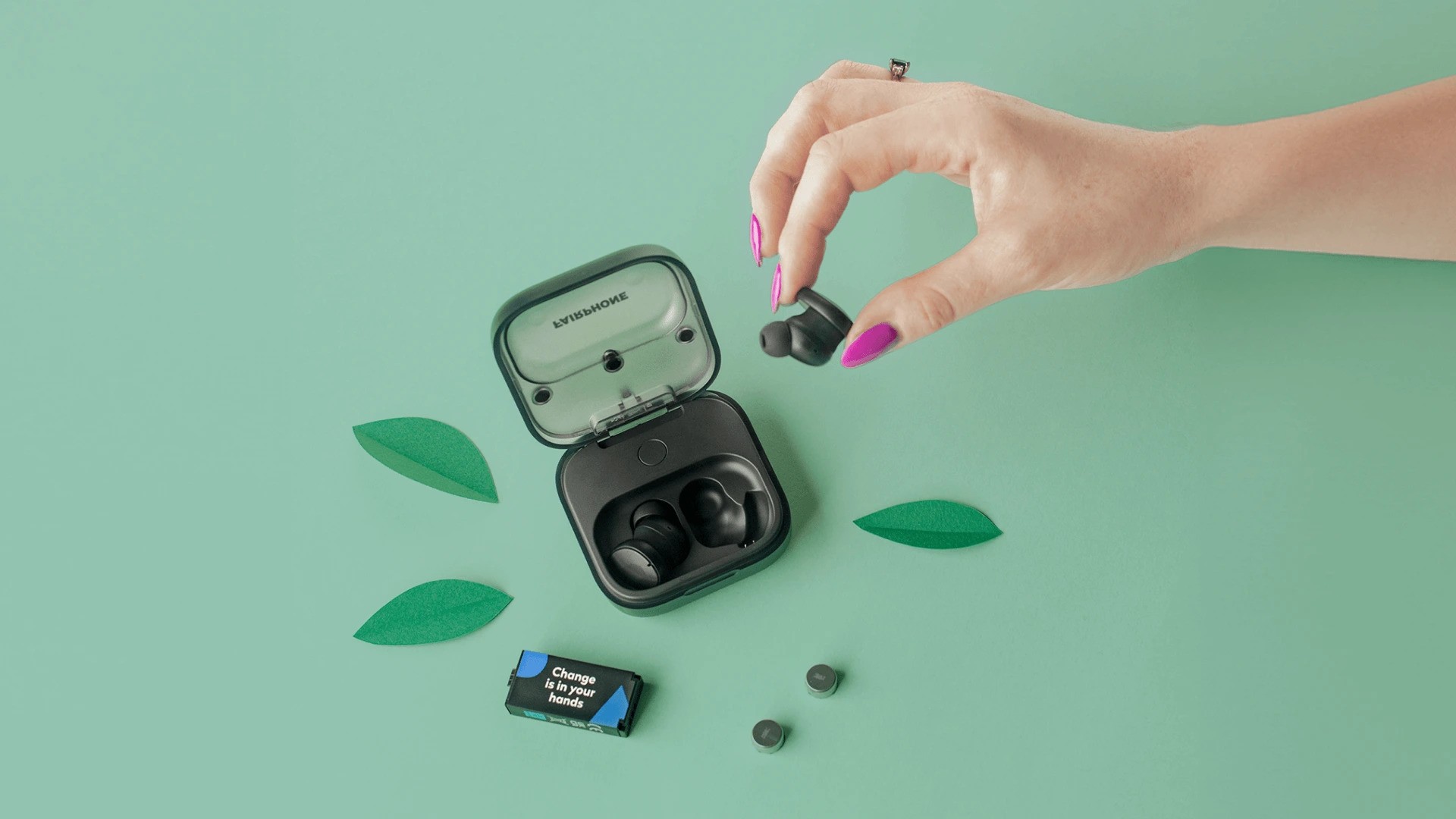
The defining hallmark of Fairphone’s hardware ecosystem has always been its modularity, and the Fairbuds 2 are no exception. According to early briefings provided by the company, the new earbuds will maintain a system built around seven distinct modular, replaceable components.
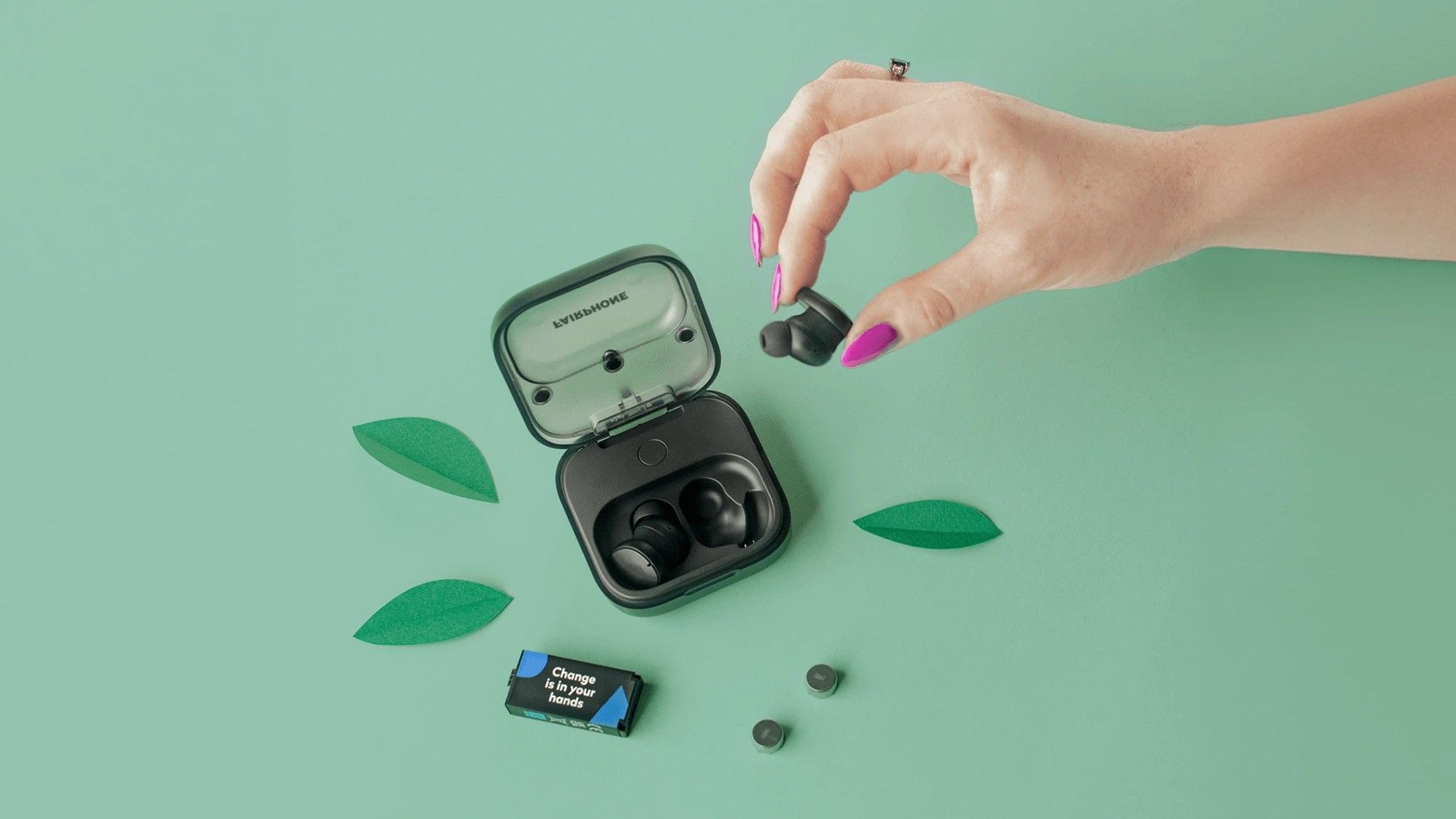
In the traditional wireless earbuds market, a failing battery typically renders the entire device obsolete. Because tiny lithium-ion cells are glued shut inside plastic shells, replacing them is practically impossible for the average consumer, resulting in millions of functional earbuds ending up in landfills every year. Fairphone’s design fundamentally alters this lifecycle.
Just like the first-generation model, the Fairbuds 2 allow users to independently replace crucial parts. If a single earbud is lost or damaged, or if the battery inside the charging case finally loses its capacity after years of heavy use, owners do not need to purchase a completely new set. Instead, they can simply order the specific replacement part directly from Fairphone’s website and swap it out themselves. This approach drastically extends the lifespan of the hardware, reduces electronic waste (e-waste), and lowers long-term ownership costs for the consumer.
Design Evolution: Moving to a Stem-Based Form Factor
While the first-generation Fairbuds opted for a rounded, bud-style aesthetic that sat flush inside the ear, leaked promotional materials and official teasers—including a vibrant green colorway showcased by the company on social media—reveal a significant aesthetic departure for the Fairbuds 2.
The new model adopts a stem-based design, aligning the earbuds visually with many of the industry’s market-leading flagship products, such as Apple’s AirPods or Sony’s WF-1000XM series. Beyond aesthetics, the inclusion of stems often serves functional purposes. It allows engineers to place microphones closer to the user’s mouth for improved call clarity, provides more surface area for touch or squeeze controls, and can assist with overall ergonomics and weight distribution in the ear canal. Fairphone has yet to officially detail the exact control schema or sensor suite housed within these new stems, but the visual redesign signals a maturation of the product’s industrial design language.
Audio Performance Upgrades: The Addition of LDAC
One of the most frequent criticisms leveled against early sustainable audio gear was that manufacturers occasionally prioritized eco-friendly materials at the expense of cutting-edge performance. The first-generation Fairbuds, while praised for their modularity, were somewhat limited in the wireless audio department, supporting only standard SBC and AAC codecs.
Fairphone has actively addressed this limitation in the Fairbuds 2 by introducing compatibility with Sony’s LDAC codec. LDAC is a high-resolution audio coding technology that allows for the transmission of High-Resolution Audio over a Bluetooth connection, streaming at up to 990 kbps at 24-bit/96kHz. For audiophiles and music enthusiasts streaming lossless tracks from platforms like Tidal or Apple Music, the inclusion of LDAC transforms the Fairbuds 2 from a basic utility listening device into a genuinely capable high-fidelity audio accessory. This technological leap ensures that buyers are no longer compromising on sound quality to support ethical manufacturing practices.
Chronology and Development Timeline
Fairphone’s journey into the personal audio space is relatively recent compared to its decade-long history of manufacturing modular smartphones. The evolution of the company’s audio hardware highlights a rapid iteration cycle:
- Early 2024: Fairphone introduces the original Fairbuds, establishing the blueprint for user-replaceable batteries and modular architecture in the wireless earbud sector.
- Mid-2025: Rumors and regulatory filings hint at a second-generation audio device, as supply chain partners prepare for production adjustments.
- Late 2025 (Teaser Phase): Fairphone teases the new green colorway and redesign via social media channels, generating industry buzz ahead of an official reveal.
- October 14, 2025: The official launch date for the Fairbuds 2 in Europe, bringing a lower price point, LDAC codec support, and a redesigned stem structure to consumers.
Industry Implications and Broader Market Impact
The launch of the Fairbuds 2 arrives at a critical juncture for the consumer electronics industry. Environmental regulations, particularly within the European Union, are tightening rapidly. Laws targeting right-to-repair initiatives, battery accessibility, and electronic waste reduction are forcing major global tech conglomerates to rethink how their devices are manufactured.
By proactively championing modularity, Fairphone serves as both a proof-of-concept and a thorn in the side of traditional electronics giants. Critics have long argued that user-replaceable components are commercially unviable or result in bulky, water-resistant-compromised designs. Fairphone continues to disprove these assumptions by refining its hardware generation after generation.
Furthermore, the decision to drop the launch price by $30 while simultaneously upgrading connectivity features like LDAC indicates a maturing supply chain and greater economies of scale. If Fairphone can successfully capture a larger share of the mainstream budget-to-mid-range audio market, it may pressure competing brands to reconsider their stance on reparability.
As consumers become increasingly conscious of their environmental footprint, products like the Fairbuds 2 demonstrate that sustainability and modern performance can coexist. Whether the new stem design and high-res audio capabilities will resonate with a broader demographic remains to be seen, but the October 14 launch marks another important step forward in the movement for responsible consumer technology.