The Mechanics of an Unscheduled Descent Analyzing the Hot-Air Balloon Landing in a Temecula Residential Backyard

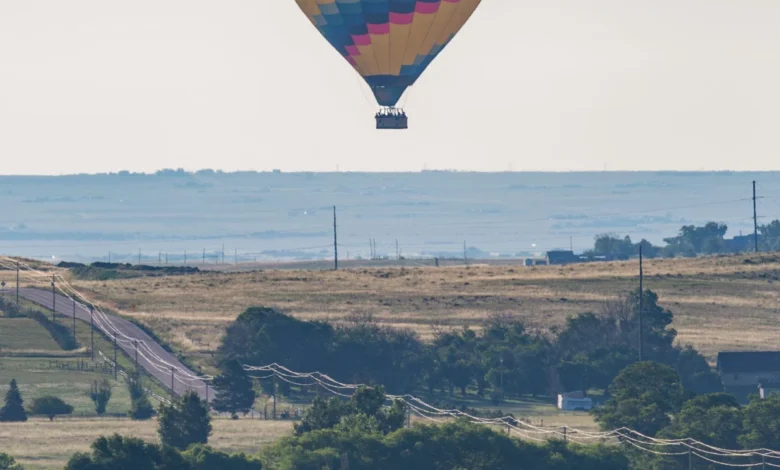
The quiet Saturday morning routine of a residential neighborhood in Temecula, California, was unexpectedly interrupted when a massive blue hot-air balloon carrying approximately ten passengers made an unscheduled landing in a private backyard. The incident, which has since garnered significant attention on social media platforms, involved a vessel operated by Magical Adventures Balloon Rides, a prominent local tour provider. While such landings in residential zones are statistically rare, the event has highlighted the complex interplay between meteorological conditions, aeronautical safety protocols, and the logistical challenges inherent in lighter-than-air flight.
According to Denni Barrett, the founder and CEO of Magical Adventures Balloon Rides, the landing was the result of a rare atmospheric phenomenon known as being "becalmed." For over two decades, Barrett’s company has operated in the Temecula Valley, a region world-renowned for its ballooning conditions, yet he noted that a landing of this specific nature—directly into a confined residential backyard—is an occurrence he has not witnessed in his 20-year tenure. The event was captured in detail by the homeowners’ security cameras and subsequent smartphone footage, providing a rare glimpse into the precision required to navigate a balloon when the wind fails to cooperate.
Chronology of the Unscheduled Landing
The flight began as a standard sunrise excursion, a popular tourist activity in the Temecula Valley due to its unique microclimate. The pilot followed standard pre-flight procedures, which included the launch of pilot balloons, or "pibals." These small, helium-filled balloons are tracked with stopwatches and compasses to determine wind speed and direction at various altitudes. Based on this data, the pilot reverse-engineered a flight path intended to conclude at a pre-designated landing zone.
However, approximately one hour into the flight, the atmospheric conditions shifted unexpectedly. While the balloon was positioned over a residential sector of Temecula, the wind speeds dropped to near zero across all navigable altitudes up to 3,000 feet. This state of being "becalmed" effectively stripped the pilot of lateral steerage. In hot-air ballooning, pilots maintain expert control over vertical movement by adjusting the temperature of the air inside the envelope, but horizontal direction is entirely dependent on prevailing wind currents.
For 30 minutes, the balloon remained stationary over the neighborhood. As the onboard fuel reserves—typically propane—reached a critical threshold, the pilot was forced to make a strategic decision. Continuing to hover in hopes of a picking up a breeze posed the risk of a fuel exhaustion, which would result in a loss of vertical control. To ensure the safety of the ten passengers and the integrity of the aircraft, the pilot identified a sufficiently large backyard belonging to residents Hunter and Jenna Perrin. At approximately 8:30 a.m., the pilot executed a precision descent, touching down on a patch of lawn adjacent to a wooden gate and the residents’ home.
Technical Analysis of "Becalmed" Conditions and Fuel Management
The incident underscores the primary technical limitation of hot-air ballooning: the lack of independent horizontal propulsion. To navigate, pilots must find "layers" of wind blowing in different directions at different altitudes. When the air becomes stagnant across the entire vertical profile, the balloon is essentially locked in place.
In this instance, the pilot’s decision-making process was governed by the Federal Aviation Administration (FAA) principle of safety of flight. According to Barrett, the pilot opted for the backyard landing because it offered a clear, unobstructed space free of power lines, trees, or structures that could snag the envelope. The alternative—attempting to reach a street corner or a park without sufficient fuel—could have led to a more hazardous "hard landing" or an entanglement with utility infrastructure.
Fuel management is a critical component of this safety calculus. Balloon burners consume propane at a high rate to maintain the buoyancy of the thousands of cubic feet of air within the envelope. Standard safety protocols dictate that a pilot must land with a reserve of fuel. By choosing to land while he still maintained full vertical control, the pilot was able to "bounce" the basket gently onto the grass, ensuring no injuries occurred and no property damage was sustained.
Recovery Operations and Ground Logistics
The conclusion of the flight was only the beginning of a complex recovery operation. Unlike a landing in an open field, a residential backyard presents significant extraction challenges. Once the balloon was stabilized, the ground crew—which follows the balloon in chase vehicles equipped with GPS and radio communication—arrived at the Perrin residence.
The recovery process involved several distinct phases:
- Passenger Disembarkation: The ten passengers were safely assisted out of the basket. Despite the unusual location, reports indicate the atmosphere remained calm, with passengers expressing confidence in the pilot’s handling of the situation.
- Refueling: Because the pilot had used a significant portion of the fuel to manage the stationary hover and the descent, additional propane tanks were brought into the backyard. This allowed the pilot to keep the balloon partially inflated and buoyant.
- Manual Relocation: To avoid deflating the massive blue envelope over the residents’ house or fences, the crew utilized "drop lines." These are long, high-strength ropes attached to the basket and the envelope. Crew members and volunteers manually guided the buoyant balloon, floating it over the yard’s perimeter and into the adjacent street.
- Deflation and Packing: Once in the clear space of the public roadway, the "crown line" was pulled to open the vent at the top of the balloon, allowing the hot air to escape. The fabric was then folded and packed into a specialized bag, and the basket was loaded onto a trailer.
Official Responses and Safety Record
Denni Barrett defended the pilot’s actions as a textbook example of emergency management. "I trust the pilot’s skills," Barrett stated, emphasizing that the priority was the safety of the passengers over the optics of the landing location. He noted that the pilot’s transparency with the passengers throughout the ordeal contributed to a lack of panic. Interestingly, Barrett reported that none of the passengers requested refunds; rather, several expressed a desire to fly with the same pilot again, citing his professionalism under pressure.
The company, Magical Adventures Balloon Rides, has a long history in the region and has previously made headlines for its "Mile High Club" packages. However, Barrett emphasized that their core operation is built on rigorous adherence to safety standards. The FAA oversees hot-air balloon operations under Part 91 of the Federal Aviation Regulations, which requires pilots to maintain commercial certificates and undergo regular flight reviews. While the FAA may conduct an informal inquiry into any off-airport landing, the lack of injuries or property damage typically classifies such events as "incidents" rather than "accidents."
The homeowners, Hunter and Jenna Perrin, have been praised for their cooperation. Rather than reacting with hostility to the intrusion, they facilitated the recovery and even documented the event, contributing to the viral nature of the story. Their "good sport" attitude is often a necessity in regions like Temecula, where the ballooning industry is a vital part of the local economy.
Broader Impact on the Ballooning Industry
The Temecula backyard landing serves as a case study for the ballooning industry as it navigates increasing urbanization. As residential developments expand into previously rural areas, traditional landing zones are disappearing. This "urban encroachment" increases the likelihood of balloons interacting with residential property.
From an insurance and legal perspective, most ballooning companies carry significant liability coverage to handle potential property damage. However, the industry relies heavily on the "implied consent" and goodwill of landowners. In California, the legal precedent for balloon landings often leans toward the "necessity" defense, where a pilot may land on private property to avoid a greater harm (such as a crash), though they remain liable for any actual damages caused.
Furthermore, the role of social media in these events cannot be overstated. In decades past, a backyard landing would be a local anecdote; today, it is a global viral event. For companies like Magical Adventures, this provides both a challenge and an opportunity. While the sight of a balloon in a backyard might initially seem like a failure, the documentation of a soft, controlled landing and a professional recovery can actually serve to bolster public confidence in the safety and resilience of the sport.
As the ballooning community continues to operate in the changing landscape of Southern California, the Temecula incident will likely be cited in safety briefings as a successful management of "becalmed" conditions. It serves as a reminder that in the world of aviation, the most important skill a pilot possesses is not just the ability to follow a planned route, but the judgment to deviate from it when safety demands.