Pentagon Seeks $30.3 Million for AI-Powered Polygraph Plus Project Amid Heightened Leak Investigations

The United States Department of Defense is seeking a federal appropriation of $30.3 million over the next five years to develop and deploy a modernized iteration of the traditional lie detector, provisionally titled Polygraph+ or Polygraph Next. According to budget documentation released by the Pentagon, the initiative aims to overhaul federal credibility assessment frameworks by leveraging artificial intelligence, machine learning, and standoff sensing technologies. Overseen by the Defense Counterintelligence and Security Agency, the program arrives during a period of acute institutional friction within the Department of Defense, characterized by aggressive internal leak investigations and heightened scrutiny surrounding national security protocols under Defense Secretary Pete Hegseth. While proponents argue that multi-modal data integration could enhance vetting procedures and insider threat detection, legal scholars, psychologists, and technical experts caution that the project relies on unproven scientific foundations, resurrecting historical debates over the validity and ethical implications of automated deception detection.
Chronology of Pentagon Credibility Assessments and Leak Investigations
The genesis of the Polygraph+ budget request is deeply intertwined with recent security breaches and an internal campaign to identify sources of unauthorized disclosures to the press. In September, mainstream news reporting highlighted critical vulnerabilities in United States military readiness, specifically noting heavily depleted weapons stockpiles stemming from regional conflicts involving Iran. In response to these disclosures, military leadership initiated widespread internal reviews. Approximately 50 officers assigned to the Joint Staff were subjected to mandatory polygraph examinations in an urgent effort to trace the origins of the leaks.
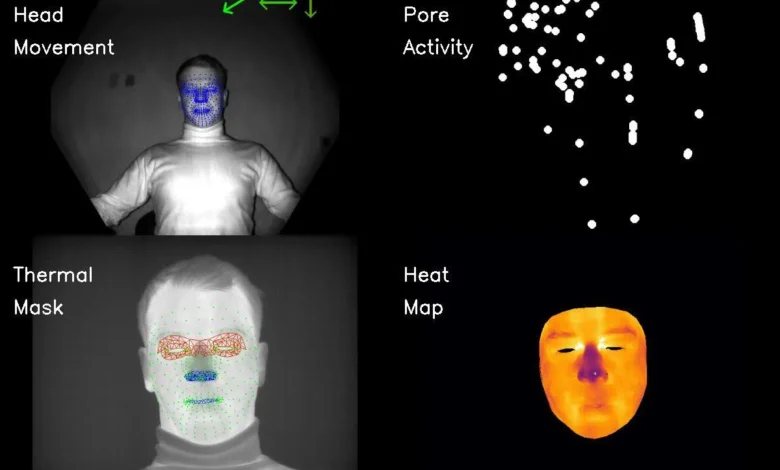
This aggressive utilization of legacy polygraph testing reflects a broader operational philosophy within the current defense administration, which has increasingly relied on physiological screening to enforce internal discipline and root out perceived disloyalty. The formal budgetary push for Polygraph+ formalizes this operational pivot, translating an immediate administrative crisis into a multi-year, million-dollar research and development priority. However, the path toward advanced automated lie detection builds upon years of incremental technological exploration by the Pentagon. In 2023, the Defense Innovation Unit issued an open solicitation to private industry for prototype deception-detection technologies. This procurement process ultimately resulted in development contracts awarded to Presage Technologies, which focused on contactless heart and breathing rate monitoring via standard optical cameras, and Altec Research, a sensor developer whose prototypes track subtle physiological indicators including head movement, facial skin temperature, and micro-sweat pore activity.
Technological Foundations and the Evolution of Deception Detection
Traditional polygraph instruments have remained fundamentally unchanged since their invention in the 1920s. Standard examinations require subjects to be physically tethered to pneumatic tubes, blood pressure cuffs, and galvanic skin response sensors. Examiners then formulate conclusions regarding a subject’s truthfulness by analyzing physiological fluctuations—such as changes in pulse, blood pressure, respiration, and perspiration—when comparing baseline inquiries (e.g., "Is the sky blue?") with target interrogatories regarding past behavior or security infractions.
Despite conducting tens of thousands of such screenings annually for federal employment vetting and security clearances, the scientific validity of the polygraph has faced continuous academic and institutional challenge for nearly a century. In 1983, the Congressional Office of Technology Assessment published a landmark evaluation concluding that there was scarce scientific evidence supporting the utility of polygraphs in personnel screening. Two decades later, a comprehensive review by the United States National Research Council similarly categorized the empirical evidence supporting polygraph efficacy as "weak at best."
The Polygraph+ initiative attempts to bypass these historical limitations by introducing two primary technological shifts: artificial intelligence algorithms for automated scoring and "standoff sensing," which aims to capture physiological data without physical contact. Companies contracted through the Defense Innovation Unit have demonstrated that computer vision and thermal imaging can theoretically track subtle human reactions—such as localized vasodilation, micro-expressions, and postural shifts—without requiring wired sensors. Proponents argue that machine learning models can process these multi-modal inputs to uncover complex statistical correlations invisible to human examiners, generating a composite deception score that is theoretically more difficult to manipulate.

Scientific Skepticism and the Problem of Ground Truth
Despite the integration of modern computing power, independent researchers and legal academics express profound skepticism regarding the feasibility of reliable automated lie detection. A fundamental structural hurdle remains: unlike physical biometric markers such as fingerprints or DNA, there is no universal, invariant physiological indicator of deception shared across all human populations.
Psychologists emphasize that deception is cognitively and physiologically complex, intersecting with internal states such as generalized anxiety, fear, cognitive load, and the deliberate suppression of information. Sophie van der Zee, an associate professor specializing in deception research at Erasmus University in Rotterdam, notes that while multiple biometric signals can theoretically be combined to assess stress and cognitive effort, historical attempts to commercialize multi-modal systems—such as the United Kingdom’s "Silent Talker" project or the European Union’s iBorderCtrl border screening pilot—ultimately stalled outside the laboratory due to high error rates and lack of generalized applicability.
Furthermore, critics argue that applying automated algorithms to historical polygraph data introduces compounded vulnerabilities. Kyri Kotsoglou, a professor at Northumbria Law School who studies forensic technology in the justice system, describes the integration of machine learning and polygraphy as "the worst of both worlds," noting that it layers statistical opacity on top of scientifically invalid foundational data. Because ground truth—absolute certainty regarding whether an individual lied during a historical examination—can rarely be established definitively, AI models trained on past polygraph records risk learning and codifying existing systemic errors rather than discovering genuine indicators of deception.
Implications for Civil Liberties and Institutional Culture
With the Department of Defense employing approximately 2.8 million active-duty military personnel and civilian staff, the implementation of an imperfect screening apparatus carries severe institutional and human consequences. Statistical analyses demonstrate that even a screening test with an estimated accuracy rate between 80% and 94%—figures frequently cited by trade organizations like the American Polygraph Association—would yield a substantial absolute volume of false positives when deployed across a workforce numbering in the millions. Such inaccuracies risk falsely accusing thousands of loyal personnel of security violations or deception.
Legal and ethical experts also point to documented biases within current testing methodologies. Research indicates that standard polygraph interpretations exhibit subjective variance depending on the examiner, and that individuals from specific minority demographics may experience higher rates of false-positive determinations due to physiological baselines influenced by cultural or environmental factors. Moreover, knowledgeable subjects can successfully execute physical countermeasures—such as altering breathing patterns or using subtle physical stimuli to manipulate baseline physiological responses—to subvert the exam.
Ultimately, legal scholars suggest that the primary utility of both legacy polygraphs and proposed systems like Polygraph+ lies not in objective forensic science, but in psychological deterrence and interrogation leverage. Marion Oswald, a professor of law specializing in emerging technologies and criminal justice, argues that the rapid acceleration toward advanced lie detection is fundamentally reactive. According to Oswald, technologies of this nature are frequently deployed by institutions as instruments of intimidation designed to induce confessions and enforce administrative conformity, rather than as objective tools for gathering verifiable intelligence. As Congress weighs the Department of Defense’s $30.3 million budget request for Polygraph+, the debate highlights an enduring tension between institutional demands for absolute security and the methodological limits of applying emerging surveillance technologies to complex human behavior.