Ford CEO Jim Farley Strategic Pivot Toward Affordable Electric Vehicles and the Influence of the Chinese Market on Global Automotive Trends

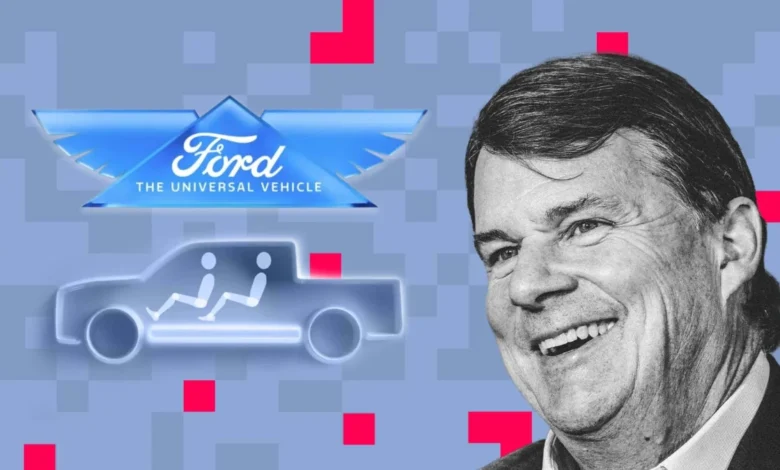
The global automotive industry is currently navigating a period of profound uncertainty as the initial wave of enthusiasm for high-end electric vehicles (EVs) encounters significant economic and regulatory headwinds. While several legacy automakers have begun to scale back their electrification investments in response to cooling demand and shifting political landscapes, Ford Motor Company has signaled a distinct strategic redirection. Led by CEO Jim Farley, the American automaker is moving away from the "high-margin, high-cost" model that defined its early EV entries, instead prioritizing the development of affordable, "commuter-type" electric vehicles designed to compete directly with the aggressive pricing structures seen in the Chinese market.
This pivot comes at a critical juncture for the industry. In the United States, the loss of federal tax credits for several models, combined with a regulatory rollback and persistently high interest rates, has led to a noticeable "wobble" in EV adoption rates. However, Farley remains convinced that the appetite for electric propulsion is not disappearing but is rather migrating toward a more price-sensitive segment of the market. By analyzing consumer behavior in both the new and used car markets, Ford is recalibrating its long-term roadmap to focus on accessibility, efficiency, and the lessons learned from the rapid expansion of Chinese EV manufacturers like BYD and Geely.
The End of the High-End EV Experiment
For the past several years, the prevailing strategy among Western automakers was to launch EVs as luxury or high-performance products. The logic was that the higher price points would help offset the massive research and development costs associated with battery technology. Ford followed this playbook with the Mustang Mach-E and the F-150 Lightning. However, the reality of the 2024 market has forced a reconsideration of this "value over volume" approach.
In a recent interview with the Rapid Response podcast, Farley acknowledged that the market for premium electric trucks and high-end SUVs has reached a saturation point. Ford recently made the strategic decision to discontinue the current iteration of the F-150 Lightning in favor of expanding its F-Series hybrid lineup and developing a new "EREV" (Extended Range Electric Vehicle) Lightning. This move signifies an admission that even the most loyal truck buyers are hesitant to commit to a pure battery-electric platform at a premium price when infrastructure and range concerns remain prevalent.
Farley noted that the truly successful EVs in the current global climate are those that serve as practical, low-cost tools for daily commuting. "We got out of our high-end EVs, but what we decided to do is double down on our affordable ones," Farley stated. He highlighted that this trend is not isolated to the United States but is visible in Australia, Europe, and especially China, where pure EVs are increasingly viewed as essential, budget-friendly transportation rather than status symbols.
The China Benchmark: A New Competitive Reality
The primary driver behind Ford’s strategic shift is the looming shadow of the Chinese automotive industry. Companies such as BYD have demonstrated an unprecedented ability to manufacture capable electric vehicles at price points that Western manufacturers currently find impossible to match. In China, the threshold for a "cheap" EV is approximately 100,000 CNY (roughly $14,500 USD), with some ultra-affordable models like the BYD Seagull starting as low as $8,000.
For Ford, the challenge is not just matching these prices but doing so while maintaining the features and safety standards expected by Western consumers. Farley has been vocal about the threat posed by Chinese imports, recently suggesting that Western nations should be cautious about allowing unchecked access to their markets. However, he also recognizes that the only way to survive in the long term is to innovate. Ford’s "Skunkworks" team in California, comprised of some of the industry’s top engineers, is currently tasked with developing a low-cost, universal EV platform specifically designed to neutralize the cost advantage held by Chinese firms.
The disparity in pricing is stark. In the United States, the average price of a used EV still often exceeds the $15,000 mark, which in China could buy a brand-new, technologically advanced vehicle. If domestic automakers cannot bridge this gap, they risk losing the "commuter" segment entirely to foreign entities that have already mastered the art of high-volume, low-margin EV production.
Analyzing the Used Market and the Hybrid Resurgence
One of the most revealing aspects of Farley’s current philosophy is his focus on the used car market as a barometer for consumer sentiment. According to Farley, used EVs are currently "super popular," which suggests that the demand for electric propulsion exists, but only when the price aligns with traditional internal combustion engine (ICE) or hybrid alternatives.
"I like to look at the used market even more than the new market to understand what consumers’ mindset is," Farley explained. This observation has led Ford to lean more heavily into its hybrid offerings. As new EV sales growth slowed, Ford’s hybrid sales surged, particularly for the Maverick and F-150 models. The hybrid serves as a "bridge" technology, offering consumers the fuel savings of electrification without the "range anxiety" or the steep entry price of a full BEV (Battery Electric Vehicle).

This data-driven approach has informed Ford’s decision to integrate its "Skunkworks" EV technology into future hybrid models. By creating a modular ecosystem where components can be shared across pure EVs and hybrids, Ford aims to achieve the economies of scale necessary to drive down costs across its entire portfolio.
Chronology of Ford’s Electrification Strategy Shift
To understand the magnitude of this pivot, it is necessary to look at the timeline of Ford’s recent EV journey:
- 2021-2022: Ford launches the Mustang Mach-E and the F-150 Lightning to critical acclaim. The company announces plans to split into two entities: Ford Blue (ICE and hybrids) and Ford Model e (EVs).
- Early 2023: Demand for high-end EVs begins to soften globally. Ford announces price cuts for the Mach-E to remain competitive with Tesla’s aggressive pricing strategy.
- Late 2023: Ford reports significant losses in its Model e division, totaling billions of dollars, as the cost of scaling production outpaces revenue.
- Early 2024: Ford announces a delay in several major EV projects, including a planned three-row electric SUV, shifting focus toward smaller, more affordable platforms.
- Mid-2024: The company confirms the discontinuation of the high-end F-150 Lightning in its current form, pivoting toward EREV technology and a dedicated low-cost EV platform developed by its California-based Skunkworks team.
- Present: CEO Jim Farley reinforces the company’s commitment to "commuter-type" EVs, citing the need to reach price parity with Chinese offerings.
The Skunkworks Initiative and Future Platforms
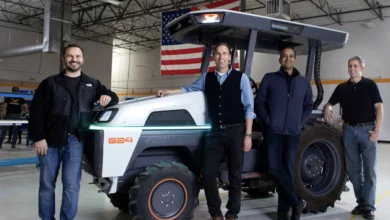
At the heart of Ford’s future is a secretive team in Irvine, California, led by Alan Clarke, a former Tesla engineer. This "Skunkworks" group is operating like a startup within the legacy giant, tasked with rethinking the entire architecture of the electric vehicle. Their goal is to create a platform that is not only cheap to build but also highly efficient and software-defined.
This new platform is expected to underpin a range of vehicles, including a compact SUV and potentially a small pickup truck, aimed at a starting price of approximately $25,000 to $30,000. While this is still higher than the cheapest Chinese models, it would represent a significant breakthrough for the U.S. market, where the average new vehicle price currently hovers near $48,000.
The technical focus of this initiative includes:
- LFP (Lithium Iron Phosphate) Batteries: Utilizing cheaper, more durable battery chemistries that do not rely on expensive materials like cobalt and nickel.
- Simplified Manufacturing: Reducing the number of parts and utilizing "gigacasting" techniques to lower labor and assembly costs.
- Software Integration: Moving toward a centralized computing architecture that allows for over-the-air updates and reduces the complexity of the vehicle’s wiring.
Broader Impact and Industry Implications
Ford’s strategic retreat from high-end EVs is a signal to the rest of the automotive world that the "luxury-first" phase of electrification is ending. As government subsidies become more volatile and consumer budgets tighten due to inflation, the survival of legacy brands will depend on their ability to democratize EV technology.
The implications of this shift extend beyond Ford. Competitors like General Motors and Stellantis are also facing the "China challenge." If Ford succeeds in bringing a $25,000 EV to market that offers a compelling range and modern features—such as integrated infotainment and advanced driver assistance systems—it will force the entire domestic industry to lower prices.
However, the path is fraught with challenges. Establishing a domestic supply chain for LFP batteries and reaching the necessary production volume to achieve profitability at low price points will take years. Furthermore, Ford must navigate the delicate balance of promoting EVs while its most profitable products remain gas-powered trucks and SUVs.
Conclusion: A Noble but Difficult Quest
Jim Farley’s vision for Ford is one of pragmatic survival. By acknowledging that the market has moved toward "commuter-type, low-cost vehicles," he is positioning Ford to fight the next major battle of the automotive era: the war for the mass-market EV buyer. The company’s willingness to "watch from the shadows" and learn from the successes of Chinese competitors represents a departure from the traditional hubris of Detroit’s Big Three.
While the "existential wobble" of the EV industry continues, Ford’s pivot toward affordability suggests that the future of electrification is not being canceled—it is simply being redesigned. The success of this strategy will ultimately be measured by whether Ford can convince the average American driver that an electric vehicle is not just a high-tech novelty, but a sensible, affordable, and indispensable tool for everyday life.