Mercedes-Benz Unveils the All-Electric C-Class with 473-Mile Range and S-Class Luxury Standards to Challenge Tesla and BMW

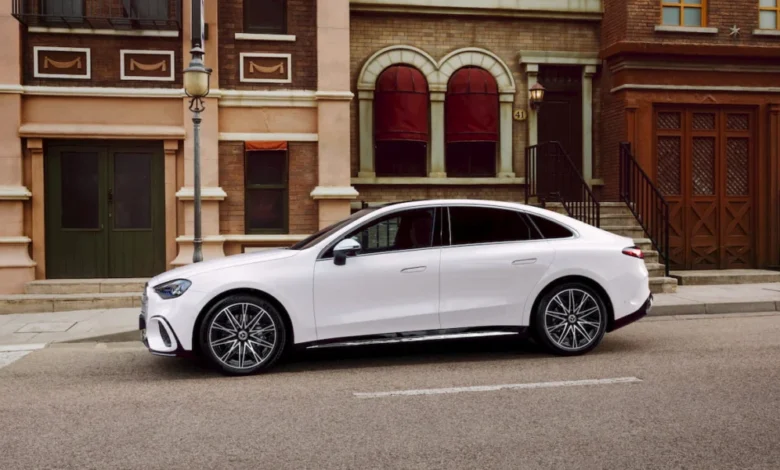
Mercedes-Benz has officially entered the next chapter of its electrification strategy with the world premiere of the first-ever all-electric C-Class, a vehicle designed to merge the brand’s traditional luxury heritage with cutting-edge digital architecture and high-efficiency propulsion. Revealed by Mercedes-Benz CEO Ola Källenius, the new electric sedan is positioned as a direct competitor to the Tesla Model 3 and the forthcoming BMW i3, aiming to redefine the mid-size luxury segment through a combination of industry-leading range, ultra-fast charging, and an interior experience that mirrors the flagship S-Class. The introduction of the C-Class EV marks a pivotal moment for the Stuttgart-based automaker as it seeks to transition its highest-volume nameplates into the zero-emission era while maintaining the "aspirational luxury" status that has defined the brand for over a century.
A New Era for the Mid-Size Luxury Segment
The C-Class has long been referred to as the "Baby Benz," serving as the entry point for many into the world of Mercedes-Benz luxury. However, the new electric variant seeks to shed the "entry-level" connotation by adopting technologies and comfort features previously reserved for the top-tier EQS and S-Class models. During the unveiling, Källenius emphasized that this model is not merely an electric version of an existing car but a ground-up reimagining of what a mid-size executive sedan should offer in the 21st century.

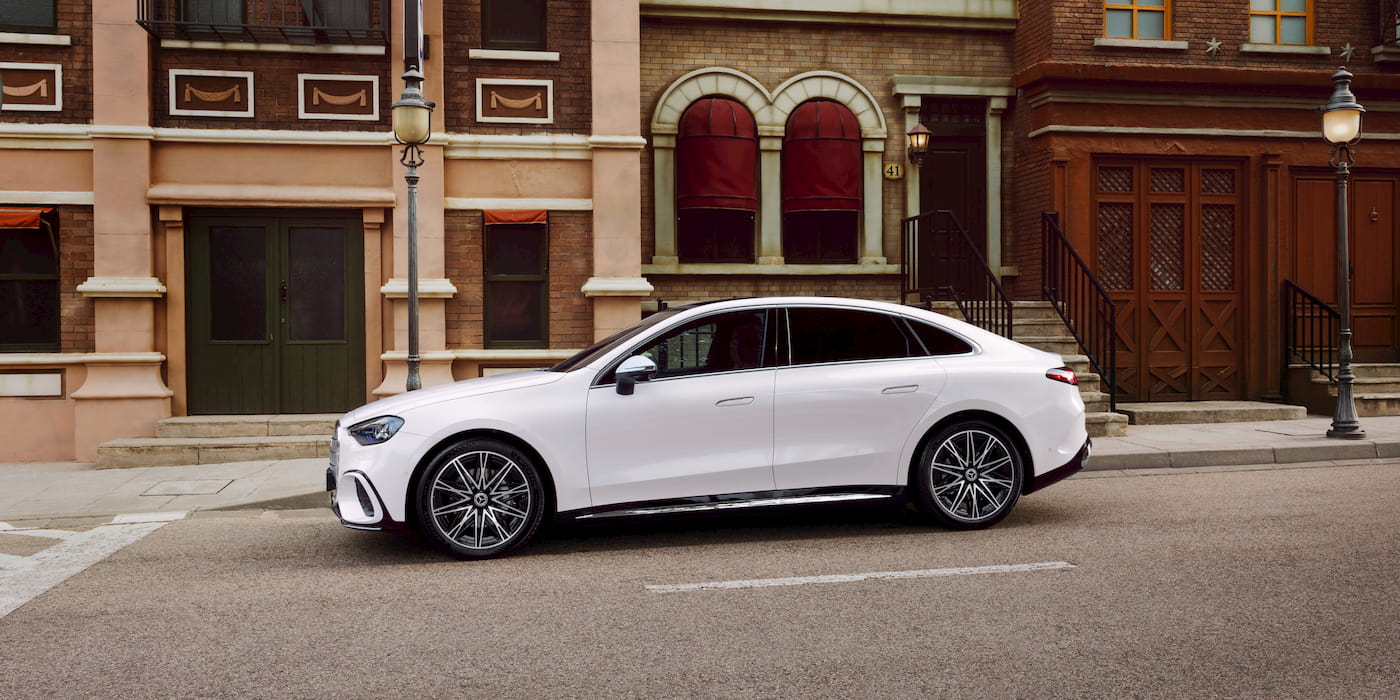
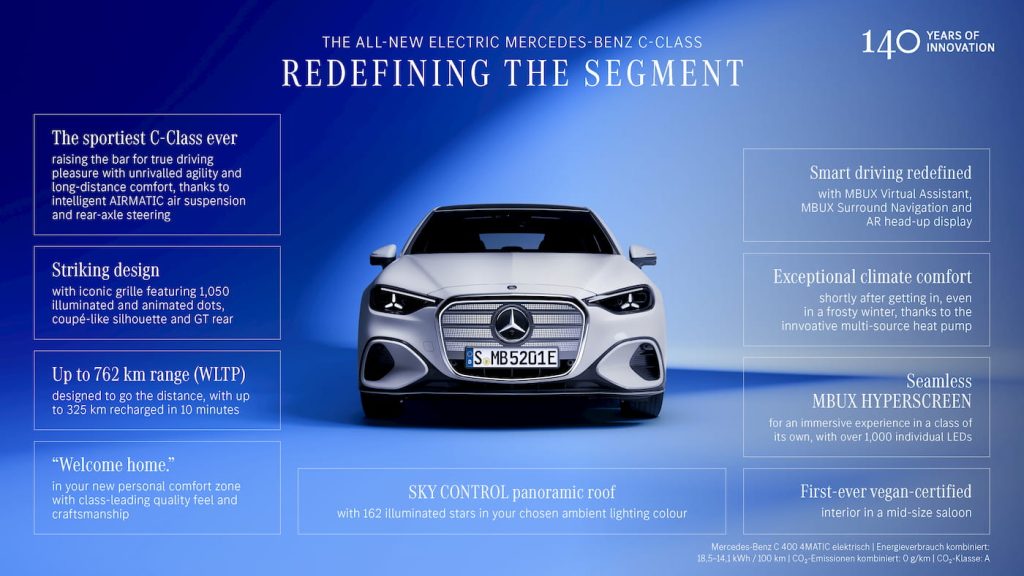
The electric C-Class features an entirely new aesthetic, departing from the traditional three-box sedan silhouette in favor of a more aerodynamic, coupe-like profile. Up front, the vehicle introduces a redesigned, wider grille that offers optional illumination—a design cue shared with the recently unveiled GLC EV. The headlights incorporate the new "star-design" signature, which is becoming a hallmark of the Mercedes-Benz electric lineup. This visual identity is paired with a focus on aerodynamic efficiency; the vehicle boasts a drag coefficient (Cd) starting at 0.22. Mercedes engineers noted that even a marginal 0.01 reduction in Cd can translate to a 2.5% increase in range during long-distance highway travel, highlighting the meticulous attention paid to airflow management.
Technical Specifications and Charging Capabilities
At the heart of the initial launch model, the C 400 4MATIC, lies a 94 kWh lithium-ion battery pack. This high-density energy storage system allows the vehicle to achieve a WLTP-certified driving range of up to 473 miles (762 km) on a single charge. For long-distance travelers, Mercedes-Benz claims that the C-Class EV can cover well over 1,000 kilometers (approximately 621 miles) with just one brief charging stop. To put this into perspective, the company noted that the vehicle could comfortably travel from Berlin to Paris—a distance of 1,054 km—with minimal downtime.
The charging infrastructure of the C-Class EV is built upon an 800-volt electrical architecture, allowing for a maximum DC fast-charging capacity of up to 330 kW. Under optimal conditions at a high-power charging station, the vehicle can recoup 201 miles (325 km) of range in just 10 minutes. This capability is intended to alleviate range anxiety and bring the refueling experience closer to the convenience of internal combustion engines.
In terms of performance, the C 400 4MATIC utilizes a dual-motor, all-wheel-drive configuration that produces a combined output of 482 horsepower (360 kW). This powertrain enables the sedan to accelerate from 0 to 100 km/h (0 to 62 mph) in exactly 4.0 seconds. Mercedes-Benz has described this iteration as the "sportiest C-Class ever," though a rear-wheel-drive variant is scheduled to follow in 2027. That upcoming model is expected to push efficiency even further, with a projected WLTP range of approximately 497 miles (800 km).
Interior Revolution: The MBUX Hyperscreen and AI Integration
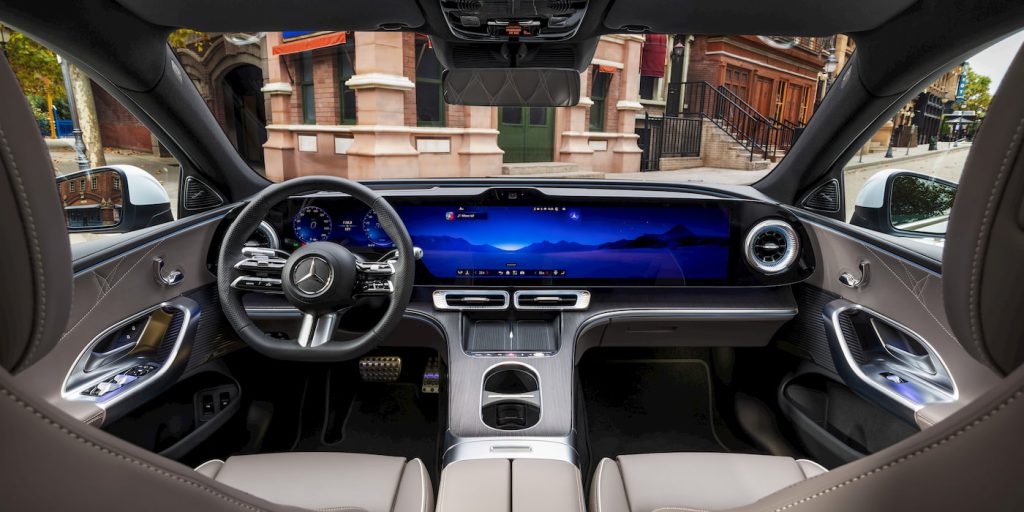
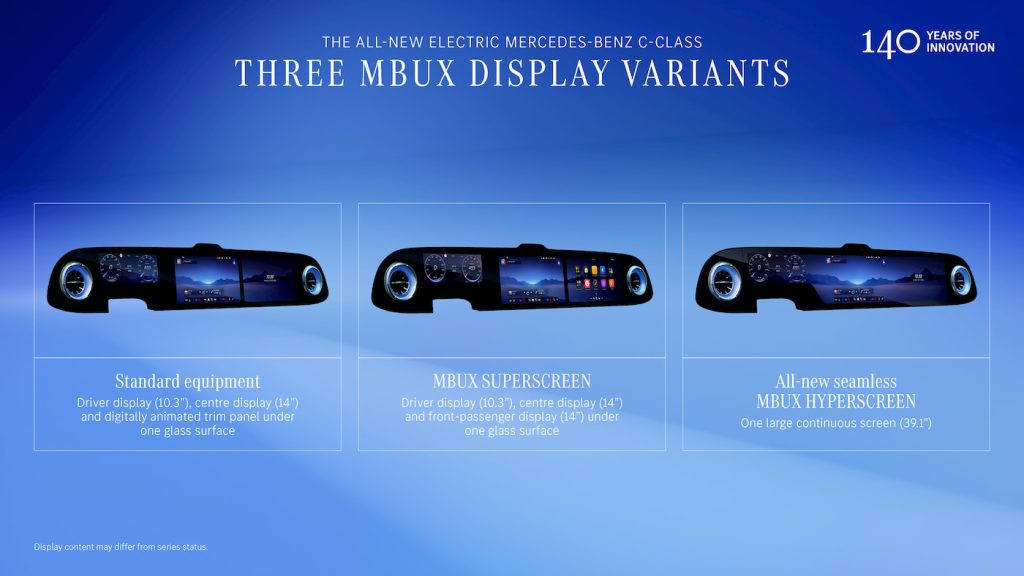
The interior of the electric C-Class represents a significant leap forward in cabin technology and material quality. Central to the experience is the optional MBUX Hyperscreen, a massive 39.1-inch floating glass panel that spans the entire width of the dashboard. This interface combines the driver’s instrument cluster, a central infotainment hub, and a dedicated passenger display into a single seamless unit. For those opting for the standard configuration, the car features a 10.3-inch driver cluster and a 14-inch central infotainment screen. An intermediate "Superscreen" option is also available, which adds a 14-inch screen specifically for the front-seat passenger.
Beyond the hardware, the C-Class EV debuts the fourth generation of the Mercedes-Benz User Experience (MBUX), powered by the new MB.OS operating system. This is the first automotive system to natively integrate a multi-modal AI assistant that draws upon ChatGPT-4o, Microsoft Bing, and Google Gemini. This advanced AI integration allows for more natural voice commands, predictive navigation, and a highly personalized user interface that learns the driver’s habits and preferences over time.
Comfort has been prioritized through the use of "Softtorino" leather, a new premium material that provides a "first-class feel." The seats are equipped with electro-pneumatic four-way lumbar support and include massage functions across the entire backrest, alongside standard heating and ventilation. For audiophiles, the more premium trims offer a Burmester 4D Surround Sound System, which features speakers integrated directly into the seat headrests for an immersive acoustic experience.
Chassis Engineering and Ride Quality
To fulfill the promise of being "as smooth as an S-Class," Mercedes-Benz has equipped the C-Class EV with several advanced chassis technologies. The vehicle features optional AIRMATIC air suspension, which continuously adjusts damping to account for road conditions and vehicle load. This is complemented by rear-axle steering, a feature that significantly reduces the turning circle at low speeds—making the sedan more maneuverable in urban environments—while enhancing stability during high-speed lane changes.
The physical dimensions of the car have also been optimized for passenger comfort. The wheelbase measures 2,962 mm, which is 97 mm longer than the current internal combustion engine (ICE) C-Class. This extension translates directly into cabin space, providing front passengers with an additional 12 mm of legroom. Furthermore, the inclusion of a standard panoramic glass roof contributes to an airy interior feel, offering 22 mm more headroom in the front and 11 mm more in the rear compared to the ICE model.
Thermal management has also seen a breakthrough. The C-Class EV introduces a new automatic climate control system designed specifically for electric propulsion. Mercedes-Benz reports that the system can heat the cabin twice as fast as combustion-powered models, a claim verified during testing at temperatures as low as -7 degrees Celsius.
Chronology and Market Strategy
The unveiling of the C-Class EV is the result of years of development under the Mercedes-Benz "Electric First" and "Lead in Electric" initiatives. While the company has previously released the EQS and EQE sedans, those models occupied higher price brackets and featured a distinct "one-bow" design language that received mixed reviews from traditionalists. The C-Class EV appears to be a strategic pivot, offering a more recognizable sedan silhouette while pushing the boundaries of range and efficiency.
The timeline for the C-Class EV rollout is as follows:
- April 2026: First official reveal of interior concepts and teaser images.
- Current (Monday): Global world premiere and disclosure of technical specifications for the C 400 4MATIC.
- First Half of 2027: Expected market launch and start of deliveries for the C 400 4MATIC.
- Late 2027/Early 2028: Introduction of the high-efficiency Rear-Wheel Drive (RWD) variant and potential AMG performance versions.
This timeline aligns with the launch of BMW’s "Neue Klasse" electric sedans, setting the stage for a major showdown between the two German giants in the 2027 model year.
Broader Impact and Industry Implications
The launch of the electric C-Class is a clear signal that Mercedes-Benz is ready to compete on volume, not just on flagship luxury. By targeting a range of nearly 500 miles, Mercedes is addressing the primary concern of potential EV buyers: range anxiety. The 800-volt architecture and 330 kW charging also place the C-Class EV at the top of its class, surpassing the current charging speeds of the Tesla Model 3 and the majority of existing EVs in the mid-size segment.
Industry analysts suggest that the success of this model is critical for Mercedes-Benz to meet tightening fleet emission standards in Europe and to regain market share in China, where domestic EV manufacturers have been rapidly gaining ground. The integration of Western AI technologies like Google Gemini and ChatGPT also highlights a shift in how luxury is defined—moving away from just wood and leather toward software-driven experiences.

As the automotive world moves toward 2027, the C-Class EV stands as a testament to Mercedes-Benz’s ability to evolve. By combining the "S-Class level" of refinement with a powertrain that rivals the best in the industry, the company is betting that customers are willing to wait for a more polished, high-tech alternative to the current crop of electric vehicles. Pricing details are expected to be announced closer to the production date, but the vehicle’s positioning suggests it will remain a premium offering, likely starting above the current ICE C-Class but offering significantly more value in terms of technology and performance.