Uber Strategic Pivot Toward Autonomous Vehicle Ownership and the Evolution of Physical AI in Transportation

The global transportation landscape is undergoing a fundamental shift as major players transition from software-centric models to asset-heavy strategies defined by the ownership of autonomous hardware and physical artificial intelligence. Uber Technologies, once the pioneer of the "asset-light" gig economy model, has reportedly committed more than $10 billion toward the acquisition of autonomous vehicles and strategic equity stakes in self-driving technology firms. This massive capital allocation, recently detailed in financial analyses and public records, signals a return to a more hardware-intensive approach for the ride-hailing giant. The move coincides with a surge in venture capital funding for "physical AI" and a series of high-profile consolidations and leadership shifts across the electric vehicle and autonomous trucking sectors.
Uber and the $10 Billion Strategic Reorientation
Uber’s recent financial commitments represent a significant departure from its 2020 strategy, when the company divested its in-house research units to focus on its core platform. According to data compiled by the Financial Times, Uber has earmarked approximately $2.5 billion for direct equity investments in autonomous vehicle (AV) developers, with an additional $7.5 billion dedicated to the direct purchase of robotaxis over the coming years.
This "everywhere, all at once" investment strategy involves a diverse portfolio of partnerships. In the past year alone, Uber has finalized deals or increased stakes in several key players:
- WeRide: A $100 million investment to fuel robotaxi expansion across 15 international cities.
- Rivian: A deal worth up to $1.25 billion to develop and integrate autonomous-capable vehicles into the Uber network.
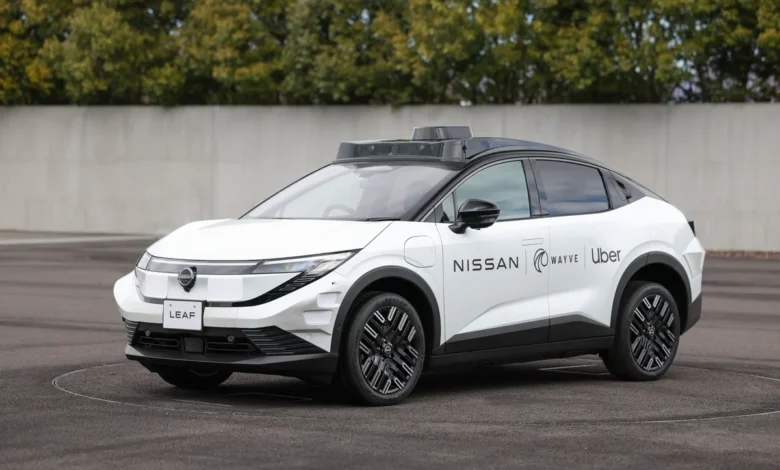
- Wayve: A strategic investment in the UK-based company to further develop "embodied AI" for self-driving applications.
- Lucid and Nuro: Multi-million dollar agreements aimed at building a specialized robotaxi service and autonomous delivery solutions.
This current trajectory is best understood through a historical lens. Between 2015 and 2018, under the leadership of co-founder Travis Kalanick, Uber pursued an aggressive "moonshot" era. This period saw the launch of Uber Elevate (aerial mobility) and the creation of Uber Advanced Technologies Group (ATG), bolstered by the controversial acquisition of the self-driving truck startup Otto. However, the immense cost of R&D and the complexities of developing proprietary hardware led Uber to "pull the rip cord" in 2020. Under CEO Dara Khosrowshahi, the company sold ATG to Aurora, Jump to Lime, and Elevate to Joby Aviation, retaining equity stakes but offloading the operational burden.

The emergence of "Asset-Heavy 2.0" suggests that Uber now believes the technology has matured enough that the risk lies not in development, but in supply. By committing $7.5 billion to buy vehicles, Uber is ensuring that it—not its competitors—will own the physical fleets that will eventually replace human-driven cars. While former CEO Travis Kalanick has publicly suggested that abandoning in-house AV development was a mistake, the current strategy allows Uber to leverage the R&D of multiple manufacturers while maintaining control over the physical assets on its balance sheet.
The Rise of Physical AI and Venture Capital Trends
The shift toward hardware is not limited to ride-hailing. Venture capital firms are increasingly focusing on "Physical AI"—the integration of advanced machine learning with robotics and industrial hardware. Eclipse, a prominent Silicon Valley venture firm, recently closed a $1.3 billion fund specifically targeted at backing and building startups that operate in the physical world.
Jiten Behl, a partner at Eclipse, has indicated that the firm is prioritizing startups that work across enterprise sectors to automate physical labor and logistics. One of the most anticipated developments in this space is a new San Francisco-based startup reportedly working on an autonomous hauler designed without a traditional driver’s cab. This "cab-less" design, which mirrors the approach taken by companies like Einride, eliminates the weight and cost associated with human life-support systems, optimizing the vehicle entirely for autonomous freight.
The roster of this new startup is reportedly comprised of veterans from Uber ATG, Pronto, and Waabi, highlighting a "brain drain" from traditional AV units toward specialized, hardware-focused startups. This trend suggests that the next phase of autonomous transportation will be defined by purpose-built vehicles rather than retrofitted consumer cars.
Capital Influx in Electric and Specialized Mobility
As the autonomous sector matures, the electric vehicle (EV) market is seeing a concentration of capital in specialized niches, particularly affordable utility vehicles and urban infrastructure.

Slate and the Affordable EV Truck Market
Slate, an EV startup secretly backed by Amazon founder Jeff Bezos, recently secured $650 million in a Series C funding round led by TWG Global. This brings the company’s total funding to approximately $1.4 billion. Slate’s primary objective is the production of affordable electric pickup trucks, a segment that has seen fluctuating interest from legacy automakers. With production slated to begin by the end of 2026, Slate is positioning itself as a high-volume alternative to more expensive luxury EV trucks. The involvement of TWG Global—led by Mark Walter and Thomas Tull—indicates a growing interest from institutional investors in the industrialization of EV technology.
Glydways and Urban Pod Systems
In the realm of urban transit, Glydways has raised $170 million in a Series C round co-led by Suzuki Motor Corporation, ACS Group, and Khosla Ventures. Glydways develops personal autonomous pods that operate on dedicated, narrow lanes. This infrastructure-light approach aims to provide the efficiency of a subway system at a fraction of the construction cost. The participation of global industrial giants like Obayashi Corporation and Mitsui Chemicals underscores the cross-industry belief that autonomous pods could solve the "last-mile" transit problem in dense urban environments.
Supply Chain and Logistics AI
Loop, a startup focusing on supply chain AI, raised $95 million in Series C funding led by Valor Equity Partners. Unlike traditional AV firms, Loop focuses on the predictive software layer of the physical world, using AI to forecast disruptions in global shipping and logistics. This investment highlights the "software-meets-physical" trend, where data is used to optimize the movement of physical goods across complex global networks.
Corporate Consolidations and Industry Shake-ups
The transition to autonomous and electric mobility is not without its casualties. The recent acquisition of Monarch Tractor’s assets by Caterpillar serves as a cautionary tale for the industry. Monarch, which developed electric, autonomous tractors, struggled to pivot from a hardware manufacturer to a software services business. Caterpillar’s acquisition of these assets allows the construction and mining giant to integrate Monarch’s autonomous technology into its own heavy machinery, illustrating a broader trend where legacy industrial firms are acquiring "distressed" tech startups to accelerate their own digital transformations.
In the legacy automotive sector, Ford Motor Company is experiencing a significant leadership transition. Doug Field, the executive who led Ford’s EV and technology strategies for five years, has announced his departure. Field, a former Apple and Tesla executive, was instrumental in shaping Ford’s "Model e" division. His exit comes as Ford restructures its organization, creating a "product creation and industrialization" team led by COO Kumar Galhotra. This reorganization suggests that Ford is moving away from the experimental phase of EV development and into a phase of mass-market industrialization and operational efficiency.

Operational Milestones and Sustainable Innovation
While financial deals dominate the headlines, operational progress in testing and sustainability continues to advance.
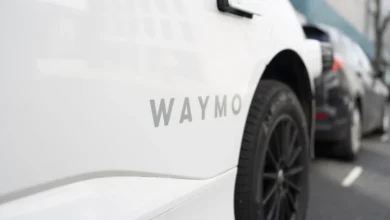
- Waymo’s International Expansion: Alphabet-owned Waymo has begun testing its autonomous vehicles on public roads in London, marking a significant step in its international expansion. Simultaneously, the company has removed its waitlist in Miami and Orlando, signaling a transition from limited pilot programs to full-scale commercial operations in major U.S. markets.
- Rivian and Redwood Materials: A partnership between Rivian and Redwood Materials has resulted in a new energy storage initiative at Rivian’s Illinois factory. The project utilizes 100 "second-life" Rivian battery packs to provide 10 megawatt-hours of energy storage. This initiative addresses one of the primary criticisms of the EV industry—battery waste—by demonstrating a viable "circular economy" for lithium-ion batteries.
- Tesla’s Gamification Strategy: Tesla has introduced a new interface for its Full Self-Driving (FSD) software that includes usage statistics and "streaks." This gamification of autonomous driving is viewed as an attempt to increase user engagement and data collection, as Tesla continues to rely on real-world driver data to train its neural networks.
Broader Impact and Market Implications
The collective weight of these developments points to a stabilization of the autonomous vehicle sector. The "hype cycle" of the mid-2010s has been replaced by a more pragmatic, capital-intensive era. Uber’s $10 billion commitment suggests that the industry’s leaders are no longer asking if autonomous technology will arrive, but rather who will own the infrastructure when it does.
The shift toward asset-heavy models indicates that the most valuable companies in the future of mobility will likely be those that control both the digital platform and the physical fleet. For startups, the path to success increasingly requires a focus on "Physical AI"—creating hardware that is inherently designed for autonomous operation rather than adapting existing human-centric designs.
As legacy automakers like Ford and GM collaborate with the Pentagon to revamp procurement and production, and as tech giants like Alphabet and Uber double down on physical assets, the boundary between "tech company" and "industrial manufacturer" continues to blur. The next three years will be critical as the industry moves from capital raising and pilot programs to the mass-market production of autonomous, electric, and AI-driven transportation solutions.