The Definitive Guide to the Best Laptops Under $500: Performance, Value, and Strategic Choices for 2025

Searching for a high-quality laptop under $500 can initially appear to be a formidable undertaking, a landscape often perceived as fraught with compromise and short-lived devices. While it is true that budget-friendly models typically forego the premium aesthetics and advanced functionalities of their pricier counterparts, a discerning eye reveals a robust selection of affordable laptops that excel in core functionalities, often surprising users with unexpected bonus features. This guide delves into the current market, highlighting top picks curated by Laptop Mag for 2025, and provides comprehensive insights into navigating this crucial segment of personal computing.
Navigating the Budget Laptop Market: Expectations and Trade-offs
Setting realistic expectations is paramount when exploring laptops within this price bracket. Consumers primarily seeking devices for fundamental tasks—such as web browsing, document creation, streaming media, or utilizing standard productivity applications—will discover numerous solid options capable of fulfilling these requirements. These machines are particularly well-suited for students, children, or individuals in search of a dependable secondary computing device that does not necessitate a significant financial outlay. While Windows-based laptops are available, Chromebooks frequently present a superior value proposition, often delivering more efficient performance and longer battery life for the cost.
The inherent trade-offs associated with lower price points are unavoidable. Buyers should not anticipate cutting-edge specifications, high-performance graphics, or luxurious build materials. Instead, the expectation should be for more modest processors, constrained storage capacities, and functional, rather than spectacular, display quality. Nevertheless, the leading budget models are characterized by intelligent compromises, and a unifying standout feature across Laptop Mag’s recommended list is exceptional battery life. Understanding one’s specific needs is the key determinant in assessing the ultimate value of a budget laptop, confirming that for many, such an investment is indeed worthwhile. This curated selection is regularly updated, with the latest reviews and insights incorporated to reflect the market’s best offerings for the upcoming year. For instance, the page saw a significant update on May 5, 2025, which included the addition of FAQs, detailed testing charts, the Acer Chromebook Spin 312, and an expanded "how to choose" section, ensuring the information remains current and comprehensive.
The Evolving Landscape of Sub-$500 Laptops

The market for laptops under $500 has undergone a remarkable transformation over the past decade. Historically, this segment was plagued by underpowered machines with sluggish performance, poor build quality, and woefully inadequate battery life, often leading to user frustration and premature obsolescence. However, advancements in processor efficiency, the maturation of ChromeOS, and manufacturers’ strategic focus on specific use cases have fundamentally altered this landscape. Today, these devices are no longer merely "cheap" but "affordable," offering genuine utility and reliability.
The rise of ChromeOS, in particular, has been a game-changer. By leveraging cloud-based services and a lightweight operating system, Chromebooks can deliver a responsive user experience with less powerful hardware, extending battery life significantly and reducing overall costs. This has made them an increasingly attractive alternative to Windows laptops in the budget category, a trend clearly reflected in Laptop Mag’s top recommendations. Furthermore, the increasing integration of AI capabilities, even in budget processors, hints at a future where even entry-level devices can offer enhanced performance for everyday tasks, as exemplified by models like the Lenovo IdeaPad Flex 5i Chromebook Plus.
Top Contenders in the Sub-$500 Category
The following models represent the pinnacle of value and performance within the sub-$500 segment, each offering distinct advantages tailored to different user profiles.
Lenovo IdeaPad Flex 5i Chromebook Plus: The AI-Infused All-Rounder
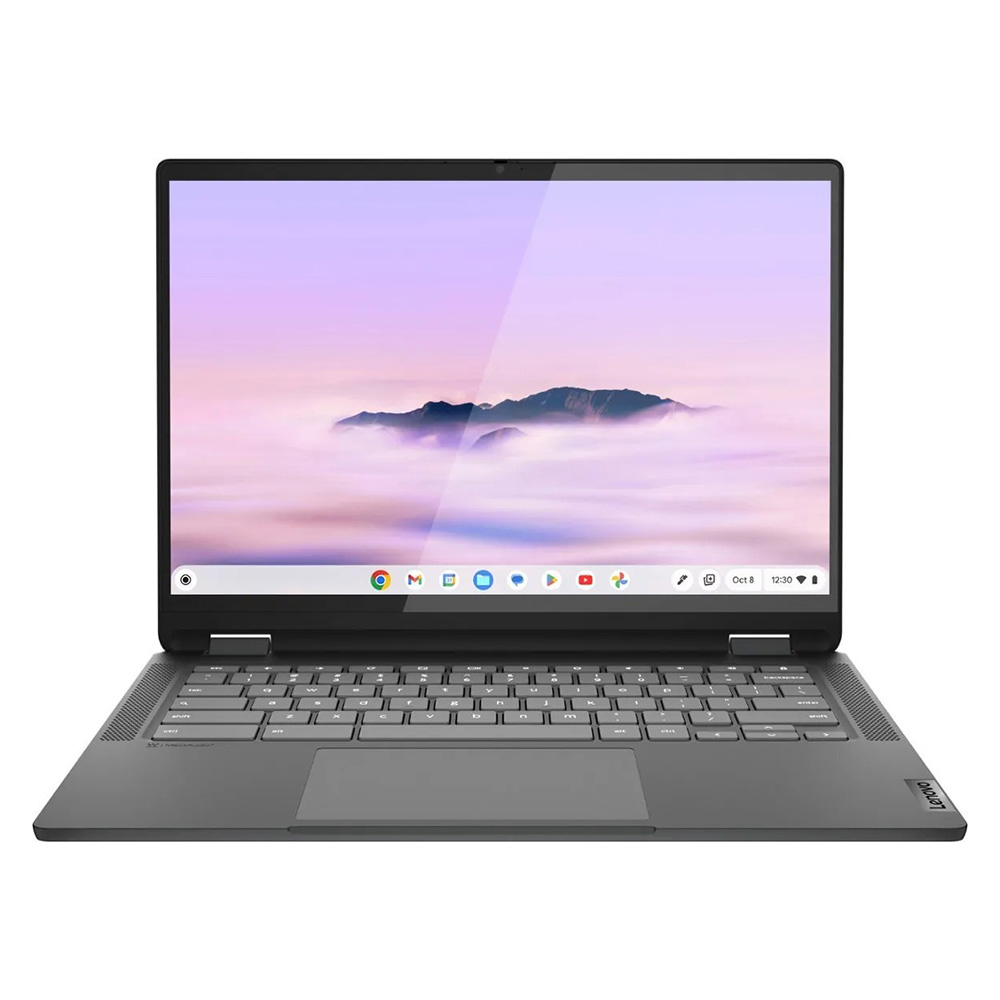
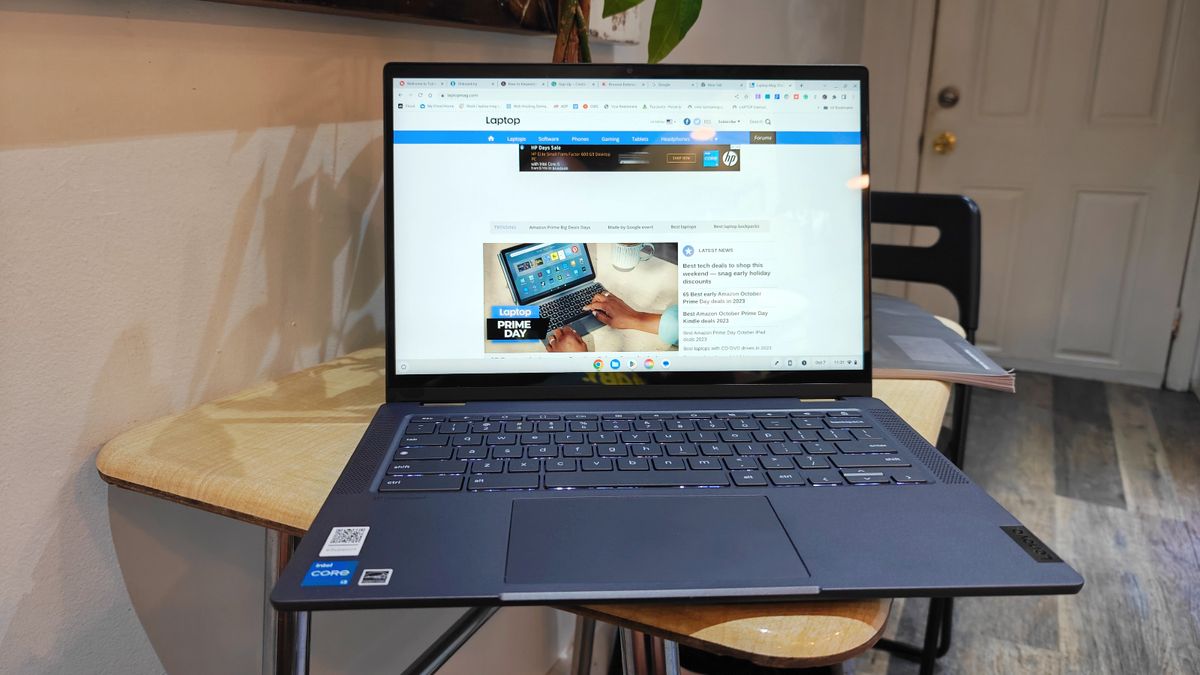
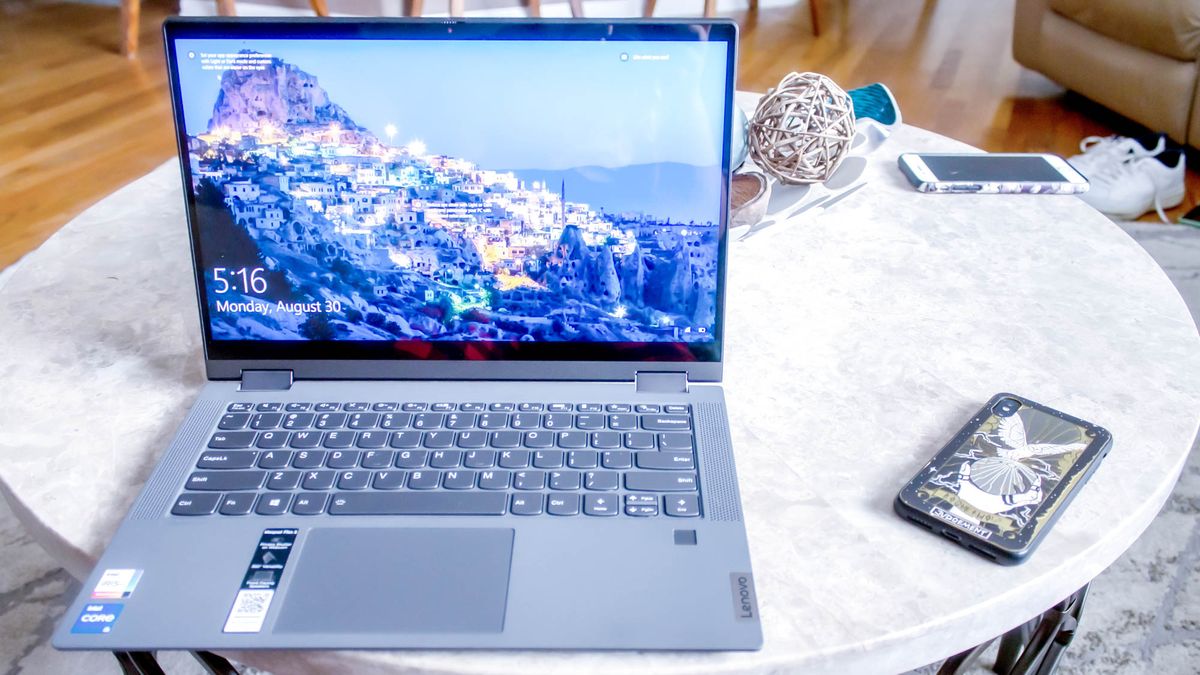
For consumers seeking a contemporary laptop that defies its budget price tag, the Lenovo IdeaPad Flex 5i Chromebook Plus stands out as the premier recommendation. This 2-in-1 convertible device, powered by an Intel Core i3-1315U processor and equipped with 8GB of RAM and a 1080p display, delivers a surprisingly robust performance package for under $500. Its AI-infused capabilities elevate its performance beyond typical Chromebook expectations.
In rigorous benchmark testing, the IdeaPad Flex 5i achieved a Geekbench 6 multi-core score of 5,384, notably surpassing the Chromebook average of 5,259. This performance metric significantly outpaces other budget models like the Lenovo Duet 5 Chromebook (1,727 on Geekbench 5) and the Lenovo Flex 5 14 (Intel) (3,841 on Geekbench 5), demonstrating its superior processing power within its class. Crucially, as a Chromebook, it is optimized for web-centric tasks, meaning its powerful processor is rarely burdened by the intensive applications that would challenge a Windows laptop. Beyond raw power, the device offers nearly 10 hours of battery life, ensuring prolonged productivity.
The design of the IdeaPad Flex 5i is another compelling attribute, eschewing the often-clunky aesthetics associated with budget laptops. Its sleek profile, measuring 12.4 x 9.0 x 0.8 inches and weighing 3.57 pounds, presents a premium appearance and a sturdy build quality, belying its affordability. While its 14-inch, 1080p display, covering 46.5% of the DCI-P3 color gamut, may not be the most vibrant, its 16:10 aspect ratio provides valuable additional vertical screen real estate, enhancing productivity for tasks like document editing and web browsing. The display achieves a respectable brightness of 306 nits, making it suitable for indoor use.
Lenovo Duet 5 Chromebook: Unmatched Value Under $300
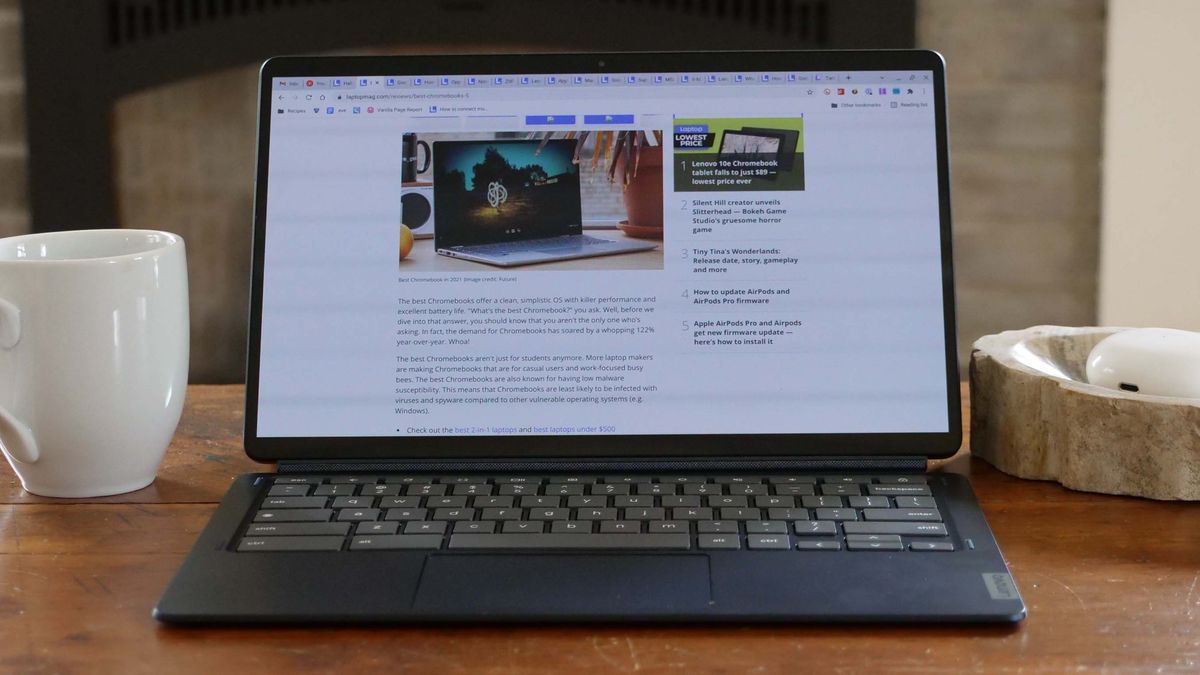
The Lenovo Duet 5 Chromebook has consistently been a top performer in the budget category, recognized for its exceptional feature set at an incredibly low price point, now positioned as the best option under $300. This detachable 2-in-1 device offers unparalleled versatility, seamlessly transitioning between a tablet and a full laptop experience.
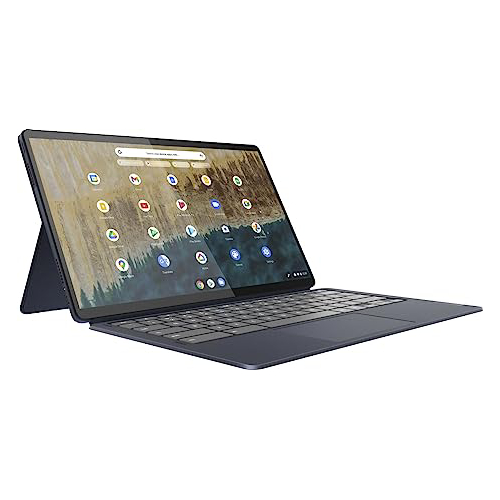
Despite its somewhat modest performance in synthetic benchmarks, driven by its Qualcomm Snapdragon 7c Gen 2 processor, the Duet 5 Chromebook shines in other critical areas. Its Geekbench 5 multi-core score of 1,727, while below the Chromebook average of 2,253 and the Intel-powered Flex 5 14, is perfectly adequate for the lightweight tasks ChromeOS is designed for. What truly distinguishes this device is its stunning 13.3-inch, 1920 x 1080 OLED display. This panel reproduces an impressive 85.2% of the DCI-P3 color gamut and boasts an average brightness of 361 nits—figures typically found in significantly more expensive, premium laptops, including high-end gaming machines and MacBook competitors. The inclusion of an OLED screen at this price is a remarkable feat.
Furthermore, the Duet 5 Chromebook delivers an astounding 13 hours and 31 minutes of battery life, placing it among the longest-lasting notebooks available, regardless of price. This longevity makes it an ideal companion for extended work or study sessions. Unlike many other detachable 2-in-1s that charge extra for essential accessories, the Duet 5 includes both its keyboard and cover, further enhancing its value proposition. While the absence of a stylus and its relatively weaker processor are minor drawbacks, the overall package of an OLED display, exceptional battery life, and a versatile 2-in-1 design makes it an unbeatable choice under $300.
Lenovo IdeaPad Flex 5 14 (Intel): A Reliable Windows Option
Finding a genuinely capable Windows laptop under $500 is a rare achievement, as many options in this segment often suffer from crippling performance issues or poor build quality. The Lenovo IdeaPad Flex 5 14 (Intel) emerges as a notable exception, offering a compelling blend of strong performance, outstanding battery life, and a comfortable user experience.
Powered by an Intel Core i5-1135G7 processor with Intel Iris Xe integrated graphics and featuring 16GB of RAM and a 512GB SSD in its reviewed configuration, this laptop delivered solid results. It achieved a Geekbench 5 multi-core score of 3,841, significantly outperforming the Chromebook average of 2,253 and other budget Chromebooks like the Duet 5 and Acer Chromebook 713. While it doesn’t match the latest Chromebook Plus models, its Windows environment provides broader software compatibility. Its real-world performance is underscored by a Handbrake video conversion time of 25 minutes and 30 seconds and SSD transfer speeds of 565.9 MBps, indicating respectable efficiency for its class.
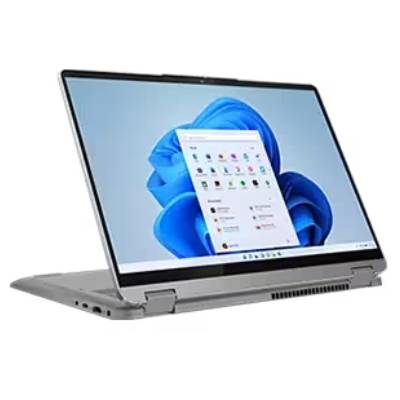
The standout feature of the IdeaPad Flex 5 14 is its extraordinary battery life, lasting 14 hours and 16 minutes in web surfing tests. This far exceeds the typical endurance of both budget and many premium laptops, making it an ideal device for users who need to work unplugged for extended periods. The keyboard also merits praise, offering a responsive and comfortable typing experience with tactile feedback, despite a slightly shallow key travel. While its 12.3-inch (2400 x 1600) IPS touch display, covering 45% of the DCI-P3 gamut and achieving 200 nits of brightness, is somewhat dim and dull compared to its Chromebook counterparts, its overall feature set and competitive pricing—often found under $500—make it the best Windows option in this category. The availability of an AMD Ryzen 3 model offers an alternative, likely with similar benefits, though specific performance and battery life may vary.
Acer Chromebook Spin 312: Tailored for Student Needs
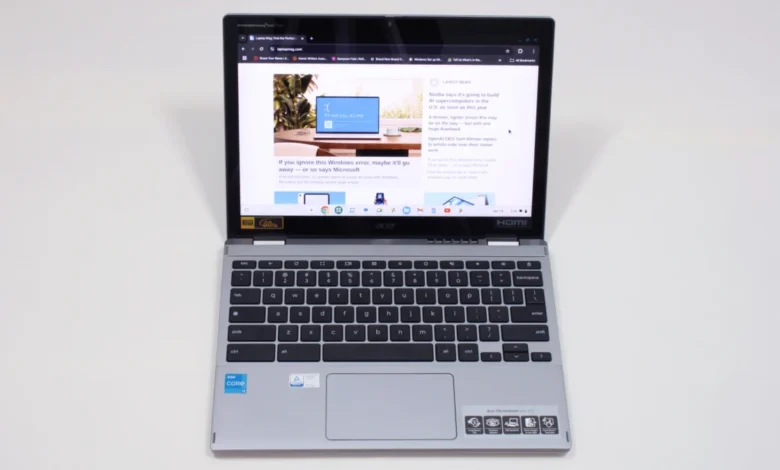
The Acer Chromebook Spin 312 is positioned as the ideal sub-$500 laptop for students, representing a substantial upgrade over older, less capable institutional devices. Its design and features are particularly well-suited for the rigors of academic life.
Aesthetically, its silver-coated chassis imparts a more expensive look than its $450 price tag suggests. Weighing just under 3 pounds (2.84 pounds, to be exact), it is exceptionally portable, making it easy for students to carry between classes throughout the day. Crucially, its battery can last up to 10 hours and 33 minutes on a full charge, providing ample power for a full school day without needing to seek an outlet.
The Spin 312 incorporates several unique features that enhance its user experience. Acer’s OceanGlass touchpad offers an exceptionally smooth and responsive navigation experience, often surpassing those found in more expensive Windows laptops. The 12.2-inch (1920 x 1200) IPS touch display is protected by Corning Gorilla Glass, which, despite a DCI-P3 color gamut coverage of only 55%, visually enhances colors and contrasts, making the screen appear more vivid than its technical specifications might suggest. This makes for a more engaging viewing experience for educational content and casual entertainment.
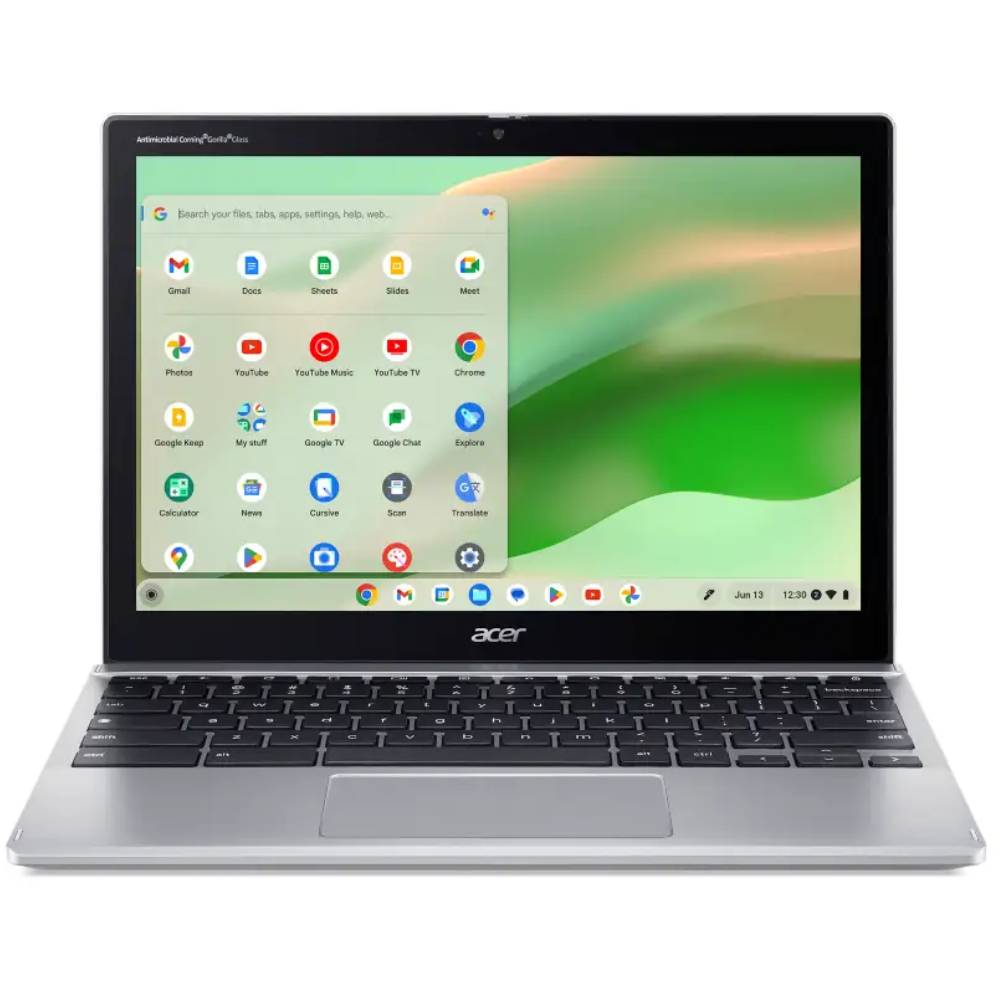
As a 2-in-1 laptop, the Spin 312 supports both traditional laptop use and tablet mode, accommodating various learning styles, including note-taking by hand. While the keyboard, with its "clicky-squishy" feel and thin plastic keycaps, is not universally praised, its functionality remains adequate for typing essays and assignments. The webcam is noted to be grainy, a common compromise in this price range, but the overall robustness and feature set make it an excellent educational tool.
Deeper Dive into Performance and Display Metrics
Understanding benchmark comparisons is crucial for making an informed decision in the budget laptop segment. The Laptop Mag testing methodology provides clear data points that reveal the strengths and weaknesses of each device.
-
Processor Performance (Geekbench): Geekbench scores indicate raw processing power. The Lenovo IdeaPad Flex 5i Chromebook Plus, with its Intel Core i3-1315U, leads with a Geekbench 6 score of 5,384, demonstrating its "speedy AI-infused performance." The Acer Chromebook Spin 312, with its Intel Core i3-N305, also performs well at 4,477 (Geekbench 6). For Geekbench 5, the Lenovo IdeaPad Flex 5 14 (Intel Core i5-1135G7) achieves 3,841, a strong showing for a Windows device. The Lenovo Duet 5 Chromebook (Qualcomm Snapdragon 7c Gen 2) scores 1,727, reflecting its lower-power, ARM-based architecture optimized for ChromeOS. Higher scores indicate better multitasking and application responsiveness.
-
Web Browsing Performance (Jetstream 2): Jetstream 2 measures JavaScript and WebAssembly performance, critical for modern web applications. The Flex 5i Chromebook Plus excels at 272.91, followed by the Acer Chromebook Spin 312 at 215. The Duet 5 Chromebook’s 70.1 highlights its more basic web processing capabilities. These scores directly correlate to the fluidity of web browsing and the performance of cloud-based applications.

-
Display Quality (DCI-P3 & Brightness): DCI-P3 color gamut coverage indicates the richness and accuracy of colors, while brightness (nits) measures screen luminance. The Lenovo Duet 5 Chromebook’s OLED display is a clear winner, boasting 85.2% DCI-P3 and 361 nits, offering a vibrant and bright visual experience. The Acer Chromebook Spin 312 (55% DCI-P3, 277 nits) provides a colorful experience for an IPS panel, especially with its Gorilla Glass coating. The Lenovo IdeaPad Flex 5i Chromebook Plus (46.5% DCI-P3, 306 nits) and Flex 5 14 (45% DCI-P3, 200 nits) offer decent, albeit less vibrant, displays. Higher brightness is crucial for usability in varying lighting conditions.
-
Battery Life (Web surfing): This is a critical metric for portability. The Lenovo IdeaPad Flex 5 14 leads with an impressive 14 hours and 16 minutes, followed closely by the Lenovo Duet 5 Chromebook at 13 hours and 31 minutes. The Acer Chromebook Spin 312 (10 hours, 33 minutes) and Lenovo IdeaPad Flex 5i Chromebook Plus (9 hours, 43 minutes) also provide excellent all-day endurance. All models on this list surpass the recommended 10-hour threshold, making them highly practical for mobile use.
-
Temperature (Hottest Temperature): Measured after 15 minutes of video playback, this indicates how well a laptop manages heat. All reviewed models stay well below the 95-degree Fahrenheit comfort threshold, with the Flex 5i Chromebook Plus at 89.5 degrees, Acer Chromebook Spin 312 at 91.5 degrees, and Flex 5 14 at 94 degrees, ensuring comfortable lap use.
Strategic Purchasing: How to Choose Your Ideal Budget Laptop
Selecting the best laptop under $500 requires a strategic approach, balancing cost with essential features.
- Budget vs. Value: While the initial price is attractive, focus on the overall value. A laptop that offers decent performance and exceptional battery life for $400 might be a better investment than one at $350 that struggles with basic tasks and dies quickly. Laptop Mag’s reviews meticulously dissect these aspects, helping consumers discern true value.
- Operating System Choice: ChromeOS vs. Windows: This is arguably the most significant decision in the budget segment.
- Chromebooks: Ideal for users primarily relying on web applications, Google Workspace, or Android apps. They generally offer superior performance, battery life, and security for the price due to their lightweight nature. They are also often more durable and easier to manage, making them perfect for students.
- Windows Laptops: Necessary for users requiring specific Windows-only software (e.g., advanced photo editing, specialized business applications). While fewer strong options exist under $500, models like the Lenovo IdeaPad Flex 5 14 prove that capable Windows devices are attainable, though they may involve more compromises in other areas compared to Chromebooks.
- Screen Size and Portability:
- 12- to 14-inch models: These are the most common sizes in the sub-$500 category, striking a good balance between screen real estate and portability. They are generally lightweight and thin, suitable for carrying in a backpack or briefcases. Larger screens (e.g., 15-inch) are less common and tend to compromise on other features or portability at this price.
- Form Factor Flexibility: Clamshell or Convertible?
- Clamshell (Traditional) Laptops: Often provide better specifications for the price, focusing resources on core computing power.
- Convertible Laptops (2-in-1s): Feature 360-degree hinges, allowing them to transform into tablet mode. This offers versatility for presentations, media consumption, or touch-based interaction. However, in tablet mode, the keyboard folds back, making the device thicker and exposing the keys.
- Detachable Keyboards: Offer the ultimate flexibility, allowing the screen to function entirely as a tablet. These avoid the awkwardness of exposed keys in tablet mode and can be exceptionally thin. The Lenovo Duet 5 Chromebook is a prime example, often including the keyboard and cover, which is a significant advantage over many pricier detachables.
- Battery Life Imperative: 10+ Hours: A laptop’s utility is severely limited if it constantly requires charging. Laptop Mag strongly recommends models that achieve at least 10 hours of battery life in its web surfing test. This ensures an entire workday or school day can be completed without concern for power outlets.
- Key Specifications:
- RAM: While 16GB RAM is desirable, 8GB is often the standard and sufficient for ChromeOS and basic Windows tasks. Less than 8GB can lead to noticeable slowdowns.
- Storage: Most budget laptops feature 128GB or less, often using slower eMMC storage. For ChromeOS, which relies heavily on cloud storage, this is usually adequate. For Windows, an SSD is preferable for speed, but eMMC might be necessary to meet the price point. Users needing more storage should consider external drives or cloud services.
- Processor: Expect Intel N-series, MediaTek Kompanio, Qualcomm Snapdragon, or entry-level Intel Core i3 processors. These are optimized for efficiency rather than raw power. Chromebooks generally extract more "mileage" from these processors due to their optimized operating system.
Industry Perspective and Market Trends
Industry analysts consistently underscore the critical role of the budget laptop segment in driving market growth and fostering digital inclusion. Manufacturers like Lenovo and Acer have strategically invested in optimizing their offerings for this price point, often by leveraging the efficiencies of ChromeOS and focusing on core user experiences like battery life and keyboard quality. The ability to deliver AI-infused performance, as seen in the latest Chromebook Plus models, signals a broader trend towards infusing advanced capabilities even into entry-level hardware.
However, the budget segment is not without its challenges. Laptop Mag reviews editor, Rami Tabari, highlights "the hidden costs of cheap laptops," emphasizing that not all budget deals are genuinely good value. Longevity, potential upgradeability, and the cost of replacing a device after a short lifespan are important considerations. Macroeconomic factors, such as tariffs, also play a significant role in laptop pricing. Historically, tariffs have influenced manufacturing costs, and potential future tariff hikes could make finding quality laptops under $500 even more challenging, underscoring the importance of seizing current good deals, particularly during sales events like Black Friday and Cyber Monday.
The Broader Impact: Accessibility and Digital Inclusion
The continued availability of high-quality, affordable laptops has profound societal implications. These devices are instrumental in bridging the digital divide, providing essential computing access to a wider demographic. For students in underserved communities, a reliable budget laptop can be the gateway to online learning resources, homework completion, and developing crucial digital literacy skills. For small businesses, they offer cost-effective solutions for administrative tasks, communication, and basic operations. Casual users benefit from accessible technology for staying connected, entertainment, and personal productivity without financial strain. This segment empowers individuals, fosters economic participation, and supports educational equity, proving that technological advancement can indeed be inclusive.
Methodology: Laptop Mag’s Rigorous Testing Standards
At Laptop Mag, every laptop undergoes a meticulous and extensive testing regimen before it reaches the hands of reviewers. This process combines both synthetic benchmarks and real-world usage scenarios to ensure a comprehensive evaluation of performance, battery life, display quality, audio output, and thermal management.
For display analysis, a Klein K10 colorimeter is used to precisely measure brightness (in nits) and DCI-P3 color gamut coverage, providing objective data on visual fidelity. Performance testing involves a suite of industry-standard benchmarks, including Geekbench 5 and 6 for CPU performance and 3DMark for graphics capabilities. To gauge real-world performance, laptops are tasked with converting a 4K video to 1080p resolution and duplicating a 4.97GB multimedia file. Gaming performance is assessed using the Sid Meier’s Civilization 6 Gathering Storm benchmark at medium settings and 1080p resolution.
Thermal performance is evaluated by playing a 15-minute full-screen video and measuring surface temperatures across various points of the chassis to ensure comfortable operation. Battery life is determined through continuous web surfing over Wi-Fi at a standardized brightness of 150 nits. For mainstream laptops and MacBooks, a runtime exceeding 9 hours is considered commendable, while gaming laptops and workstations are praised for exceeding 5 hours.
Following these rigorous laboratory tests, each laptop is subjected to an in-depth, hands-on evaluation by expert reviewers. These specialists integrate the laptop into their daily workflows for several days, performing tasks such as writing, editing, video conferencing, and streaming, to gain a nuanced understanding of its real-world performance and user experience. This dual approach of objective technical analysis and subjective, lived-in experience enables Laptop Mag to deliver well-rounded, transparent, and trustworthy reviews, empowering consumers to make confident purchasing decisions.
The sub-$500 laptop market has evolved into a dynamic and genuinely valuable segment, offering reliable and often surprisingly capable devices for a diverse range of users. By understanding the key trade-offs, leveraging the strengths of ChromeOS, and prioritizing essential features like battery life, consumers can confidently navigate this market and find a laptop that perfectly meets their needs without exceeding their budget.