Tesla Teases October 1 Reveal for Long-Awaited Roadster After Nearly a Decade of Delays

Electric vehicle manufacturer Tesla has officially signaled a forthcoming unveiling for its long-awaited second-generation Roadster, releasing a promotional teaser indicating an event scheduled for October 1. The announcement arrives nearly nine years after the high-performance electric hypercar was first introduced to the public as a prototype, marking a significant, albeit heavily delayed, step forward for a vehicle that has repeatedly missed its projected production milestones.
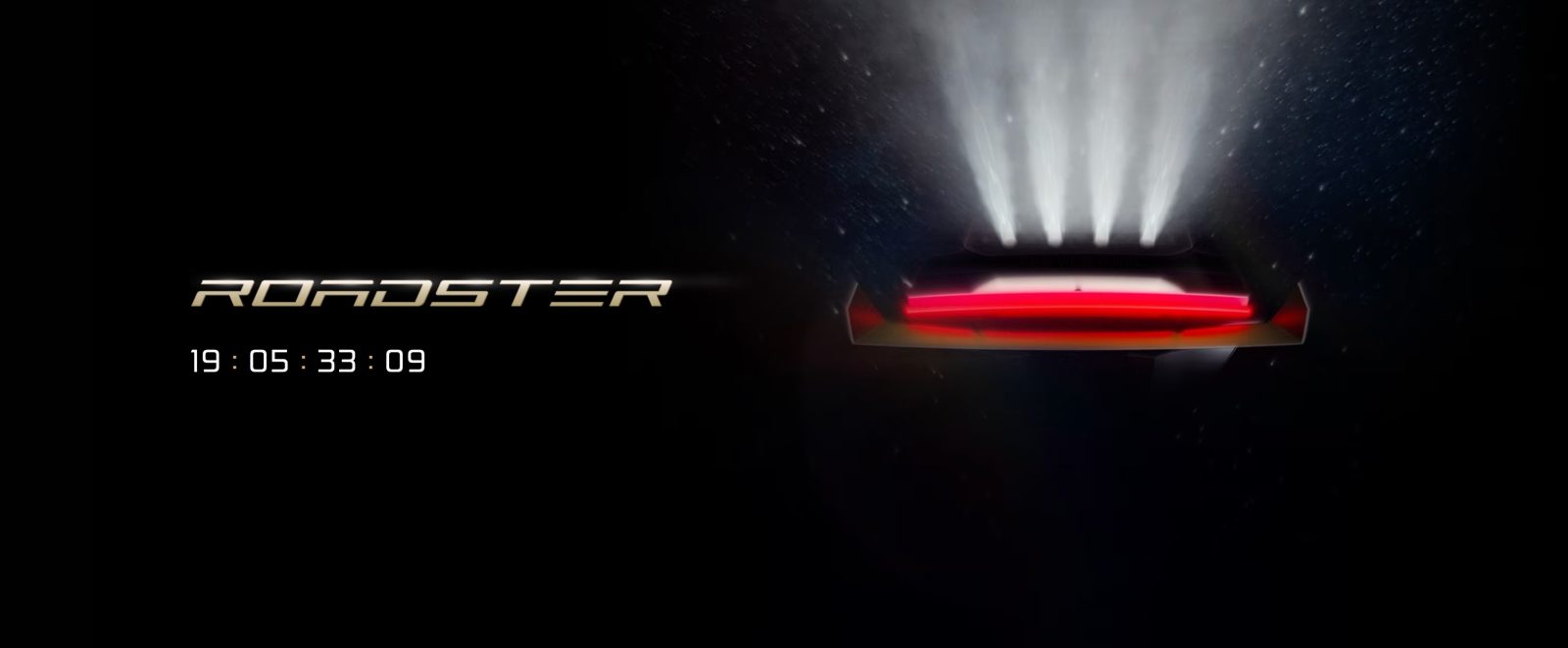
The promotional campaign, disseminated across Tesla’s corporate channels, features a sleek, red electric vehicle bathed in dramatic rocket-launch lighting. Emblazoned with the phrase "Go for launch" and the date "10.01," the teaser aligns with a synchronized countdown clock currently active on the official Tesla Roadster web portal. While the company has not yet disclosed the specific geographic location of the event or confirmed whether it will be broadcast globally, the imagery strongly hints at the long-rumored integration of aerospace engineering derived from sister company SpaceX.
A Chronology of Broken Promises and Repeated Delays
The journey of the second-generation Tesla Roadster is characterized by one of the longest pre-production cycles in modern automotive history. The vehicle was initially unveiled to great fanfare in November 2017 during the rollout of the Tesla Semi. At the time of its debut, Chief Executive Officer Elon Musk boasted performance specifications that pushed the boundaries of physics for a production automobile: a base price of $200,000, a limited Founders Series priced at $250,000, a staggering 620 miles of driving range on a single charge, a 0-to-60 mph acceleration time of under two seconds, and a top speed exceeding 250 mph.
Initial reservations required substantial financial commitments from eager consumers, with standard deposits set at $50,000 and the entire $250,000 upfront for the Founders Series. Prominent early reservation holders, such as tech entrepreneur Sam Altman and content creator Marques Brownlee, have since publicly confirmed canceling their orders as the timeline continuously stretched.
Production was originally scheduled to commence in 2020. However, that target proved unachievable, initiating a cascade of revised schedules. Over the subsequent years, Tesla shifted the production target at least eight times, pushing the timeline through 2022, 2023, 2024, and eventually into a vague "2025–2026" window. During a shareholder meeting in late 2025, Musk further tempered expectations by stating that manufacturing would likely not begin until 2027 or 2028. Throughout this period, multiple demonstration dates were floated and subsequently missed, including aborted plans for spring and summer demonstrations earlier this year.
Scaling Back the "Flying" Demonstration
Central to the enduring mystique of the new Roadster has been Musk’s persistent promise that the vehicle would incorporate SpaceX-developed cold gas thrusters, allowing it to perform unprecedented maneuvers, including short bursts of levitation. However, recent reports indicate that the scope of this demonstration has been significantly scaled back from its initial, highly ambitious conceptualization.
While early internal discussions reportedly floated complex stunts—such as driving up a magnetized ramp, executing an upside-down roll, and righting itself via thruster force—the upcoming October 1 event is expected to feature a more controlled, remote-operated hover demonstration. Industry insiders and reporting from automotive trade publications note that the vehicle will likely lift off the ground without a driver onboard, operating entirely via remote inputs. Furthermore, spectators will reportedly be required to maintain a distance of several hundred yards due to the extreme decibel levels generated by the rocket thrusters, which are powerful enough to cause immediate hearing damage.

Moreover, automotive analysts have pointed out that the vehicle appearing on October 1 is unlikely to represent a consumer-ready production model. The hardware being demonstrated is not expected to be street-legal. Industry observers suggest that rather than entering mass production for the general public, initial units may be funneled into an exclusive, Ferrari-style track program reserved for an elite tier of brand superfans, keeping the vehicle largely out of reach for everyday reservation holders.
Strategic Implications and Corporate Synergy
Financial analysts and industry watchers have increasingly viewed the protracted Roadster development cycle through a strategic lens rather than a conventional automotive one. Rather than serving as a high-volume profit driver, the Roadster program has evolved into a high-profile marketing vehicle designed to highlight the technological synergy between Tesla and SpaceX.
This positioning coincides with broader corporate discussions regarding a potential closer alignment or structural merger between Tesla and SpaceX—an idea that Musk has periodically floated to institutional investors on Wall Street. By staging a rocket-powered, aerospace-adjacent vehicle demonstration, Tesla reinforces the narrative of technological crossover between electric mobility and rocketry.
The timing of the October reveal also mirrors a pattern observed in previous quarters, where the company utilizes high-visibility product revivals or updates to sustain investor enthusiasm ahead of critical shareholder votes or financial milestones. Reintroducing legacy projects that captured public imagination years prior serves as a reliable mechanism to dominate news cycles and maintain market momentum.

Looking Beyond the Teaser
As the October 1 deadline approaches, automotive markets and loyal enthusiasts remain divided in their expectations. While the prospect of a rocket-assisted, hovering electric hypercar captures the imagination, skepticism remains deeply entrenched among early investors who have watched timelines slip for nearly a decade.
Ultimately, while the upcoming event promises visual spectacle and technological bravado, the milestone that matters most to the broader market—and to the thousands of customers who tied up capital in 2017—is the establishment of a credible, binding delivery date for a street-legal production vehicle. Until that date is firmly established, the Tesla Roadster remains one of the automotive industry’s most ambitious, and most delayed, conceptual exercises.