The Wealth of AI and the Choice Between Philanthropy and Regulation Neil Rimer’s Warning for a New Gilded Age


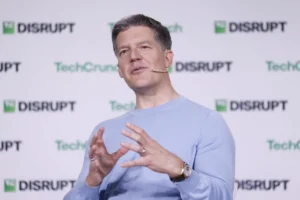
In late May, against the backdrop of a vibrant new tech festival in Athens, Greece, Neil Rimer, a co-founder of Index Ventures, shared a perspective on the burgeoning wealth of the artificial intelligence era that has since reverberated throughout the financial and technology sectors. Rimer, whose firm has been a cornerstone of venture capital for three decades, sat down to discuss the unprecedented concentration of capital currently pooling around AI enterprises. His conclusion was as blunt as it was unexpected for a man of his stature: a massive redistribution of this wealth is inevitable.
"I have a strong sense that there will be some sort of a redistribution," Rimer noted during the interview. "It’ll either be voluntary or it’ll be involuntary, but it’ll happen, and I hope it’s voluntary." He further emphasized that technology leaders have a unique opportunity—and perhaps a closing window—to play a leading role in orchestrating this transition before the hand of government intervenes.
Coming from a populist politician, such words might be dismissed as standard rhetoric. Coming from Rimer, they carry the weight of billions of dollars in realized returns. Index Ventures, under Rimer’s long-term guidance, has raised approximately $15 billion from outside investors since its inception. The firm’s recent performance has been nothing short of staggering; in the last year alone, high-profile exits including the initial public offering of Figma and Google’s acquisition of the cybersecurity firm Wiz reportedly netted Index roughly $9 billion. Despite stepping back from day-to-day investing in 2021 to spend more time in his wife’s native Greece, Rimer remains a bellwether for the "moral center" of Silicon Valley.
The Cracks in Modern Philanthropy
Rimer’s call for voluntary redistribution arrives at a moment when traditional philanthropic models appear to be fracturing. For over a decade, the "Giving Pledge"—launched by Warren Buffett and Bill Gates in 2010—served as the gold standard for billionaire altruism, requiring signatories to commit at least half of their fortunes to charitable causes. However, data suggests the initiative is losing its cultural and practical momentum.
In its first five years, 113 families joined the pledge. That number has dwindled significantly in recent years, with only 72 joining in the subsequent five-year block, followed by 43, and reaching a nadir of just four signatories in all of 2024. This decline underscores a growing "billionaire backlash" against traditional giving. Figures like Elon Musk, currently the world’s wealthiest individual, have redefined the term entirely, suggesting that their profit-seeking businesses are, in themselves, a form of philanthropy because they advance humanity’s technological frontier.
This shift is mirrored in broader American statistics. While total charitable giving in the United States hit a record $592.5 billion in 2024, the donor base is narrowing. According to the Stanford Social Innovation Review, the number of individual Americans giving to charity has fallen for five consecutive years, dropping 4.5% in 2024 alone. In 2000, two-thirds of American households donated; today, that figure has plummeted to roughly half. Even among affluent households, participation has slipped from 90% in 2017 to 81% last year, according to data from Bank of America and the Lilly Family School of Philanthropy.
The Anthropic Case Study: Wealth Over Welfare
The trend of prioritizing wealth accumulation over redistribution is visible even within the most "altruistic" corners of the AI boom. Index Ventures is an investor in Anthropic, an AI startup founded on the principles of "effective altruism" (EA). Despite these roots, the behavior of the company’s newly minted millionaires suggests a preference for reinvestment over charity.
Financial planners working with Anthropic employees note that while the company matches employee donations of up to 25% of their equity, few are building long-term philanthropy into their financial blueprints. Instead, these individuals are largely focused on angel investing or launching their own startups. This "recycling" of wealth within the tech ecosystem ensures that capital remains concentrated within a specific class of innovators rather than being distributed to broader social causes.
The scale of this wealth is difficult to overstate. Once Anthropic and OpenAI complete their widely anticipated initial public offerings, their combined workforces will reportedly hold enough equity to purchase nearly one-third of all residential real estate in the San Francisco metro area. This concentration creates a localized economic gravity that many fear will further alienate the technology sector from the public it claims to serve.
The Involuntary Path: Legislation and the Wealth Tax
As voluntary giving wanes, the "involuntary" redistribution Rimer warned of is already taking shape in the form of aggressive legislative proposals. California, the heart of the global tech economy, is currently facing a pivotal moment. Voters are set to decide on a 5% one-time wealth tax targeting the state’s billionaires.
The mere prospect of such legislation has already triggered a flight of capital. High-profile founders, including Google’s Sergey Brin and Larry Page, have reportedly moved their primary residences to South Florida to insulate their assets. Furthermore, the timing of OpenAI’s rumored 2027 IPO is being viewed by some analysts through a cynical lens; if the California wealth tax passes, it could calculate net worth based on worldwide assets held as of the end of the current calendar year. Going public later allows for more complex tax planning and potential relocation of assets.
The federal government is also entering the fray. OpenAI has reportedly discussed the possibility of the U.S. government taking a 5% equity stake in the company. While CEO Sam Altman frames this as a way to share the "upside" of AI with the American public, critics view it as a strategic move to buy political favor and prevent more stringent regulatory oversight. Historically, Silicon Valley has been loath to involve "Uncle Sam" on the cap table. Roelof Botha, a veteran investor at Sequoia, recently echoed a long-standing industry sentiment, joking that the most dangerous words in the English language remain: "I’m from the government, and I’m here to help."
Historical Parallels: The First Gilded Age vs. The AI Era
The current economic landscape bears a striking resemblance to the American Gilded Age of the late 19th and early 20th centuries. In 1916, at the peak of that era’s wealth concentration, the top 1% of U.S. households controlled 45% of the nation’s wealth. While the current share held by the top 1% is lower—roughly 31.7%—the concentration at the "tippy top" is actually more extreme today than it was during the age of the Robber Barons.
Economist Gabriel Zucman has noted that in 1910, the four largest American fortunes were equivalent to 4% of the U.S. Gross Domestic Product (GDP). Today, the top 19 households in the U.S. hold wealth equivalent to 14% of the GDP. This unprecedented scaling of individual wealth, fueled by the global reach of digital platforms and AI, has created a social pressure cooker.
History provides two clear precedents for how this ends. In 1889, Andrew Carnegie published "The Gospel of Wealth," arguing that the rich had a moral obligation to distribute their wealth for the public good during their lifetimes. Carnegie’s philosophy founded modern philanthropy, but it was not enough to stem the tide of public resentment.
By the mid-1930s, the "involuntary" phase arrived. Senator Huey Long’s "Share Our Wealth" movement, which demanded massive taxes on the rich to fund a guaranteed national income, gained enough traction to threaten the political establishment. In response, President Franklin D. Roosevelt pushed through the "soak-the-rich" tax of 1935, raising the top marginal income tax rate to 79%. This was a direct result of the failure of voluntary redistribution to sufficiently address the economic disparities of the era.
The Moral Center and the Future of Tech
For Rimer, the concern is not merely economic but existential. He traces his fascination with the "moral center" of tech back to his days as a Stanford undergraduate in 1984, when Steve Jobs and Apple were viewed as heroes for democratizing technology through the Macintosh.
"What troubles me now," Rimer admitted, "is hearing my own children talk about certain tech companies the way an earlier generation talked about defense contractors or cigarette makers."
This reputational shift—from being seen as a force for global good to being viewed as a predatory or indifferent elite—is what Rimer believes will ultimately trigger the "involuntary" redistribution. If the public and the next generation perceive tech wealth as a net negative for society, the political will to seize and redistribute that wealth will become irresistible.
Rimer, as an investor in companies like Anthropic, is a direct beneficiary of the AI windfall. However, his advocacy for voluntary redistribution is rooted in a pragmatic understanding of history. He suggests that tech leaders can either choose to be the architects of a new social contract or they can wait for the government to draft one for them. As the AI era creates the first trillionaires—with Elon Musk recently crossing that threshold following SpaceX’s latest valuation—the window for a "voluntary" solution is closing. Rimer is betting that his peers will recognize the "easy way" out before history forces the "hard way" upon them.