Khosla Ventures Breaks Decades-Long Tradition by Opening First-Ever Non-Bay Area Office in New York City


Silicon Valley venture capital stalwart Khosla Ventures is officially breaking away from its geographic roots, making a historic pivot that underscores the shifting center of gravity in the American technology landscape. After spending the entirety of its 13-year institutional history tethered strictly to its longtime headquarters in Menlo Park, California, the prominent investment firm is establishing its first-ever outpost outside of Sand Hill Road.
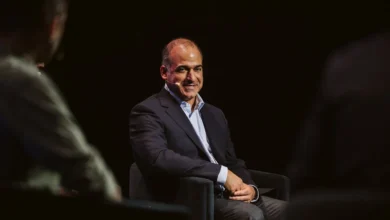
The announcement, delivered by partner Keith Rabois during an appearance at TechCrunch’s StrictlyVC event in the West Village of New York City, marks a watershed moment not only for Khosla Ventures but for the broader venture capital ecosystem. The new East Coast hub, slated for a tentative opening this fall, will be located on 14th Street in Manhattan. For a firm that has historically eschewed even a San Francisco footprint—opting instead to centralize operations entirely in the affluent heart of Silicon Valley—this physical expansion signifies a calculated adaptation to the evolving dynamics of tech, talent, and enterprise customers.
A Strategic Evolution on 14th Street
While construction delays have cast a characteristically realistic shadow over the target launch timeline—Rabois quipped to event attendees that the fall opening date was “very vague in my mind” as build-out continues—the strategic intent behind the Manhattan office is sharply focused.
The upcoming facility will house a dedicated contingent of Khosla investors, including Rabois, who recently relocated to the East Coast to be closer to family. However, the office’s most distinguishing characteristic is not merely desk space for dealmakers, but an innovative feature Rabois termed an “executive briefing center.”
This specialized venue is designed to serve as a high-volume matchmaking engine between Khosla’s expansive portfolio and legacy enterprise buyers. The firm plans to rotate 10 to 12 portfolio companies through the center four days a week to pitch directly to Fortune 500 executives. According to Rabois, this model bridges a critical gap for early- and growth-stage startups desperate for enterprise traction. By bringing the startups directly to the doorstep of traditional corporate buyers on the East Coast, Khosla aims to accelerate product pilots and customer acquisition, ensuring the Manhattan office functions as a dynamic, high-utility operational hub rather than a traditional satellite outpost.
The Human Capital Equation: Junior Talent vs. Senior Leadership
Rabois’s relocation to the East Coast—prompted by his move to join his husband, Jacob Helberg, the Under Secretary of State for Economic Growth, Energy, and the Environment, and their children in Washington, D.C.—inevitably invites broader questions regarding regional talent pools. Specifically, industry observers are forced to evaluate whether New York possesses the dense technological and executive talent matrix that the venture capital community has spent decades mining in the San Francisco Bay Area.
According to Rabois, the answer depends heavily on the seniority level of the workforce in question. At the entry-level tier, the venture capitalist is unequivocally bullish on New York. Citing his firsthand experience with Ramp, the high-flying fintech unicorn backed heavily by Khosla, Rabois noted that the region boasts an extraordinary ability to capture and cultivate raw, young talent straight out of academic institutions.
“Individual contributor level, right out of school, absolutely,” Rabois stated, emphasizing how companies have successfully tapped into local university pipelines and intern classes to build critical masses of high-performing junior personnel.
Conversely, sourcing senior technical talent presents a formidable hurdle. Architect-level senior engineers remain scarce in comparison to the Bay Area’s deep reservoir of legacy infrastructure builders. Nevertheless, Rabois offered a pragmatic caveat regarding modern software development, suggesting that contemporary engineering practices may require fewer top-tier architects per enterprise than historical models dictated.
The most acute pain point for New York-based tech companies, however, lies in recruiting C-suite executives and senior leadership. Rabois traced this challenge not to a deficit of qualified individuals, but to deeply entrenched geographic and lifestyle constraints. In an environment that prioritizes in-office collaboration, senior executives frequently reside in affluent commuter suburbs well outside Manhattan. The grueling daily commute deters top-tier candidates who refuse to sacrifice domestic stability for corporate face-time.
“If you have an in-office culture, most of the more senior people that live and reside in the New York area live outside the city, and the commute in and out of the city for an office environment can be very painful,” Rabois explained, drawing on his own upbringing in a New York commuter suburb.
For companies like Ramp, the strategic workaround has been to sidestep the executive recruitment bottleneck entirely. By consciously choosing to build organizations from the ground up with younger personnel over the past three years, the fintech firm bypassed the friction of hiring seasoned veterans. However, Rabois conceded that for startups requiring immediate gravitas—such as filling vacancies for a Chief Financial Officer or a Senior Vice President of Sales—enforcing a strict five-day in-office model in Manhattan remains exceptionally difficult unless candidates possess independent wealth capable of absorbing the exorbitant cost of raising a family in the heart of the city.
Shifting Tides: New York Eclipses Silicon Valley in Tech Headcount
Khosla Ventures’ decision to plant a flag in Manhattan arrives at a pivotal macroeconomic crossroads for America’s primary technology hubs. For decades, Silicon Valley stood uncontested as the undisputed capital of software innovation, venture capital deployment, and technical talent density. Today, that monopoly is steadily eroding.
The firm’s expansion mirrors a broader, structural realignment documented by commercial real estate services firm CBRE. In a landmark market report released just weeks prior to Rabois’s announcement, CBRE data revealed that New York had narrowly surpassed the San Francisco Bay Area in total tech talent headcount for the first time in the 13-year history of the firm’s tracking.
This historic demographic shift has been propelled by dual economic forces: traditional Wall Street financial institutions and enterprise giants aggressively ramping up hiring for artificial intelligence and software engineering talent, juxtaposed against a protracted period of workforce rationalization and headcount reductions among West Coast tech employers.
Despite empirical data pointing toward New York’s ascendance, local skepticism remains palpable within entrepreneurial circles. During the StrictlyVC gathering, the audience’s mixed reaction to the CBRE findings highlighted a cultural lag in perception; many industry veterans remain emotionally anchored to the narrative of Silicon Valley supremacy, slow to acknowledge that the geographic center of gravity for technical human capital has fundamentally fractured.
A Growing Vanguard of Venture Capital Migration
By establishing a physical foothold in Manhattan, Khosla Ventures joins a select, albeit expanding, echelon of premier Bay Area venture capital institutions acknowledging the strategic necessity of an East Coast presence. While legacy powerhouses like Sequoia Capital and Andreessen Horowitz have maintained localized footprints in New York for years, their operations have historically remained modest extensions of their West Coast headquarters.
Khosla’s move signals an escalation in this cross-country migration. As financial capital, artificial intelligence development, and enterprise procurement increasingly decentralize beyond California’s borders, the traditional venture capital playbook of managing investments exclusively from Menlo Park is undergoing rapid obsolescence.
Whether the firm’s 14th Street office—complete with its ambitious executive briefing center—serves as the blueprint for a broader industry migration remains to be seen. Yet, as venture capitalists and tech founders alike navigate the logistical realities of bi-coastal operations, the message from Manhattan is unmistakable: the future of American venture capital is no longer confined to Sand Hill Road.