Anthropic Unveils Claude Design, Revolutionizing Visual Asset Creation Through Conversational AI and Deep Integration Capabilities.

Anthropic, a leading artificial intelligence safety and research company, has officially introduced Claude Design, an innovative preview service poised to transform the landscape of visual asset creation by leveraging advanced conversational AI. This new offering empowers users to generate diverse visual assets through intuitive text-based prompts, marking a significant step in democratizing design processes. Built upon the robust foundation of Claude Opus 4.7, Anthropic’s most capable large language model, Claude Design is now accessible via the dedicated palette icon located in the left-hand navigation panel of the Claude.ai platform. This powerful feature is exclusively available to Anthropic’s Pro, Max, Team, and Enterprise subscribers, signaling a strategic focus on professional and organizational users who require sophisticated design capabilities integrated into their AI workflows.
The launch of Claude Design comes at a pivotal moment in the generative AI space, as companies increasingly explore applications that extend beyond text generation to encompass visual and multimedia content. Anthropic, known for its commitment to developing helpful, harmless, and honest AI, is now positioning itself as a key player in the creative AI market. This move not only broadens the utility of the Claude ecosystem but also intensifies competition within the rapidly expanding field of AI-powered design tools.
A Deep Dive into Claude Design’s Operational Framework and Access
Claude Design operates as a distinct service within the broader Claude.ai environment, with its usage meticulously tracked separately from the standard Claude chat and Claude Code limits. This segregation underscores the specialized nature of the design feature and allows for tailored resource allocation. Subscribers are granted individual weekly allowances for Claude Design, which are additive to their existing usage limits rather than replacing them. This tiered approach ensures that users can experiment with and integrate Claude Design into their workflows without impinging on their general AI interaction capacities. For Enterprise users operating under usage-based pricing models, Anthropic has provided a one-time credit equivalent to approximately 20 typical design prompts. This credit, designed to facilitate initial exploration and adoption, carries an expiration date of July 17, encouraging prompt engagement with the new service.
The decision to offer Claude Design as a preview service aligns with a common strategy in the fast-evolving AI industry, allowing Anthropic to gather valuable user feedback, iterate on features, and refine the underlying models in a controlled environment. This approach is crucial for optimizing performance, enhancing user experience, and ensuring that the tool meets the diverse needs of its target audience before a potential general release.
Transformative Capabilities: What Claude Design Can Create
Anthropic touts Claude Design as a versatile tool intended for a wide array of creative applications, significantly streamlining the initial stages of various design projects. Its core utility lies in design prototyping, enabling users to quickly visualize concepts and iterate on ideas. Beyond mere conceptualization, the service is adept at generating product wireframes and mockups, providing a tangible starting point for product development teams. This capability is particularly valuable for accelerating the design sprint process and facilitating clearer communication among stakeholders.
The platform also serves as an excellent ideation tool, allowing designers and non-designers alike to explore diverse design ideas without the need for specialized software or extensive graphic design expertise. For corporate users, Claude Design offers a powerful solution for preparing professional pitch decks and presentations, automating the creation of visually compelling slides that can enhance communication and engagement. Furthermore, it is designed to assist in the development of marketing materials, from social media graphics to promotional flyers, empowering businesses to generate engaging content more efficiently.
The workflow within Claude Design is inherently conversational. Users articulate their design requirements through natural language text prompts, and Claude Design subsequently produces an initial version of the requested visual asset. This intuitive interaction paradigm lowers the barrier to entry for individuals without formal design training, making sophisticated design tools accessible to a broader audience.
Refinement and Integration: Enhancing the Design Workflow
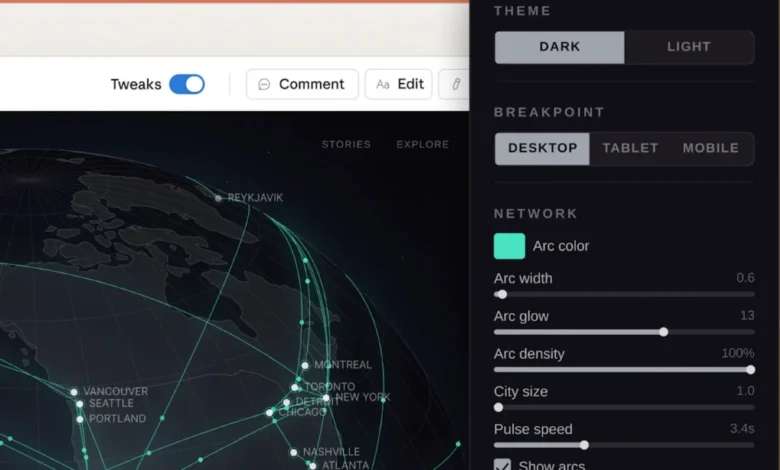
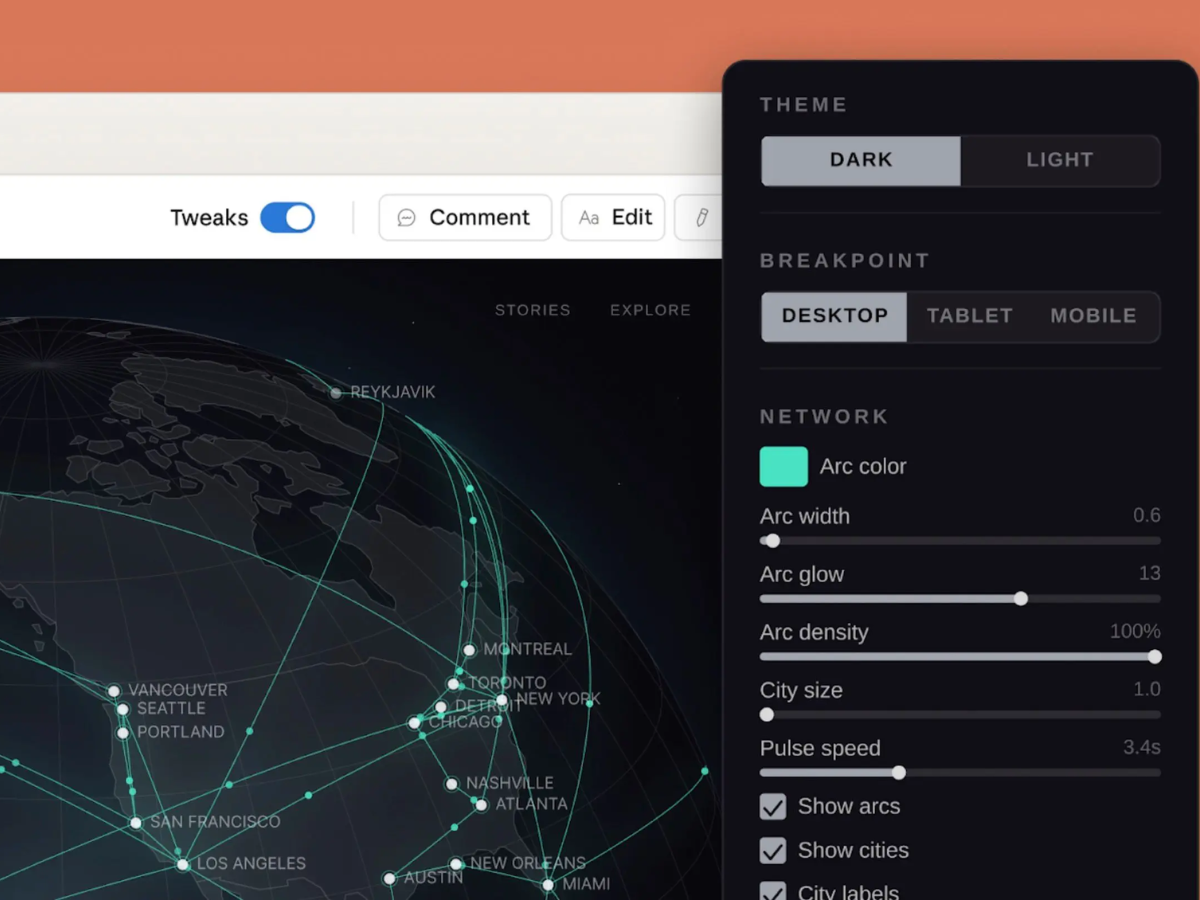
The iterative nature of design is fully supported within Claude Design. Users are not limited to the initial output; adjustments and refinements can be made through several intuitive methods. Follow-up conversations allow users to verbally request modifications, guiding the AI through a series of improvements. Inline comments offer a direct way to annotate specific elements of the design and suggest changes. For more granular control, direct edits can be performed on certain aspects of the generated visuals. Perhaps most innovative are the custom sliders generated by Claude during the session, which provide dynamic controls for adjusting parameters such as color schemes, typography, layout, and other design attributes, offering a unique blend of AI automation and user control.
Once a design reaches completion, Claude Design offers robust export and integration options. Completed designs can be exported in several widely used formats, including a ZIP archive for comprehensive project files, PDF for easy sharing and printing, and PPTX for direct integration into Microsoft PowerPoint presentations. Further enhancing its utility, Claude Design provides direct integration capabilities with popular platforms such as Canva, a leading online graphic design tool, allowing for seamless transition and further embellishment. Designs can also be exported as HTML, facilitating web development, or sent directly to Claude Code, indicating potential for generating code from visual designs, a powerful feature for front-end developers. These diverse export and integration pathways underscore Anthropic’s commitment to providing a flexible and interoperable design solution.
Revolutionizing Design Systems and Usage Logistics
A cornerstone feature of Claude Design, particularly beneficial for professional teams and enterprises, is its ability to configure and leverage personal design systems. This functionality allows users to establish a consistent visual identity across all their projects. By providing links to GitHub repositories, local code files, uploaded Figma files, font and logo folders, and even plain text notes, users can imbue Claude Design with their specific brand guidelines and aesthetic preferences. Once a design system is configured, new projects automatically inherit this style information, eliminating the need to start from default settings each time. This not only significantly accelerates the design process but also ensures brand consistency, a critical factor for professional organizations. The integration of existing design assets, especially from industry-standard tools like Figma, highlights Anthropic’s understanding of contemporary design workflows and its ambition to seamlessly integrate into established ecosystems.
The introduction of Claude Design has sent ripples through the design software industry. Following the announcement, shares of the design software company Figma experienced a notable drop of approximately 7 percent. This immediate market reaction underscores investor concerns about potential disruption from advanced AI design tools. Figma, a dominant player in collaborative interface design, faces a new competitive landscape where AI-driven generation tools could potentially reduce the reliance on manual design processes for initial drafts and iterations. While Anthropic has maintained silence regarding a direct comparison of Claude Design to Figma or other emerging AI design tools like Lovable, the market’s response clearly indicates a perception of competitive pressure.
Claude Design is currently available as a research preview, a status that implies ongoing development and refinement. Anthropic has not yet disclosed a timeline for its general release or indicated any forthcoming changes to the current usage limits. This strategic ambiguity allows the company flexibility in responding to user feedback and market dynamics, ensuring that the final product is as robust and impactful as possible.
The Broader Landscape: Generative AI and the Future of Design
The launch of Claude Design is a microcosm of a larger trend sweeping the technology industry: the rapid advancement and integration of generative AI across various creative domains. Over the past few years, AI models have evolved from generating simple text to creating complex images, videos, and even 3D models. Companies like OpenAI with DALL-E and Midjourney have popularized AI image generation, demonstrating the immense potential for automation in visual content creation. Anthropic’s entry into this space with Claude Design, leveraging its sophisticated Claude Opus 4.7 model, signifies a maturation of these capabilities towards more structured and professional design applications.
Historically, design software has been complex, requiring significant training and expertise. Tools like Adobe Creative Suite (Photoshop, Illustrator, InDesign), Sketch, and Figma have empowered designers for decades but also presented a barrier to entry for non-specialists. Generative AI tools like Claude Design promise to democratize design by abstracting away much of this complexity, allowing individuals to articulate their vision in natural language and have the AI translate it into visual form. This could empower entrepreneurs, marketers, small business owners, and educators to create professional-grade visuals without incurring significant costs or learning curves associated with traditional design tools.
However, the implications extend beyond mere accessibility. For professional designers, AI tools are increasingly seen not as replacements but as powerful co-pilots. Claude Design’s ability to generate initial prototypes, explore design ideas rapidly, and manage design systems could free up designers to focus on higher-level strategic thinking, creative problem-solving, and intricate refinements. The integration with existing design tools like Canva and the export options to HTML and Claude Code suggest a vision where AI augments, rather than entirely replaces, human design expertise.
Competitive Dynamics and Market Evolution
The design software market is fiercely competitive, with established giants and nimble startups vying for market share. Adobe, with its comprehensive suite of creative tools, has been actively integrating AI capabilities into its products for years, with features like Generative Fill in Photoshop and AI-powered content creation tools across its ecosystem. Canva has revolutionized graphic design for non-professionals with its user-friendly interface and vast template library, and it too is investing heavily in AI to enhance its offerings. Figma, with its collaborative cloud-based platform, has become indispensable for product design teams, and its recent acquisition by Adobe (currently under regulatory scrutiny) underscores the strategic importance of this sector.
Anthropic’s Claude Design enters this arena with a distinct advantage: it is built on a leading conversational AI model known for its sophisticated understanding and reasoning abilities. This could allow Claude Design to interpret complex design briefs and nuanced requests more effectively than purely visual AI generators. The focus on integrating personal design systems further differentiates it, catering to the enterprise market’s need for brand consistency and scalability.
The 7 percent drop in Figma’s shares, while not catastrophic, serves as a bellwether for market sentiment. It indicates that investors are keenly watching how AI will reshape the competitive landscape. While dedicated design tools will likely retain their core user base for highly specialized tasks, the rise of AI-powered general-purpose tools capable of design generation poses a credible threat to certain segments of their business, particularly those related to initial ideation and rapid prototyping. The long-term impact will depend on how quickly traditional design software companies integrate equally powerful generative AI capabilities and how well new entrants like Anthropic can evolve their offerings to meet professional demands.
Challenges and Future Outlook
Despite its promising capabilities, Claude Design, being in research preview, faces several challenges. The quality and originality of AI-generated designs are continually improving but can still vary. Ensuring that AI outputs are genuinely creative, align perfectly with user intent, and avoid generic aesthetics will be crucial for widespread adoption. Data privacy and intellectual property concerns surrounding the use of public datasets for AI training are ongoing debates within the industry, and Anthropic’s commitment to "helpful, harmless, and honest" AI will be tested in this creative domain.
Furthermore, the scalability of the service, the cost-effectiveness for heavy users, and the ability to handle extremely complex or highly bespoke design projects will determine its long-term viability. Anthropic’s decision not to provide a general release timeline or details on future usage limits suggests a cautious approach, allowing for continuous iteration and improvement based on real-world usage and feedback.
In conclusion, Anthropic’s Claude Design represents a significant leap forward in making sophisticated design tools accessible through conversational AI. By leveraging the power of Claude Opus 4.7 and integrating features like personalized design systems and versatile export options, Anthropic is not just introducing a new product but is actively shaping the future of how visual assets are conceived, created, and refined. While the journey from research preview to general release will undoubtedly involve further development and adaptation, Claude Design has already signaled a potent shift in the competitive dynamics of the design software industry, underscoring the transformative potential of generative AI in democratizing and augmenting creative processes across the globe.