ProMaster iota Series: Ultralight Tripods Redefine Portability for the Modern Creator

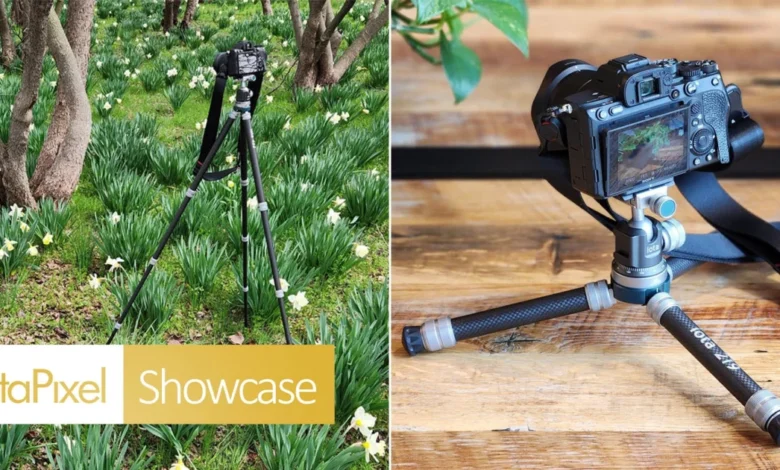
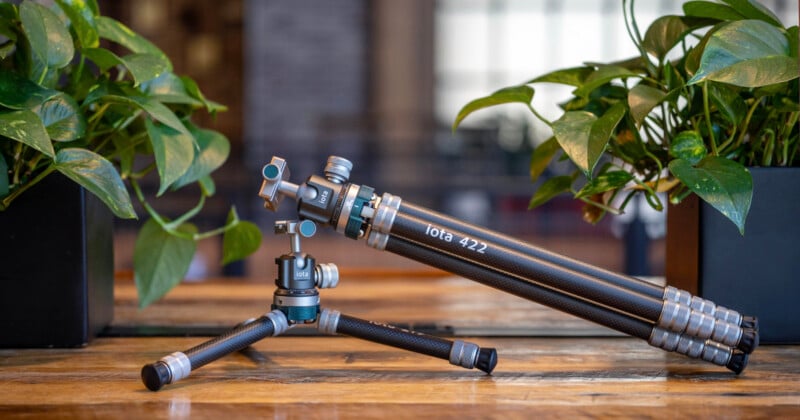
The photography industry is constantly evolving, driven by a demand for lighter, more agile equipment that empowers creators to capture compelling imagery without being weighed down. In this landscape, ProMaster’s new iota series of ultralight tripods emerges as a significant development, meticulously engineered to prioritize speed, simplicity, and minimal weight. The intentional lowercase "i" in the "iota" branding subtly underscores the series’ core philosophy: compact portability and ease of use. This isn’t about replacing robust, feature-laden studio tripods, but rather about offering an indispensable tool for photographers and content creators who value efficiency and wish to spend more time composing shots and less time wrestling with cumbersome gear. The iota series comprises two distinct models: the iota 219 tabletop tripod and the full-size iota 422. Both are designed for rapid deployment, effortless transport, and the capacity to support lighter camera setups, making them ideal companions for a wide range of photographic endeavors.
A New Standard in Ultralight Support
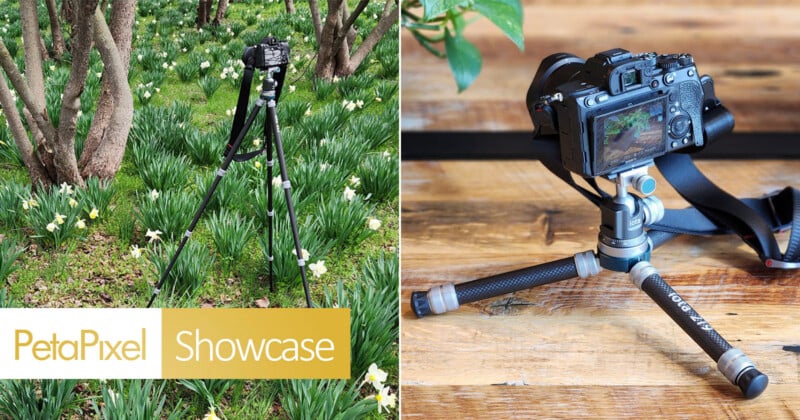
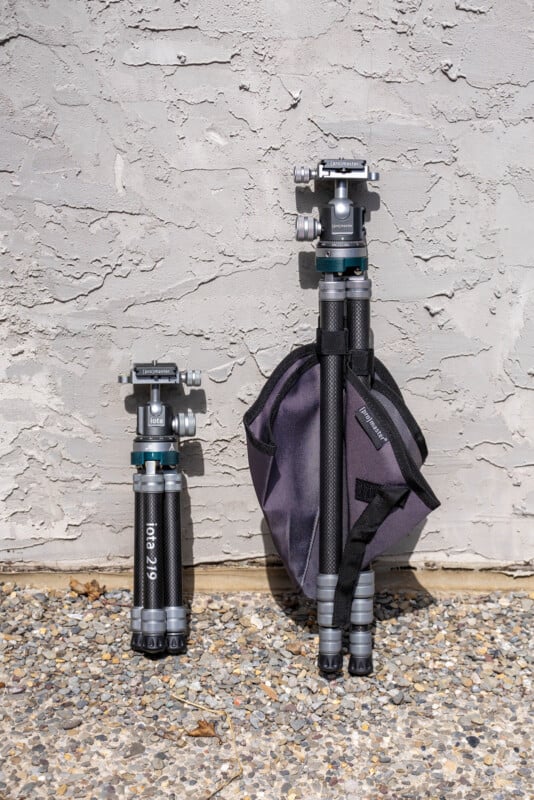
The driving force behind the iota series is a commitment to reducing every possible ounce without compromising essential functionality. This philosophy is immediately apparent upon handling the tripods. The iota 422, weighing in at a mere 768 grams (under two pounds), feels exceptionally easy to carry, removing any hesitation for photographers to include it on long hikes or extensive shooting excursions. Despite its minimal weight, the construction, featuring 12-layer, cross-patterned carbon fiber, imparts a reassuring rigidity that instills confidence. The materials convey a sense of substance and precision, contributing to a stable performance during everyday use while maintaining its remarkable portability. This synthesis of strength, refined design, and lightweight construction distinguishes the iota 422 from many other ultralight tripods that often resort to less durable plastic components.
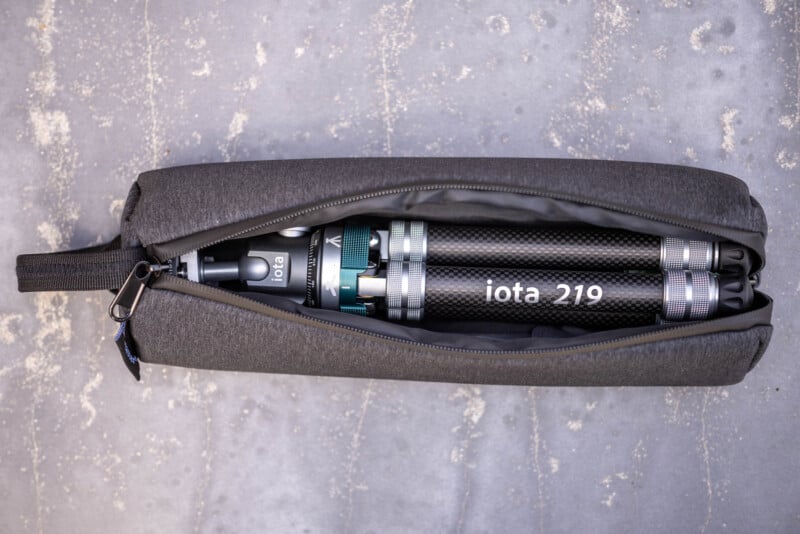
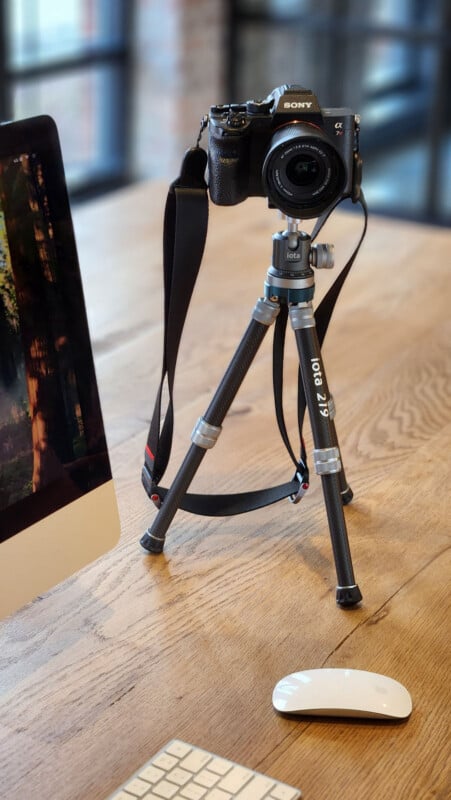
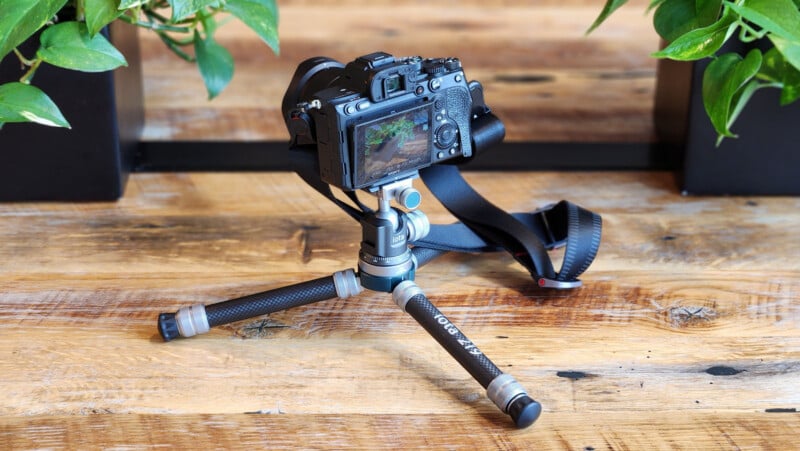
The iota 219 takes the concept of portability even further. Weighing less than 422 grams (under a pound), it is exceptionally easy to transport, allowing it to be slipped into a shoulder bag or backpack almost unnoticed until needed. Its diminutive size and thoughtful engineering make it particularly well-suited for tabletop setups, macro photography, and on-the-go video or streaming applications. Despite its compact footprint, the tripod feels sturdy and reliable, demonstrating ProMaster’s success in merging ultralight portability with practical utility for creators who require a nimble and versatile support system.
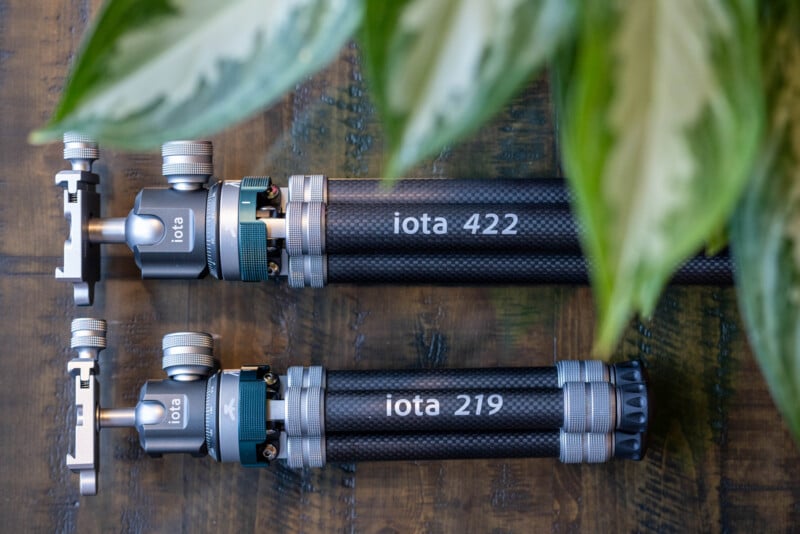
Design Philosophy: Simplicity as a Strength
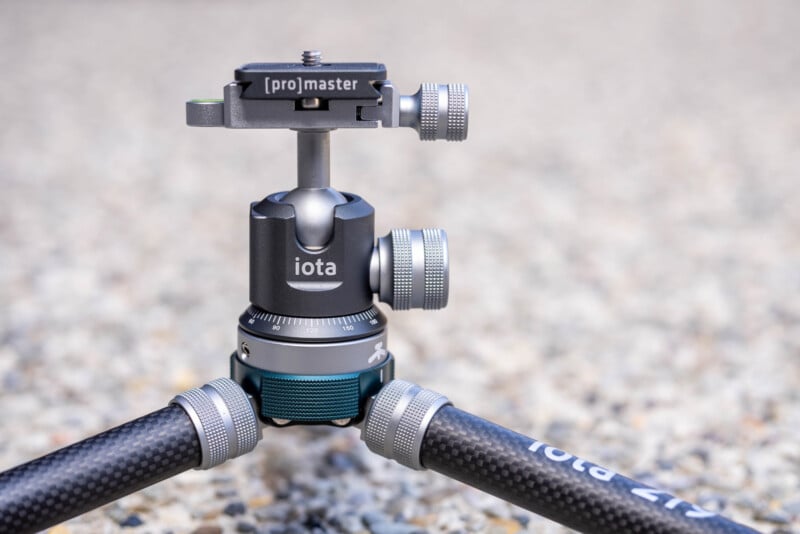
The defining characteristic of the iota series is its elegant simplicity. ProMaster has deliberately minimized the number of controls, a decision that profoundly shapes the entire user experience. Mounting a camera is facilitated by a single, intuitive knob, while another knob expertly manages all movement within the ball head. A single collar system adjusts the angle of all three legs simultaneously, eliminating the need to manage multiple locks or memorize separate operating procedures. This streamlined approach translates into swift and natural deployment, a critical advantage in dynamic shooting environments.
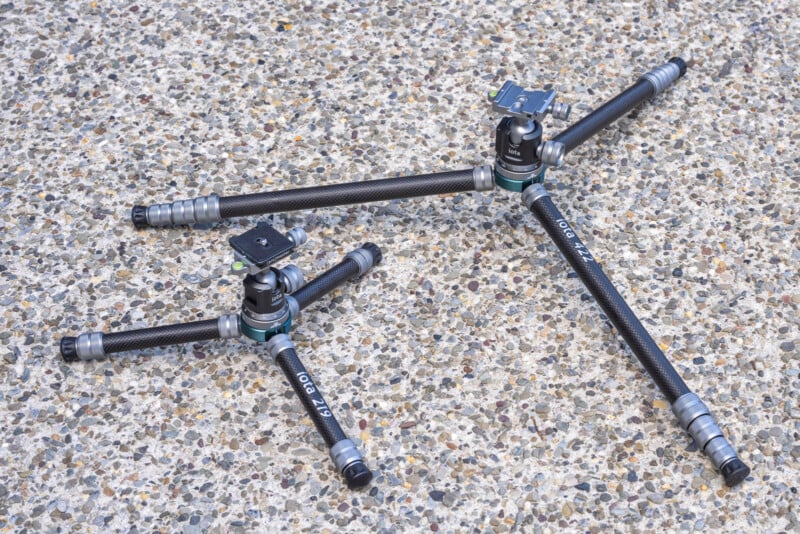
This minimalist design is particularly beneficial in rapidly changing conditions. Whether adjusting compositions under shifting light or setting up on uneven terrain, the reduced complexity actively removes friction from the workflow. However, this simplicity also introduces certain tradeoffs that are important for potential users to understand.
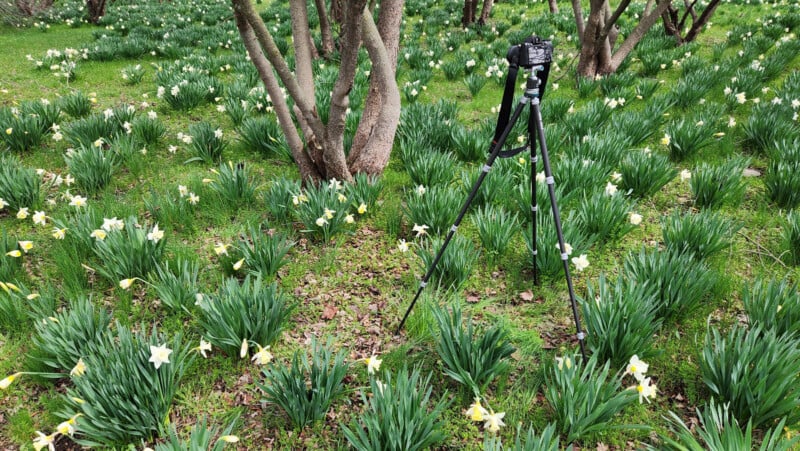
The Ball Head: A Nuance of Control
The single-action ball head exemplifies the series’ design philosophy and its associated considerations. Unlike traditional heads that offer separate controls for panning and tilt, the iota series consolidates these functions into a single knob. In practical terms, this means that any adjustment to the ball head releases both tilt and rotation simultaneously. This design necessitates a more deliberate approach to fine-tuning compositions. Loosening the knob releases the entire head, allowing the camera to shift more than might be intended during minor adjustments. This can present a challenge for tasks such as stitching panoramas or executing precise micro-adjustments when compared to heads with independent pan and tilt controls.
However, this design is not arbitrary. By integrating tilt and rotation into a single control, ProMaster effectively reduces component count, thereby saving weight and simplifying operation. Once users adapt to its behavior, the ball head becomes manageable. For many shooting scenarios, the benefits of a significantly lighter and more portable tripod – one that is more likely to be brought along rather than left behind due to bulk or inconvenience – outweigh the nuances of this integrated control.
Stability and Load Capacity: Tailored for Lighter Setups
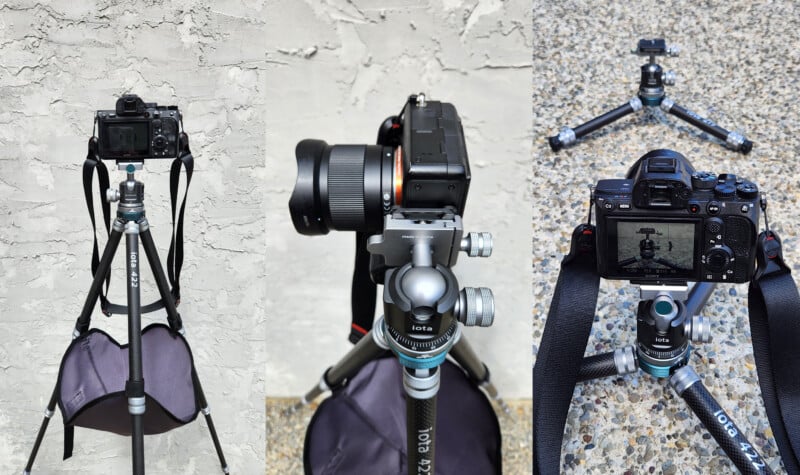
It is crucial to understand that the iota series is not engineered for heavy telephoto lenses or the demanding stability requirements of large studio setups. The iota 422 boasts a maximum working height of 48 inches (121.9 cm) and a minimum height of 8 inches (20.3 cm), with a maximum load capacity of 5.5 pounds (2.5 kg). Paired with lighter mirrorless camera systems, it performs admirably and offers sufficient stability for landscapes, travel photography, and general-purpose shooting. The included, detachable stone bag is a thoughtful addition, capable of holding extra weight between the legs to anchor the tripod in windy conditions or on uneven ground. This bag also conveniently doubles as a small accessory pouch for items like lens filter cases.
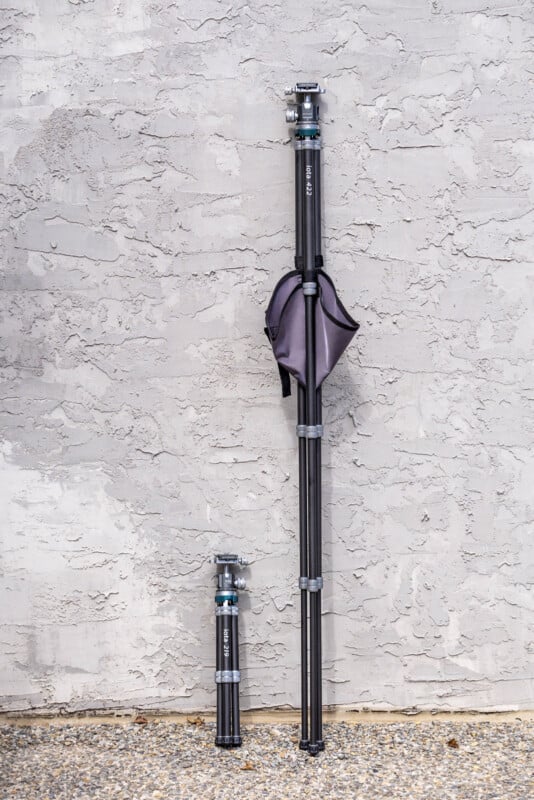
The tabletop iota 219, being considerably smaller, reaches its limits more quickly. It has a maximum working height of 14.5 inches (36.8 cm) and a minimum height of 5.88 inches (14.9 cm), with a maximum load capacity of 4.8 pounds (2.18 kg). When testing with a full-frame body and a relatively light prime lens, attempting vertical shooting resulted in a top-heavy setup that was prone to tipping. While this is less of a concern with smaller cameras or compact systems, it is an important consideration for heavier gear. In such instances, adding counterweight or utilizing an L-bracket instead of tilting the camera can significantly enhance stability.
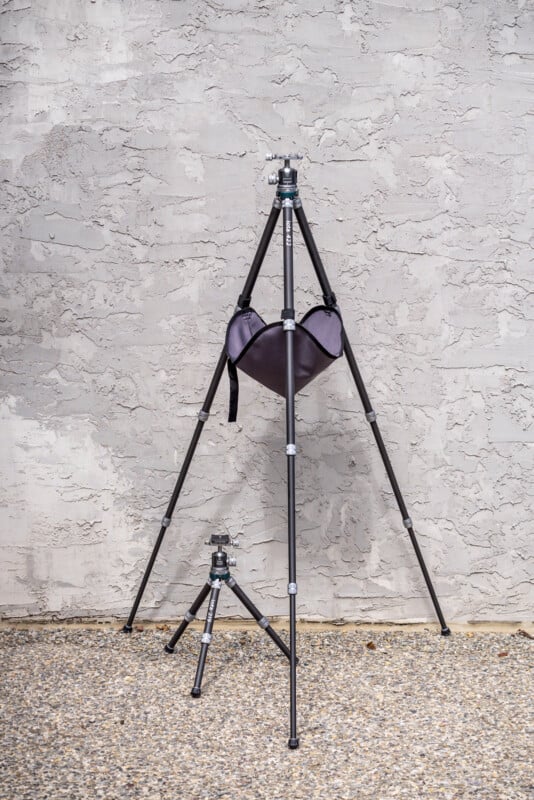
A standout design element across both iota models is the absence of a center column. This not only contributes to weight reduction but also significantly enhances creative flexibility. The leg angle adjustment system is particularly well-implemented. A simple twist of the collar either locks the legs in a standard position or enables "ground mode," allowing all three legs to splay out fully for extremely low shooting angles. For landscape photographers, especially those building layered compositions, this capability is invaluable. The ability to quickly and easily position the tripod just inches from the ground encourages experimentation and simplifies the refinement of compositions in the field.
Thoughtful Details and Robust Construction
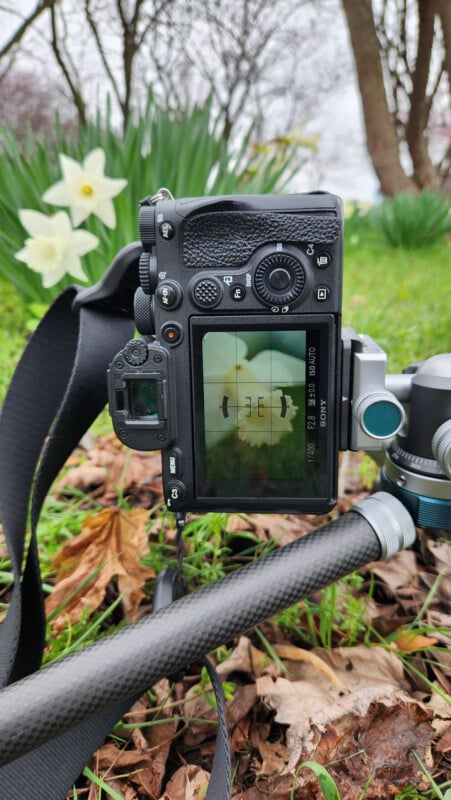
Beyond the core design principles, several smaller details enhance the usability of the iota series. Both tripods feature an Arca-compatible quick-release system, and the ball head incorporates a built-in bubble level for precise leveling. A cold shoe mount is also integrated, offering a convenient spot for accessories such as small lights or microphones – a subtle but highly practical addition for creators. The 3/8"-16 threaded rubber feet can be unscrewed, suggesting the potential to swap in spike feet or other attachments depending on the shooting environment, further enhancing their adaptability.

The aesthetic of the iota series is also considered. The combination of gunmetal, nickel silver, black, and dark green creates a subdued, professional appearance that integrates seamlessly with most camera gear without being ostentatious. This understated design language reinforces the series’ focus on functionality and performance.
Target Audience and Purchasing Considerations
The ultimate value proposition of the ProMaster iota tripods hinges on how a photographer shoots and what they expect from their support system. The iota series excels when its core strengths—portability, speed, and simplicity—align with the user’s needs, rather than prioritizing maximum stability or absolute precision.
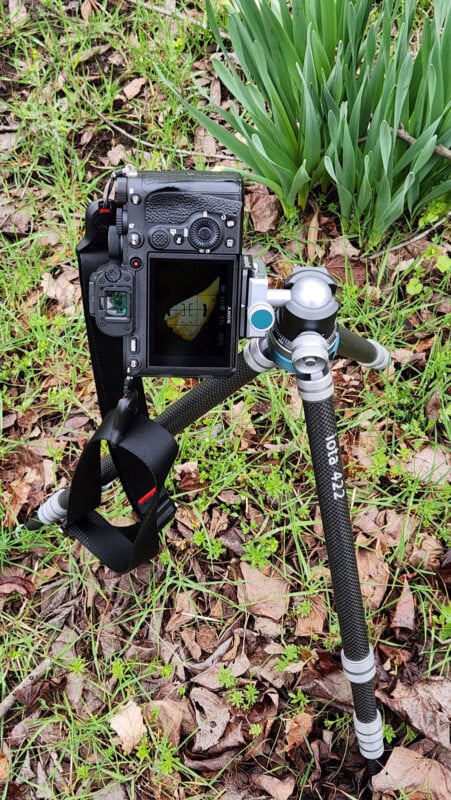
These tripods are particularly well-suited for travel photographers seeking to minimize their gear weight, as well as content creators and vloggers who benefit from rapid setup and minimal bulk. Landscape photographers utilizing lighter camera setups will also find considerable merit in the iota series, especially when working close to the ground, where the design’s low-angle capabilities truly shine. The iota 219, in particular, proves to be an excellent choice for macro and tabletop scenarios where compact support is paramount.
For individuals whose priority is carrying the least amount of weight possible while still having access to a capable and thoughtfully designed tripod, both the ProMaster iota 422 Ultralightweight Tripod Kit and the ProMaster iota 219 Tabletop Tripod Kit present compelling arguments. They perform best in situations where mobility is a greater concern than absolute rigidity, whether that involves hiking, extensive travel, or assembling lightweight creator setups.
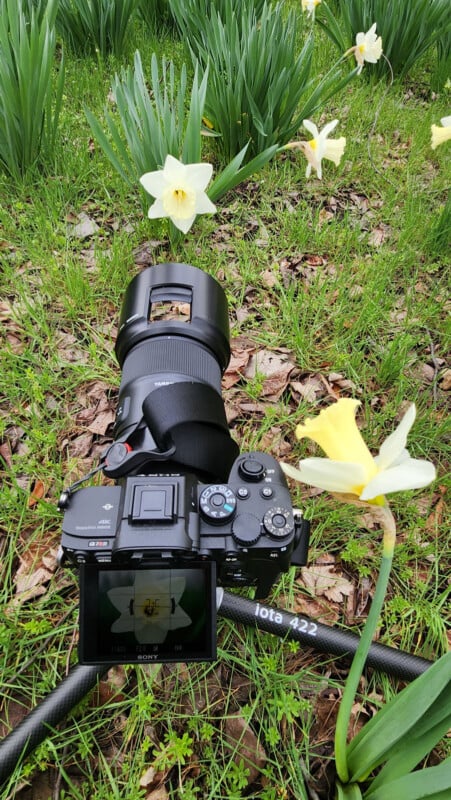
From a personal perspective, the iota 422 emerges as the more versatile option. It would be the go-to choice for excursions where packing light is essential, especially when anticipating the use of lighter lenses. The ability to achieve extremely low shooting angles quickly, coupled with its minimal contribution to overall bag weight, makes it an easy decision to include in any kit.
However, it is important to reiterate that these tripods are not intended to replace more traditional, fully featured systems. They are less suitable for heavy telephoto work or scenarios where maximum precision and independent control over movement are critical. If a photographer’s workflow relies on heavier equipment or they depend on separate controls for panning and ball movement, the simplified design might feel restrictive. The very choices that make the iota series so appealing for portability can become compromises in more demanding shooting environments.
Ultimately, the ProMaster iota series is a line of tripods built with a very clear purpose. If this purpose aligns with an individual’s shooting style, the iota series delivers a lightweight, fast, and genuinely enjoyable experience that encourages more frequent use and fosters a greater sense of photographic freedom. The series represents a significant step forward in ultralight tripod technology, catering to a growing segment of the photography and content creation market that values agility and efficiency above all else.